Haplogroup Q1b1a1a1l

– 4 min read


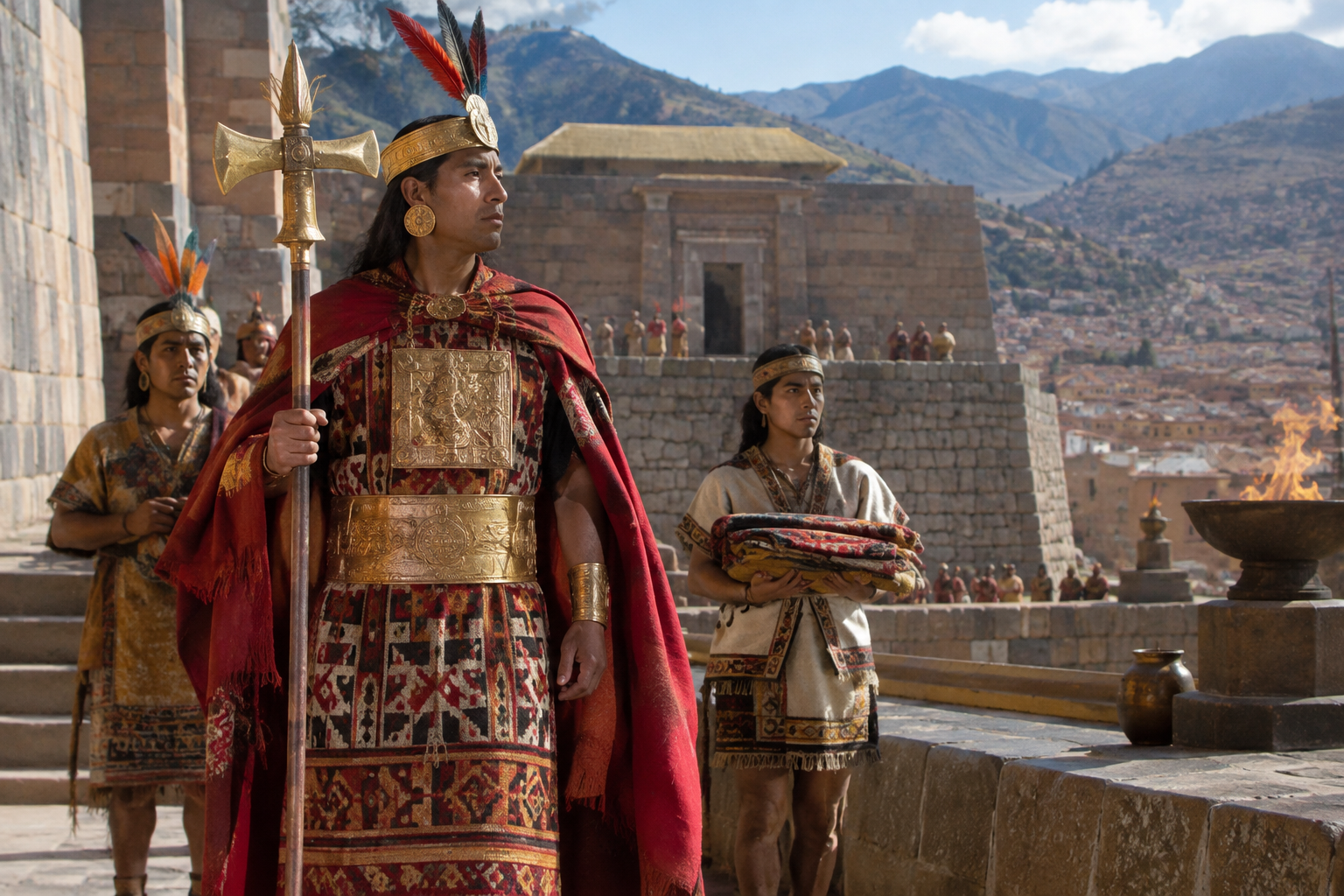
In Cusco, at Qotakalli, one ancient individual gives us a sharply focused glimpse of haplogroup Q1b1a1a1l. The sample is identified as QKI-809, dated to around AD 1425, in the heartland of the Inca world. That matters because Cusco was not some distant provincial corner: it was the political and ceremonial center of a rapidly expanding Andean state, and any paternal lineage identified there immediately raises questions about continuity, movement, and the male lines present in the late pre-Hispanic Andes.
With this haplogroup, the evidence is narrow but still revealing. We are dealing here with a very specific Y-chromosome branch, not the whole of haplogroup Q. Y-DNA follows one direct paternal line only, but that single line can still be archaeologically important when it appears in a securely dated individual from a major center like Cusco.
The site label attached to QKI-809 places him in Cusco City, Qotakalli, around the first half of the 15th century AD. That is a fascinating moment. It sits close to the period when the Inca polity was consolidating and extending its reach across the Andes, before the Spanish invasion transformed the region forever.
What the record gives us is precise in some ways and modest in others. We have an individual, an approximate date, a place, and an association with haplogroup Q1b1a1a1l. What we do not have here are extra details about grave goods, kinship, social rank, or a fully described burial context, so those should not be invented. Still, even without such embellishment, QKI-809 is valuable because he anchors this paternal branch in one of the most historically consequential urban landscapes in Indigenous South America.
Cusco was a city of administration, ritual, labor organization, and imperial memory. A paternal lineage found there in the late pre-Columbian centuries belongs in that crowded historical picture: not as proof of royal descent or ethnic exclusivity, but as evidence of one male line present within the living population of the Inca capital.
Ancient DNA from Chincha, Peru
It is important not to overstate what the label Q1b1a1a1l means on its own. This is a fine-grained branch within the wider haplogroup Q family, a paternal lineage that is well known in the Indigenous Americas. But the ancient and global history of haplogroup Q as a whole should not simply be pasted onto this narrower subclade as if they were identical things. The broader lineage has deep time depth and a very wide story; this article's branch is much more specific.
That distinction is where careful archaeology helps. A terminal or near-terminal subclade like Q1b1a1a1l is most useful when it is attached to real people in real places. In this case, the strongest thing we can say is that a man associated with this branch was living in Cusco around AD 1425. For descendants and family historians, that is already meaningful: it places the paternal line in the Andean highlands during the age of Inca expansion.
Research on ancient populations of the Americas has increasingly shown that broad Indigenous genetic continuity can coexist with local shifts, migrations, and regional mixtures over time. A useful wider frame comes from work on the peopling and diversification of the Americas, such as a Science Advances study on ancient genomes in Indigenous American history. That sort of research helps explain why one Cusco Y-line should be read as part of a long continental history, yet also as something locally grounded and historically specific.
If this same haplogroup had turned up in an isolated and poorly dated context, the story would be thinner. Cusco changes that. By the 15th century, the city was tied into roads, tribute systems, resettlement policies, and elite institutions that linked mountain valleys, lake basins, and distant provinces. Any male lineage in that setting may reflect local continuity, regional incorporation, or both.
That does not mean QKI-809 can be turned into a stand-in for the entire Inca state. One burial is one burial. But one burial from Cusco is still a powerful historical data point because the city concentrated people from across the imperial core and beyond. Archaeologists and geneticists alike are interested in precisely these central places, where political history and biological history may intersect without ever becoming identical.
That is also why a direct paternal lineage should never be confused with language, status, or full ancestry. An individual in Inca Cusco might have spoken Quechua, served the state, belonged to a local community, or been part of a family with deeper regional roots, and none of those identities is reducible to a Y-chromosome branch. Yet the branch remains important because it tracks one line of descent through that larger social world.
One of the most exciting things about Andean archaeogenetics is that it lets us move beyond the old habit of treating the Andes as timeless. The centuries around AD 1400 were dynamic: polities rose and fell, populations were moved, and local identities were woven into larger imperial structures. Ancient DNA adds another layer to that picture by showing which lineages were actually present in particular communities.
For the late pre-Hispanic Andes, this matters enormously because written sources become denser only after European contact, and those sources are shaped by colonial agendas. Burials such as QKI-809 therefore preserve evidence from before the archives took over. They allow paternal ancestry to be studied on its own terms, inside archaeological time rather than retrospective imperial or colonial storytelling.
That wider Andean setting is worth keeping in view when reading a haplogroup like Q1b1a1a1l. The branch is not interesting because it is rare-looking or technical-sounding. It is interesting because it belonged to an actual man in a major Andean center at a historically charged moment. Ancient DNA turns the abstract label into a human timeline.
Pre-Columbian Bolivia DNA study
For someone researching Q1b1a1a1l today, the clearest ancient signpost here is late pre-Hispanic Cusco. Sample QKI-809 shows that this paternal branch, or a reported association with it, was present in the Inca capital around AD 1425. That does not make every modern carrier "Inca" in any simple sense, but it does place the lineage in a documented Indigenous Andean setting before colonial disruption.
The larger lesson is a good one. Haplogroups become most meaningful when they are tied to excavated individuals, secure dates, and historical landscapes. In this case, Q1b1a1a1l is not just a string of letters and numbers. It is a paternal line connected to a man from Cusco, living in one of the great centers of Andean history just before the world around him changed irrevocably.
Comments