Haplogroup Q1b1a1a1h1

– 4 min read


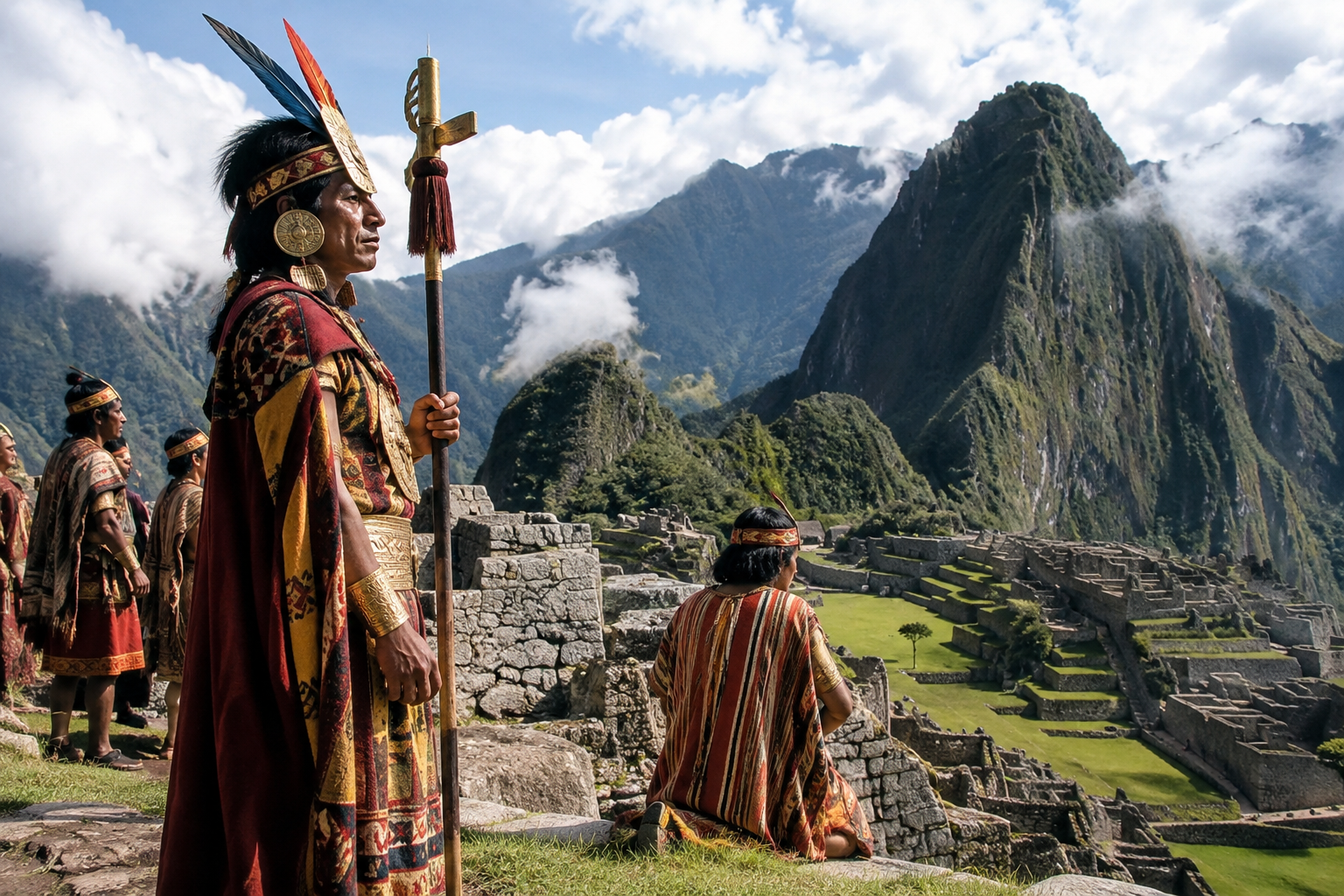
At Machu Picchu, high in the Andes and active into the late 15th and early 16th centuries, one ancient individual offers a small but striking window into a paternal line now labeled Q1b1a1a1h1. The sample is MP84a, dated around AD 1500 and identified from Inca Peru. On its own, that is just one man from one famous site. But because Y-DNA follows a direct paternal line, it can pin a very specific branch of ancestry to a very specific historical world: the imperial Andes at the moment just before Spanish conquest transformed it forever.
That matters because haplogroup Q is one of the major Y-chromosome lineages associated with the peopling of the Indigenous Americas, yet a narrow branch such as Q1b1a1a1h1 is not the same thing as the whole parent haplogroup. The appearance of this lineage in MP84a does not stand for all Inca men, still less for all Andean ancestry. What it does do is place one direct paternal line inside the living, political, and ceremonial landscape of late Inca Machu Picchu.
Machu Picchu is often flattened into a postcard: terraces, stone walls, mist. Archaeologically, though, it was a functioning Inca site with a population tied into the wider imperial system. Individuals buried there were part of an Andean world shaped by state labor, ritual obligations, movement across mountain ecologies, and the extraordinary logistical reach of Tawantinsuyu, the Inca Empire.
In that setting, MP84a gives Q1b1a1a1h1 a concrete archaeological anchor. He was not an abstract branch on a phylogenetic tree but a person living in a place that linked highland politics, sacred geography, and imperial administration. A genetic study connected with the site, published in Science Advances, has helped show how much ancient DNA can add to that picture when combined with careful archaeological context.
There is always a temptation to make a haplogroup behave like an ethnicity, a language, or a civilization. Ancient DNA is useful precisely when we resist that temptation. Q1b1a1a1h1 marks one direct male-line descent path. MP84a may have belonged to an Inca-period community, but that does not mean everyone at Machu Picchu shared his paternal lineage, nor that this branch somehow defines "the Inca" in a genetic sense.
Still, one line can be historically revealing. Empires gather people, redistribute communities, and layer local ancestry onto wider political structures. In the Andes, that process happened across sharp ecological zones and over long-established regional traditions. A lineage found at Machu Picchu may therefore speak not just to local continuity, but also to the human movement that sustained imperial life.
Dating MP84a to around AD 1500 places him in the final generations of independent Inca rule. This was the age of imperial consolidation in some regions and strain in others, with the state managing roads, storehouses, labor obligations, and provincial relationships across a huge swath of western South America. Machu Picchu belonged to that mature imperial system, not to a vague timeless past.
That timing gives Q1b1a1a1h1 a particular historical sharpness. This was not a lineage recovered from the first settlement of the Americas, nor from an early Formative village, but from a society with architecture, administration, ceremony, and social hierarchy on a grand scale. The paternal branch survived all the way into a highly organized Indigenous state whose people were about to face the upheavals of colonial invasion, epidemic disease, forced resettlement, and demographic collapse.
Adaptive history in Indigenous Andeans
Because Machu Picchu is so famous, it is easy to forget that its value for ancient DNA lies in context, not celebrity. A sample such as MP84a is useful because it comes from a named site, a known historical horizon, and a region central to Inca power. That lets us place Q1b1a1a1h1 in a real social landscape rather than in a decontextualized list of mutations.
It also helps balance a common misunderstanding about Indigenous American paternal history. Haplogroup Q has deep roots in the broader population history of the Americas, but its many downstream branches diversified over time and across regions. A late Inca example reminds us that these lineages were not relics stranded in prehistory. They remained active, local, and historically situated within complex societies right up to the threshold of European conquest.
The most interesting thing about an Inca-period Y-line is that it sits at the meeting point of continuity and statecraft. The Andes were home to ancient regional populations long before the rise of the Inca, and the empire did not erase that depth. Instead, it organized, relocated, and incorporated people on a vast scale. So a lineage like Q1b1a1a1h1 at Machu Picchu may reflect older Andean roots carried into an imperial setting, rather than some simple story of one recent migration.
That wider Andean pattern is one reason ancient DNA from Peru has become so valuable. Research on ancient populations in the region has increasingly shown that mobility, kinship, and local persistence all mattered, often at the same time. Archaeology gives us the stonework and settlement patterns; genetics can sometimes show how individuals fit into those larger human arrangements.
Pre-Columbian Bolivia and ancient DNA
For someone exploring Q1b1a1a1h1 today, the strongest insight from MP84a is not a grand claim about empire-wide descent. It is something more disciplined and, in its way, more interesting: this paternal branch is attested in the late Inca Andes, at Machu Picchu, in a real person living around AD 1500. That gives the lineage a secure place in one of the best-known Indigenous historical settings in the world, while reminding us that every Y-DNA branch tells only one line within a much larger ancestry.
Comments