Haplogroup O2a1b1a1a1a1a2

– 5 min read


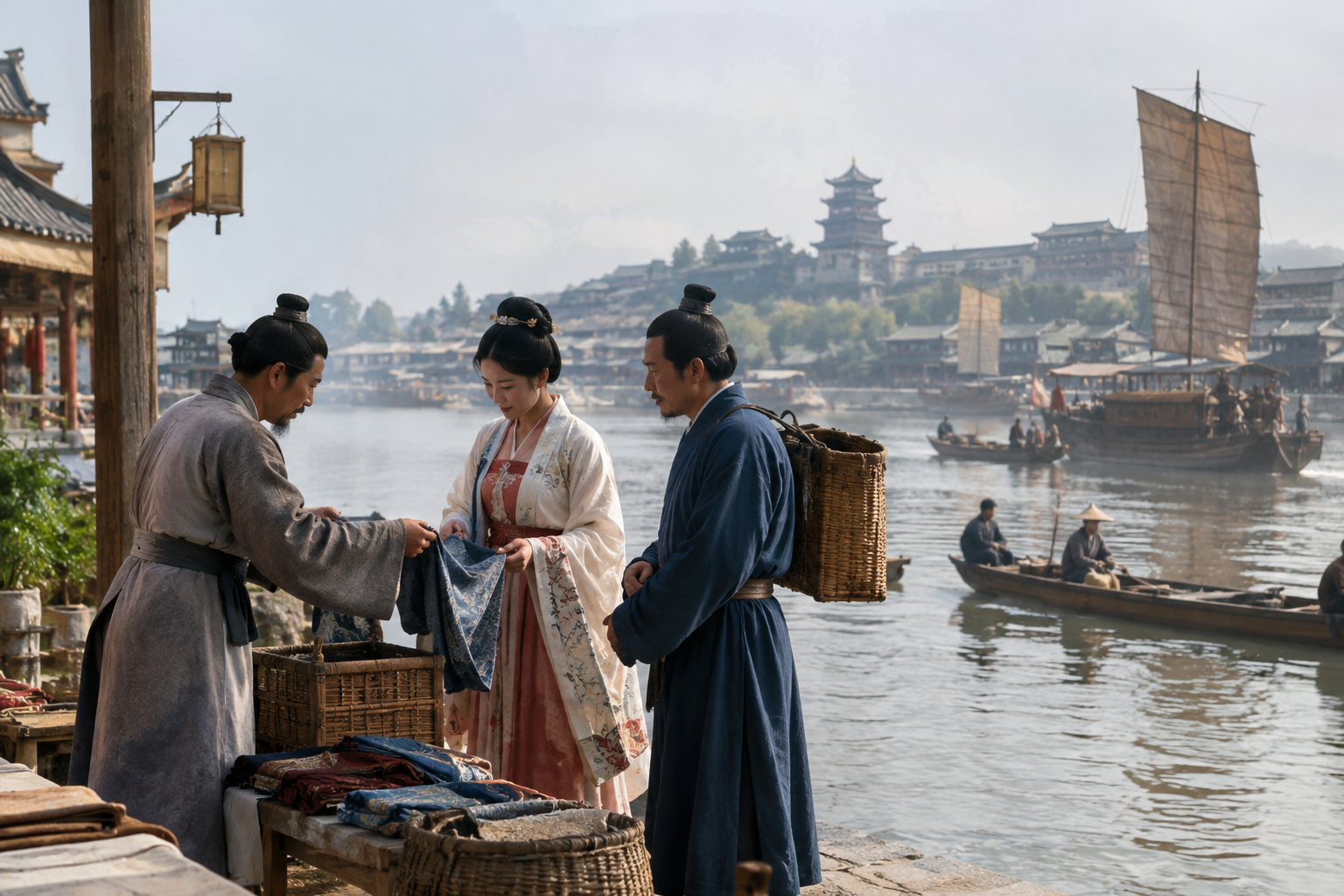
One of the few ancient clues we currently have for the Y-DNA haplogroup O2a1b1a1a1a1a2 comes from the Yangtze River region of medieval China, in the long stretch from the Song through Qing periods. The individual is identified as KWSM146LR, dated here to around AD 960, and even that spare label is enough to make the find interesting. It places this paternal line not in some vague prehistoric haze, but in a literate, densely populated, politically complex landscape where ancestry, family continuity, and local society can sometimes be tested against excavated human remains.
That matters because Y-DNA follows a direct paternal line only: father to son to grandson, and so on. It does not describe a person's whole ancestry, culture, or identity. But when a branch like O2a1b1a1a1a1a2 appears in a dated archaeological context, it gives us something precious and stubbornly concrete: a man, in a place, at a particular historical moment.
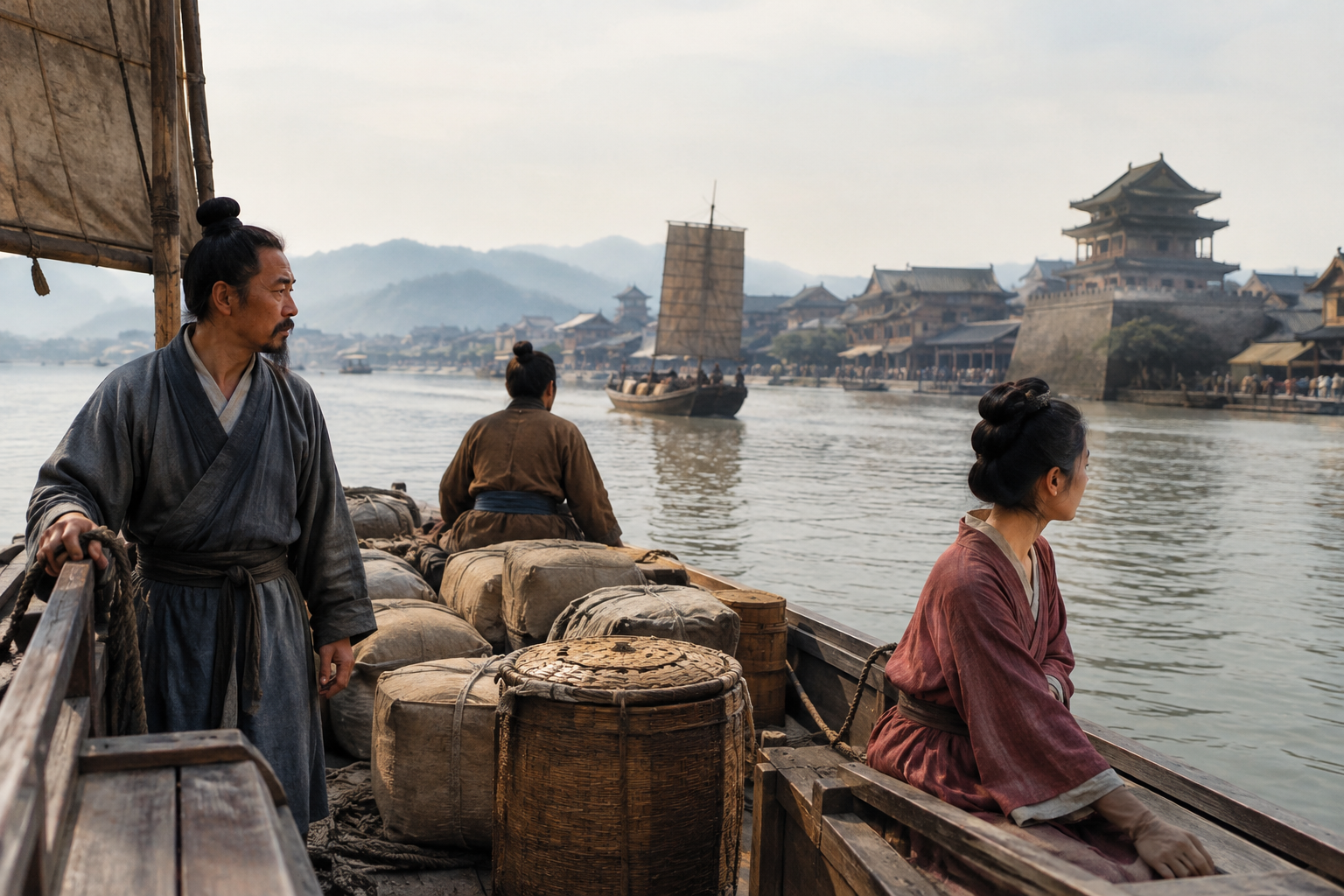
The date attached to KWSM146LR, around AD 960, sits at the threshold of the Song era, though the wider site grouping extends into later imperial centuries. The Yangtze basin was already one of the great demographic and economic engines of East Asia. This was a world of river transport, market towns, agricultural intensification, lineage organization, and expanding documentary culture. To place a paternal lineage there is to place it in one of the most important human landscapes on earth.
What makes the sample especially useful is not lavish storytelling potential, but restraint. We are not entitled to invent rank, occupation, or grave furnishings for KWSM146LR. What we can say is that this lineage was present in a medieval Chinese population from the Yangtze River zone, a region central to the transformations of the Song and later dynasties. That alone anchors O2a1b1a1a1a1a2 in a historically rich setting.
A related MyTrueAncestry discussion of Song-period remains is worth reading alongside this case because it shows the sort of questions ancient DNA can answer in medieval Chinese burials: kinship, ancestry, sex, and disease, when preservation allows it.
O2a1b1a1a1a1a2 is a very narrow label inside the broader O lineage, one of the major Y-chromosome macro-branches associated above all with East and Southeast Asia. But a small twig on a large tree is not the same thing as the whole tree. It would be careless to pour the entire deep history of haplogroup O straight into this one terminal branch without branch-specific evidence.
That distinction is more than technical fussiness. In genetic history, broad parent lineages may have wide geographic ranges and long time depths, while much narrower subclades can reflect more local or later expansions. So for O2a1b1a1a1a1a2, the safest historical move is a modest one: it is attested in at least one medieval Yangtze-region individual, and that places the branch within the population history of imperial China. It does not, by itself, prove a single origin story, a single ethnicity, or a single migration route.
This is exactly why East Asian Y-chromosome work has become so important. Ancient paternal lineages often show that continuity, movement, and regional diversity all existed at once. A broader MyTrueAncestry piece on ancient Y chromosomes in East Asia gives the larger frame for how these male-line branches can illuminate both coastal and inland population histories.
Medieval Chinese archaeology can feel almost unfairly rich. There are chronicles, inscriptions, tax systems, official geographies, and family genealogies - yet ancient DNA still manages to surprise us. It can reveal whether burial communities were close paternal kin, whether outsiders married in, whether people buried together were biologically related at all, and how regional populations changed across dynastic transitions.
In that sense, KWSM146LR belongs to a larger methodological shift. Instead of asking only what texts say about society, researchers can compare written expectations with biological evidence from the dead. A recent ancient DNA study of medieval Chinese remains shows how powerful this can be when preservation is difficult but analysis succeeds. Even where a single sample offers only a narrow window, it joins a much broader effort to reconstruct family life and population structure in imperial China.
That is particularly useful in the Yangtze region, where state expansion, migration, commercialization, and local lineage formation all left their mark over many centuries. A Y-chromosome result from this setting is not just a genetic footnote. It is part of the evidence for how male lines persisted, branched, and were absorbed into changing social worlds.
It is tempting to think of rivers as borders, but historically the Yangtze was often the reverse: a corridor binding distant places together. Grain moved on it, soldiers crossed it, merchants depended on it, and states tried repeatedly to control it. Populations in the Yangtze basin were shaped by both local continuity and repeated influx from elsewhere in China.
That broader setting is useful when thinking about a lineage like O2a1b1a1a1a1a2. Its appearance in this region could reflect long-established local paternal continuity, later internal migration, or some combination of both. Without a larger sample set for the exact same branch, one cannot press further than the evidence allows. But the historical backdrop is clear enough: the Yangtze was one of the great engines of demographic mixing within China, while still preserving strong regional identities.
For readers interested in longer-term Chinese population history beyond the medieval period, there is a helpful companion piece on the deeper genomic history of northern China.
Ancient DNA articles often celebrate great sweeping datasets, but one should not sneer at a lone well-placed individual. A single sample can pin a branch to a time and place that were previously missing from the map. KWSM146LR does that for O2a1b1a1a1a1a2. It tells us that this paternal line was present in the Yangtze world of medieval China, within a historical setting of extraordinary social complexity.
There is also a practical point for family historians. Many living men discover a very specific Y-haplogroup label and then wonder whether it has any ancient grounding at all. In this case, the grounding is real, if still limited. The branch is not floating free in modern testing databases; it has at least one anchor in the archaeological record of imperial China.
Another relevant MyTrueAncestry article looks at ancient DNA from Bronze Age Gansu, a reminder that Chinese population history was regionally varied long before the medieval period and cannot be reduced to a single north-to-south or south-to-north narrative.
For now, the most defensible historical picture of O2a1b1a1a1a1a2 is modest but meaningful. It is a direct paternal lineage attested in at least one medieval individual, KWSM146LR, from the Yangtze River region in the era spanning Song to Qing contexts. That places the branch inside the lived history of imperial China - a world of local families, regional movement, and enduring male-line descent. For anyone researching this haplogroup today, the lesson is not that one sample explains everything, but that your paternal line already has a documented foothold in one of the great historical heartlands of East Asia.
Comments