Haplogroup R1a1a1b1a2a2a1a2

– 5 min read


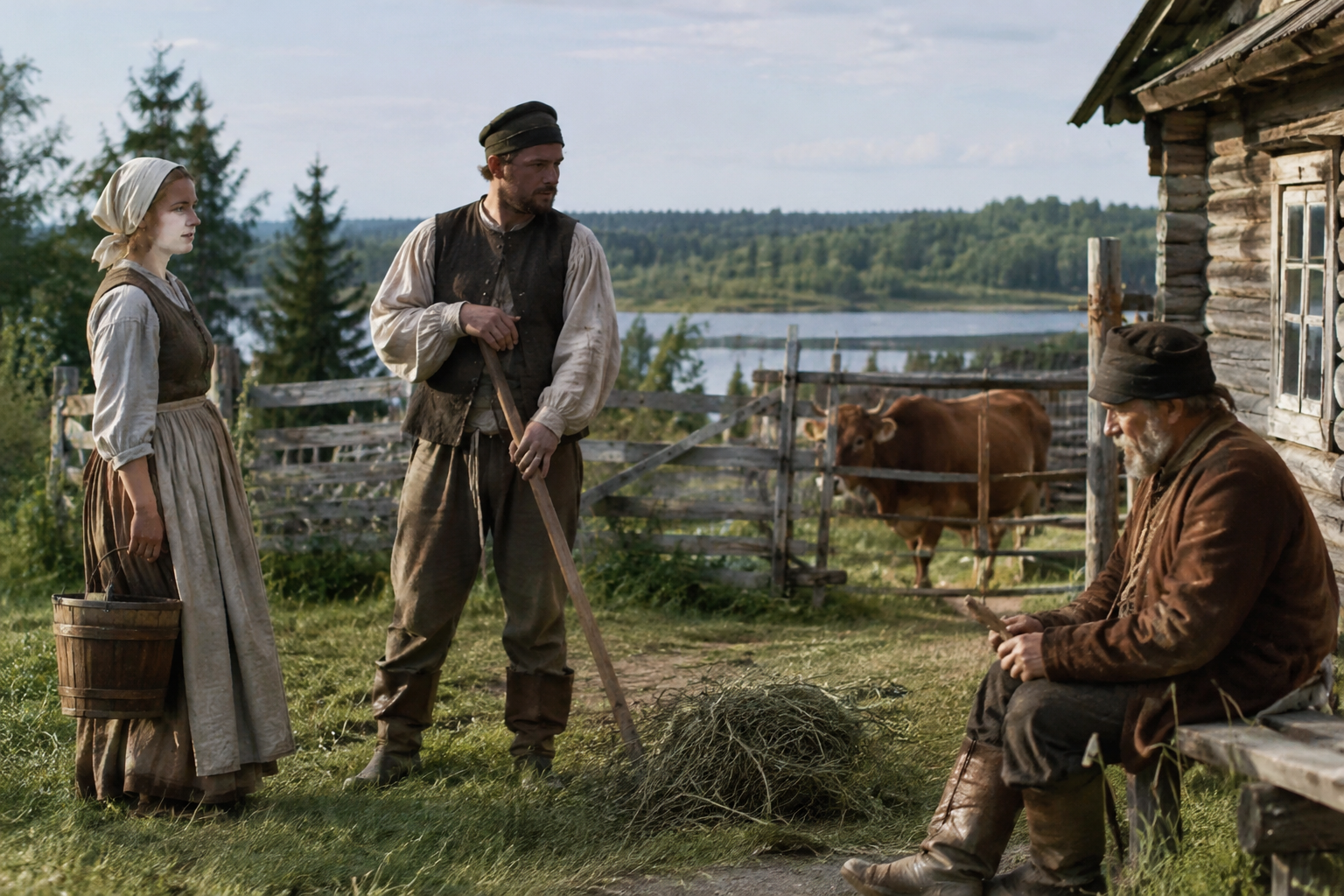
In Tavastia, in the forests and lake country of inland Finland, one post-medieval burial offers a very precise but also rather humbling clue about paternal ancestry. The individual labeled PKN012, dated to around AD 1750 at Paelkaene, carries the Y-DNA haplogroup R1a1a1b1a2a2a1a2. That long string may look forbidding, but in historical terms it places one man from early modern Finland inside a very specific branch of a much wider paternal lineage that has deep roots across northern and eastern Europe.
The important thing is not to turn one burial into a grand myth. Y-DNA traces one direct male line only - father to son to son - not a person's whole ancestry, language, or identity. Even so, a securely identified Finnish individual from the eighteenth century matters because he anchors this branch in a real place, among real communities, at a moment when Finland stood within the Swedish realm yet retained its own regional histories and older Finnic population structure.
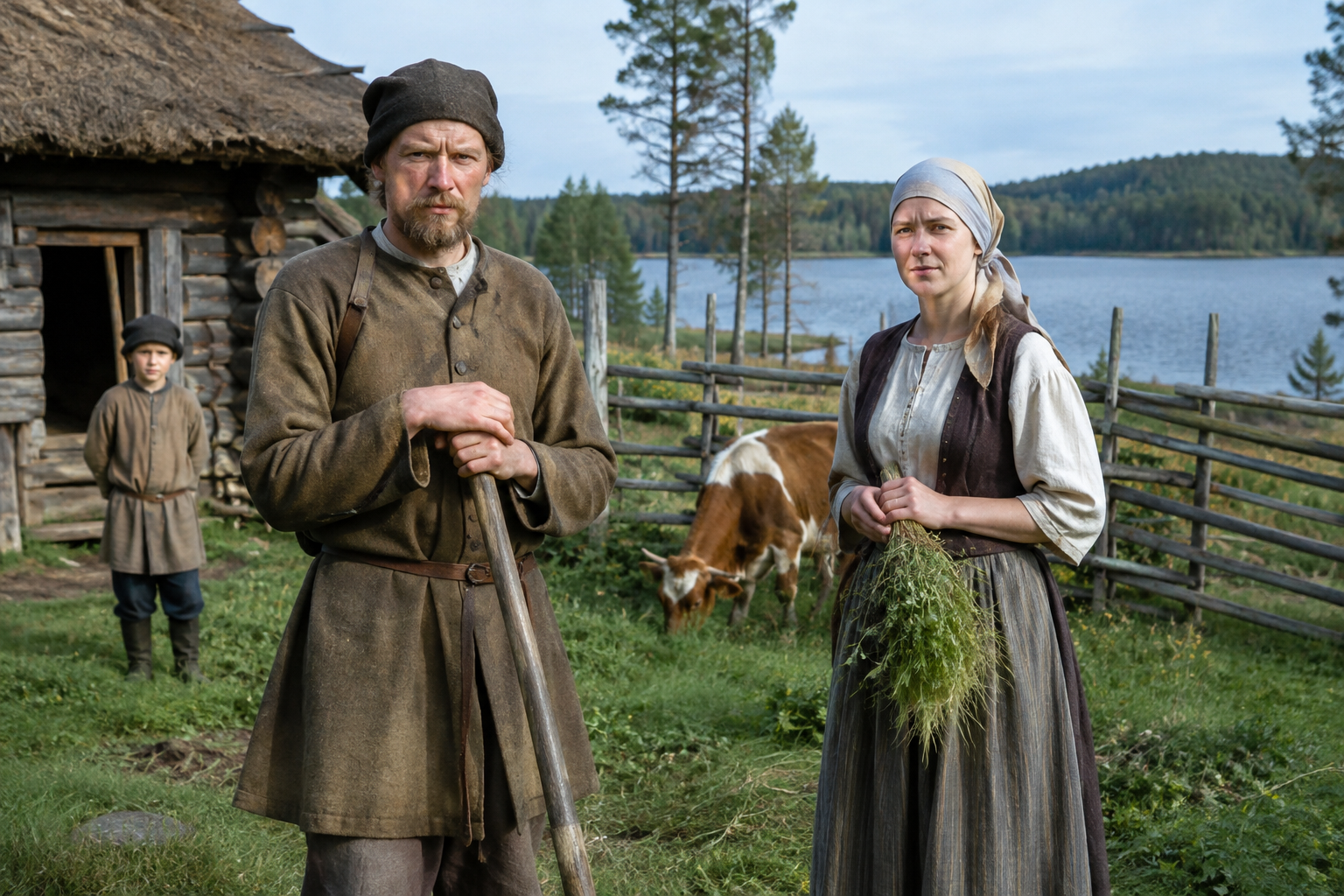
Paelkaene lies in historic Tavastia, a region central to many discussions of Finnish population history. Tavastia was not a remote blank on the map in the eighteenth century. It was part of a long-settled inland zone shaped by medieval parish organization, Swedish state expansion, Lutheran church life, warfare on the eastern frontier, and older Finnic traditions that long predated modern national borders.
So when we meet PKN012, we are not looking at an abstract genetic code detached from history. We are looking at a man buried in a region where local continuity and outside connections had been layered together for centuries. That is exactly the sort of setting where a narrow Y-lineage can survive through time without needing any melodramatic tale of conquest or sudden replacement.
A broader ancient DNA study framework for Finland and nearby regions has made precisely this point again and again: population history in the north is rarely simple. Lineages may persist locally, but they do so within communities formed by repeated contacts across the Baltic, with Scandinavia, the eastern forest zone, and the wider northeastern European world. A relevant research project associated with these materials can be found here: https://www.ebi.ac.uk/ena/browser/view/PRJEB88970.
R1a is one of the major Y-chromosome haplogroups of Eurasia, and it has a long and complicated history. But the article haplogroup here is not simply "R1a." It is the much narrower branch R1a1a1b1a2a2a1a2, and that distinction matters. Broad claims about the entire R1a family - whether about Bronze Age steppe expansions, Slavic dispersals, or medieval northern Europe - cannot automatically be pinned onto this exact subclade without direct evidence.
Still, the Finnish context is suggestive in a careful way. In northern and northeastern Europe, R1a branches have often been associated with long-term male-line continuity in populations shaped by both local settlement and regional mobility. In Finland especially, paternal lineages help reveal how different provinces could preserve distinct demographic signatures even while sharing language, religion, and political institutions.
That is why a late date like AD 1750 is still historically useful. Ancient DNA does not only matter when it comes from the Bronze Age or a princely tomb. An eighteenth-century burial can show that a paternal branch remained established in a particular landscape after the Reformation, after medieval state formation, and after centuries of interaction across the Baltic world.
People sometimes assume that the closer we get to modernity, the less interesting the archaeology becomes. In fact, post-medieval cemeteries can be wonderfully informative. They sit at the point where documentary states, church institutions, local parish life, and biological ancestry all intersect. Finland is especially valuable here because written records grow richer in the early modern period, while genetics can still reveal patterns that documents alone never could.
For Tavastia, this matters because inland Finland was neither isolated nor simply Scandinavian in any crude sense. It was a Finnic-speaking region tied into the Swedish kingdom, affected by wars with Russia, internal colonization, taxation, military service, and ecclesiastical administration. A direct paternal lineage found there may represent long local residence, movement from another Finnish province, or a more distant northern or eastern connection - but those possibilities have to be argued from evidence, not assumed from the haplogroup name alone.
That is one reason Finland has become increasingly important in archaeogenetics. Work on medieval and early modern burials has helped historians ask sharper questions about continuity, migration, and social mixture without collapsing them into tidy ethnic labels.
Medieval Finland Archaeogenetics
The older history behind PKN012 is not a single migration story but a regional one. Tavastia sat between coastal Baltic routes and the inland lake systems that linked communities across southern and central Finland. Over many centuries, that meant contact with western Scandinavian power, eastern trade and warfare, and internal settlement shifts inside Finland itself.
In such regions, paternal lineages can preserve surprisingly old structure. That does not mean a man in eighteenth-century Paelkaene was a relic from some untouched past. Quite the opposite: he belonged to a living society already shaped by centuries of political integration and demographic change. The fascination of R1a1a1b1a2a2a1a2 here is that it survives not in isolation, but within that layered historical world.
There is a useful parallel in broader discussions of northern Eurasian population history. Genetic studies repeatedly show that forest-zone populations cannot be understood simply by borrowing models from central Europe or the steppe. Finland often preserves signals of older regional structure while also recording movement and mixture over long periods.
Readers interested in that bigger background may enjoy this related discussion of Finnic populations and their paternal history:
With only one named ancient individual here, restraint is part of good history. We can say that PKN012 from post-medieval Paelkaene in Tavastia is associated with R1a1a1b1a2a2a1a2. We can place that finding in the real historical landscape of inland Finland around AD 1750. We can also say that this belongs to a wider paternal family with a substantial presence across parts of northern and eastern Europe.
What we cannot do is spin that into a guaranteed tribal label, a medieval dynasty, or a single migration episode. Finland's past was made through accumulation: settlement, parish life, frontier pressures, marriage networks, and the steady inheritance of some male lines while others disappeared. A Y-chromosome branch is powerful evidence, but it is one thread in that fabric, not the whole cloth.
That carefulness is precisely what makes the find interesting. The value of PKN012 is that he gives this subclade a documented human foothold in Tavastia, in a period close enough to history to feel familiar, yet far enough back to illuminate the deeper persistence of paternal lines in Finland.
For anyone exploring the haplogroup R1a1a1b1a2a2a1a2, the clearest lesson from the evidence here is one of regional endurance. This branch is attested in an identifiable man from eighteenth-century Tavastia, showing that a very specific paternal line was present in inland Finland within a historically documented society. That does not hand you a saga hero or a noble pedigree. What it does offer is something better: a real archaeological anchor, tying one narrow Y-lineage to the lived history of Finland's post-medieval countryside.


Comments