Haplogroup O2b1a

– 5 min read



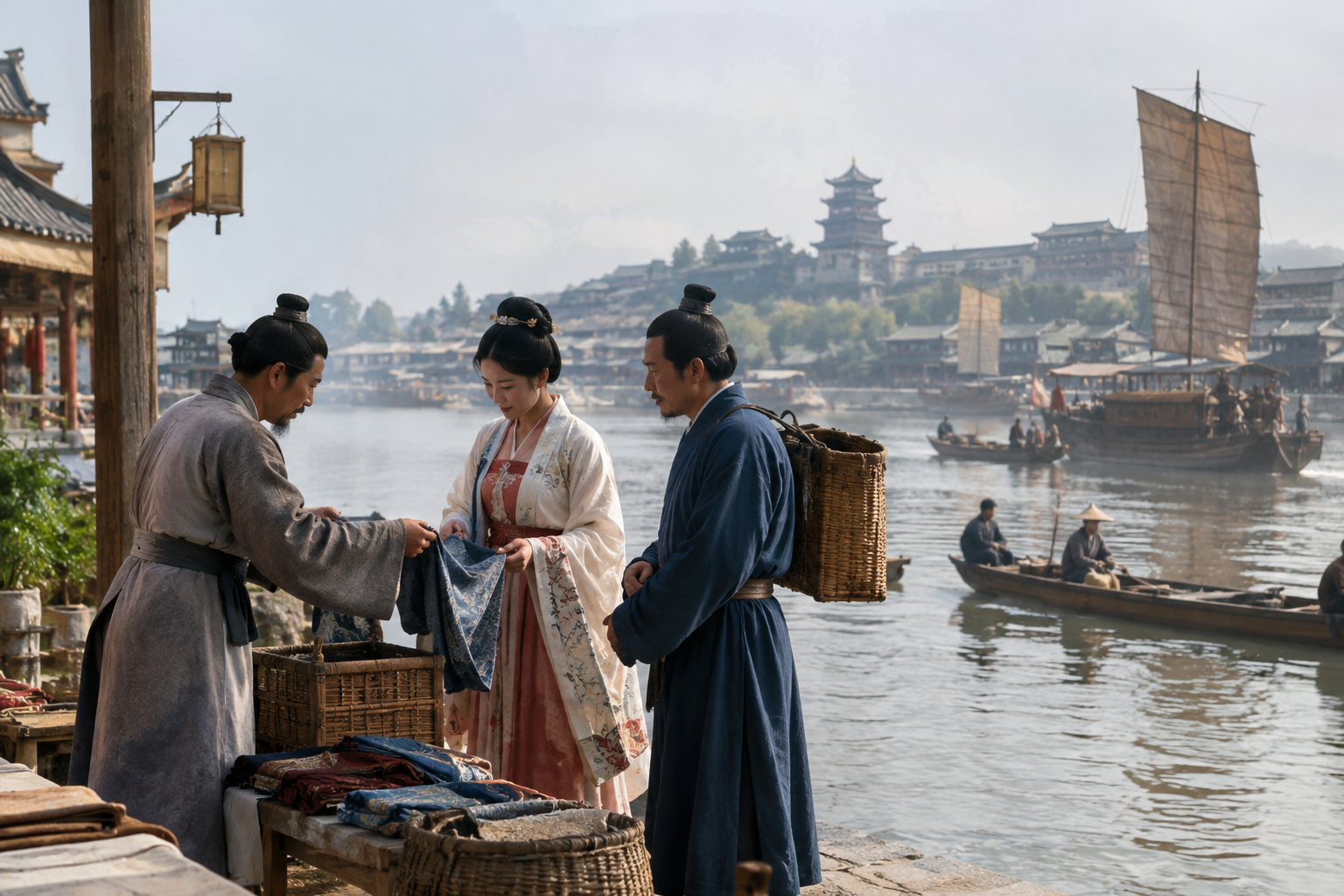
One of the clearest ancient signposts for Y-DNA haplogroup O2b1a in this set of evidence comes from the Yangtze River region of China, in an individual identified as 21SMM157SE_2, dated broadly between the Song and Qing periods and placed here around AD 960. That is an interesting moment to catch a paternal line. The 10th century sits at the threshold of the Song dynasty, when the lower and middle Yangtze were becoming even more central to Chinese economic life, urban growth, and long-distance movement.
What makes this sample useful is not that it tells us everything about O2b1a. It plainly does not. But it gives us something more valuable than a grand theory: a real man from a documented medieval Chinese setting whose direct paternal line is reported as part of this branch. Y-DNA follows one line only, from father to son, so it is never the whole story of ancestry. Yet it can be an excellent marker for tracing how particular male lineages persisted through major historical changes.
The Yangtze basin was not some quiet background to Chinese history in the Song period. It was one of the great engines of the medieval world: agriculturally rich, heavily settled, and threaded together by waterways, markets, and administrative networks. A lineage appearing here in a sample like 21SMM157SE_2 belongs in that larger story of continuity and movement inside one of Eurasia's most densely populated historical landscapes.
For haplogroup O2b1a, this matters because the branch is usually discussed in broad East Asian terms, and sometimes too broadly. The safe point is narrower. This sample shows that a paternal line associated with O2b1a was present in medieval China along the Yangtze during a period of dynastic transition and later imperial continuity. That is a concrete archaeological-historical setting, not a vague map label.
Research on Song dynasty and later remains has begun to show just how much ancient DNA can recover even from challenging burials, including kinship, ancestry patterns, and disease evidence in degraded skeletons. For readers wanting wider context on this Chinese medieval material, this related article is especially relevant.
O2b1a is a sub-branch within the wider O haplogroup complex, one of the major Y-chromosome lineages of East and Southeast Asia. That wider family has a deep and complicated history, but it would be careless to pour all of that history directly into this more specific branch. A man assigned to O2b1a is not automatically evidence for every migration ever proposed for haplogroup O, still less for a single ethnicity, language, or political identity.
That distinction is especially important in Chinese history. Dynasties changed, frontiers shifted, and populations mixed, but paternal lineages could persist across all of that. So the significance of 21SMM157SE_2 is not that he represents an entire region or state. It is that he anchors O2b1a in a lived historical context: a medieval society where local continuity and population mobility existed side by side.
An ancient DNA study examining these Yangtze-period burials is linked through research published in Cell Reports. Without overstating details that are not given here, the broader value of that work lies in showing how genetic data can illuminate family structure, ancestry, and health in later imperial Chinese populations.
The date attached to 21SMM157SE_2 is useful precisely because it sits inside a long arc, from Song through later dynasties down toward Qing. The Yangtze region did not stand still over those centuries. It saw commercial expansion, internal migration, war, demographic recovery, state reform, and the rising importance of southern China in the imperial economy.
That means an O2b1a lineage in this zone could have been part of a deeply rooted local population, part of regional male-line movement within China, or part of a pattern that only becomes visible when more burials are sampled. At present, the evidence here supports presence, not a single dramatic origin story. And that is often how archaeology works best: one secure point first, wider patterns later.
There is a temptation with haplogroup articles to leap instantly from a branch name to a migration map. Better, surely, to begin with the actual historical ground beneath our feet. In this case that ground is the riverine heartland of medieval and early modern China, where administrations rose and fell but families carried their paternal lines onward.
The importance of a sample like 21SMM157SE_2 also lies in timing within the discipline itself. East Asian archaeogenetics is now moving well beyond a few headline prehistoric genomes. We are starting to see finer-grained paternal histories, including how ancient Y-chromosome branches appeared in different regions and how coastal and inland histories may not have been identical.
That is why even a single medieval result deserves attention. It helps bridge the gap between deep prehistory and documented history. Instead of speaking only about Neolithic farmers or Bronze Age populations, we can begin to ask how particular male lines were still present in periods full of texts, taxation, lineage organization, and local memory.
For China in particular, that is a powerful development. Historical sources can tell us a great deal about states and elites, but ancient DNA brings us physically closer to ordinary buried individuals. It can show that the men living through major historical transformations were not abstractions in a chronicle. They belonged to lineages with real depth in time.
The Yangtze should not be imagined as a dividing line so much as a corridor. Goods, people, officials, soldiers, marriage partners, and ideas moved along it for centuries. A paternal lineage found there might reflect local ancestry in place, but it might equally reflect the long habit of Chinese history in which regions are connected through rivers, canals, migration, and state expansion.
This is where O2b1a becomes historically interesting. Not because it can be pinned to one simple identity, but because it appears in a region famous for absorbing and redistributing people. If more O2b1a-associated men are identified in medieval or earlier Chinese contexts, the branch may help clarify whether certain paternal lines were especially concentrated in southern and eastern zones, or whether they were more widely distributed across imperial populations than older assumptions suggest.
Another useful comparison comes from work on kinship and social structure in historical East Asia. Genetic data from later Chinese burials can sometimes reveal how family organization worked in practice, rather than only in legal or literary ideals.
If your paternal line falls under O2b1a, this medieval Yangtze sample does not certify descent from one named historical family, nor does it confine your ancestry to one modern nation. What it does offer is a sober and rather valuable point of contact: a documented male line related to this branch was present in the Yangtze world around the beginning of the second millennium AD, inside one of the most important population centers of Chinese history.
That is the real attraction of evidence like 21SMM157SE_2. It turns an abstract haplogroup label into a human historical setting: river towns, imperial administration, family continuity, and the long demographic weight of southern China. As more East Asian ancient DNA is published, O2b1a will almost certainly acquire a fuller map. For now, this medieval Chinese anchor is already enough to make the lineage feel less like a code and more like history.
Comments