Haplogroup I1a2a1a1a2b1

– 5 min read


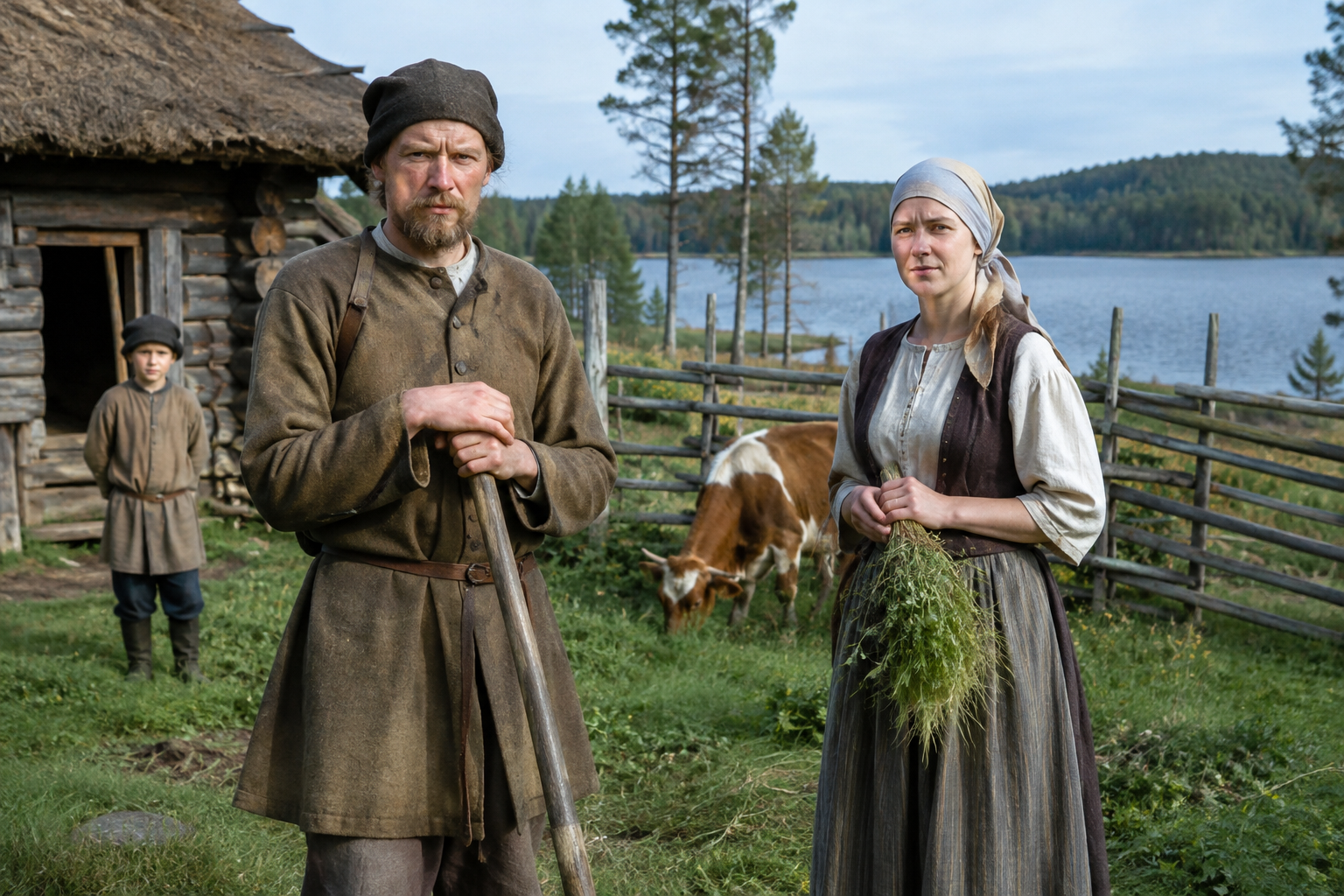
In Tavastia, in southern inland Finland, one man buried in the post-medieval period has become an unexpectedly useful signpost for a very specific paternal line. The individual labeled PKN013, dated to around AD 1750 at Paelkaene, is associated here with the Y-DNA haplogroup I1a2a1a1a2b1. That may sound forbiddingly technical, but the historical interest is quite straightforward: it places a very narrow branch of a well-known northern European paternal lineage in an identifiable Finnish setting, late enough to touch the documented world, yet old enough to illuminate how older Scandinavian-linked male lines persisted in the eastern Baltic.
This is also a useful reminder of what Y-DNA can and cannot do. It follows one direct paternal line only - father to son across many generations - so it does not describe the whole ancestry of PKN013 or of anyone living today. But because paternal lines can sometimes remain locally stable for long periods, even a single well-placed sample can help us think more clearly about continuity, language contact, settlement history, and the long entanglement between Finland and the wider Scandinavian world.
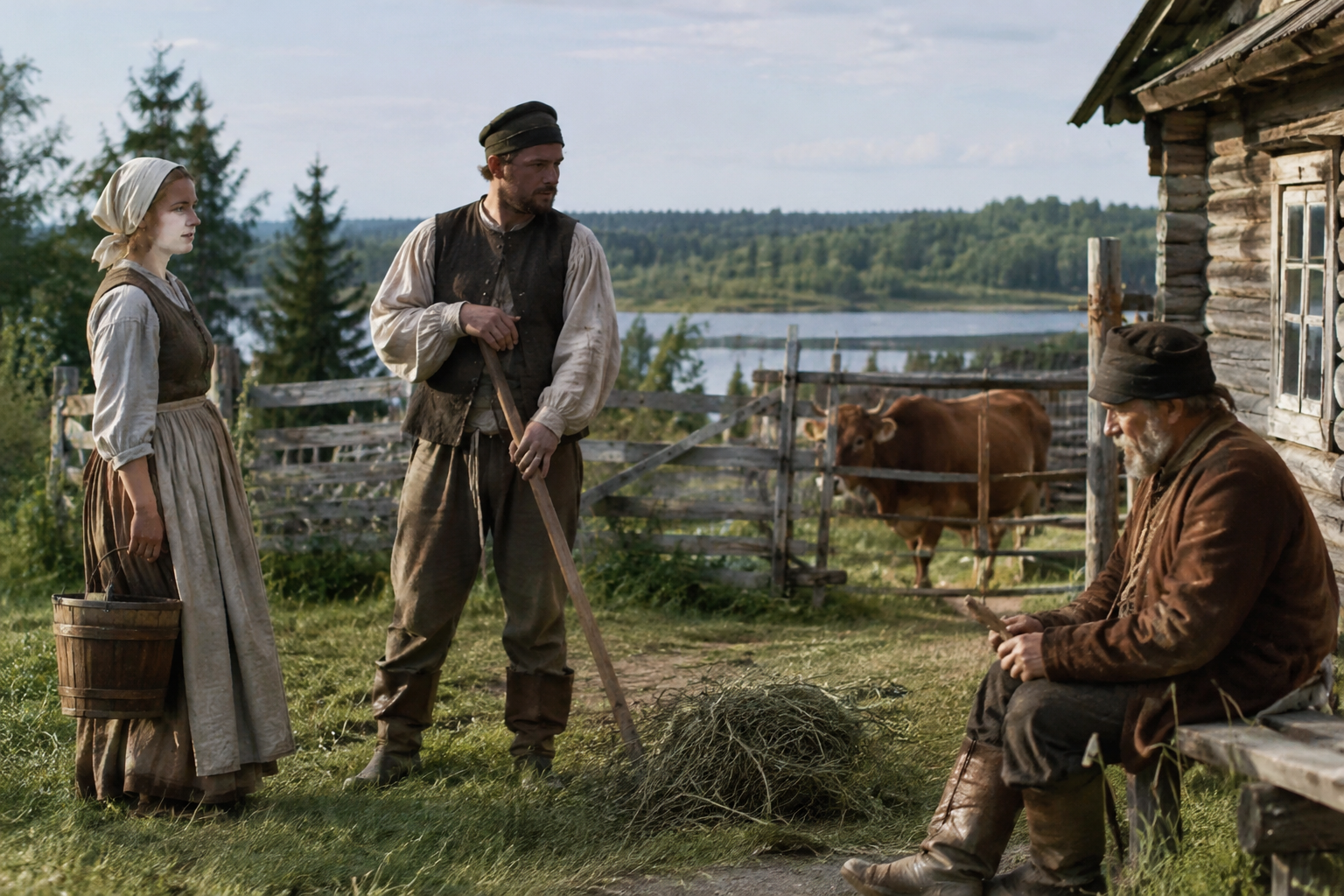
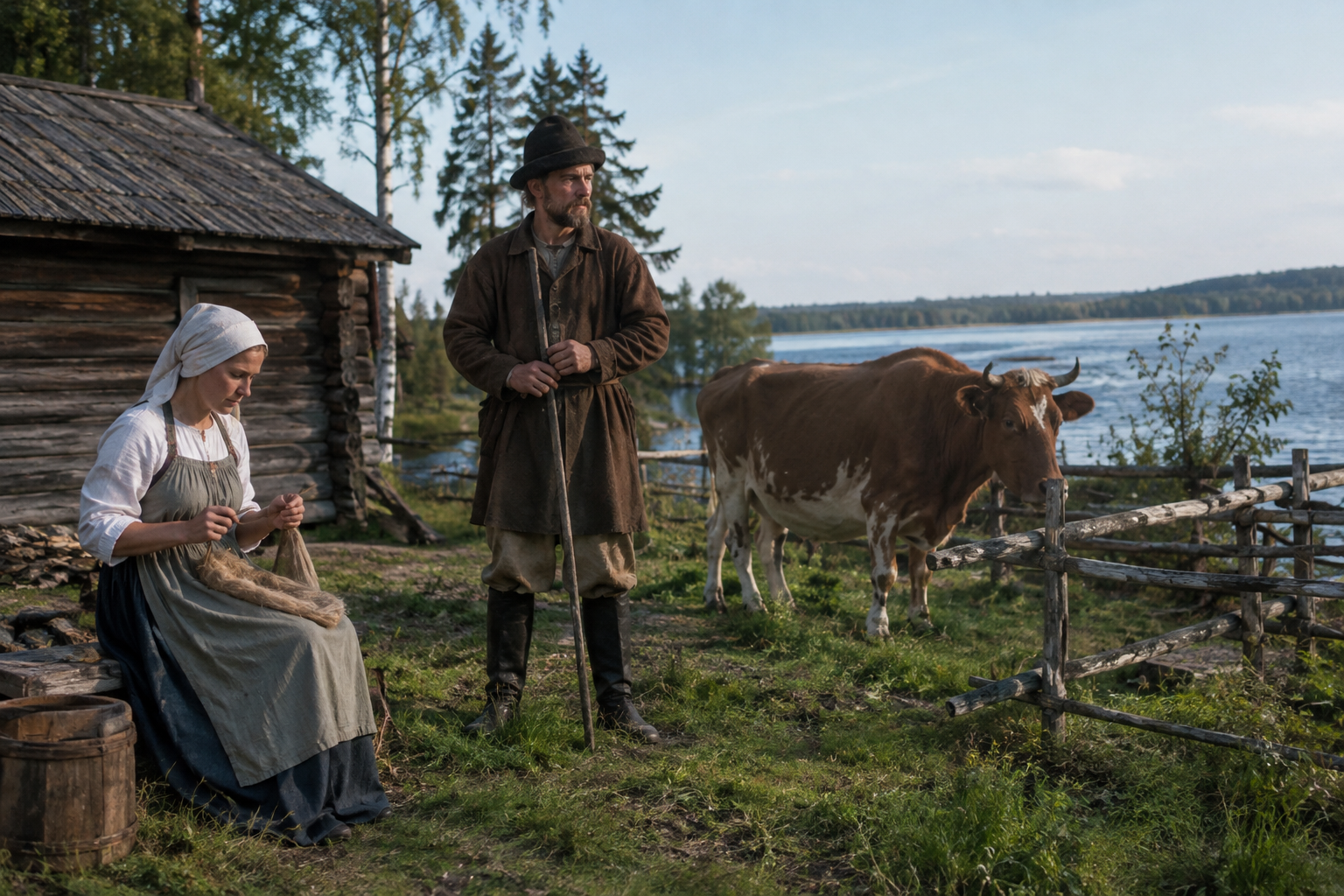
Paelkaene lies in historic Tavastia, a region central to the making of inland Finland. This was not a fringe wasteland waiting to be discovered by history, but a landscape of farms, parish life, shifting crowns, military burdens, and older local identities. By the mid-18th century, when PKN013 lived, Tavastia had already passed through centuries of interaction with Swedish rule, Lutheran church structures, and the aftermath of wars that repeatedly rearranged life across Finland.
That is what makes the sample interesting. A post-medieval man from Tavastia is not a Viking-age chieftain or an Iron Age mystery burial. He is, in a way, more revealing than that: he stands in a period when written administration existed, local populations were established, and paternal lineages had already passed through many centuries of demographic filtering. If a branch such as I1a2a1a1a2b1 appears here, the question is not whether Finland had contact with Scandinavia - that is obvious - but how deeply such male lines had become rooted in Finnish regional history.
The wider haplogroup behind this label is I1, one of the paternal lineages most strongly associated with northern Europe, especially Scandinavia and regions shaped by Scandinavian and Germanic expansions. But the article haplogroup is not simply I1 in general. It is the much narrower branch I1a2a1a1a2b1, and that distinction matters. A broad lineage can be thousands of years old and geographically wide; a terminal or near-terminal branch represents a much more specific slice of that history.
So one should resist the temptation to read the whole grand story of I1 directly into this one Finnish sample. PKN013 does not prove that his immediate male ancestors arrived in one particular migration, nor that they spoke one language rather than another at every stage. What it does suggest is that a fine-grained offshoot of a northern paternal network was present in Tavastia by the 18th century, embedded in a region where Finnic-speaking communities, Swedish state power, and Baltic exchange had long intersected.
That broader northern setting fits well with research themes explored in MyTrueAncestry's discussion of Germanic language spread through ancient genomics, where language history and paternal ancestry are treated as related but never identical phenomena. That distinction is especially important in Finland, where linguistic frontiers and political frontiers have overlapped only imperfectly.
It is easy, especially from the outside, to imagine inland Finland as somehow sealed off from the drama of the Baltic. Archaeology says otherwise. The Finnish interior was connected through waterways, trade, ecclesiastical organization, seasonal movement, and military service. Tavastia in particular sits within a long history of interaction between inland communities and coastal powers.
In that setting, an I1-derived paternal lineage in Tavastia is not surprising in itself; what matters is its continued survival into the post-medieval era. Finland's male-line history includes lineages linked to older Finnic populations, lineages with strong Scandinavian associations, and others reflecting later movement under Swedish and Russian rule. A branch like I1a2a1a1a2b1 belongs to that mixed historical field, where continuity and contact go hand in hand.
An ancient DNA study connected with these Finnish remains is catalogued through this research dataset, which anchors the sample in a genuine scientific context even when the public-facing details for the individual remain brief. That matters because careful interpretation depends on real laboratory work, not on surname guesswork or romantic regional myths.
Medieval Finland Archaeogenetics
To understand why PKN013 matters, it helps to think in layers. Finland's early medieval and medieval populations were not static. Ancient DNA has increasingly shown that the eastern Baltic was shaped by repeated contacts across the Gulf of Finland, links into Scandinavia, and internal regional differentiation. Western, southern, and inland Finnish populations did not all share identical demographic histories.
By the time we reach around AD 1750, we are looking at the outcome of those earlier processes after centuries of parish formation, taxation, war, famine recovery, and family continuity. A post-medieval burial is therefore a kind of endpoint as well as a data point. It lets us ask which paternal lines remained part of the local population after all those centuries of upheaval.
That is one reason post-medieval ancient DNA is so valuable. It narrows the gap between archaeology and genealogy. Not because it turns one excavated man into a family tree for modern testers, but because it shows that some lineages visible in modern northern Europe were already firmly established in historically recognizable communities.
One should also be careful with historical shorthand. Because I1 is common in Scandinavia, people sometimes leap from a result like this to the word "Viking," as if that solved everything. But Tavastia in AD 1750 was not a Viking-age context, and a paternal lineage associated with Scandinavia does not automatically mark a recent Scandinavian migrant. The line may have been in Finland for many centuries by then.
Nor should haplogroup be confused with ethnicity. A man carrying I1a2a1a1a2b1 in Tavastia could belong to a Finnish-speaking community, live under Swedish imperial institutions, and descend from paternal ancestors whose deeper roots lay somewhere in a northern Baltic population history that predates modern national identities. That complexity is not a nuisance; it is the real history.
Readers interested in how such northern populations changed over time may also want to look at the broader island and Scandinavian context in this post on post-Viking early Christian DNA in Scandinavia. It is a useful comparison because it shows how Christian-period communities preserve older biological patterns while living in very different social worlds from the pagan centuries that came before.
Post-Viking Christian Scandinavia
There is only one ancient individual listed here, and that means restraint is necessary. We are not looking at a cemetery-wide paternal study, a reconstructed dynasty, or a chain of proven father-son burials. Yet single samples can still be historically useful when they are securely placed in time and region. PKN013 gives this branch of Y-DNA a real human foothold in Tavastia rather than leaving it as a purely modern testing result.
That foothold matters especially for descendants and testers whose paternal lines point toward Finland or the wider eastern Baltic. The value is not that PKN013 is everyone's ancestor, still less that he represents all Tavastians. It is that he demonstrates the presence of this narrow paternal branch in a documented Finnish region during the post-medieval period, precisely where long-term continuity and cross-Baltic contact meet.
For this haplogroup, the clearest supported insight is modest but important: I1a2a1a1a2b1 is not just an abstract branch on a phylogenetic tree, but a paternal line present in a real man from Paelkaene, Tavastia, around AD 1750. In historical terms, that places the branch within the settled, parish-based world of post-medieval Finland, a world shaped by much older Scandinavian and Baltic connections but not reducible to any single migration story.
For someone researching this paternal line today, that makes Tavastia a meaningful historical reference point - not a guaranteed homeland for every bearer, but a genuine place where this branch appears in the ancient DNA record. It is a small piece of evidence, certainly, yet exactly the sort of piece from which responsible family history is built.


Comments