Haplogroup G2a2b2a1a1c1a2

– 4 min read


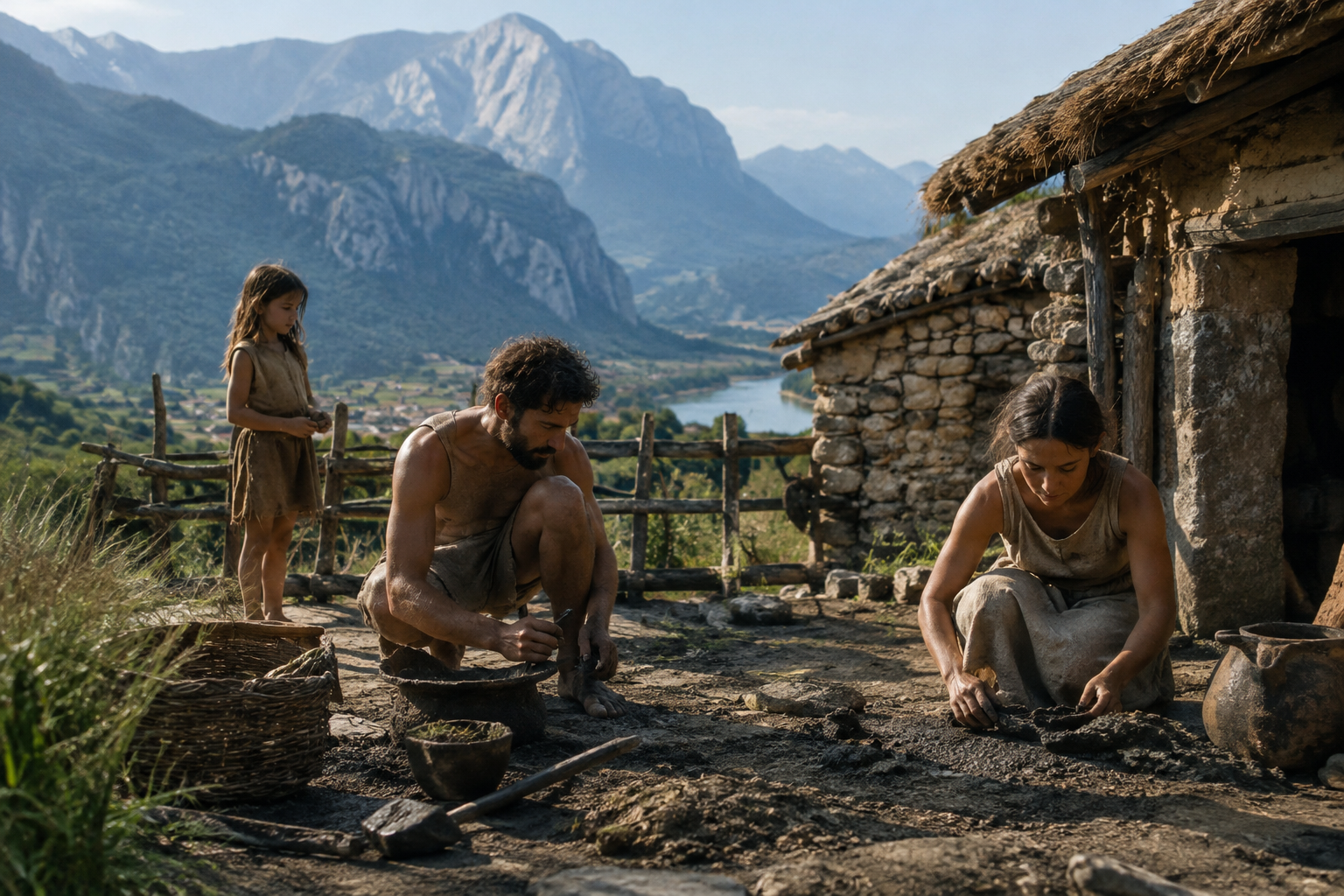
At Mezzocorona Borgonuovo in the Adige valley of northern Italy, one ancient male sample stands out for anyone interested in the deep history of paternal lines: MEZ02, dated to around 2200 BC. That places him in the Copper Age to very early Bronze Age world of the Alpine foothills, a landscape of movement, exchange, and changing communities rather than some sealed mountain backwater. His reported connection to the Y-DNA branch G2a2b2a1a1c1a2 gives us a small but telling glimpse into one of the older paternal lineages still visible in European prehistory.
The important thing to say at once is that Y-DNA tracks only one line of descent: father to son to son. It does not describe a person's whole ancestry, language, or identity. But in the case of a branch like G2a2b2a1a1c1a2, even a single securely placed ancient individual matters, because haplogroup G is one of the lineages strongly associated with the long prehistoric spread of farming populations into Europe, and Alpine Italy is one of the places where those older layers of ancestry remained visible for a very long time.
Mezzocorona Borgonuovo lies in Trentino, in a region that has always been more than a picturesque mountain setting. The Adige valley is a natural corridor between the Po plain and the passes leading north into the Alps. By around 2200 BC, communities here were living through a period of real transition: older Copper Age traditions were meeting new technologies, new networks, and in many parts of Europe, new people as well.
That is what makes MEZ02 so useful. He is not simply "an ancient Italian." He belongs to a very specific place at a very specific moment, when northern Italy sat between Mediterranean and transalpine worlds. If his Y-line is indeed placed within G2a2b2a1a1c1a2, it suggests the persistence of an older paternal strand in this Alpine zone even as wider European population history was shifting.
An ancient DNA study of Alpine populations, including sites close to the world of Mezzocorona, has helped illuminate just how complicated that long-term history was, with continuity in some lines and change in others rather than a single clean replacement event. For readers who want the broader archaeological-genetic setting, see the research published here: https://www.nature.com/articles/s41467-025-61601-8.
The wider haplogroup behind this article's branch, G, has a distinguished prehistoric record in Europe. It appears again and again among early farming groups descending from populations ultimately connected to Anatolia and the first spread of agriculture westward. In other words, this is not one of the paternal lines that first became prominent with later steppe-associated expansions; it belongs to an older chapter.
That does not mean every man in haplogroup G shared the same history, nor that the narrow branch G2a2b2a1a1c1a2 can simply be given the whole story of early farmers as if nothing changed for millennia. Subclades split, moved, survived locally, or disappeared. What the Mezzocorona evidence hints at is that one such descendant branch of that older Neolithic-Copper Age world was still present in northern Italy at the end of the third millennium BC.
In public discussions of ancient DNA, people often imagine sharp breaks: farmers, then steppe migrants, then historic peoples. The reality in Alpine regions is usually messier and more interesting. Valleys, uplands, and transport routes could preserve older paternal lines even while the overall ancestry profile of surrounding populations changed through admixture and mobility.
Northern Italy in the later third millennium BC was plugged into a wider European conversation in metal, livestock, and movement. The Alps were barriers, certainly, but they were also connectors. A lineage found in Trentino need not represent an isolated remnant cut off from history; it may instead belong to communities participating in exchange systems that linked the Italian peninsula to central Europe.
This matters because a haplogroup such as G2a2b2a1a1c1a2 can seem, at first glance, almost too narrow to say anything historical. Yet archaeology gives it context. A man buried in the Adige valley around 2200 BC lived in a zone where old farming-derived populations and newer demographic currents met. His paternal line therefore becomes evidence not of a frozen relic population, but of survival within a changing human landscape.
Italy is especially important for understanding lineages like this because the peninsula repeatedly preserves older genetic structure beneath later historical identities. Etruscans, Romans, Lombards, medieval communes, and early modern states all belong to the written history of Italy, but the genetic foundations go much deeper. In some regions, paternal lines with roots in Europe's first farming expansions persisted alongside later arrivals for thousands of years.
That broader pattern makes a Copper Age Alpine sample more than a local curiosity. MEZ02 helps anchor one branch of that older male heritage in a real archaeological setting. It is the difference between speaking vaguely about "early European farmers" and pointing to an actual man in a valley community of northern Italy.
Several MyTrueAncestry articles on ancient Italy explore the same larger theme from later periods: how continuity and change coexist. Roman and post-Roman cemeteries often show that local ancestry persisted even while mobility increased and new identities formed.
With only one named ancient sample here, caution is essential. We should not pretend that G2a2b2a1a1c1a2 was common across all of Alpine Italy, or that MEZ02 founded a later historic dynasty, tribe, or language community. Nor should we leap from one Copper Age burial to claims about specific modern surnames. Ancient Y-DNA works best when it gives us anchored points, not fantasy pedigrees.
Still, anchored points are powerful. This branch is tied, at least in the available evidence here, to a man living in northern Italy at a moment when Europe's demographic map was being redrawn. That alone is historically suggestive. If your paternal line falls within G2a2b2a1a1c1a2, the safest interpretation is not glamorous but meaningful: one part of your direct male ancestry may connect to the long-lived descendants of Europe's early farming world, still present in Alpine Italy well into the late Copper Age.
What makes G2a2b2a1a1c1a2 memorable is not the number of famous names attached to it, but the clarity of its archaeological foothold. Through MEZ02 at Mezzocorona Borgonuovo, the branch appears in a real community in Copper Age Alpine Italy, at a crossroads between persistence and change. For anyone tracing this haplogroup today, that is the useful historical insight: your Y-line may preserve a paternal thread reaching back to some of the older agricultural populations of Europe, still living, adapting, and enduring in the Alpine valleys over four thousand years ago.


Comments