Haplogroup G2a2b2a1a1b1a1c2a3

– 5 min read


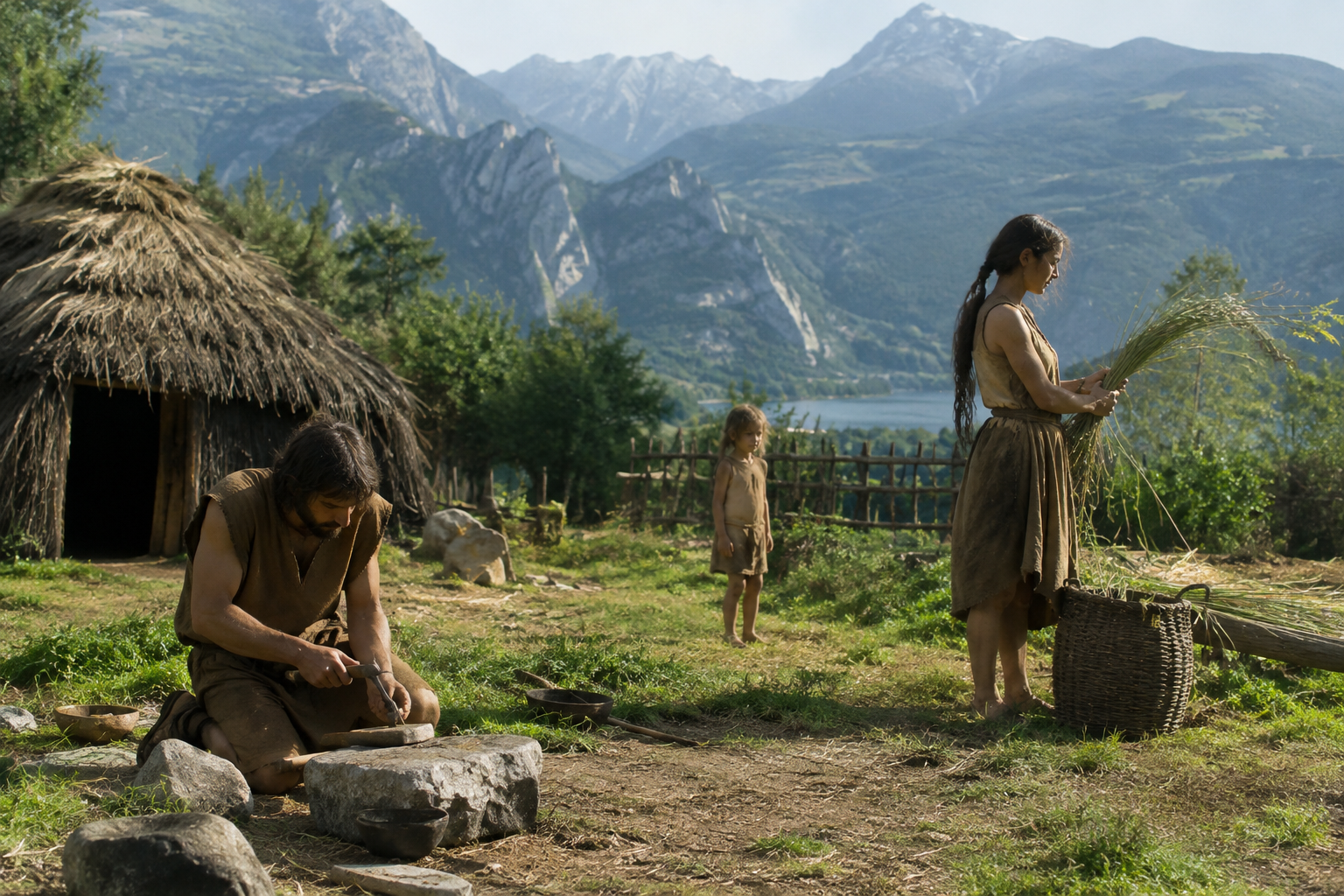
At Romagnano near Trento, in the Adige valley of alpine northern Italy, one Early Bronze Age male identified as ROM305 has become a small but intriguing witness to a much larger story. Dated to around 1688 BC, he is associated here with the Y-DNA haplogroup G2a2b2a1a1b1a1c2a3, a very narrow paternal branch whose presence in this setting is interesting precisely because it turns up in a period when Alpine communities were already living through deep changes in mobility, ancestry, and social connections.
That does not mean one man from Trento can stand for all Bronze Age Italy. Y-DNA follows only a direct paternal line, not a whole ancestry profile or an ethnic label. But when a lineage this specific appears in a securely dated Alpine context, it gives us something solid to work with: a paternal line surviving in a mountain corridor that had long linked the Po plain, the eastern Alps, and the wider European world.
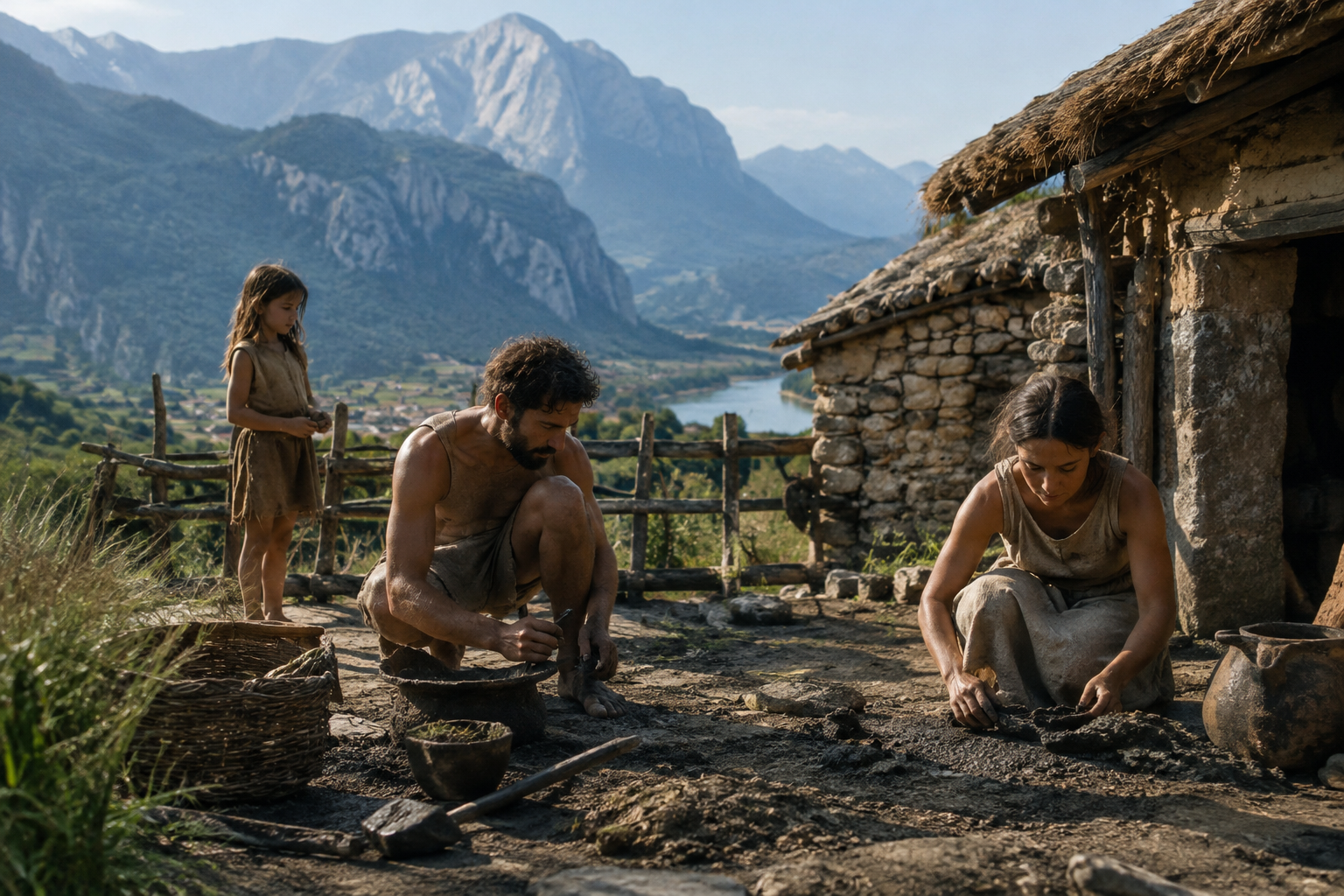
Romagnano is not just a dot on the map. The Trento basin sits in one of the great north-south passage zones of Europe, where rivers and valleys channel movement through otherwise difficult terrain. By the Early Bronze Age, these Alpine routes mattered enormously for exchange, pastoral mobility, and the spread of new cultural habits, even if any one burial tells us only part of that story.
That is why ROM305 matters. His reported link to G2a2b2a1a1b1a1c2a3 places this paternal line in a region better known in genetic history for mixture than for purity of descent. Alpine populations were not sealed mountain isolates. They were connected communities, and their cemeteries often preserve the biological traces of those connections long after language and political labels have vanished.
An ancient DNA study focused on populations from the Alps and nearby regions has helped illuminate that broader setting, showing how much continuity and change could coexist in mountain landscapes over long stretches of prehistory. In that sense, the Trento find belongs in a larger Alpine conversation rather than an isolated genealogical curiosity: research on ancient Alpine genomes.
The wider haplogroup G has a long and important place in European prehistory, especially in discussions of early farming. But that broad background must be handled carefully. It would be wrong to assume that every narrow descendant branch of G had the same history, distribution, or role thousands of years later.
For this article, the real point is more modest and more useful. G2a2b2a1a1b1a1c2a3 appears here in Early Bronze Age Alpine Italy, showing that highly specific paternal branches within the old G family were still present in northern Italy well after the first Neolithic expansions. In other words, some paternal lines with deeper prehistoric roots persisted into a world already transformed by Bronze Age population shifts.
That persistence is exactly the sort of thing ancient DNA is good at revealing. Archaeology has long shown continuity in settlement zones, route systems, and local lifeways even when material culture changes. Genetics can sometimes show a parallel pattern: not unbroken sameness, but survival of particular lines through repeated episodes of mixture and reorganization.
The temptation with any Bronze Age lineage is to force it into a tidy migration story. Northern Italy does not really cooperate with that kind of neatness. By the early second millennium BC, communities in and around the Alps had already experienced centuries of contact with peoples carrying quite different ancestry profiles, and paternal lineages could survive through that process in patchy, local ways.
So ROM305 should not be imagined as a fossilized remnant of a single ancient people, nor as proof of one dramatic incoming wave. A better reading is that his Y-line belonged to the mosaic of male lines present in Bronze Age northern Italy, where older European farmer-linked branches, newer steppe-associated lines, and local survivals could all coexist. The Alps are good at preserving exactly this kind of complexity.
This matters for family historians because modern Y-DNA testing often encourages a search for one decisive origin point. Ancient evidence usually gives a subtler answer. A branch like G2a2b2a1a1b1a1c2a3 may point not to one tribe or kingdom, but to long survival within connected regional populations.
The Trento area is especially revealing because it sits between worlds that historians too often separate: Mediterranean Italy to the south, transalpine Europe to the north, and the inner Alpine valleys themselves. In prehistory, those were not hard frontiers. They were overlapping zones of traffic, marriage exchange, resource use, and seasonal movement.
That makes a paternal lineage from Romagnano historically valuable even without a lavish tomb or a famous name attached to it. We do not need to invent status symbols to see the importance of the find. A dated male line in this setting helps anchor the biological history of a corridor through which people, goods, and ideas moved for millennia.
It is also worth remembering that Alpine Italy has become increasingly central to ancient DNA because it complicates older textbook stories. Rather than a simple replacement of one population by another, the evidence often suggests local persistence within changing social worlds. ROM305 fits that sort of picture rather well: a man from a Bronze Age valley community whose paternal line hints at depth beneath change.
Readers with this haplogroup may wonder whether it makes them directly "Bronze Age Italian" in any straightforward sense. The safest answer is that it places your paternal ancestry somewhere within a much older web of lineages present in prehistoric Europe, and in this case documented in Alpine Italy by the time of ROM305. That is meaningful, but it is not the same as proving descent from one excavated man or one continuous local family.
Still, ancient Italy is full of cases where local biological histories lasted through remarkable cultural change, from later prehistoric societies into the historic era. If you want a broader sense of how Italian populations changed and endured across time, studies of Roman and post-Roman communities help show just how layered the peninsula became.
Ancient ancestry in Italy after Rome
The distinctive point about G2a2b2a1a1b1a1c2a3 is not imperial grandeur or a neatly branded ethnic identity. It is its appearance in a real Early Bronze Age man from Romagnano, Trento, in a region where continuity and connection mattered as much as migration. For someone researching this paternal line today, that is a useful clue: your branch belongs to a deep and durable layer of European prehistory that remained present in the Alps even in an age of major social change.
That is, in a way, the charm of ancient DNA. Not that it turns every lineage into a legend, but that it restores real people like ROM305 to the historical map and lets a narrow paternal branch be seen where it actually lived: in the valleys, communities, and crossroads of Bronze Age Europe.


Comments