Haplogroup I2a1b

– 5 min read


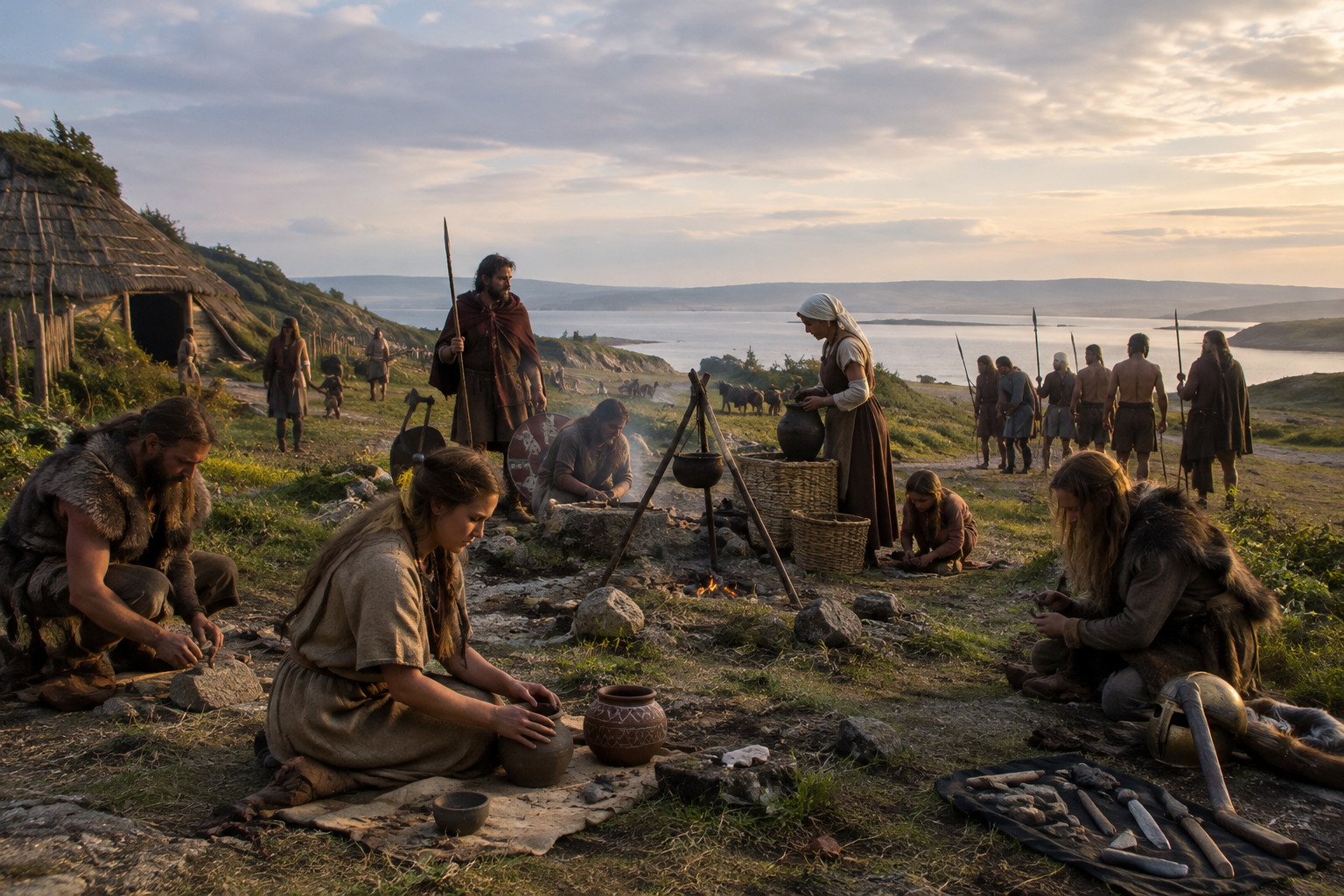
At Links of Noltland on Westray in Orkney, one Bronze Age man dated to around 1400 BC, sample KD064_2, offers a neat way into the story of Y-DNA haplogroup I2a1b. Orkney is often discussed for its stone villages, chambered tombs, and remarkably durable local traditions, but ancient DNA adds another layer: some paternal lines there were not newcomers of a single moment, but part of a much longer northern European history.
That is what makes I2a1b so interesting. Y-DNA tracks one direct paternal line only - father to son to son - so it is never the whole ancestry of any ancient person. But when the same branch appears in Mesolithic and Neolithic Scandinavia, in Neolithic and Bronze Age Britain, and later in parts of continental Europe, it begins to look less like a single dramatic migration and more like a stubborn, recurring male lineage moving through very different archaeological worlds.
The earliest striking evidence here comes from Kanaljorden at Motala in Sweden, where two Neolithic individuals, I0013 and I0017, are dated to about 5710 BC. Motala is one of those sites that archaeologists return to because it forces awkward but productive questions about ritual, landscape, and continuity. Long before metalwork or states, men carrying lineages associated with I2a1b were already present in northern Europe.
These Motala individuals matter because they place the branch in a hunter-gatherer setting rather than a later farming or warrior horizon. In broad terms, haplogroups within I2 are often linked with European forager populations, and the Motala finds sit comfortably in that older pattern without allowing us to flatten every later I2a1b bearer into "a hunter-gatherer survivor." What the evidence shows, more carefully, is that this paternal line was available very early in the north and remained available to later populations who lived very differently.
A wider ancient DNA picture for the Baltic and Scandinavian world has been explored in research on the region's prehistoric populations, helping show how forager ancestry and later cultural change did not always move in lockstep with paternal replacement. That broader context is useful for understanding why an I2a1b line can appear both very early and much later in quite different settings.
From Scandinavia, the trail leads convincingly into Atlantic Britain. Neolithic northern Scotland provides several relevant cases: I2634 from Tulach an t'Sionnaich in Scotland, dated to about 3618 BC; I2932x from Isbister in Orkney, dated to about 2463 BC; and I12312 from Ulva Cave on the Isle of Ulva, dated to about 2870 BC. None of these sites needs embellishment. Their importance lies precisely in the fact that they place this paternal branch in distinct insular settings over more than a millennium.
Orkney is especially revealing because its Neolithic and Bronze Age record is unusually dense and unusually local. The appearance of an I2a1b-associated line both in Neolithic Orkney and later in Bronze Age Westray does not prove uninterrupted descent from one excavated man to another, still less from one tomb community to a whole island population. But it does suggest that paternal lines connected with older northern European ancestry remained part of the human landscape there even as material culture, burial practice, and contacts changed.
Archaeological work on tomb-building and descent in Neolithic northern Scotland has emphasised how monuments were used to structure memory, belonging, and kin relations across generations. That makes these Y-DNA results especially resonant: not because they magically decode tomb society, but because they give one more line of evidence for how long-lived male lines could be embedded in places with very strong ancestral geographies.
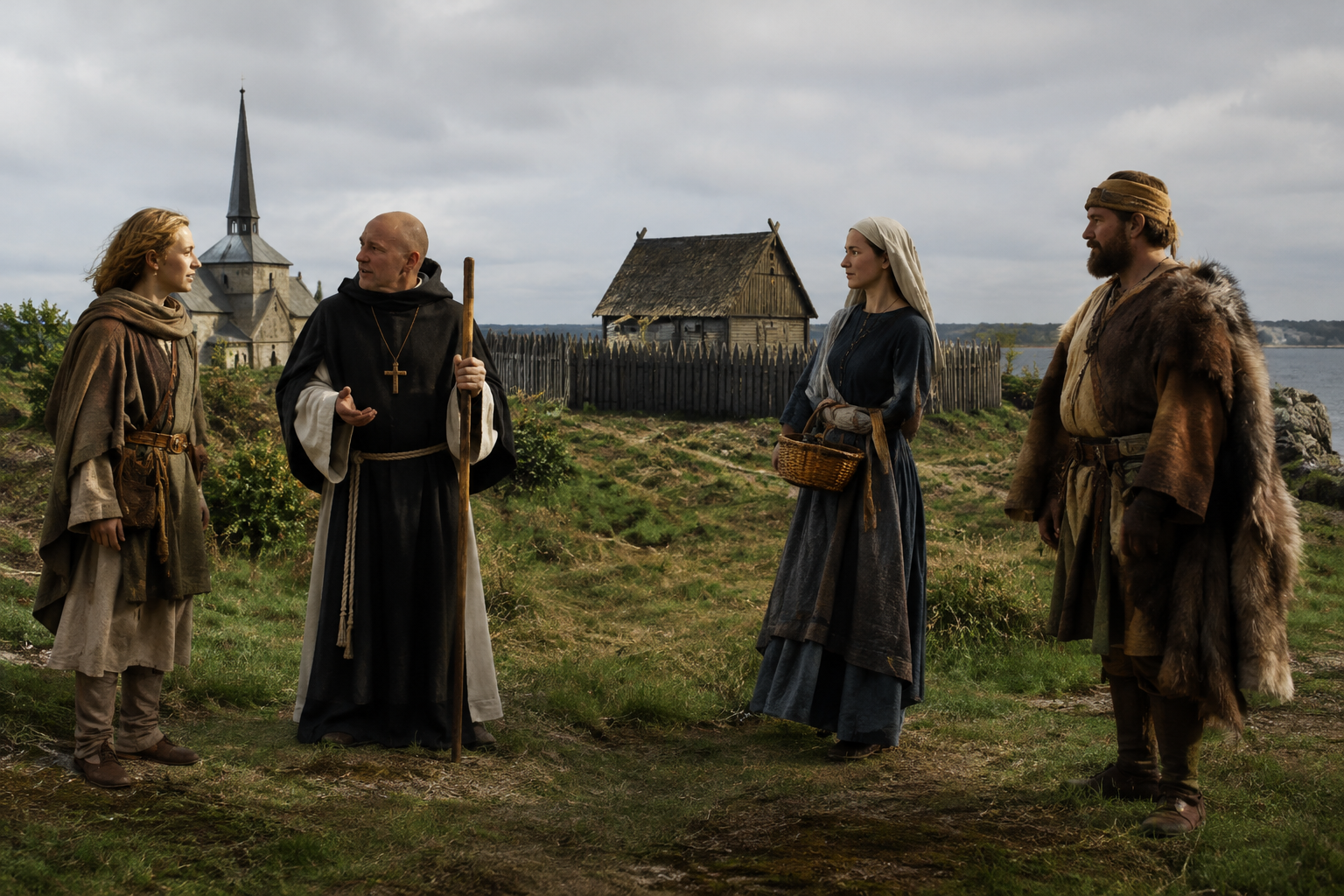
Northern Scotland tomb kinship
I2a1b also turns up in settings that warn against easy ethnic storytelling. Sample Ajvide54, dated to about 2790 BC on Gotland, is listed here as Battle Axe Sweden. Elsewhere in western Europe, the same broad branch appears in early farming contexts such as Lingolsheim in Alsace, with samples SX29 and SX33, dated to roughly 4500-4680 BC. There are also Iberian examples, including por004 from Copper Age Iberia and I10284 from Cova de la Guineu in Spain.
This is where haplogroup articles can go badly wrong if they become too eager. A man in a Battle Axe context is not thereby turned into a spokesman for every Corded Ware migration, and a man in an early farming cemetery is not simply evidence that the haplogroup "belongs" to farmers. The more sober reading is better: I2a1b-associated paternal lines were present among communities adopting different economies, burial customs, and regional identities from the western Mediterranean to the Baltic.
For people researching their own paternal line, that matters. It means I2a1b cannot be reduced to one famous migration event. Its ancient record looks older, wider, and more entangled with local population histories than that.
By the Bronze Age, the branch appears in an even broader set of social landscapes. There is S2 from the Balaton region of Hungary, associated with Kisapostag Encrusted Pottery and dated to around 1980 BC; I2177 from Early Bronze Age Bulgaria, around 3200 BC; I6608 from Camino de las Yeseras in Iberia, around 1890 BC; and WEZ24 from the Tollense Valley battlefield in Mecklenburg-Vorpommern, around 1250 BC.
Tollense is the most arresting of these because it comes from a battlefield context rather than a tomb or cave. An I2a1b-associated paternal line was therefore present not only in village and funerary settings, but among the men caught up in one of Bronze Age Europe's most famous episodes of organised violence. That does not make I2a1b a "warrior haplogroup" - such labels are mostly nonsense - but it does show the branch participating in the full mess of later prehistoric life.
The same persistence carries on into the Iron Age with I20518 from Teplice in the Czech Republic, dated to around 280 BC. By then Europe had long since changed beyond recognition from Motala's forager world. Yet the paternal line had not disappeared. It had simply travelled through new cultural forms, new burial systems, and new historical landscapes.
Late Bronze Age Central Europe
Some of the most useful samples are the awkward ones. SFI-35 from Saifi in Lebanon, dated to about 500 BC in the Achaemenid period, and SZ6 from a Lombard grave dated to about AD 590, remind us that paternal branches can appear far from the regions where they seem most familiar. A single Y-line in Lebanon does not rewrite Levantine population history, and one Lombard grave does not tell us the haplogroup of an entire migrating people. But both are warnings against treating I2a1b as a neatly fenced northern relic.
A genetic study of ancient Britain and nearby regions has also shown how paternal lineages could persist or shift differently from broader ancestry patterns, especially across moments of migration and cultural change. That is one reason Y-DNA remains so useful: not because it gives a complete answer, but because it can expose the difference between population mixture and the survival of particular male lines.
Research on Neolithic northern Scotland is particularly relevant for the Scottish island evidence, while a major ancient DNA study of prehistoric populations in Britain helps place later island and mainland samples into a broader framework of continuity and change.
The best-supported picture of I2a1b is not one of a single tribe, kingdom, or heroic migration. It is a paternal line with deep roots in prehistoric Europe, visible in northern foragers, in Neolithic island communities, in Bronze Age central and western Europe, and in a scattering of later settings beyond them. If this is your haplogroup, the ancient evidence points less toward one neat badge of identity than toward durability: a direct male line that kept turning up as Europe was repeatedly remade.
Comments