Haplogroup I1a1b1a1e2f1

– 5 min read


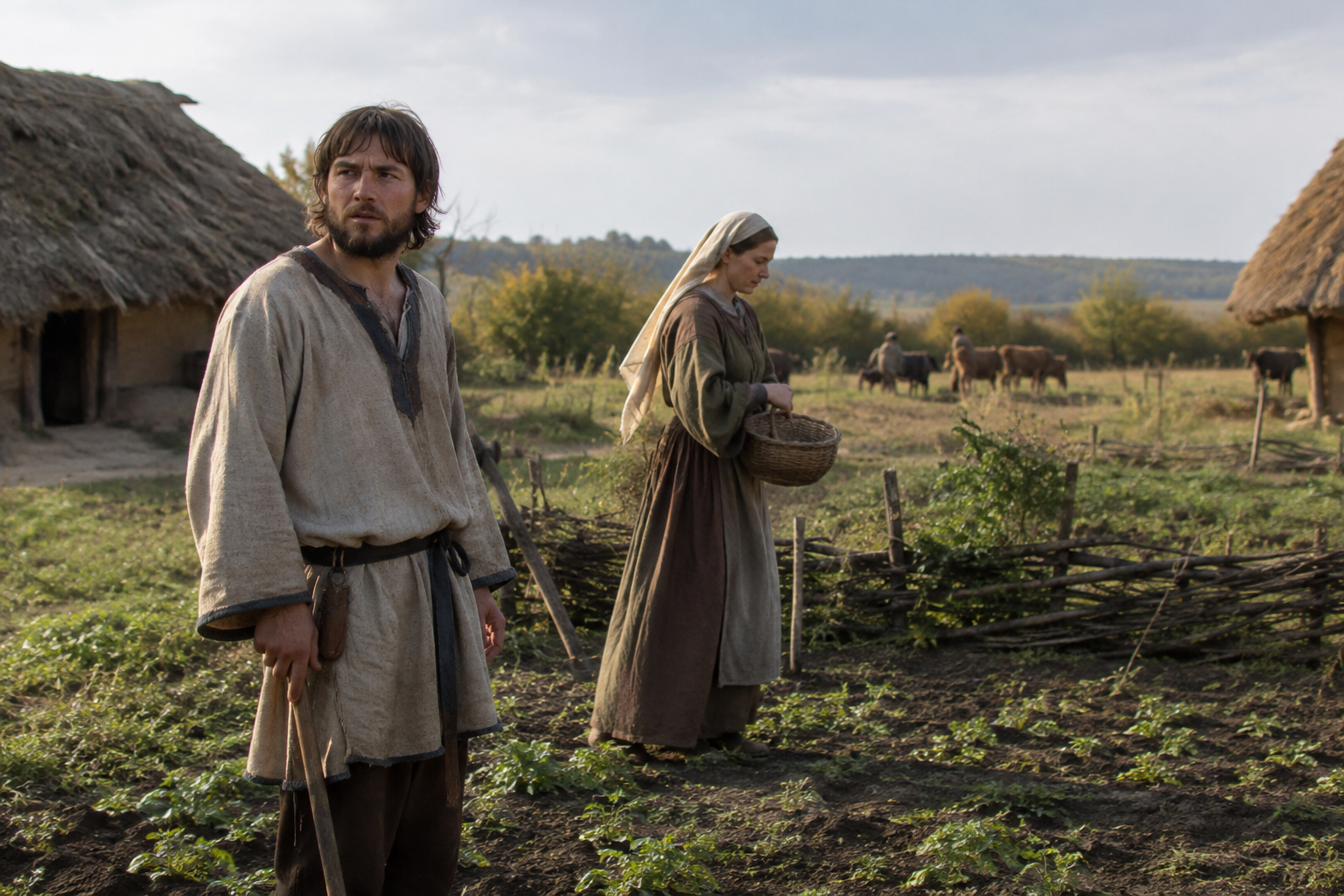
In the cemetery at Püspökladány-Eperjesvölgy in eastern Hungary, one man from around AD 975 stands out for a very modern reason: his Y-chromosome line can be assigned within the branch discussed here as I1a1b1a1e2f1. He is recorded as sample PLE-115, an Arpadian-period commoner rather than a king, warlord, or courtly grandee. That is precisely what makes him interesting. Ancient DNA often tempts us toward dynasties and famous names, but sometimes the sharper historical view comes from an ordinary burial in an early medieval community.
The wider haplogroup behind this branch, I1, is best known for its strong association with northern Europe and with populations shaped by the long history of the Scandinavian and Germanic world. But the exact subclade I1a1b1a1e2f1 is a much narrower paternal twig, and one medieval Hungarian burial does not license sweeping claims about ethnicity, language, or a single migration story. What PLE-115 does offer is something more solid: evidence that a distinctly northern European paternal line was present among people living under the early Arpad rulers in the Carpathian Basin.
Püspökladány-Eperjesvölgy belongs to the first generations of the Hungarian kingdom, the period when the conquering Magyar political order was settling into Christian statehood while older local populations and incoming groups were being folded into new communities. A burial dated around AD 975 sits at exactly that awkward, fascinating hinge in history: late enough to belong to the Arpadian age, early enough that the social landscape was still fluid.
PLE-115 is important because he is explicitly described as a commoner. That matters. If a paternal lineage appears only in elite graves, one plausible explanation is a narrow ruling stratum. If it turns up in ordinary community cemeteries, we are looking at a broader social reality. In other words, this is not just a question of who ruled medieval Hungary, but of who lived there, married there, and became part of village life.
An ancient DNA study examining early Hungarian populations brought exactly this kind of complexity into focus, showing that the Arpad-period population cannot be reduced to a single biological source or a tidy tribal label. The scientific paper associated with this material is here: research on ancient genomes from the Hungarian context.
Y-DNA follows one line only: father to son, back through grandfathers and great-grandfathers. So when we speak of I1a1b1a1e2f1, we are speaking about one paternal inheritance stream, not the whole ancestry of PLE-115. His autosomal ancestry, his mother's family, the language he spoke, and the identity recognized by his neighbors are separate questions.
Still, paternal lines can be historically revealing. The broader I1 family is strongly tied to northern Europe in both modern distributions and ancient DNA studies. That does not mean every I1-bearing man in medieval Hungary was a recent immigrant from Scandinavia, nor that all such lines arrived in one episode. A lineage like this might have entered the Carpathian Basin through migration-period movements, frontier contacts, military service, trade, marriage, or generations of smaller-scale mobility across central Europe.
That is why the exact subclade matters. It narrows the paternal story, but only if we resist the urge to over-interpret it. With the present evidence, the safest reading is that PLE-115 represents one strand of northern-linked male ancestry living inside an Arpadian-period population that was already mixed, layered, and historically dynamic.
Early medieval Hungary sat in the middle of Europe in the most literal sense. The Carpathian Basin was a corridor and a meeting ground, shaped by Roman frontiers, post-Roman population change, Avar rule, the Hungarian conquest, Slavic-speaking communities, and links extending west toward the Rhineland and east toward the steppe. A paternal lineage associated with the wider I1 family makes sense in that setting not because it proves a single origin story, but because the region was exactly the kind of place where lineages met and persisted.
There is a habit, still lingering in popular history, of treating medieval peoples as if each had a neat biological signature: Germanic here, Slavic there, Magyar somewhere else, all marching about in sealed containers. Ancient DNA has been steadily dismantling that fantasy. Studies of the early medieval Rhineland, for example, have shown how mobility and local continuity could coexist in the same region, with communities containing both long-rooted and more recently arrived ancestry.
That broader European background helps make sense of PLE-115. His lineage does not float in isolation. It belongs to a medieval continent in which paternal lines associated with northern and central Europe could appear far from any modern national stereotype. Hungary in the late 10th century was not peripheral to that world; it was one of its crucial crossroads.
The most useful comparison for a branch like I1a1b1a1e2f1 is not a fantasy map of Vikings leaving flags everywhere, but the quieter and more plausible story of Germanic-linked paternal ancestry spreading through centuries of interaction. Northern lineages moved south and east long before and long after the Viking Age. Some were carried by migration-period groups, some by service in armies, some by frontier settlement, some simply by families putting down roots in new places.
Genomic work on the spread of Germanic languages has contributed to this discussion by showing that language history and biological ancestry are related in complicated rather than mechanical ways. A paternal line that looks "northern" in origin may be found in a community whose culture, speech, and political loyalties were by then thoroughly local.
Germanic Languages and Genomics
That point is worth underlining for anyone with this haplogroup today. If your direct paternal line belongs to a narrow I1 branch, that may point toward some deep or medieval connection with the northern European world. It does not mean your paternal ancestors were all culturally Scandinavian, or that every generation moved in the same direction, or that the line arrived in one dramatic historical episode. Medieval Europe was less like a set of boxes and more like an ongoing argument conducted through marriage, war, work, and settlement.
There is also something refreshing about the social rank of PLE-115. The Arpad period is often approached from the top down, through rulers, conquest narratives, and royal burials. Yet state formation is not only about crowns. It is about villages, cemetery communities, landholding, kin networks, and ordinary people whose descendants made the kingdom durable.
In that sense, PLE-115 gives us a corrective. He shows that paternal diversity in early medieval Hungary was not confined to elites. The presence of a branch tied to the wider I1 world among commoners suggests that such lineages could already be embedded in local society, not merely visiting it from above.
Medieval Hungary's Elite Genomes
The strongest thing we can say about I1a1b1a1e2f1 from the present evidence is modest, but useful. By around AD 975, a man associated with this paternal branch was living as a commoner in Arpadian Hungary at Püspökladány-Eperjesvölgy. That anchors the lineage in a real early medieval community, in a kingdom being formed from many human ingredients.
For someone researching this haplogroup today, the lesson is not to chase a single grand origin myth. It is to look for the places where northern-linked paternal ancestry became part of larger central and eastern European histories. PLE-115 is valuable because he makes that process visible: not in saga form, but in the quieter, tougher truth of an ordinary medieval grave.

Comments