Haplogroup G2a2b2a1a1c1a1a2

– 5 min read


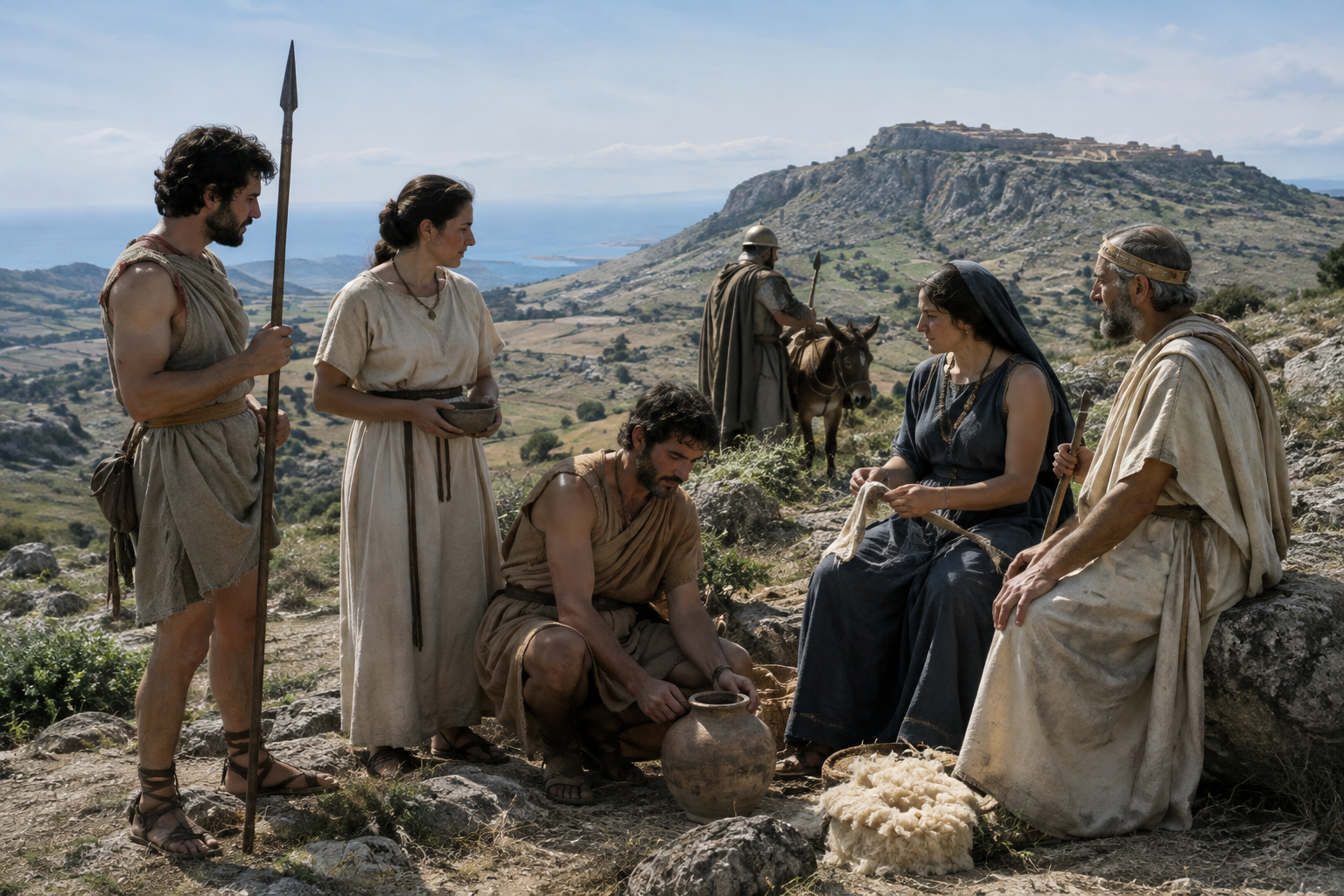
At Polizzello in central-western Sicily, a cluster of Iron Age males dated to around 800 BC offers an unusually tight glimpse of one paternal line in one community. Four individuals from the Sicani context there - I13382, I13389, I13383, and I13385 - have been associated with the Y-DNA haplogroup G2a2b2a1a1c1a1a2, a very specific branch within the broader G family that is often linked, at a much wider level, with some of Europe's early farming populations.
That is the first thing worth saying plainly. Y-DNA follows one direct paternal line only: father to son to son. It is not a person's whole ancestry, nor does it turn an archaeological culture into a genetic tribe. But when the same narrow paternal branch appears several times at one Iron Age Sicilian site, it becomes historically interesting. It hints at continuity, local structure, and the stubborn survival of old lineages in a Mediterranean island that is too often described only through its conquerors.
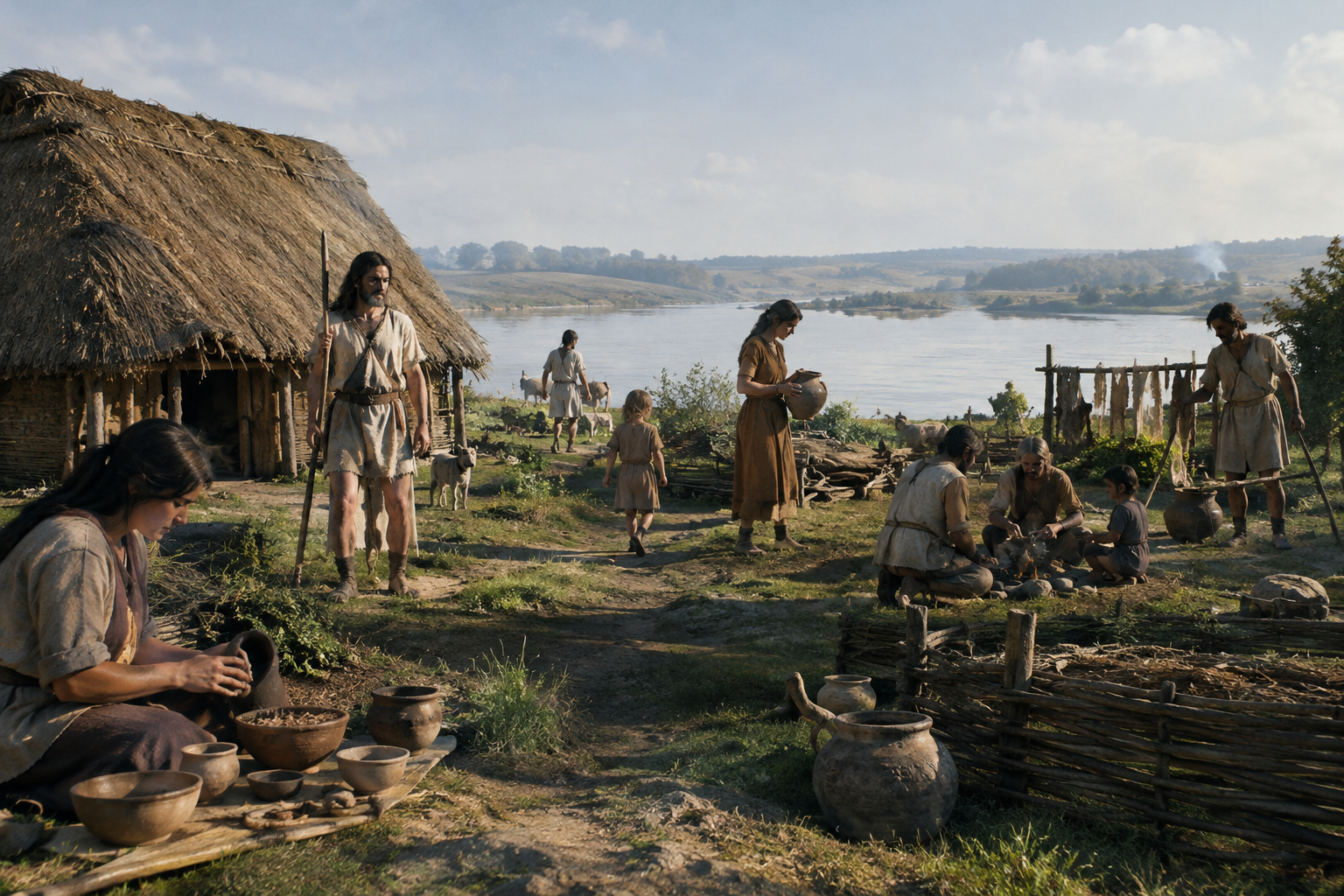
Polizzello is one of those inland Sicilian sites that makes the island harder to reduce to a simple Greek-or-Phoenician story. The Sicani are known from ancient literary traditions as one of pre-Greek Sicily's peoples, but archaeology and genetics force us to be more careful than the old ethnographic labels usually allow. What the Polizzello evidence gives us is not a myth of origins, but a set of real men from a real Iron Age community in the island's interior.
The repeated appearance of this paternal branch among the Polizzello individuals suggests that some male lines in inland Sicily remained locally rooted across generations. That matters because first-millennium-BC Sicily was already connected to wider Mediterranean exchange. Even so, not every place was simply washed over by newcomers. Some communities preserved older structures, and paternal continuity may be part of that picture.
A major ancient DNA study of Italian island populations helped sharpen this broader context, showing that Sicily's population history was layered rather than uniform, with different phases of continuity and outside contact visible across time. For that larger island framework, see this genetic study of ancient Italian islands.
The Polizzello cluster does not stand alone. Another ancient individual, I10373 from western Sicily, is dated to the Late Bronze Age, around 1200 BC, and is also associated with this same haplogroup article branch. That pushes the documented presence of the lineage in Sicily back before the Sicani Iron Age horizon represented at Polizzello.
This is exactly the sort of pattern archaeologists like, because it is modest and concrete. We are not looking at a grand migration tale pinned to one skeleton. We are looking at a lineage appearing in western Sicily in the Late Bronze Age and then again, several centuries later, among inland Iron Age men. That does not prove unbroken descent from one named ancestor, of course, but it does support the idea that this paternal line belonged to the island's pre-classical population landscape rather than arriving only with later colonial movements.
The wider historical background is important here. By the Late Bronze Age, Sicily was already part of maritime networks linking the central and eastern Mediterranean. Yet local communities were not merely passive recipients of contact. They maintained their own settlement traditions, their own burial practices, and, sometimes, as the Y-DNA suggests, their own enduring paternal strands.
Because G2a2b2a1a1c1a1a2 sits inside haplogroup G, there is a temptation to leap straight back to Europe's first farmers and stop there. That would be too neat. Broad haplogroup G lineages are indeed well known in Neolithic archaeology, especially in early farming contexts around the Mediterranean and southeastern Europe. But a very narrow downstream branch like this one has its own history, which cannot simply be copied from the parent lineage's much older spread.
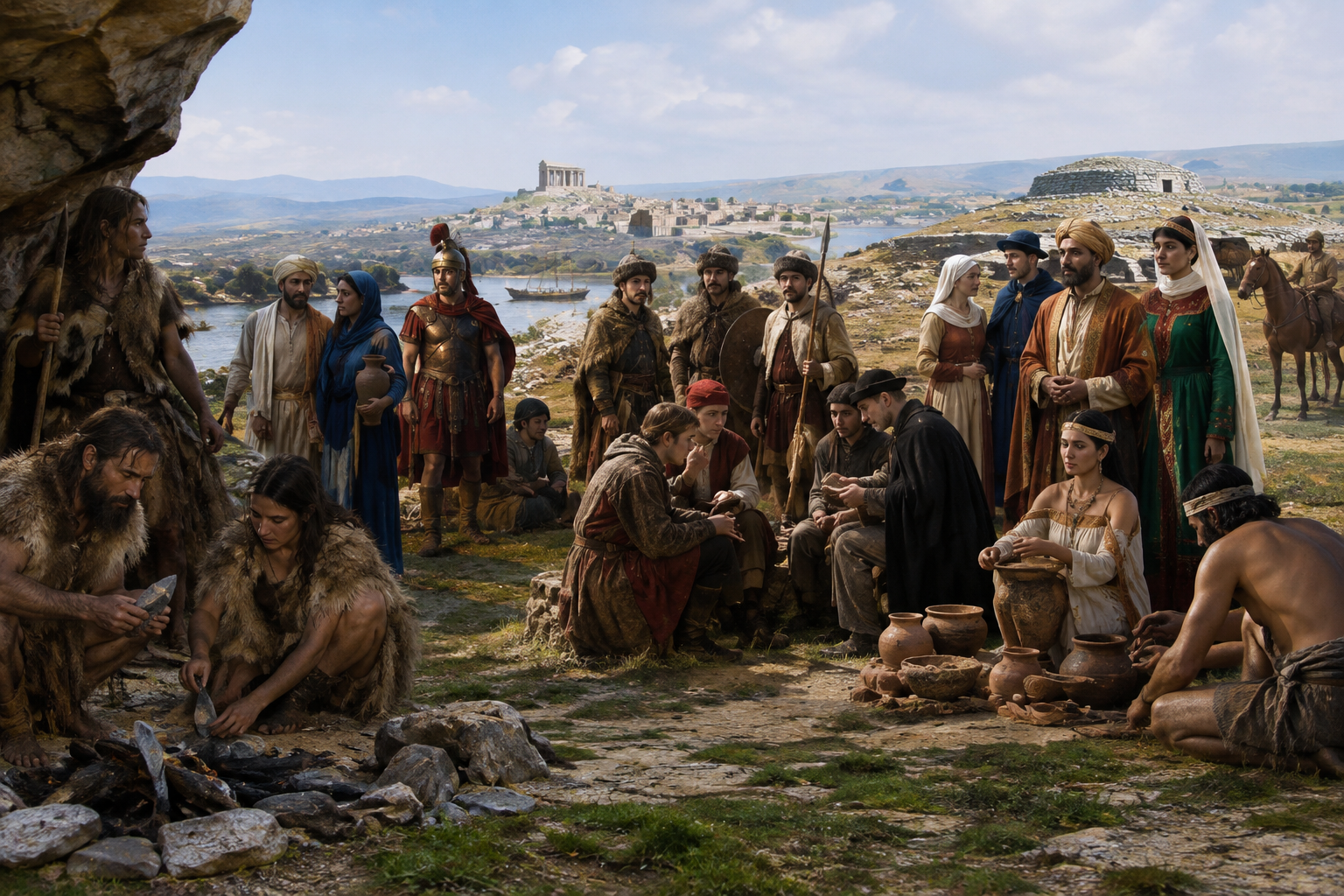
Still, the Sicilian pattern makes historical sense. Sicily was one of the great meeting grounds of Neolithic and later Mediterranean populations, and some paternal lines with deep roots in farming-era expansions appear to have lasted there for a very long time. In that sense, these Polizzello and western Sicilian males may preserve a thread of continuity stretching through Bronze Age and Iron Age island life, even as languages, trade links, and political powers changed around them.
If the inland Sicilian evidence speaks of continuity, the later sample I3350 reminds us that continuity is never the whole story. This individual, labeled "Skeleton Lake Traveller - Hellenic" and dated to about AD 1810, belongs to a completely different historical world: one of mobility, empire, long-distance travel, and identities shaped far beyond a single village or island. The sample is far removed in time and setting from Bronze and Iron Age Sicily, so it should not be folded into a false tale of one uninterrupted local community.
But its presence in the evidence is still suggestive in another way. It shows that this paternal branch, or an associated classification tied to it, is not confined to one prehistoric Sicilian episode. By the modern era, men carrying such lineages could be found moving through much wider Mediterranean and Eurasian spaces. That is not surprising. Islands preserve, but they also connect. Sicily above all does both.
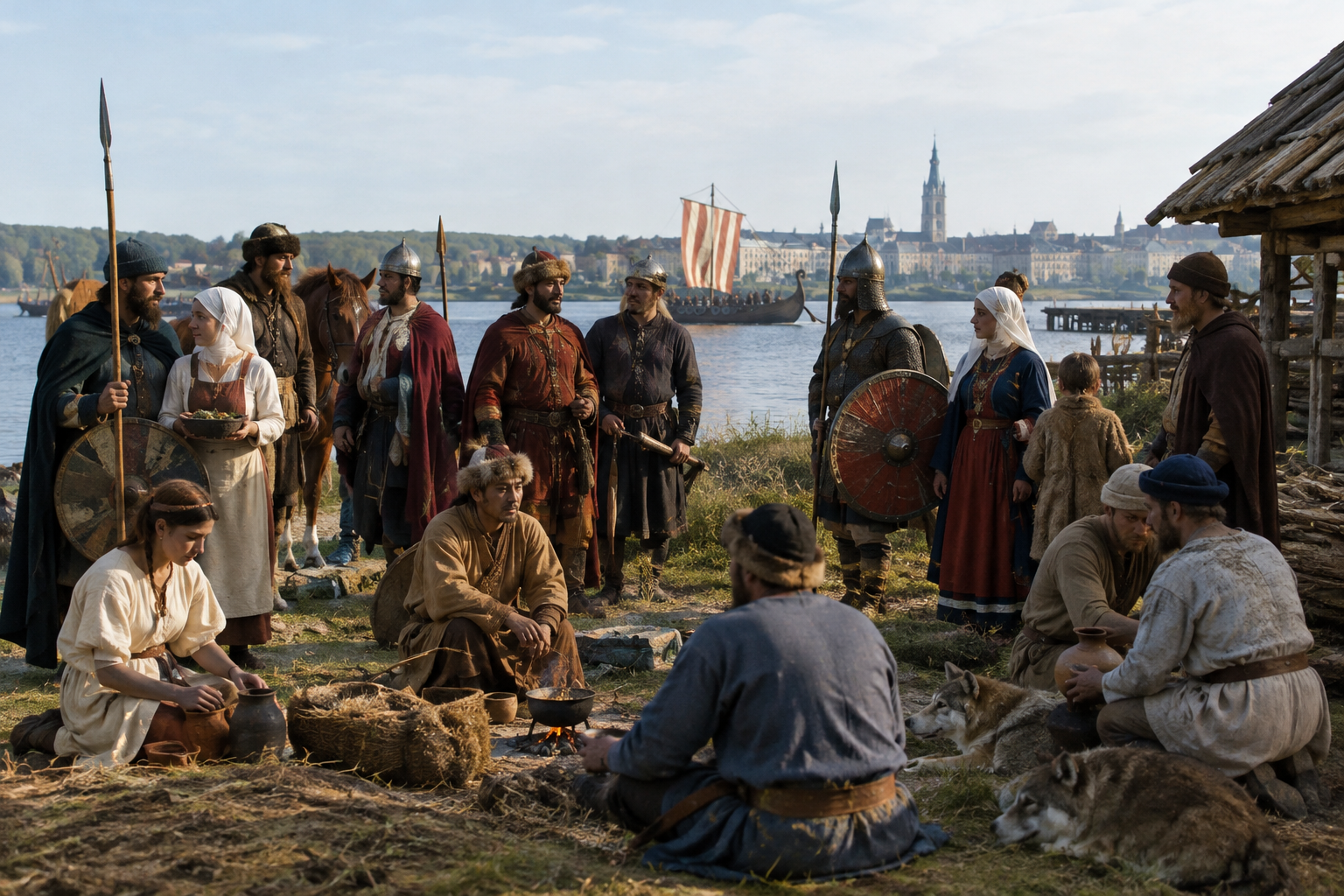
Research on Sicily in later periods has repeatedly shown that the island's people cannot be boxed into a single ancestry narrative. Greek settlement, Phoenician and Punic networks, Roman incorporation, Byzantine rule, Islamic polities, Norman conquest, and later Mediterranean movement all left demographic traces at different scales. The point is not that one haplogroup explains Sicily. The point is that one haplogroup can illuminate how older paternal lines endured within that changing world.
There is a larger archaeological question sitting behind these Sicilian samples. How much of Iron Age island identity was built from long local development, and how much from incoming populations? Ancient DNA rarely gives a single answer, because the truth is usually mixed. Yet the recurrence of a branch like G2a2b2a1a1c1a1a2 among pre-classical Sicilian males strengthens the case that part of Sicily's Iron Age population carried paternal ancestry with substantial time depth on the island.
This fits a broader Mediterranean pattern in which new cultural horizons do not necessarily wipe out older lineages. Pottery styles change. Trade intensifies. cult practice shifts. Foreign merchants and settlers arrive. But some family lines remain in place, becoming part of each new historical layer without vanishing into it. Sicily is particularly good at preserving that sort of complexity.
For readers interested in how later historical populations on the peninsula and islands continued to mix continuity with change, the Italian evidence from Roman and post-Roman contexts offers a useful comparison.
For someone whose paternal line falls under G2a2b2a1a1c1a1a2, the most distinctive signal in the present evidence is not royal glamour or a single famous founder. It is something more archaeologically satisfying: a documented foothold in prehistoric and Iron Age Sicily, especially among men connected with inland Sicani-period Polizzello and a Late Bronze Age individual from western Sicily. In other words, this branch presently looks most vivid in a setting of local endurance within a famously connected island.
That does not make every modern carrier "Sicani," nor does it rule out later movement elsewhere. It does suggest that this paternal line can be placed, at least in part, within the long human history of Sicily before and beyond the better-known imperial headlines.
Comments