Haplogroup G2a2b2a1a1b1a1a1a

– 5 min read


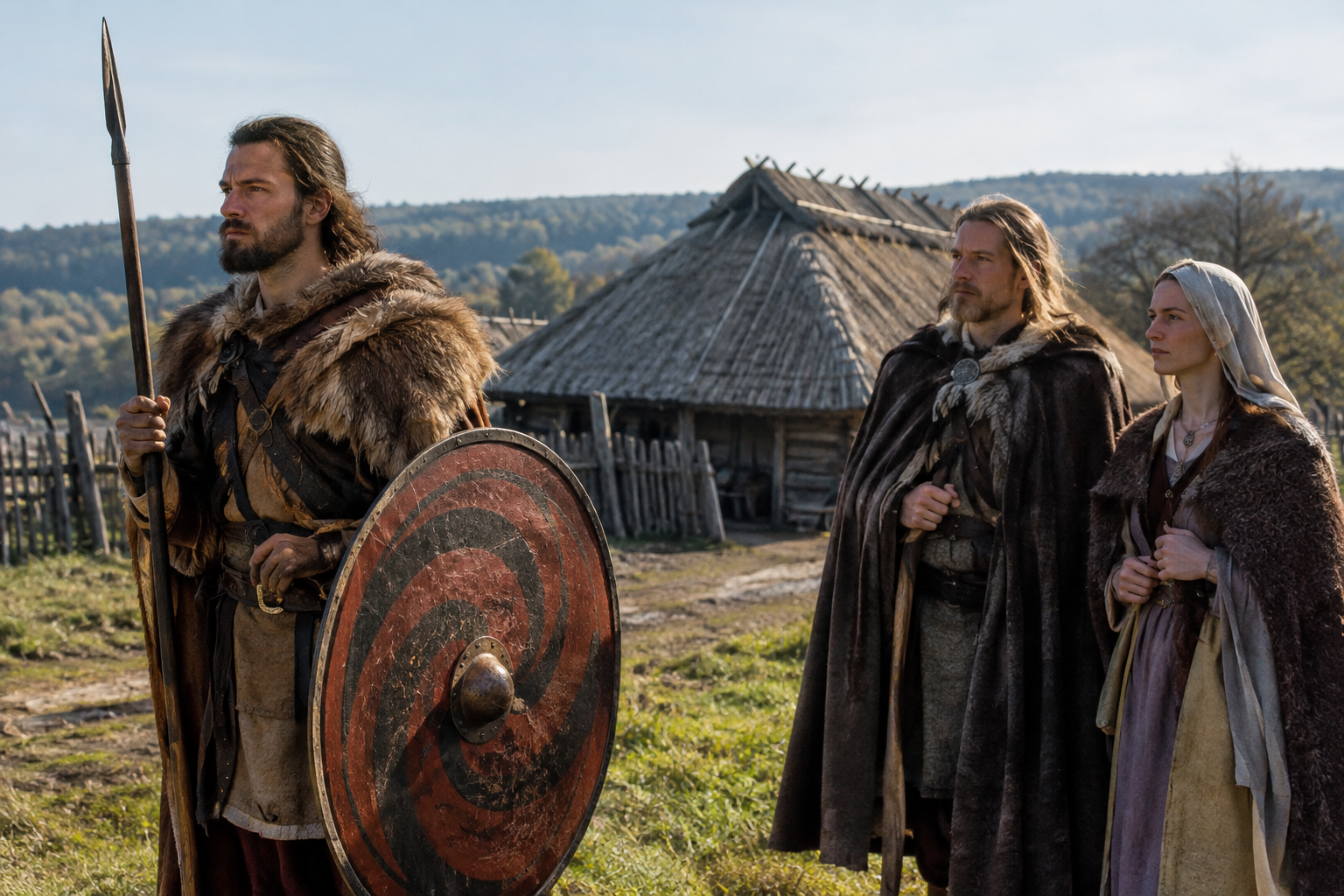
At Lauchheim-Mittelhofen in southern Germany, one early medieval man has become a particularly useful signpost for tracing a very old paternal line into a very busy historical world. The individual identified as G56PBx, dated to around AD 700 and associated with the Merovingian period, carried the Y-DNA haplogroup G2a2b2a1a1b1a1a1a. That matters because Lauchheim is not some vague point on a map: it belongs to the archaeologically rich landscape of early medieval Alemannia, where graves, settlements, and changing burial customs let us watch post-Roman Europe being remade in detail.
This is also what makes this lineage interesting. Y-DNA follows one direct paternal line only, not a person's whole ancestry, but a lineage like G2a2b2a1a1b1a1a1a becomes historically meaningful when it appears in real excavated people from clearly dated contexts. In the evidence here, that line turns up not in one single age alone, but in two sharply different settings: an Iron Age warrior from Prague and a Merovingian-era man from Lauchheim. That spread does not prove one simple migration story. It does, however, place this paternal branch inside the long population history of Central Europe.
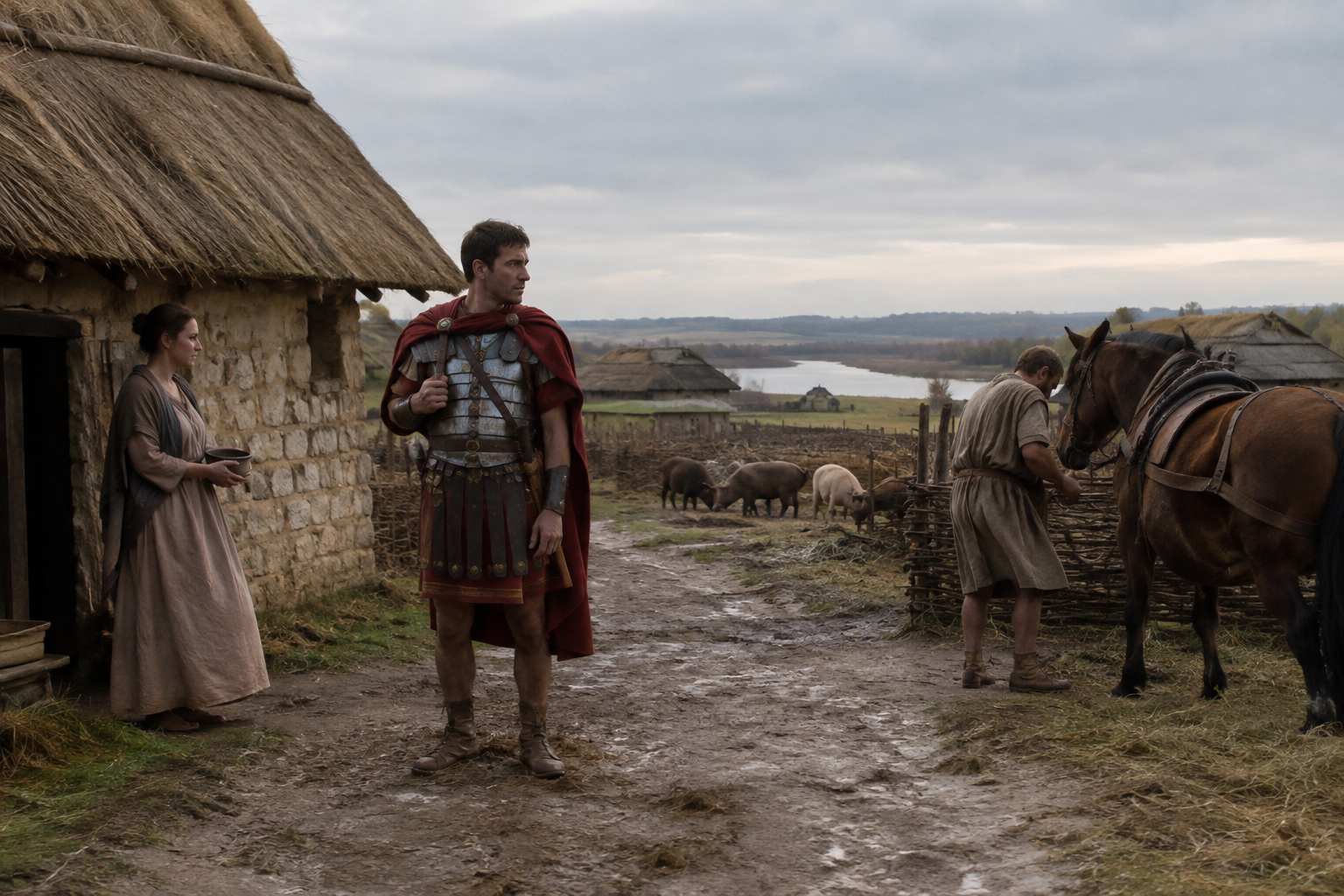
The Lauchheim complex in Baden-Wurttemberg has become one of the best studied early medieval sites in Europe because it preserves both cemetery and settlement evidence. Sample G56PBx, dated to about AD 700, comes from the final centuries of the Merovingian world, when local communities in what is now southern Germany lived amid the afterlife of Rome, the growth of Christianity, and new forms of regional power.
For a haplogroup article, the importance of Lauchheim is not pageantry but context. This was a society in which identities were layered: local, regional, post-Roman, and increasingly tied to Frankish political authority. A paternal lineage found here does not make its bearer "Frankish" or "Germanic" in any simple biological sense. What it does show is that the branch represented by G2a2b2a1a1b1a1a1a was present within an early medieval population shaped by centuries of interaction, mobility, and social change.
An ancient DNA study examining burials from this broader region has helped clarify just how mixed and locally varied these frontier and post-frontier communities could be, especially between the late Roman and early medieval periods. That larger setting is well worth bearing in mind when thinking about Lauchheim and similar cemeteries in southwestern Germany: research on the Roman-Barbarian transition in this zone shows that archaeology and genetics together often reveal blending rather than neat replacement.
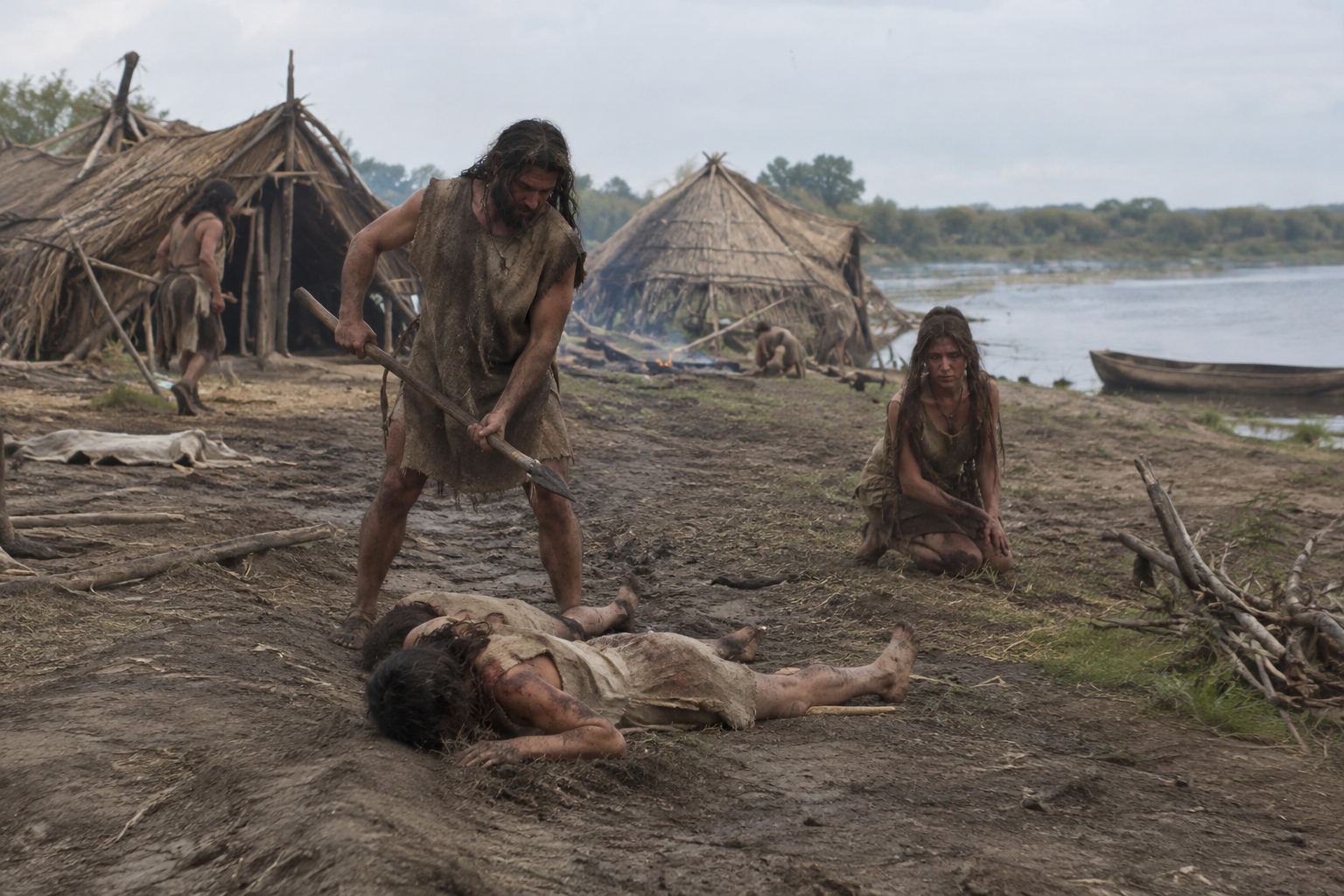
The other ancient individual tied here to the haplogroup is I17317, described as an Iron Age warrior from Prague, Central Bohemia, dated to around 300 BC. This is a very different world from Merovingian Lauchheim. We are now in later prehistoric Central Europe, in the centuries usually associated with La Tene-era societies, fortified places, shifting regional alliances, and the expanding archaeological footprint of Iron Age communities often linked with Celtic-speaking groups.
Even with sparse sample detail, the Prague context matters. Central Bohemia sat in a crossroads zone, tied into exchange networks reaching across temperate Europe. A paternal lineage present there in the Iron Age, and again centuries later in early medieval Germany, suggests endurance of some male lines across major political and cultural turnovers. Those turnovers included the end of Iron Age polities, Roman expansion nearby, the transformations of late antiquity, and the creation of post-Roman kingdoms.
That is the sort of pattern ancient DNA is especially good at exposing. Archaeological cultures change names and material styles rather dramatically; lineages may persist, shift in frequency, or reappear in unexpected settings. A major ancient DNA study of European prehistory and Iron Age population formation has helped frame Central Europe's long genetic background, even when one should be cautious about drawing straight lines from one excavated man to another: research on the spread of ancestry linked with later prehistoric Europe provides part of that wider backdrop.
Celtic origins and ancient DNA
The long string of letters and numbers can look forbidding, but the key point is simple enough. G2a2b2a1a1b1a1a1a is a very specific twig on the much broader Y-DNA haplogroup G, one of the old paternal lineages of western Eurasia. Haplogroup G, especially some of its branches, is well known from early farming populations in Neolithic Europe. But that broad history should not be lazily pasted onto every much later sub-branch.
For this article, the evidence is narrower and more responsible than that. What we can say is that a lineage classified here as G2a2b2a1a1b1a1a1a appears in two documented ancient males from Central Europe, one in Iron Age Bohemia and one in Merovingian Germany. That gives us a historically grounded pattern of presence. It does not by itself prove where this exact terminal branch first formed, how common it was, or that every later carrier belonged to one coherent ethnic tradition.
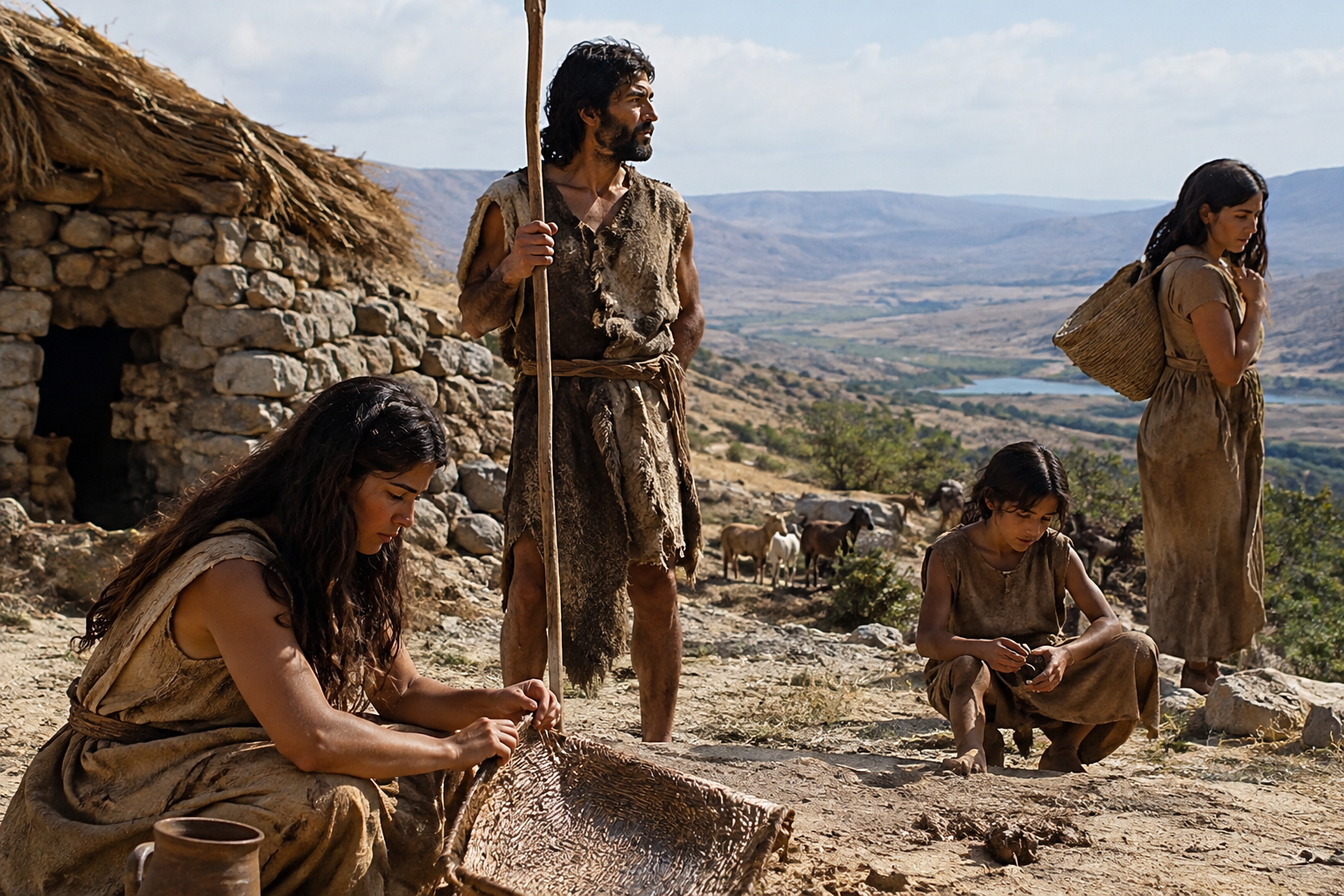
Still, there is something rather striking in seeing a branch of haplogroup G in these settings. In popular imagination, later Central Europe is often simplified into stories of sweeping replacements by one people after another. Ancient DNA keeps complicating that picture. Some paternal lines associated in broad terms with very early European farmers did not vanish; they survived into later prehistoric and historic societies that looked culturally quite different.
If these two individuals are read together, the real theme is not romance but continuity amid change. Around 300 BC, I17317 belonged to an Iron Age landscape in Bohemia. Around AD 700, G56PBx belonged to an early medieval community in southwestern Germany. Between them lies roughly a millennium of transformations that would fill several history books.
And yet paternal lines can outlast political labels. The men themselves did not live in the same society, speak the same language, or bury their dead under the same customs. But their shared branch reminds us that biological descent and cultural history move on different clocks. Central Europe was repeatedly reorganized by trade, conflict, empire, migration, and local marriage patterns, while some male lines quietly continued through it all.
This is also why single ancient matches should be read with care. One Iron Age warrior does not stand for all Iron Age Bohemia, and one Merovingian-era man does not define Lauchheim as a whole. But together they do show that this haplogroup belongs to a real and documentable Central European record, not merely to abstract phylogenetic charts.
If your paternal line falls under G2a2b2a1a1b1a1a1a, the most defensible takeaway is that your branch has at least some documented ancient presence in Central Europe across very different eras. The current evidence places it in Iron Age Prague and Merovingian Germany, suggesting a lineage that persisted through major social and historical change rather than belonging to only one brief episode.
That is, in its own restrained way, quite a good historical result. It links your direct paternal line to excavated men who lived in two important Central European worlds: one prehistoric, one early medieval, both recoverable through archaeology rather than legend.
Comments