Haplogroup E1b1b1a1b1a15

– 5 min read


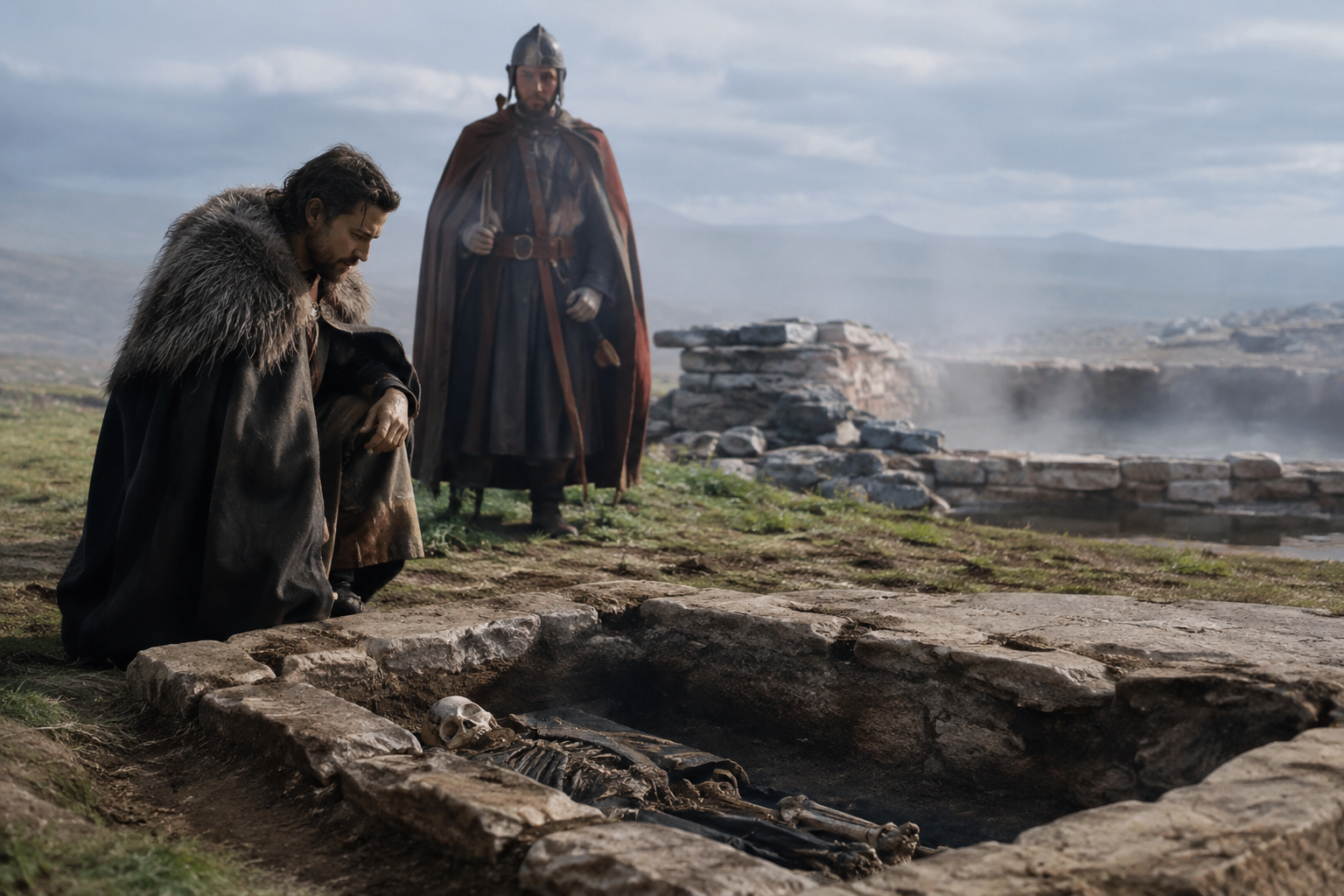
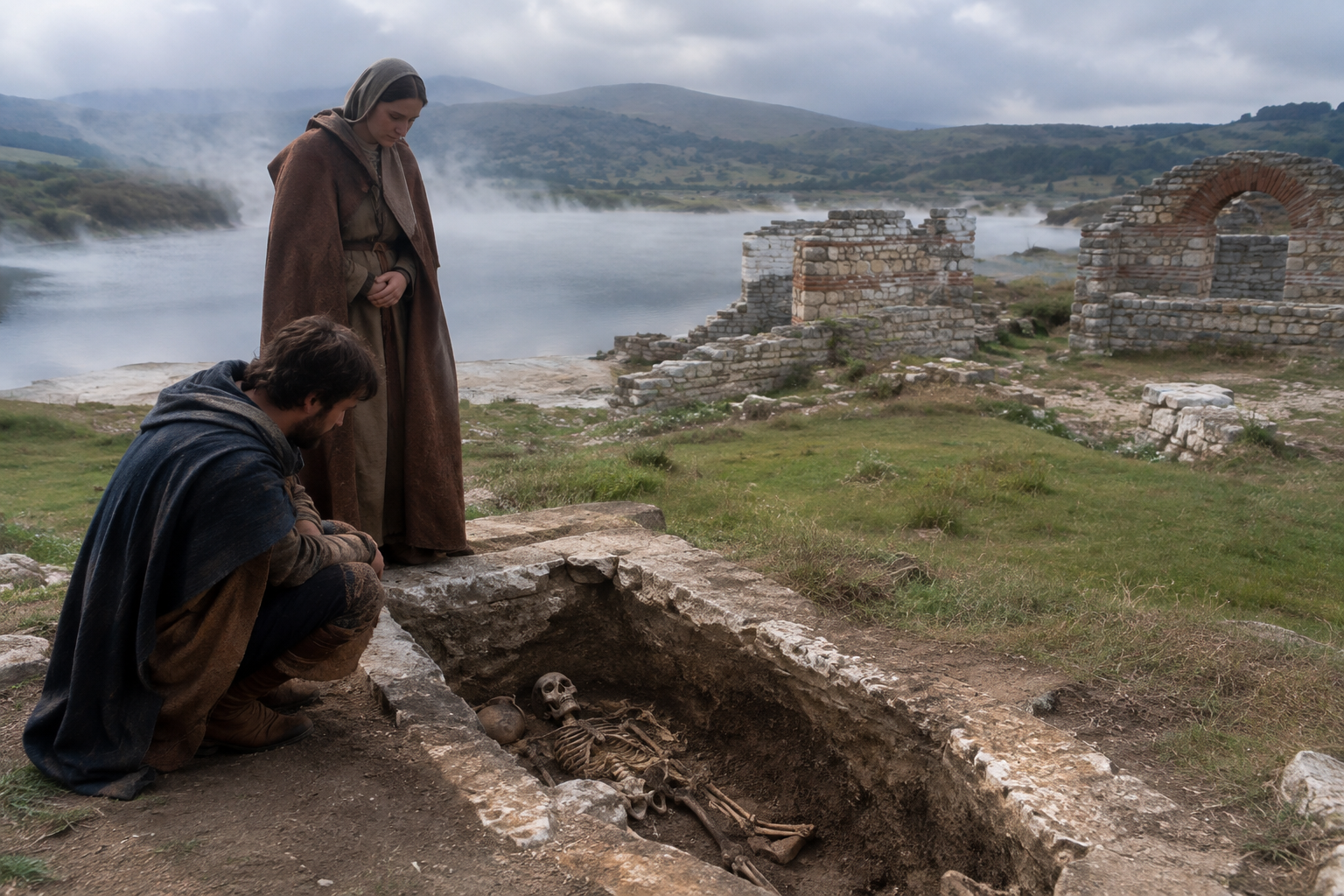
At Aquae Calidae in present-day Bulgaria, one late Roman grave has become unexpectedly important for anyone tracing the Y-DNA haplogroup E1b1b1a1b1a15. The individual known as I40573, dated to around AD 350 and described as coming from a Gothic burial context, places this paternal line in one of the most complicated borderlands of late antiquity: a Roman world still functioning, a Gothic world increasingly present, and a Black Sea-Balkan region where people, armies, and families were constantly on the move.
That is the first thing worth stressing. A Y-chromosome lineage follows one direct paternal line only; it is not a complete identity card for language, culture, or ancestry. But when a branch like E1b1b1a1b1a15 turns up in a late Roman Gothic grave, it raises a properly historical question: what does it mean when a lineage often associated, at broader levels, with older Balkan and Mediterranean histories appears inside a community labeled Gothic?
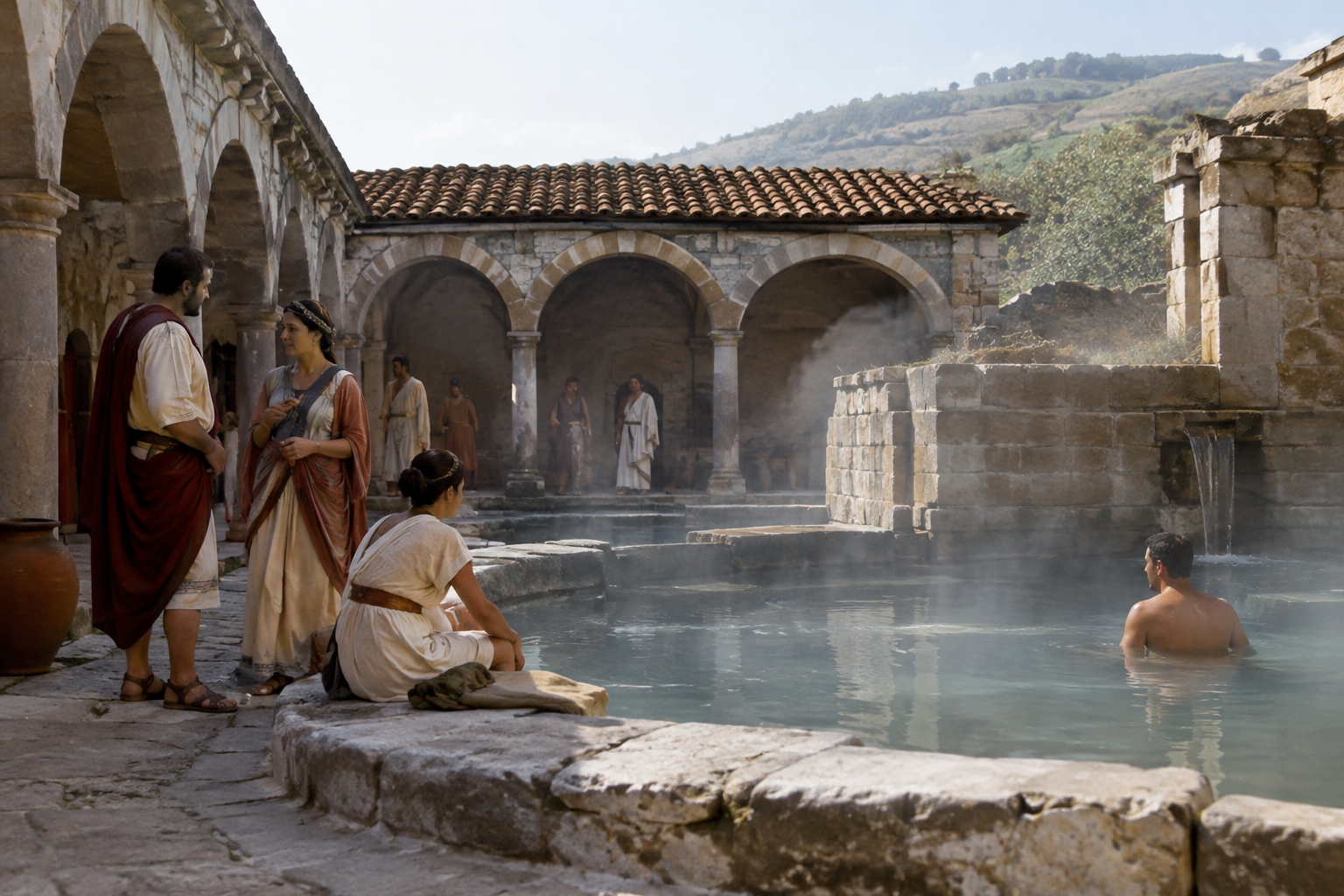
Aquae Calidae was no remote outpost. It was a long-used thermal and settlement zone on the western Black Sea fringe, in a region that had seen Thracian, Greek, Roman, and later post-Roman activity layered one on top of another. By the fourth century AD, this was exactly the kind of place where imperial structures and so-called barbarian identities met in daily life rather than in neat textbook categories.
The sample I40573 is therefore interesting not because it lets us tell a simple ethnic story, but because it refuses one. The grave is described as late Roman and Gothic; the paternal line under discussion is E1b1b1a1b1a15. Even with just this single securely named individual, the implication is clear enough: Gothic communities in late antique Bulgaria were not genetically uniform outsiders marching in from somewhere else with a sealed biological identity. They were mixed communities, or at the very least communities able to incorporate men whose paternal origins lay in older southeastern European or eastern Mediterranean population histories.
An ancient DNA study examining these burials is linked through research on late antique Bulgaria, and the sample sits squarely within a growing body of evidence that the archaeology of the Goths is much messier, and much more interesting, than older nationalist narratives allowed.
Mixed Origins of Gothic Bulgaria
The name E1b1b1a1b1a15 is, of course, very specific. It belongs to the wider E1b1b1 family, a major Y-DNA grouping with a long and varied history across parts of Africa, the Mediterranean, and southeastern Europe. But one should be careful here. The wider history of E1b1b1 cannot simply be poured into this narrower branch as if nothing changed along the way.
What the Aquae Calidae sample shows is not the origin of E1b1b1a1b1a15, nor its full migration path. It shows that by the fourth century AD, a man associated archaeologically with a Gothic context in Bulgaria carried this paternal line. That matters because it gives the branch a firm foothold in a historically documented world of frontier settlements, military mobility, local recruitment, intermarriage, and community formation under late Roman rule.
In other words, if you belong to E1b1b1a1b1a15 today, this ancient match does not make you "a Goth" in any simple sense. It does, however, connect your direct paternal line to the late antique Balkans, where identities were being made and remade in close contact between imperial and non-imperial groups.
The word "Gothic" can mislead modern readers. Ancient authors used ethnonyms broadly and often politically; archaeologists use them more cautiously, tying them to material culture, burial style, and historical context rather than imagining a pure bloodline. Genetics has reinforced that caution. Again and again, ancient DNA shows that communities called Gothic were genetically diverse.
That is precisely what makes I40573 valuable. A man carrying E1b1b1a1b1a15 in a Gothic grave does not look like an exception that breaks the evidence; he looks like part of the real pattern. Gothic groups on the move through eastern Europe and the Balkans could include people of different ancestries, and the communities that emerged in Roman territory were shaped by alliance, service, settlement, and family formation as much as by distant origin myths.
This is the larger historical setting behind the sample. By the fourth century, the Balkans were not a chessboard of separate peoples standing tidily apart. They were a lived landscape of forts, roads, baths, towns, villages, and cemeteries in which Roman soldiers, provincials, migrants, clients, and federate groups interacted constantly.
Goths as a Multi-Ethnic Community
To understand why a lineage like E1b1b1a1b1a15 might appear in this setting, it helps to think geographically. The western Black Sea coast and the Balkan interior formed one of antiquity's great connective zones. Trade, military deployment, pilgrimage, forced movement, colonization, and ordinary marriage all ran through it. Roman rule did not erase local populations; nor did later Gothic settlement wipe the slate clean.
So Aquae Calidae is important less as an isolated dot on a map than as a place in a corridor. A paternal line found there may reflect local Balkan continuity, movement from elsewhere within the empire, or incorporation into Gothic-associated groups over generations. With the evidence presently in hand, one should not pretend to choose among those options too confidently. But all three are historically plausible in this region, and that alone tells us a good deal about the world in which I40573 lived.
That point also brings the sample into conversation with broader work on the northern Black Sea and Balkan population history. The region repeatedly appears in archaeogenetic studies as a zone of mixing rather than separation, where steppe-linked, Balkan, Mediterranean, and central European strands met over long periods.
There is a further lesson in this single sample, and it is a rather salutary one. Late Roman and migration-period burials are often given labels such as Roman, Gothic, Hun, or local, but real communities did not come with museum tags attached. The people buried in them could be culturally adaptive, politically shifting, and genealogically mixed within just a few generations.
That is why a branch like E1b1b1a1b1a15 is so useful when discussed properly. It does not solve identity, but it sharpens the questions. Was this paternal line already established in the Balkans before Gothic settlement? Was it carried into a Gothic-affiliated community through alliance or descent? Was the deceased part of a local population that adopted, or was absorbed into, a Gothic milieu? The archaeology alone cannot fully answer that; nor can the Y chromosome by itself. But together they show that late antique Bulgaria was not a frontier of simple replacement.
For readers interested in the wider linguistic and population story around Germanic-speaking groups, the best comparison is not a tale of one people replacing another, but of mobile and mixed communities forming across large regions of Europe.
Germanic Languages and Genomics
For now, the most distinctive ancient anchor for E1b1b1a1b1a15 in this material is I40573 from late Roman Aquae Calidae, around AD 350. That places the branch, or at least a reported representative of it, in a historically rich contact zone where Gothic identity and Balkan population history overlapped. The sample does not license grand claims about one tribe, one migration, or one homeland. What it does offer is something better: a real person, in a real burial context, showing that this paternal line was part of the mixed human world of late antique southeastern Europe.
For someone researching this haplogroup today, that is a meaningful clue. It points not to a neat ethnic label, but to a frontier society where Roman and Gothic worlds were already entangled at the level of family lines.

Comments