Clan Prendergast

– 3 min read


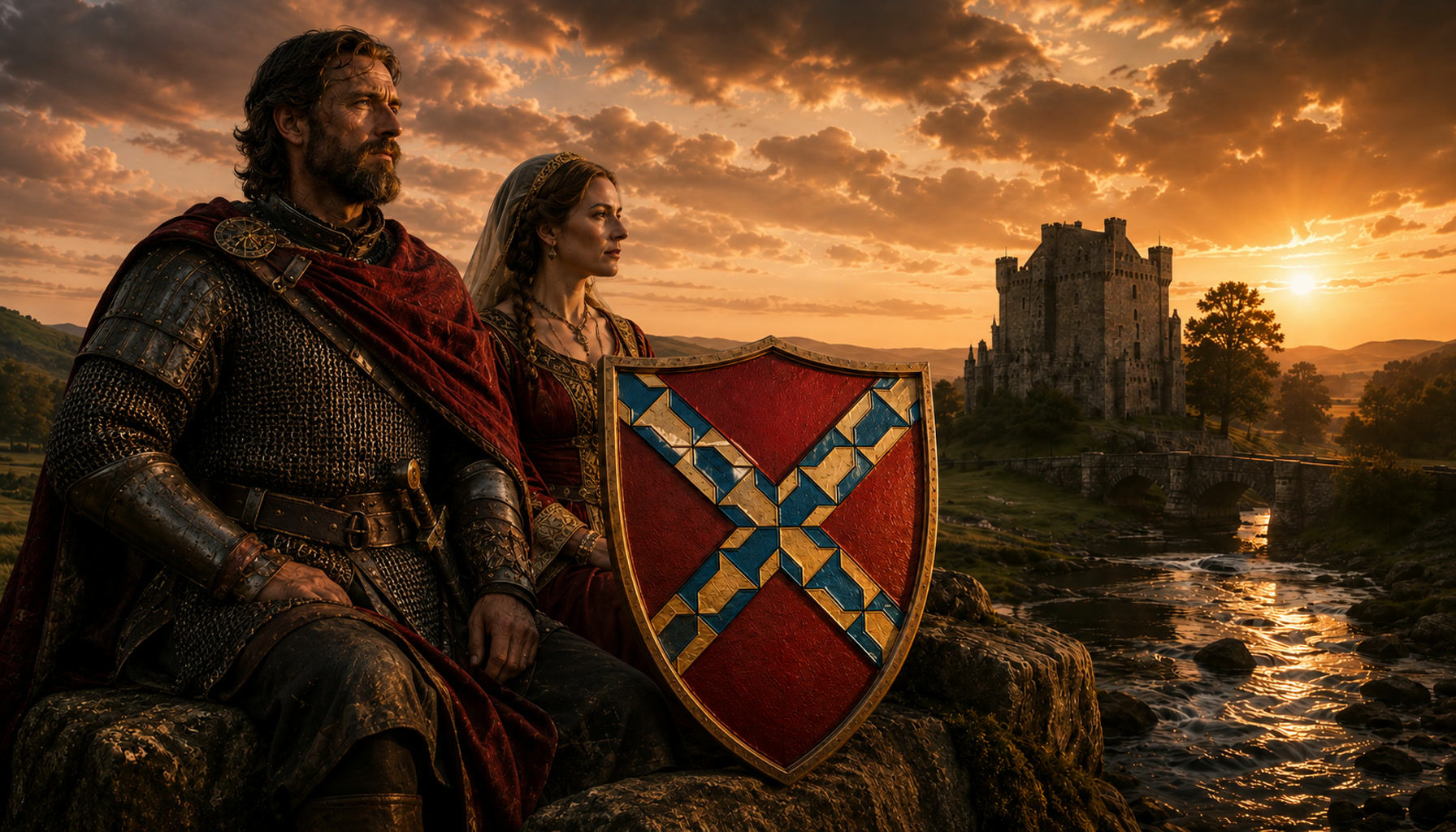
Clan Prendergast was a Norman-Irish family whose story begins with the great movement of Anglo-Norman lords into Ireland in the late 12th century. Their deeper origins lay in the Norman world that had grown out of northern France and spread across Britain and Ireland through conquest, service, and lordship. In haplogroup tagging terms, the primary family line here is linked with R1a1a1a1b1a3a2, a paternal marker that opens an intriguing window onto much older European population history far beyond the medieval record.
The Prendergasts belong to that very recognisable Irish historical pattern: a family arriving as part of the Anglo-Norman settlement, receiving lands through military support and feudal obligation, then gradually putting down roots so deep that they became unmistakably part of Ireland itself. They entered Irish history through campaigns, grants, castle society, marriage alliances, and local authority. Maurice Lord of Prendergast, noted in 1172, stands as one of the named figures tied to this early phase. Over generations the family moved from being newcomers in armour to landed participants in a mixed world where Norman law, Gaelic custom, church patronage, and regional politics constantly overlapped. That, really, is the fascinating thing about the Prendergasts: not just that they came to Ireland, but that they stayed, adapted, and became woven into the fabric of medieval Irish life.
One strong location anchor for the family story is Enniscorthy Castle in County Wexford, a place that still gives you the proper physical sense of Norman power in Ireland. The castle stands above the River Slaney and was originally established in the closing years of the 12th century, in the wake of the Anglo-Norman arrival in Leinster. It is traditionally associated with Philip de Prendergast, making it especially relevant to the clan's early foothold in Ireland. Like many such fortifications, it was not merely a residence but a statement in stone: control of crossing points, command of surrounding land, and visible authority over town and countryside. Over the centuries the building was altered, repaired, and reused, reflecting the long afterlife of medieval fortresses in Irish history. Today Enniscorthy Castle survives as one of the best-known landmarks in the town, and yes, it can still be visited, which is rather wonderful because it allows the Prendergast story to be encountered not just in pedigrees and chronicles but in masonry, towers, and landscape.
From the ancient DNA angle, the haplogroup tag R1a1a1a1b1a3a2 links the Prendergast profile to a much older and wider prehistoric and early historic world. Related or linked samples include Jute Early Roman Era Denmark Jutland Bog War Alken Enge individuals CGG019204 and CGG019214, along with several Corded Ware Culture samples such as Brandysek Czech I7279, Obalczkowo Wielkopolska Poland CWC poz81, and the Czech Radovesice III Axe and Radovesice X Club individuals I7208 and I7209. These are not evidence of direct descent from the Prendergasts themselves, and should not be read that way. Rather, they show that the same broad paternal lineage appears in populations stretching from Bronze Age central Europe to Iron Age northern Europe. In other words, the medieval clan sits at the end of a very long human story, one in which lineages travelled, expanded, mixed, and resurfaced in quite different cultural settings long before anyone in Ireland was building Norman castles.
If you are exploring Prendergast heritage, this is where history and DNA become especially enjoyable together. A surname can tell you about lordship, settlement, and memory; a haplogroup can hint at a far older prehistoric backdrop; and ancient samples can place your family story into the wider map of Europe. Upload your DNA to MyTrueAncestry to see whether you match Clan Prendergast or related ancient DNA samples linked with R1a1a1a1b1a3a2.
Comments