Clan Ohara
– 3 min read


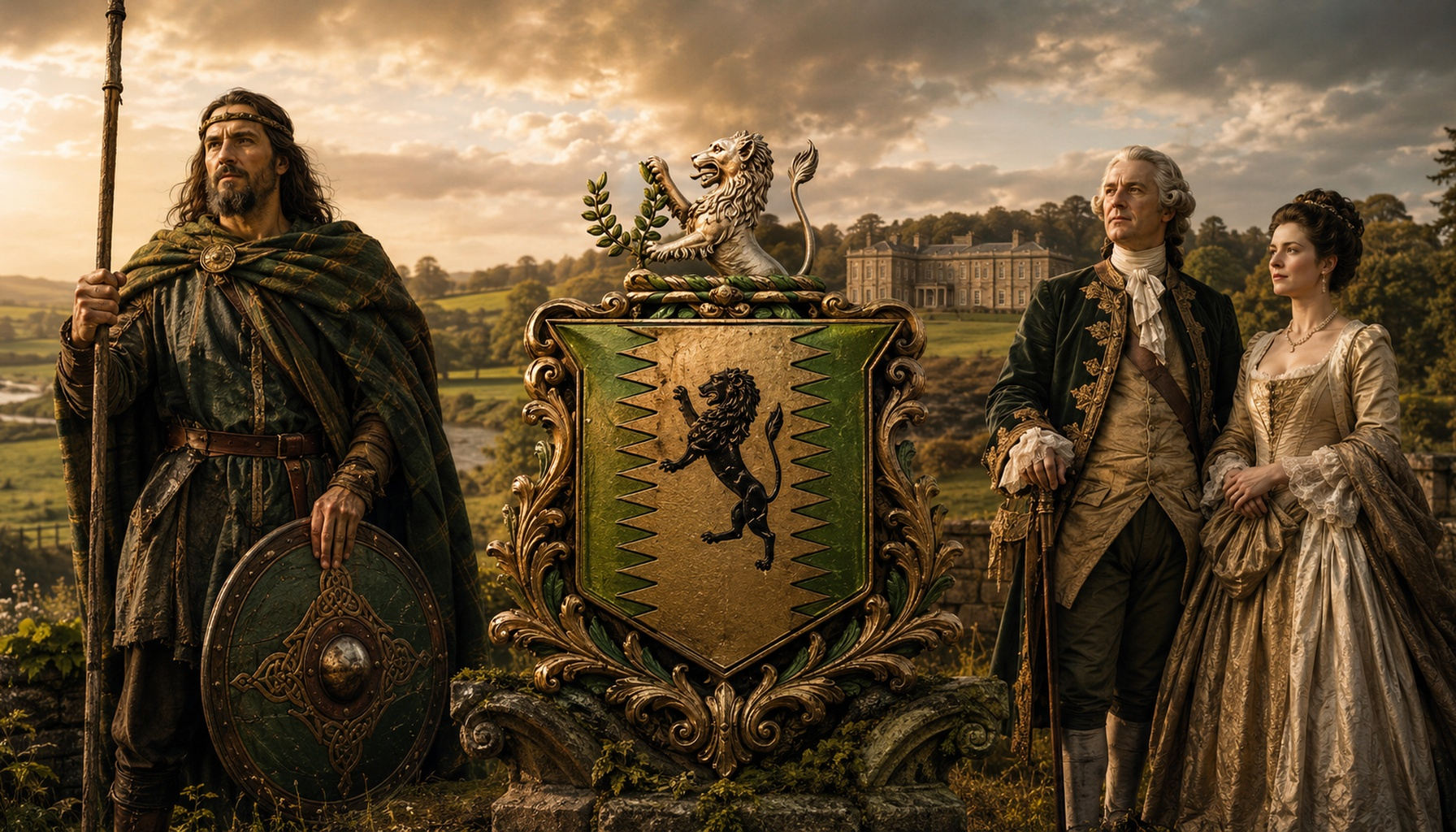
Clan Ohara, or O hEaghra, was one of the old Gaelic noble families of Connacht in western Ireland, rooted above all in what is now County Sligo and its neighbouring lands. In historical terms they belonged to that recognisable Irish clan world built on descent, lordship, clientship, marriage alliances, and control of territory rather than on neat modern ideas of a surname alone. Their primary linked Y-DNA haplogroup is R1b1a1b1a1a2c1a2b3a1, a branch within the broader Atlantic-facing paternal lineages so often associated with Ireland and the western fringes of Europe.
The Oharas emerged in the political landscape of medieval Gaelic Ireland, where families held status not simply by possessing land, but by maintaining followers, honour, and memory. Their name preserves the legacy of Eaghra, remembered in the sources with Chief Eaghra recorded in 976, a useful reminder that many Irish clans were already fully historical powers long before the Norman arrival. Like other regional dynasties in Connacht, the Oharas had to navigate shifting overlordships, rivalry between neighbouring kindreds, later English pressure, and the long, weary business of anglicization and land change. Yet the remarkable thing is not merely that they suffered these pressures, but that the family identity survived them.
Read more about Clan OFlaherty
Moymlough Castle is one of the most evocative place-anchors for the Ohara story. Standing in County Sligo, it ties the family not to an abstract pedigree but to stone, landscape, and the practical realities of lordship. The site is associated with the Oharas and reflects the later medieval and early modern habit of Irish noble families adapting their power to fortified tower houses and castles as political conditions changed. The old drawings discussed by Ask About Ireland show Moymlough as a substantial ruin, with the battered dignity that Irish castles do so well: broken enough to stir the imagination, solid enough to insist on the former presence of rank and authority. It can still be visited as a historic ruin, reasonably supported by its continued visible survival in the landscape, and for anyone interested in the clan it offers something better than romance alone: a real physical reminder that Gaelic aristocratic identity was grounded in place as much as pedigree.
From a DNA perspective, the primary family haplogroup linked here is R1b1a1b1a1a2c1a2b3a1. That does not prove direct descent from any ancient excavated individual, and it is important not to pretend otherwise. What it does offer is a wider genetic neighbourhood. Related or linked ancient samples assigned near this branch include a striking cluster from Celtic Durotriges burials at Duropolis, Winterborne Kingston in England such as WBK12, WBK20, WBK29, WBK41, WBK05, WBK30, WBK43, WBK06, WBK08, WBK18, and WBK191, alongside samples such as Medieval Ireland Kilteasheen Roscommon Bishops Seat (KIL026), Ireland Copper Age Rathlin2B, Bell Beaker Wiltshire Upavon England (I4950), Bronze Age Amesbury Down Wiltshire England (I2417), Bronze Age Trumpington Meadows Cambridge England (I3256), Bronze Age Orkney Westray Links of Noltland (KD061), Iron Age Worlebury Somerset England (I11991), Iron Age Roundhouse Bu Orkney Scotland (I2982), Post Roman Era Worth Matravers Dorset England (I11580), Imperial Roman Era Zadar Croatia (I26776), Late Roman Conimbriga Portugal (R10488), Early Medieval Belgium Sint-Truiden Groenmarkt (ST2025), and Medieval Belgium Outsider Sint-Truiden Onze-Lieve-Vrouwekerk (ST1308). Taken together, these linked samples sketch a deep western European and Insular context for this paternal line, stretching from Bell Beaker and Bronze Age horizons into Iron Age Celtic societies, Roman-period populations, and medieval Ireland.
Explore Neolithic Irish kinship
The Oharas embody a classic western Irish story: noble descent, regional roots, political resilience, and the stubborn survival of Gaelic family identity through centuries of upheaval. If you carry the Ohara name, have Connacht ancestry, or simply want to see whether your DNA connects with this family story or with related ancient samples, upload your DNA to MyTrueAncestry and explore the evidence for yourself.






Comments