Clan Newlands

– 3 min read


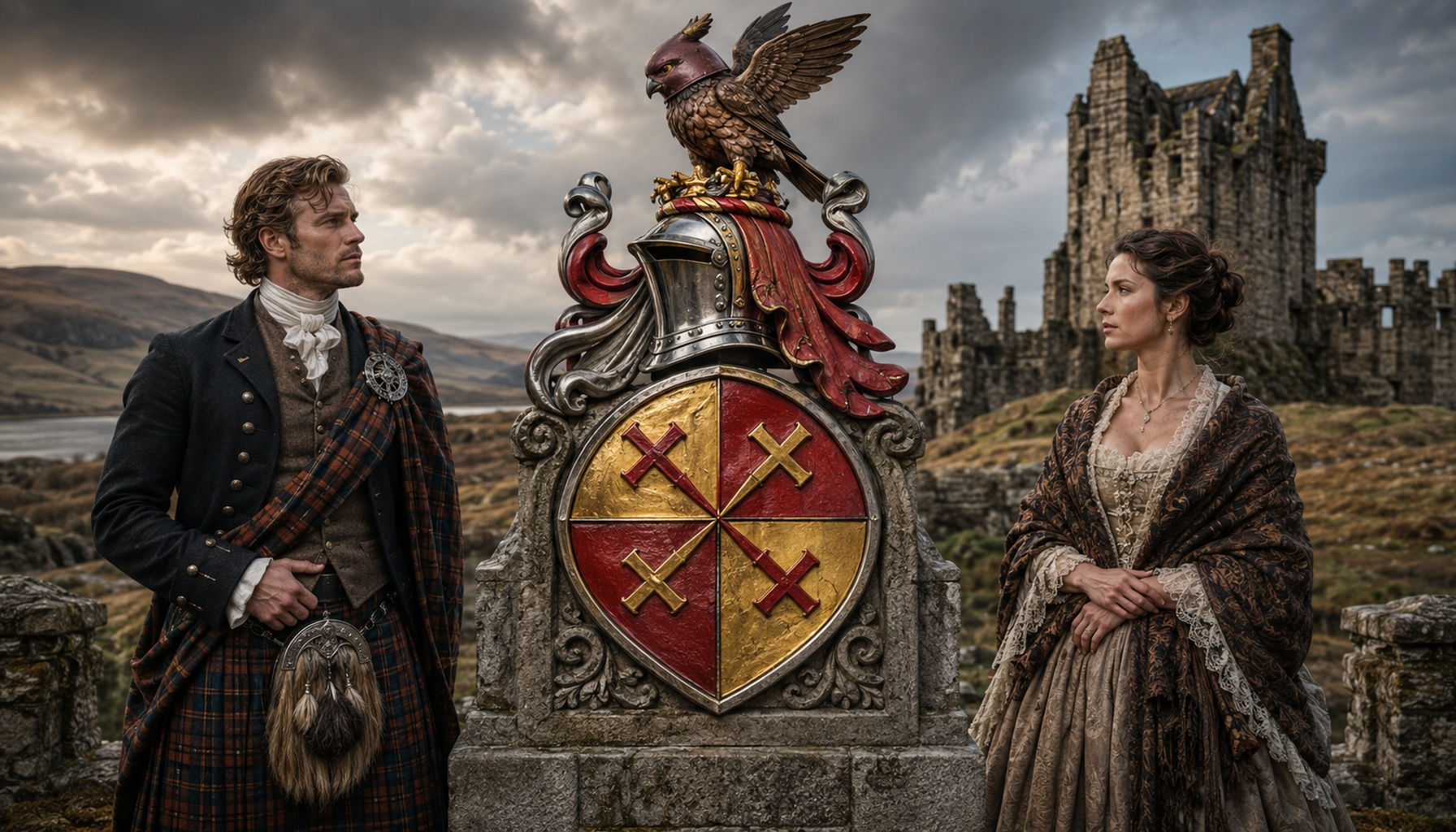
Clan Newlands was not a royal house in the grand theatrical sense, but something much more recognisably Scottish: a place-rooted family tradition shaped by land, locality, and the stubborn continuity of a surname. The name itself is territorial in character, drawn from places known as new lands, and it belongs to that familiar Scottish pattern in which identity grew out of settlement, service, tenancy, local standing, and memory carried across generations. In haplogroup terms, the primary lineage linked here is R1b1a1b1a1a2c1a1a1a1a1c, a branch within the wider R1b family so often found across Atlantic and northwestern European histories.
That matters because families like Newlands were made not only by documents, but by geography. A surname of this sort usually began with people associated with a particular tract of land, then hardened into hereditary identity as records, charters, parish memory, and local reputation accumulated. By the later medieval period we can glimpse named individuals such as Jasper Newlands in 1469, reminding us that this was a family present within the ordinary but vital machinery of Scottish life. The Newlands story is therefore best understood not as princely myth, but as a history of rootedness: territorial origin, local roots, service, heraldic memory, and enduring surname continuity.
Read more about Clan Kinninmont
A particularly evocative location anchor for the Newlands story is Monklands House in Lanarkshire, a site tied to the old territorial world from which surnames like Newlands drew their force. Monklands itself began as church land associated with the Cistercian monks of Newbattle Abbey, and over time the district developed into one of those layered Scottish landscapes where ecclesiastical ownership, estate management, later domestic architecture, and industrial transformation all left their mark. The house known today as Monklands House is an 18th-century building, notable for preserving the memory of that earlier estate world even as the surrounding area changed dramatically. It stands as a reminder that Scottish family identity was often anchored less in castles of feudal fantasy than in working houses, landed properties, and long-familiar districts whose names endured in local speech and family tradition. The house has been discussed as a surviving historic site, and there is reasonable support for saying it can still be viewed or visited in some form, though visitors should always check current access arrangements locally before making a special trip.
The haplogroup tag R1b1a1b1a1a2c1a1a1a1a1c places Clan Newlands within a deep paternal story that reaches far beyond medieval Scotland. Related or linked ancient DNA samples assigned within this broader lineage framework appear across a striking sweep of time and place: Late Iron Age West Yorkshire Wattle Syke (I14347), Iron Age Long Bredy in Dorset (I27382), Iron Age Briton from Thornholme in the East Riding of Yorkshire (I22060), Anglo-Saxon Sedgeford in Norfolk (SED005), Medieval Ireland at Kilteasheen in Roscommon Bishops Seat (KIL043), Carolingian Era Groningen in the Netherlands (GRO005), Merovingian Alt-Inden in North Rhine-Westphalia (IND007), Thuringii-associated Deersheim in Saxony-Anhalt (DRH026), Medieval Jutland at Vor Frue Kirkegard Aalborg (CGG100512), Bronze Age Drasenhofen in Austria (DSH008), Viking Iceland (FOV-A1), Aquitani Pech-Maho in France (PECH8), and even later colonial-era Calvert family burials in Maryland (I2097 and 2099). These are not evidence of direct descent from Clan Newlands, and they should not be treated as such. What they do show is that the wider paternal branch linked to this family sits inside a very old northwestern European genetic landscape shaped by Bronze Age movement, Iron Age Britain, early medieval migrations, and the maritime world of the North Sea and Atlantic.
Explore ancient DNA in post-Roman Britain
If you carry the Newlands surname, have Newlands ancestors in Scotland, or simply want to know whether your DNA may connect with this family tradition or with related ancient samples from Britain and northern Europe, the next step is to test it. Upload your DNA to MyTrueAncestry and see whether you match Clan Newlands, its haplogroup background R1b1a1b1a1a2c1a1a1a1a1c, or any of the linked ancient DNA discoveries that help illuminate the deeper human story behind the name.
Comments