Clan McQuillan
– 2 min read


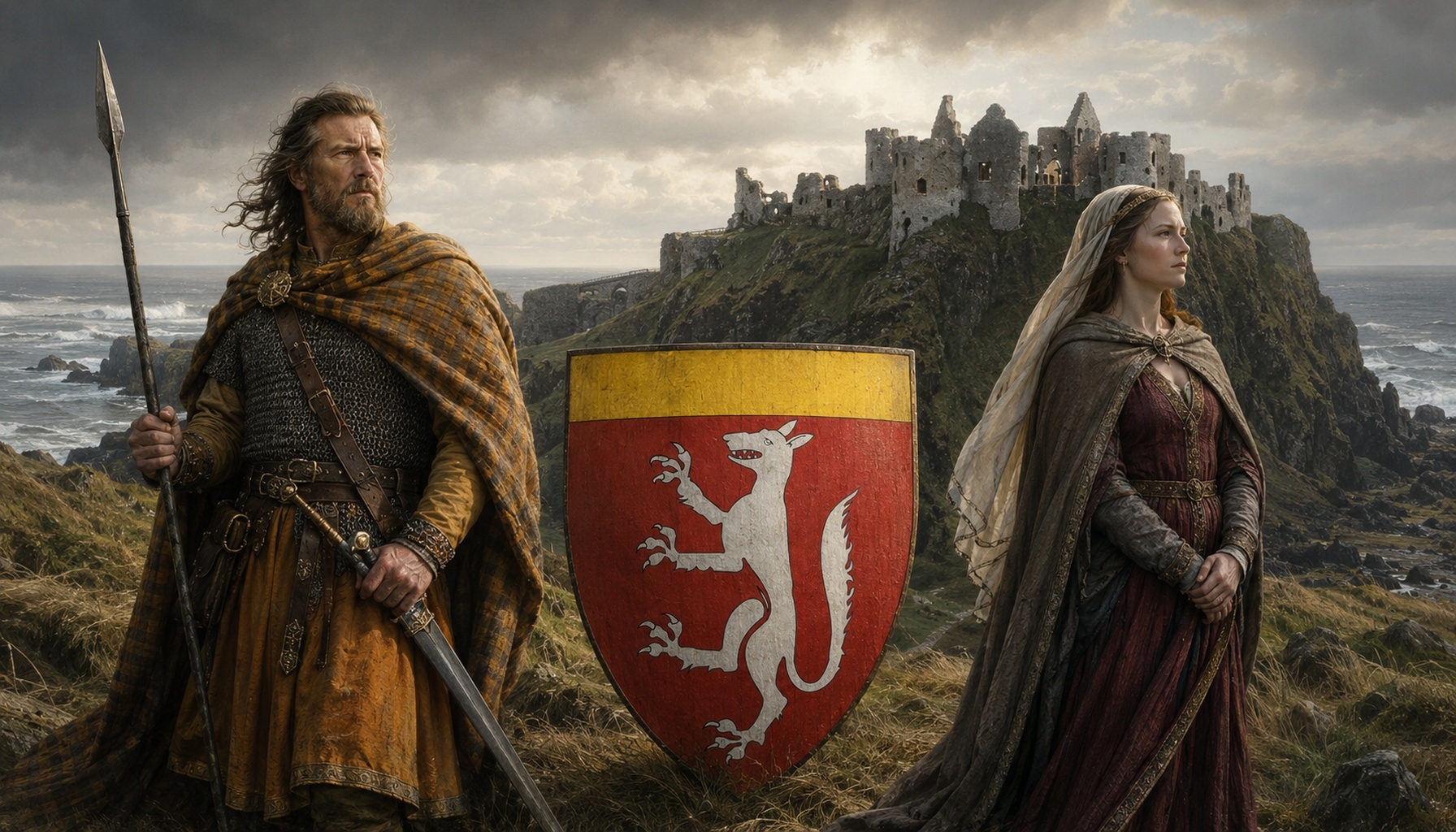
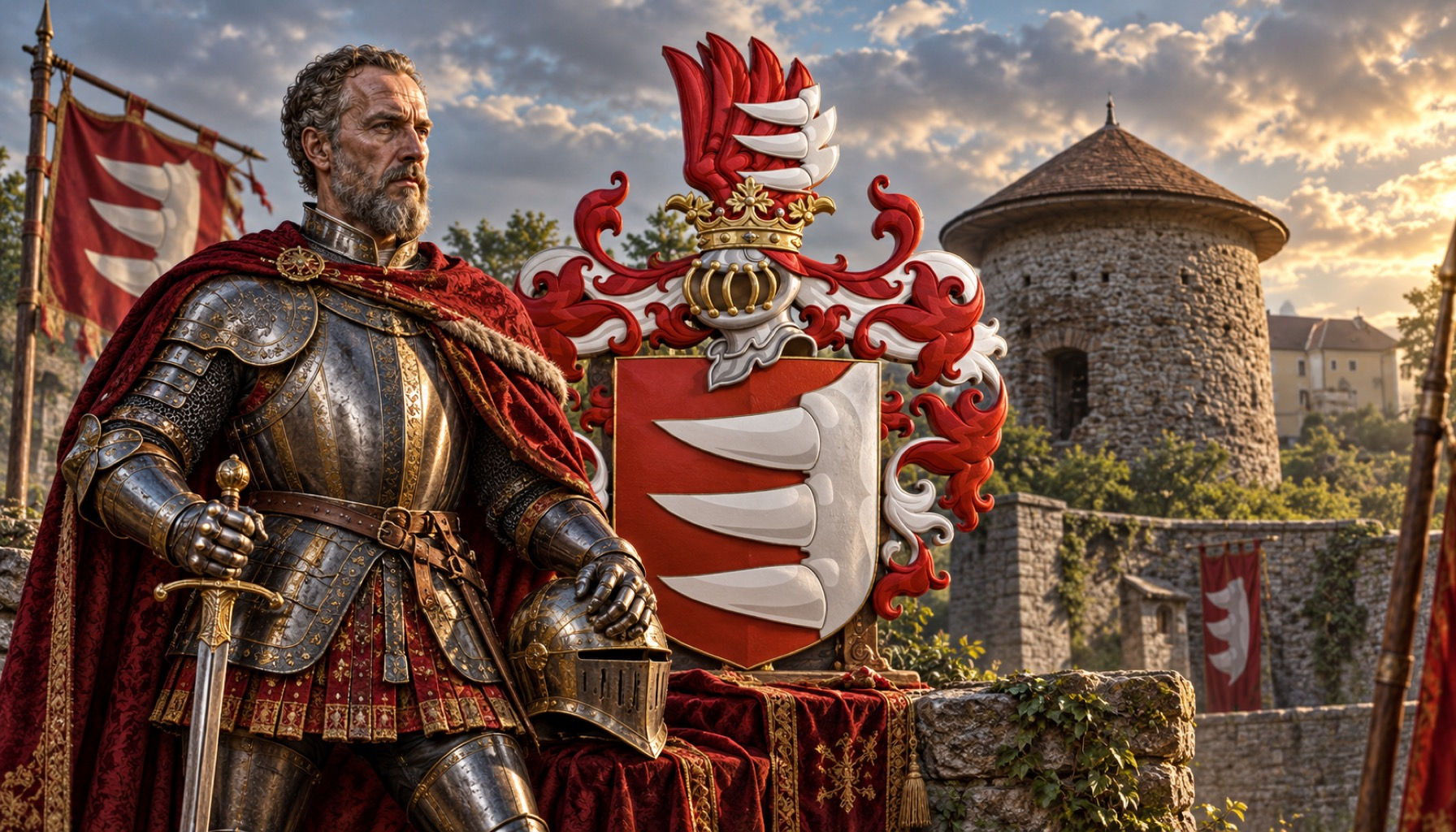
Clan McQuillan was a northern Irish lordly family rooted in Ulster, especially along the north coast, and remembered for the way it stood at the meeting point of Gaelic and Norman-Irish society. Their story is not a neat one-line tale of a single ethnic origin. It is, rather, a very Irish medieval story: land, castles, war bands, marriages, shifting loyalties, and families who learned to survive by adapting to the world around them. The haplogroup most closely associated here is R1b1a1b1a1a2c1a5d3a1a, a lineage found within the broader paternal landscape of the Atlantic world.
The McQuillans are often linked in origin traditions to the de Mandeville line, with Hugelin de Mandeville among the named figures associated with the family background. Over time, families of this kind could become deeply embedded in Irish political life, taking on local customs and power structures while still carrying memories of earlier Norman connections. In historical terms, the McQuillans fit the regional lordship pattern of medieval and early modern Ulster: authority tied to territory, military strength, kinship networks, and repeated conflict with rival powers in a landscape where control was never entirely secure.
Read more about Clan McDonnell
Dunluce Castle is the great location anchor for the McQuillan story, and what a setting it is. Perched dramatically on a basalt outcrop on the coast of County Antrim, the castle seems almost to grow out of the cliff itself, with the Atlantic crashing below and a narrow bridge connecting the site to the mainland. The earliest castle on the site is usually placed in the late medieval period, and Dunluce became strongly associated first with the McQuillans before later passing into the hands of the MacDonnells. It was not simply a picturesque ruin avant la lettre. It was a statement of power: visible, defensible, and perfectly placed in a region where sea routes, raiding, trade, and territorial rivalry all mattered. Parts of the later complex included domestic buildings and a settlement near the castle, showing that this was not only a fortress but a lived political center. Yes, it can still be visited today, and it remains one of the most striking historic sites in Northern Ireland.
From a DNA perspective, the primary lineage tag here is R1b1a1b1a1a2c1a5d3a1a. We should be careful, though: ancient DNA samples linked to this broader paternal branch are related comparators, not proof of direct descent from Clan McQuillan itself. Still, they help sketch the deeper human backdrop behind families of the Irish and British world. Examples include Rathlin1B from Copper Age Ireland, as well as later linked samples such as I11586 from the Early Anglo-Saxon cemetery at West Heslerton in Yorkshire, I12775 from Carsington Pasture Cave in Derbyshire, I12783 from Lechlade-on-Thames in Gloucestershire, I11156 from Bradley Fen in Cambridgeshire, and I12785 from Iron Age Greystones Farm in Gloucestershire. Taken together, these samples hint at the long and layered history behind lineages found around Britain and Ireland: prehistoric continuity, Iron Age communities, and the complicated population mixtures of the early medieval centuries.
Explore ancient DNA in post-Roman Britain
If Clan McQuillan is part of your family story, this is exactly the sort of history worth exploring with both documents and DNA: a coastal Ulster clan shaped by castles, rivalry, and a mixed Gaelic-Norman world. Upload your DNA to MyTrueAncestry to see whether you match the McQuillan family profile or related ancient DNA samples connected to haplogroup R1b1a1b1a1a2c1a5d3a1a.
Comments