Clan MacNaughten

– 3 min read


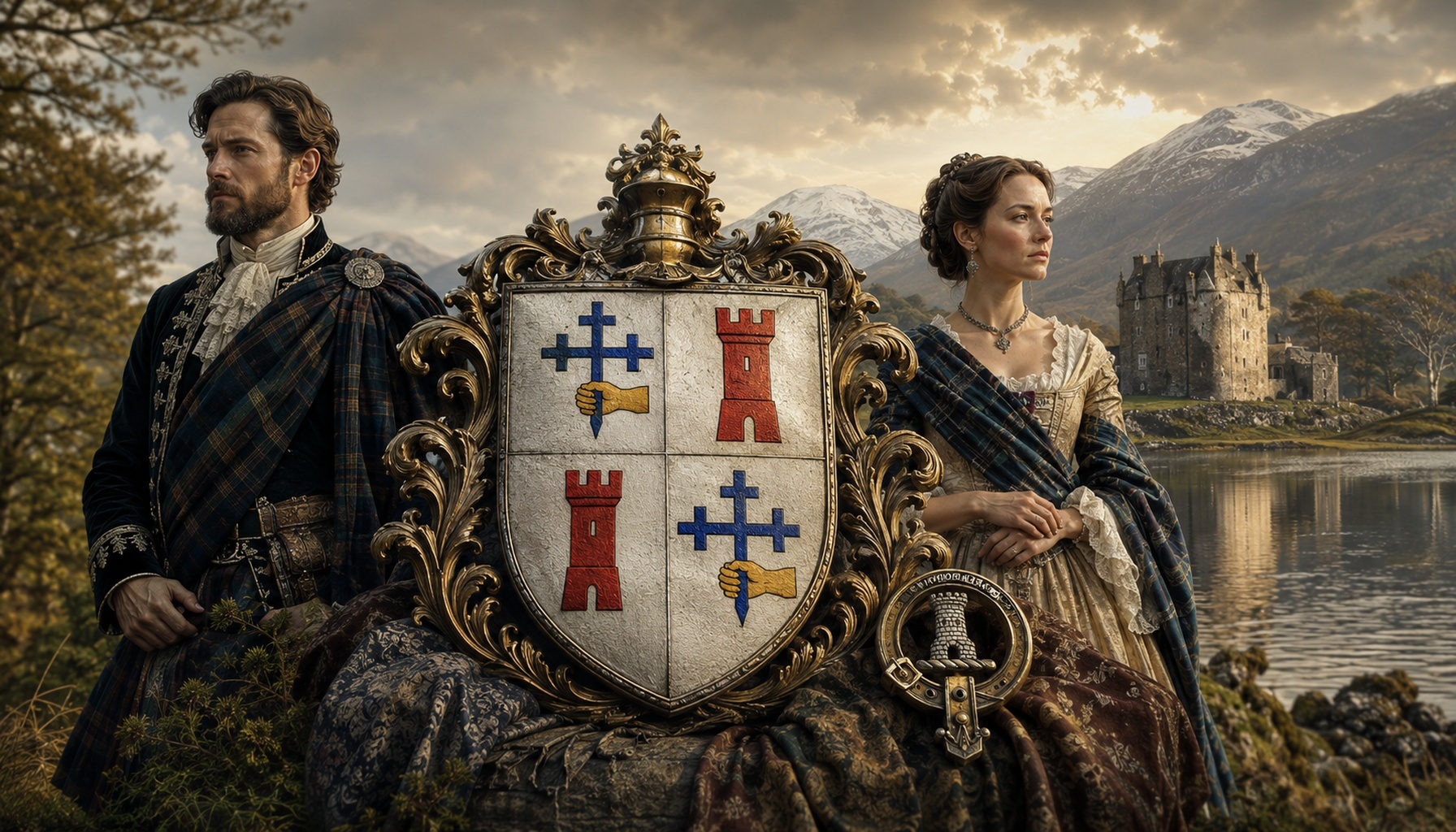
Clan MacNaughten was one of the old Gaelic kindreds of the western Scottish Highlands, rooted above all in Argyll and the country around Loch Awe. In the classic Highland way, this was not simply a surname but a social world: land, kin, fighting service, and loyalty to a chief were all bound together. The family emerged within Gaelic-speaking Highland society, where identity was carried in memory as much as in parchment, and where a clan's standing depended on alliances, rivalries, and the ability to hold its ground in a difficult political landscape. Haplogroup tags linked with the family include R1b, with the primary family haplogroup here noted as R1b1a1b1a1a2c1a5d3a.
The MacNaughtens belong to that recognisable Highland pattern which mixed deep local roots with a readiness to adapt when the world changed around them. Their story is one of service and survival rather than smooth upward progress. Chiefs, cadet lines, heraldry, tartan, and the memory of ancestral territory all helped preserve the clan's identity long after the old Gaelic order had begun to fray. One early named figure is Gilchrist Macnachten, recorded in 1297, a reminder that by the late 13th century the family was already part of the documented political fabric of medieval Scotland, standing at the meeting point of local lordship, wider royal power, and the often rough business of Highland loyalties.
If you want one place that anchors MacNaughten history to the map, it is Dunderave Castle on the northern shore of Loch Fyne in Argyll. Although the clan is closely associated more broadly with Loch Awe country, Dunderave became one of the chief seats of the family and a visible expression of Highland lordship in stone. The castle as seen today is largely a 16th-century tower house, later altered and restored, standing in a dramatic waterside setting that still gives a strong sense of how power worked in the west Highlands: not abstractly, but through control of routes, shorelines, neighbours, and defended residences. Its later history included periods of decline and rebuilding, which is itself very Highland, because these places were rarely frozen museum pieces; they were lived in, fought over, repaired, and reinvented. Dunderave Castle still stands and can be viewed from the outside, so it remains a real destination for anyone tracing the MacNaughten story on the ground.
From a DNA perspective, the MacNaughten haplogroup tag R1b1a1b1a1a2c1a5d3a sits within a wider northwestern European paternal landscape that reaches deep into later prehistory and the early historic period. Related or linked ancient samples include I11586 from the Early Anglo Saxon cemetery at West Heslerton in Yorkshire, I12775 from Celtic Briton Carsington Pasture Cave in Derbyshire, I12783 from Celtic Briton Lechlade-on-Thames in Gloucestershire, I11156 from Celtic Briton Bradley Fen in Cambridgeshire, I12785 from Iron Age Greystones Farm in Gloucestershire, and Rathlin1B from Copper Age Ireland. These individuals should not be presented as direct ancestors of Clan MacNaughten, but they help sketch the broader genetic backdrop from which later British and Irish paternal lineages emerged. In other words, they are not the clan itself, but they belong to the long human story behind the kind of ancestry from which Highland families later formed.
See ancient DNA in post-Roman Britain
Clan MacNaughten carries all the ingredients that make Highland history so enduring: Gaelic origins, remembered territory, martial reputation, and family solidarity surviving across centuries of upheaval. If your own line may connect to MacNaughten, Argyll, or to the wider R1b1a1b1a1a2c1a5d3a story, you can explore that further by uploading your DNA to MyTrueAncestry and seeing whether you match this family or related ancient DNA samples.
Comments