Clan Mac Suibhne
– 3 min read


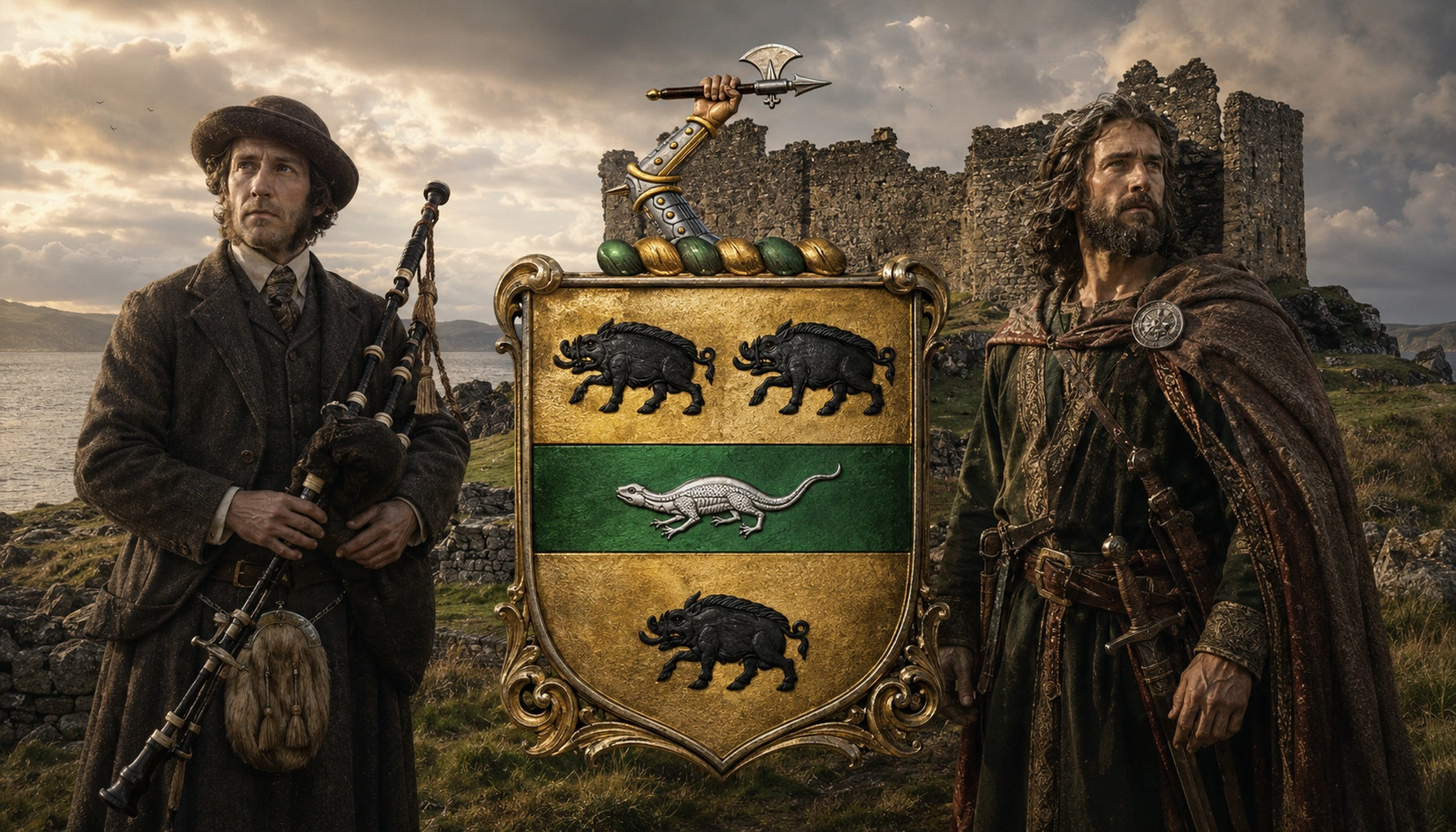
Clan Mac Suibhne was a Scottish-Gaelic family that crossed into Ireland and became one of the best-known gallowglass kindreds of the northwest, especially in Donegal. Their story is one of movement across the North Channel, from the western Scottish and Hebridean world into Gaelic Ireland, where military service, landholding, marriage alliances, and regional lordship could turn a seaborne warrior family into a rooted political force. In genetic tagging terms, the primary family haplogroup associated here is R1b1a1b1a1a2c1a1f1a1, a branch linked more broadly with long-standing Atlantic and Celtic-zone paternal histories.
The Mac Suibhnes belong to that very recognisable medieval Gaelic pattern: not simply migrants, and not merely mercenaries either, but a kin-group that carried arms, clients, reputation, and memory with them. They entered Irish politics through service and became deeply woven into the fabric of northwest Irish society. Their name survives in castles, local tradition, heraldic memory, and the history of captains who operated in a world where sea routes mattered as much as roads. One early historic figure often associated with the family is Dubhghall Mac Suibhne, who flourished in the mid-13th century, from 1232 to 1262, in the period when the family was consolidating its standing in the wider Gaelic maritime zone.
Read more about Clan McDonnell
If you want a physical place to begin with the Mac Suibhnes, Castle Sween is the obvious anchor. Standing on Loch Sween in Knapdale, Argyll, it is one of the oldest stone castles in Scotland and is traditionally connected with the MacSween or Mac Suibhne family. The castle occupies a commanding coastal position, which tells you almost everything important at once: this was a world of sea-lanes, lordship, and strategic movement between Argyll, the Hebrides, and Ireland. Rather than imagining a hard border between Scotland and Ireland, it is much better to picture a Gaelic maritime region, stitched together by ships, kin ties, warfare, and lordly ambition. Castle Sween later passed through several hands and suffered in the struggles of the later Middle Ages, but its surviving masonry still gives a vivid sense of the power such a site projected. Yes, it can still be visited today, and for anyone interested in Mac Suibhne heritage it is exactly the sort of place where the landscape makes the history suddenly feel real.
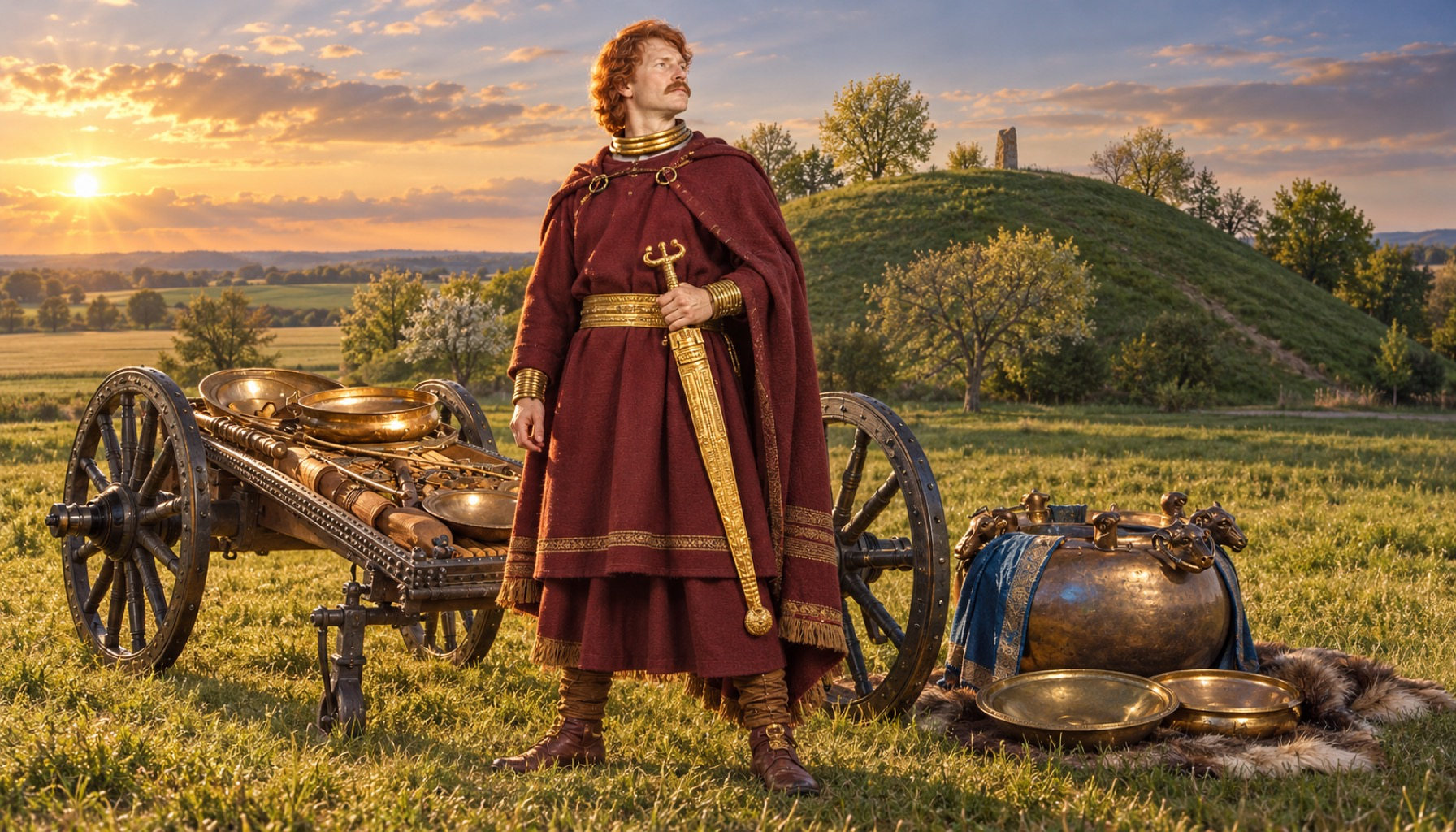
The haplogroup tag linked here, R1b1a1b1a1a2c1a1f1a1, should be read carefully: it does not prove direct descent from any named ancient individual, but it does place Mac Suibhne heritage within a wider web of related paternal lineages found in ancient DNA across Britain and Europe. Related or linked samples include several Celtic Durotriges burials from Duropolis at Winterborne Kingston in England, such as WBK12, WBK20, WBK29, WBK41, WBK05, WBK30, WBK43, WBK06, WBK08, WBK18, and WBK191, alongside other linked finds like Celtic Briton Oxfordshire Yarnton England I21182, Iron Age Worlebury Somerset England I11991, Iron Age Hillfort Battlesbury Bowl England I21309, Bell Beaker Wiltshire Upavon England I4950, Bronze Age Amesbury Down Wiltshire England I2417, Bronze Age Trumpington Meadows Cambridge England I3256, Bronze Age Boatbridge Quarry South Lanarkshire Scotland I5473, Early Bronze Age England Thames I5377, and Ireland Copper Age Rathlin2B. Further related samples appear across a remarkably wide map, from Bronze Age Orkney Westray Links of Noltland KD061 to Imperial Roman Era Zadar Croatia I26776, Late Roman Conimbriga Portugal R10488, Early Medieval Belgium Sint-Truiden Groenmarkt ST2025, Medieval Belgium outsider Sint-Truiden Onze-Lieve-Vrouwekerk ST1308, Gallic France Parancot CGG023699, and Merovingian Alt-Inden IND013. What that suggests, in broad and sensible terms, is that the Mac Suibhne haplogroup sits inside a deep western European story with strong prehistoric and later historic roots in Atlantic Britain and Ireland, not as a neat single line of identity, but as part of the long human background from which Gaelic warrior families emerged.
Read more about Clan Gallagher
Mac Suibhne history is a fine reminder that families are not static things. They move, fight, marry, adapt, and settle, while still keeping a strong sense of who they are. If you carry Mac Suibhne heritage, or simply suspect a link to the gallowglass world of Donegal and the western seaways, you can upload your DNA to MyTrueAncestry and see whether you match this family story or any of the related ancient DNA samples connected with haplogroup R1b1a1b1a1a2c1a1f1a1.


Comments