Clan Lamont

– 3 min read


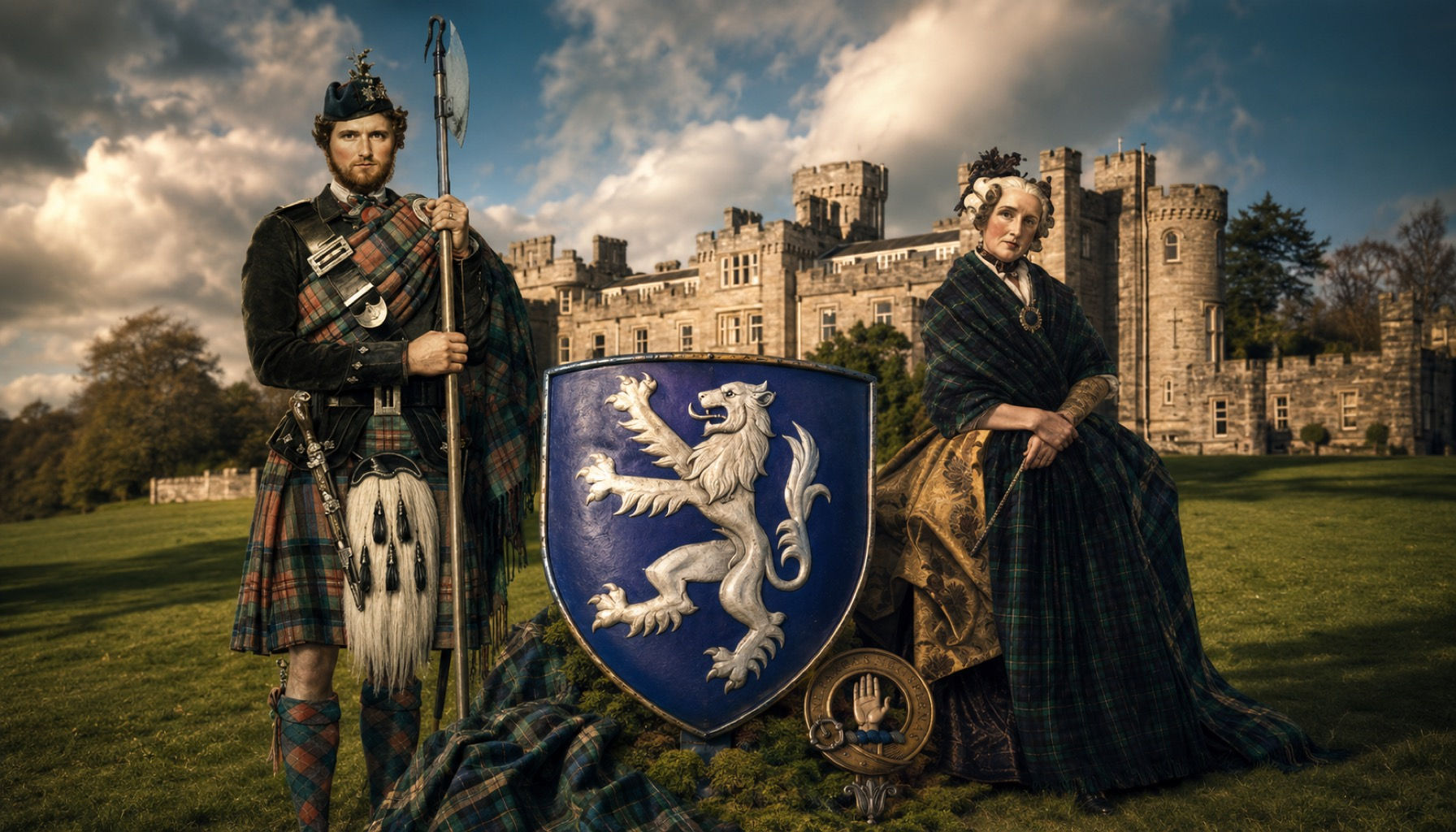
Clan Lamont was one of the old Gaelic kindreds of western Scotland, rooted above all in Cowal in Argyll, where sea, mountain, and kinship shaped power as much as any royal charter did. This was a Highland clan in the fullest sense: a community held together by chiefship, inherited land, military obligation, oral tradition, and loyalty to ancestral territory. In genetic tagging terms, the primary family haplogroup linked here is R1b1a1b1a1a2c1a1a1a1a1a1a1, a branch within the broad Atlantic-facing paternal lineages so common across parts of Ireland and Britain.
The Lamonts emerged from the Gaelic world of the western seaboard, a region tied together by boats, lordship, and language more than by tidy modern borders. Their story belongs to the historical pattern of the western Highlands: descent remembered through generations, authority expressed through landholding and heraldry, and survival tested by rivalry with neighboring clans, especially in Argyll. One early named figure is Sir Laumon, recorded in 1235, a reminder that the family was already visible in the documentary record by the 13th century. Like many Highland families, the Lamonts experienced both prominence and terrible reversals, yet the clan identity endured through memory, surname continuity, and attachment to place.
One of the strongest location anchors for Clan Lamont is Castle Toward on the Cowal peninsula, looking out across the Firth of Clyde in a landscape that still feels strategically chosen. The earlier castle associated with the site stood near Toward Point and was linked to the Lamonts before later changes in ownership and rebuilding transformed the estate. The modern baronial mansion known as Castle Toward dates largely to the 19th century, but the importance of the place is older than that architecture. It sits in a commanding coastal position, the sort of place that tells you immediately why families fought to control these shores: sea routes, visibility, defensible ground, and proximity to the clan heartland. The estate later became known for its grand house and grounds rather than as a medieval fortress in the strict sense, but for Lamont heritage it remains a meaningful territorial marker in Cowal. As a historic site and estate area, it has been accessible to visitors in modern times, and the location can still reasonably be visited, even if access to individual buildings may vary with ownership and site conditions.
Read more about Clan MacLachlan
From the ancient DNA angle, the Lamont haplogroup tag R1b1a1b1a1a2c1a1a1a1a1a1a1 connects not to a single proven ancestor, but to a wider web of related or linked paternal signatures found around the Gaelic and Norse-Gaelic world. Particularly striking are numerous medieval samples from Ballyhanna, County Donegal, Ireland, including individuals such as Sk197an, Sk197y, Sk197q, Sk197am, Sk197s, Sk197ab, Sk197u, Sk197t, Sk197r, Sk197ad, Sk197x, Sk197n, Sk197aa, Sk197z, Sk197ak, Sk197w, Sk197ai, Sk197m, Sk197ah, Sk197ag, Sk197v, Sk197ac, Sk197al, Sk197af, Sk197ae, Sk197o, Sk197aj, HAN197x, Sk197a through Sk197p, and HAN197. Related medieval Irish examples also appear at Kilteasheen in Roscommon, including KIL041, KIL044, KIL033, KIL037, KIL009, and KIL014. Further linked finds extend into the Norse Atlantic world, with VK95 from Viking Age Hofstadir in Iceland and VK44 from the medieval church site on Sandoy in the Faroe Islands. None of these samples should be read as direct Lamont ancestors without specific evidence, but together they sketch the larger genetic backdrop of the North Atlantic world from which Highland Gaelic lineages like the Lamonts emerged.
Read more about Clan Mackenzie
Clan Lamont is a fine example of how family history is rarely just about a name. It is about a territory in Cowal, a Gaelic-speaking past, remembered chiefs, hard conflict, lost property, and a stubbornly persistent identity carried forward across centuries. If you have Lamont roots, or roots anywhere in Highland Scotland or the Irish Sea world, you can upload your DNA to MyTrueAncestry and explore whether you match Clan Lamont, its related haplogroups, or the ancient DNA samples linked to this wider Atlantic story.


Comments