Clan Laigin
– 3 min read


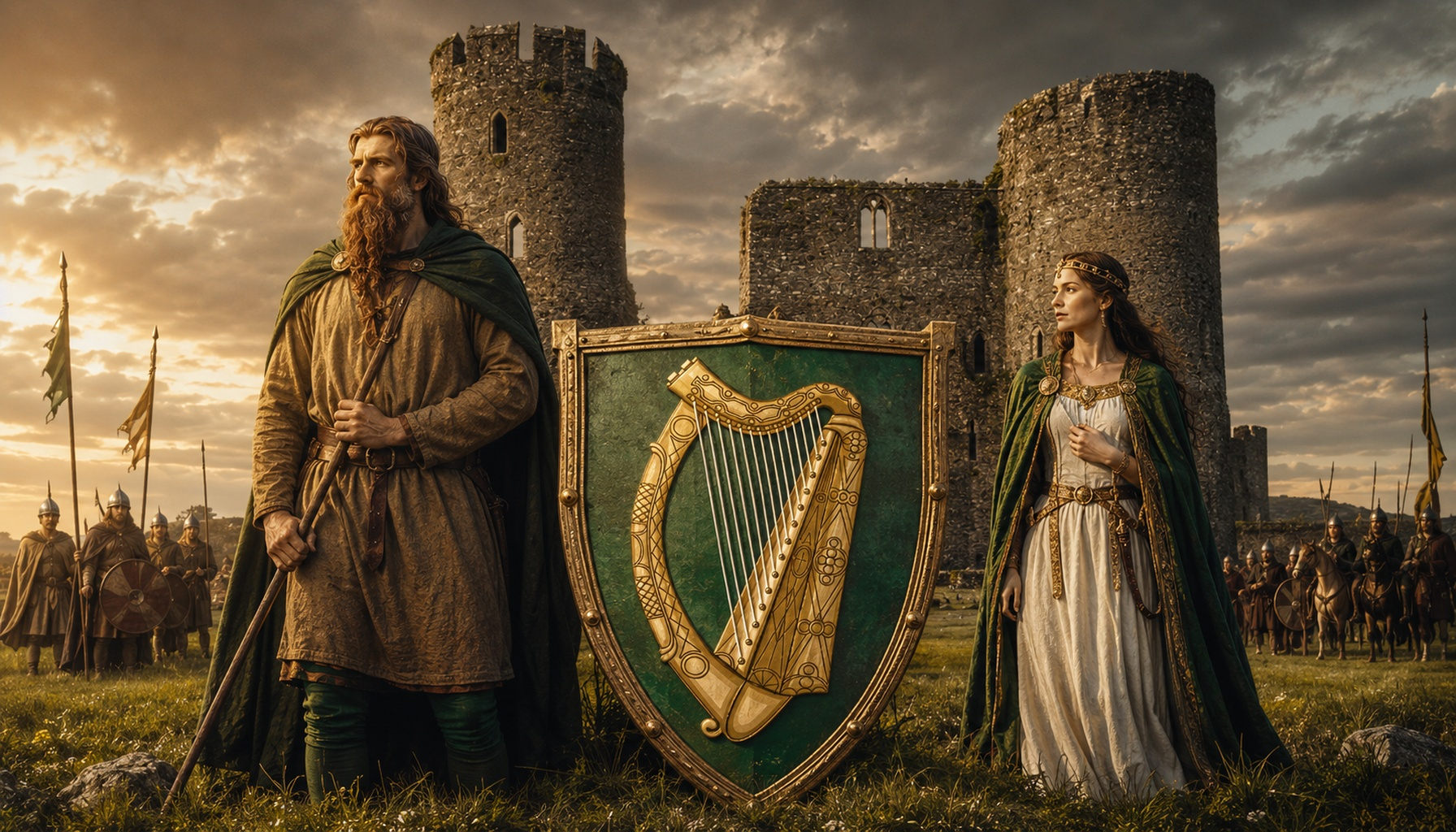
Clan Laigin was not a later surname clan in the Scottish sense so much as an older Gaelic Irish identity rooted in a people, a region, and a memory. The Laigin were the ancient people of Leinster, and their name survives in the province itself. In that sense, this is heritage from a very deep layer of Irish history, where belonging came through kinship groups, regional loyalties, sacred landscapes, and origin legends rather than fixed modern surnames. The primary haplogroup linked here is R1b1a1b1a1a2c1a1a1a1a1, a paternal line associated with wider patterns seen across parts of Atlantic and western Europe.
What makes Clan Laigin so fascinating is that it carries the feel of early Ireland before the country was neatly parcelled into later dynastic labels. This was a world of provincial kings, rival kindreds, inauguration places, and stories half poised between history and legend. The Laigin belonged above all to Leinster in eastern Ireland, though their memory reaches into the broader Gaelic imagination. Among the best known names associated with this old lineage tradition is Labraid Loingsech, remembered in Irish tradition as a High King of Ireland, dated here to 369. Whether one approaches such figures as history, legend, or a blend of both, they show how strongly the Laigin endured in Ireland's ancestral storytelling.
Read more about Clan Mac Murchada
A useful location anchor for thinking about this older Irish world is Rathcroghan in County Roscommon, one of the great royal landscapes of ancient Ireland. Rathcroghan is not just one monument but a whole archaeological complex of earthworks, burial mounds, enclosures, and ritual sites spread across the landscape. It is best known as the traditional royal site of Connacht, and at first glance that may seem a little outside Laigin territory, but that is precisely why it matters: early Irish identity was shaped through a network of provincial centres, each with its own political and ceremonial importance. Rathcroghan helps us picture the kind of world in which identities such as Laigin took shape, where kingship, assembly, myth, and ancestry were tied to visible places on the land. It is also entangled with saga tradition, especially the Tain and the cave of Oweynagat, the so-called Cave of the Cats. Yes, it can still be visited, and for anyone interested in early Ireland it is one of those rare places where archaeology and legend still sit side by side in the fields.
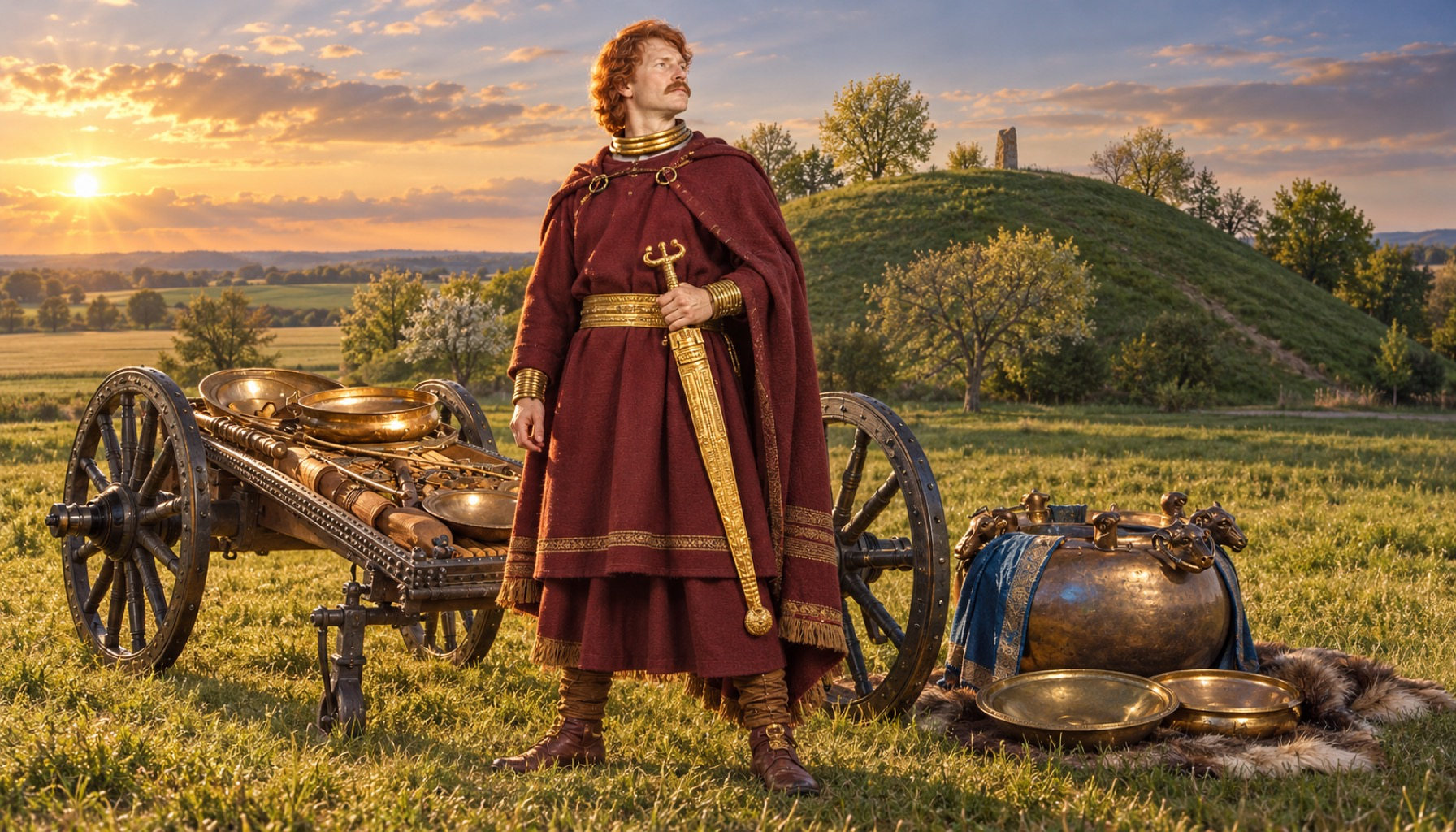
From a DNA point of view, the Laigin story sits within a much wider web of related paternal lines rather than a single provable chain to named ancient individuals. Haplogroup R1b1a1b1a1a2c1a1a1a1a1, or closely linked branches, appears in a striking spread of ancient samples: the Gallic Cenomani horse co-burial at Verona Seminario Vescovile in Italy (3232s), Bronze Age Drasenhofen in Austria (DSH008), and several medieval Irish samples from Kilteasheen, Roscommon, including KIL033, KIL037, and KIL009. Related examples also turn up in Iron Age and later Britain and northwestern Europe, such as Wattle Syke in West Yorkshire (I14347), Long Bredy in Dorset (I27382), Thornholme in East Riding of Yorkshire (I22060), and Chemin de Coupetz in Marne, France (I19359), as well as Viking Age and medieval North Atlantic contexts including Hofstadir in Iceland (VK95), Panum in the Faroe Islands (VK24), Sandoy Church (VK44), and Viking Iceland (FOV-A1). These do not prove direct descent from Clan Laigin, of course, but they do show that this paternal signature belongs to a broad and mobile historical world stretching from Bronze Age central Europe to medieval Ireland and the Viking Atlantic.
Explore Neolithic Irish Kinship
If Clan Laigin speaks to your own family story, the appeal is not only in kings and old names, but in that deeper continuity of land, memory, and Gaelic identity. Upload your DNA to MyTrueAncestry and see whether you match the family or any of these related ancient DNA samples from Ireland, Britain, and the wider Celtic and Atlantic world.
Comments