Clan Jardine
– 3 min read


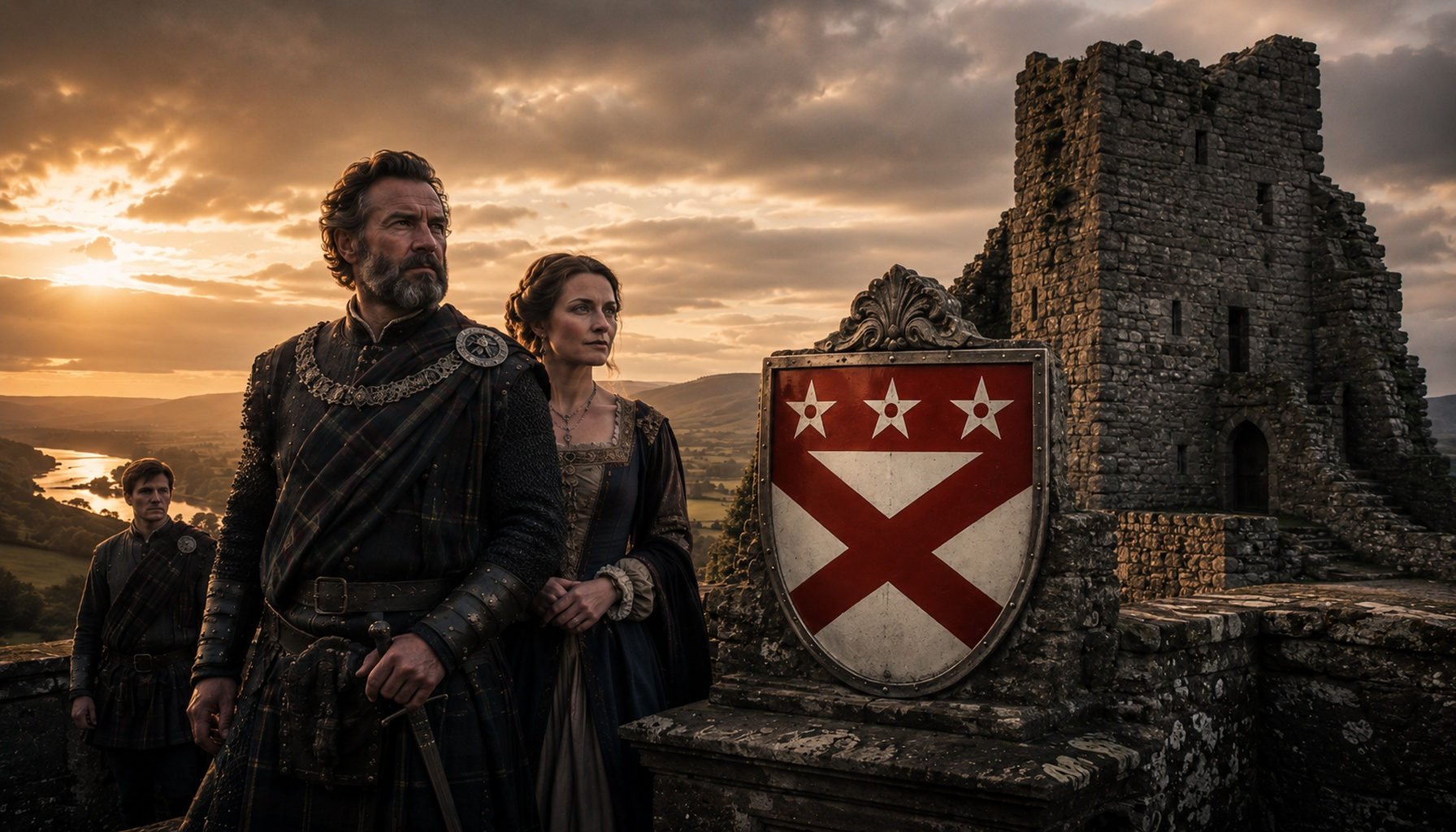
Clan Jardine was a Scottish Border clan of Dumfriesshire, shaped not in the misty cliche of the far Highlands but in the harder, more practical world of the south-west frontier. Their story belongs to the Anglo-Scottish Borders, where families were made and tested by landholding, local loyalties, military readiness, and the constant need to defend what was theirs. The primary family haplogroup linked here is R1b1a1b1a1a2c1a1i, a branch associated more broadly with long-running paternal lines found across Britain and Atlantic Europe.
The Jardines seem to have taken their name from place, as so many old Scottish families did, and from early on they were anchored in the Annandale district of Dumfriesshire. That matters, because Border identity was intensely local. A clan here was not simply a romantic badge but a functioning social unit: kin, tenants, allies, retainers, and a landed base. The Jardine motto, Cave Adsum, meaning beware, I am present, sounds exactly right for that world, watchful, armed, and slightly menacing in the best Border fashion. Over time the family built a reputation for local authority and service, while preserving continuity through heraldry, estate memory, and regional standing. Among the notable later figures are Sir Alexander Jardine, 8th Baronet, who died in 1799, and Sir William Jardine (1800-1874), the celebrated naturalist and baronet whose life shows how an old Border family could move from a martial frontier past into the wider intellectual world of modern Britain.
Read more about Clan Johnstone
No family like this floats free of geography, and for the Jardines the great anchor is Jardine Hall near Lockerbie in Dumfriesshire. The house stands on or near the long-established seat of the family and preserves that deep sense of territorial continuity which is so important in Border history. Jardine Hall, in its present form largely an 18th-century country house with earlier roots behind it, replaced or absorbed the memory of an older fortified residence. That is exactly what one would expect in the Borders: first a defensible stronghold in a violent frontier zone, then a more comfortable landed house as politics settled and status expressed itself differently. The estate remains closely tied to the identity of the chiefs of Clan Jardine, and the site still speaks to centuries of local power, kinship, and adaptation. As a historic exterior and estate setting it is known and identifiable, and the hall can reasonably be described as a place that can still be visited, at least from the surrounding area and by arrangement or depending on access conditions.
For DNA enthusiasts, the haplogroup R1b1a1b1a1a2c1a1i opens an intriguing wider landscape. It does not prove direct descent from any named ancient individual, and we should be careful about that, but it does place the Jardine line within a broader network of related or linked paternal signatures seen in ancient Europe and especially Britain. Among the linked samples are multiple Celtic Durotriges burials from Duropolis at Winterborne Kingston in England, including WBK12, WBK20, WBK29, WBK41, WBK05, WBK30, WBK43, WBK06, WBK08, WBK18, and WBK191, alongside Iron Age and later individuals from East Kent, Oxfordshire, Somerset, Yorkshire, East Lothian, Applecross, Orkney, and Moray. The pattern is rather striking: a strong presence in Iron Age and later Britain, with echoes also in Pict-era Scotland, Anglo-Saxon England, medieval Ireland, Belgium, Iberia, and parts of the former Roman world. In other words, the Jardine haplogroup sits comfortably within the deep paternal tapestry of the islands and nearby western Europe, fitting a Border clan whose historical identity was Scottish, regional, and enduring.
If you carry the Jardine surname, have Dumfriesshire Border ancestry, or simply want to see whether your DNA connects with Clan Jardine or the related ancient samples linked to R1b1a1b1a1a2c1a1i, you can explore that story directly. Upload your DNA to MyTrueAncestry and compare your results with historic families, regional populations, and ancient individuals from Britain and beyond.






Comments