Clan Davidson
– 2 min read


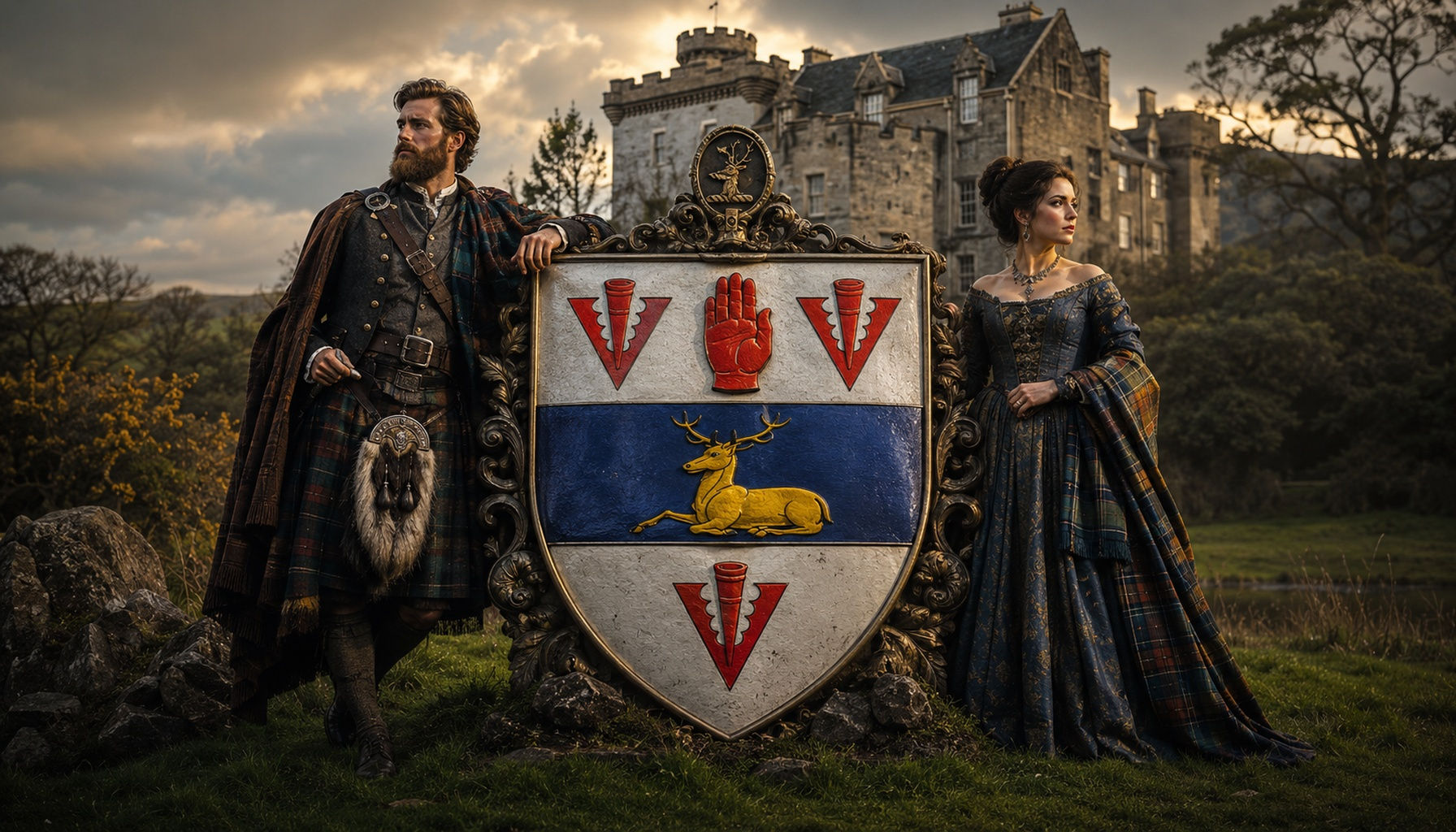
Clan Davidson was a Highland Scottish clan rooted above all in Badenoch, and closely tied to the wider Clan Chattan confederation, that famously knotty alliance of kindreds, captains, and rival claims that shaped so much of life in the central Highlands. In other words, the Davidsons were not simply a surname floating loose in the mist. They belonged to a very particular world of Gaelic kinship, military service, landholding, obligation, feud, and memory. Their primary linked family haplogroup here is I1a2a2a4b2c2, a paternal line with a long northern European story behind it.
The Davidson story is best understood in that Highland setting where family identity was political as much as personal. The clan developed through service, local authority, and participation in the struggles that bound together and pulled apart the Clan Chattan kindreds. Their heritage includes battle traditions, alliances, heraldry, oral history, and a strong attachment to ancestral ground. Like many Highland families, they knew both prominence and difficulty: strength in confederation, danger in feud, pressure in national wars, and then the slower upheavals of later social change. A named historical figure connected with the family is Henry Davidson (1762), a reminder that clan history is carried not only by legendary founders but also by documented individuals who appear in the record as the centuries move on.
A good location anchor for the Davidson world is Tulloch Castle, near Dingwall in Ross-shire, a later historic stronghold whose story captures the layered character of Highland and northern Scottish history. The castle site has medieval origins, with the present building largely taking shape from a tower house expanded over the centuries, and it became associated especially with the Munros of Foulis before later alterations gave it the grander form people recognise today. What makes Tulloch Castle so evocative is that it is not a frozen relic from one single date. Like many Scottish castles, it is a structure built, rebuilt, adapted, and reimagined across generations, reflecting shifting fortunes, tastes, and power. It stands as the sort of place through which one can picture the networks of clan society, lordship, defence, hospitality, and regional ambition that formed the backdrop to families such as the Davidsons. And yes, it can still be visited today, which makes it a very tangible stop for anyone tracing Highland heritage beyond the page and into the landscape itself.
Read more about Clan Mackenzie
From the DNA side, the Davidson-linked haplogroup I1a2a2a4b2c2 connects broadly to a wider ancient northern European and early medieval world rather than proving any simple one-to-one descent from a single excavated person. Related or linked samples include Migration Period Hungary Rakoczifalva RKO007, the Goth-associated Maslomecz sample PCA0100, Late Merovingian Bavaria at Ergoldsbach Doernbacher Feld in Germany ErgDF2, Viking Age Sweden at St Martins Church, Skanninge in Ostergotland A017-004, Iron Age Denmark Eastern Sjaelland Varpelev Vest CGG107413, Viking Age Trelleborg Kingdom of Denmark CGG106824, Viking Age Galgedil on Funen VK446, Iron Age Kragehaven Odetofter Denmark VK532, and Late Iron Age Tollemosegard Denmark VK71. Taken together, these linked finds sketch a deep background in the Scandinavian and north-central European zone, the kind of long-distance prehistoric and early medieval context that often sits behind later family identities in Britain without collapsing them into a single neat origin story.
Explore Viking Age Skanninge DNA
If Clan Davidson is part of your family story, this is exactly where history and genetics become most interesting: not as fantasy, but as evidence layered over tradition, place, and record. Upload your DNA to MyTrueAncestry and see whether you match Clan Davidson, or related ancient DNA samples linked to haplogroup I1a2a2a4b2c2 and the wider northern European past.
Comments