Clan Creel

– 3 min read


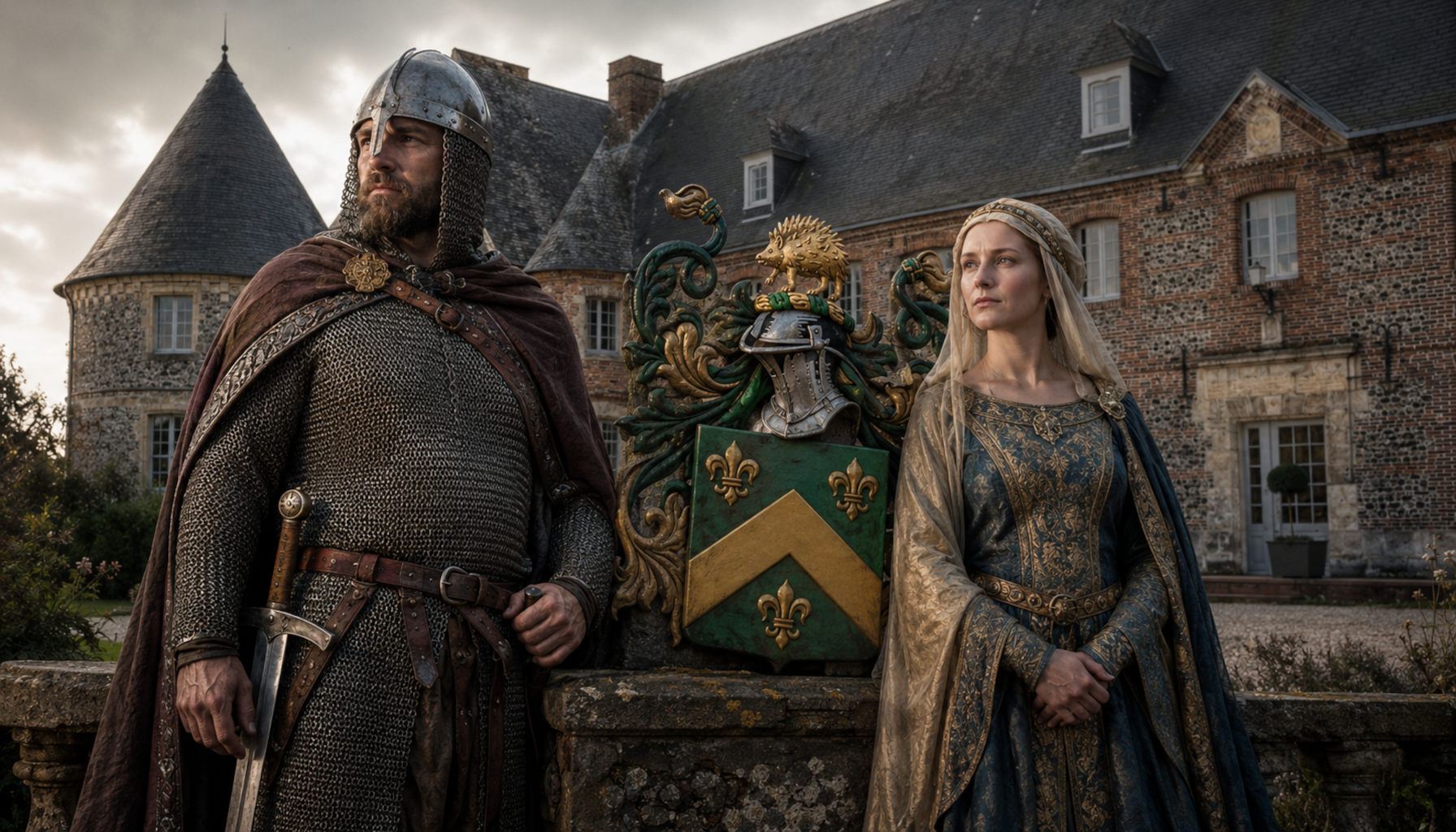
Clan Creel belongs to that deeply British and Scottish world of surnames shaped less by princely grandeur than by endurance: a family name carried through place, work, local service, migration, and memory. In that sense, the Creels are best understood as a rooted surname tradition of the British Isles, one whose identity survived because families kept the name alive across generations, even as spellings shifted through forms such as Criel, Curle, and Creel. The primary haplogroup linked here is R1b1a1b1a1a1c2b1b1, a paternal line within the great R1b branch so common across western Europe, and a useful reminder that family history is often a story of continuity as much as conquest.
The historical trail is early and rather evocative. A figure such as Robert de Criel in 1066 places the name in the charged world around the Norman Conquest, when old English, Norman, and wider Channel connections were being reshaped into new local loyalties. Later, Walter Curle (1575-1647), a prominent Scottish churchman, shows how this family-name tradition could move into public duty and institutional life. That is very much the Creel pattern: not a fairy-tale dynasty, but a surname anchored in real communities, adapting to the long history of Britain through service, movement, and resilience.
One especially striking location anchor for the family story is Dover Castle in Kent, long one of the great defensive sites of England. Perched above the White Cliffs and commanding the narrowest sea crossing between Britain and the Continent, Dover Castle has been called the "Key to England" for good reason. The site carries layers of history: Iron Age occupation, a Roman lighthouse still standing, an Anglo-Saxon church, and then the vast medieval fortress developed above all under Henry II in the 12th century. It later played important roles in the Barons' War, the Tudor period, the Napoleonic age, and even the world wars, when its tunnels were again used for defence and command. For a family name like Creel, tied to regional service and the movement of people across the British world, Dover makes historical sense as a symbolic frontier point: military, maritime, administrative, and always watchful. Better still, yes, it can still be visited today, and it remains one of the most impressive historic castles in Britain.
Explore the House of de Courcy
From the ancient-DNA side, the Creel haplogroup tag R1b1a1b1a1a1c2b1b1 connects the family to a broader web of related or linked ancient males across medieval and earlier European settings. These include Medieval Belgium Outsider Sint-Truiden Onze-Lieve-Vrouwekerk (ST1189), Medieval Belgium Sint-Truiden Onze-Lieve-Vrouwekerk (ST1237), Medieval Belgium Sint-Truiden Onze-Lieve-Vrouwekerk (ST2320), Early Medieval Yorkshire England Norton Bishops East Mill (I17274), Viking Age Galgedil Funen Denmark (VK134), Viking Age Skara Varnhem Sweden (VK424), and even Royal Tombs of Aigai Macedonia Elite Tomb I (DEM3235). None of this proves direct descent from any one of these individuals, and it should not be presented that way. What it does suggest is that the paternal line associated with Creel sits inside a very old and mobile European story, one that turns up in medieval towns, early English contexts, Scandinavian-age burials, and elite Balkan settings alike. That is the delight of archaeogenetics: it shows how a modern family name may rest within a much older map of movement, settlement, and survival.
Explore medieval Sint-Truiden DNA
If you carry the Creel surname, or think your family may belong to this wider heritage tradition, the next step is not fantasy pedigree but evidence: records, places, and DNA. Uploading your DNA to MyTrueAncestry can help you see whether you match Clan Creel, this haplogroup cluster, or any of the related ancient DNA samples connected with the wider story.
Comments