Clan Chalmers
– 3 min read


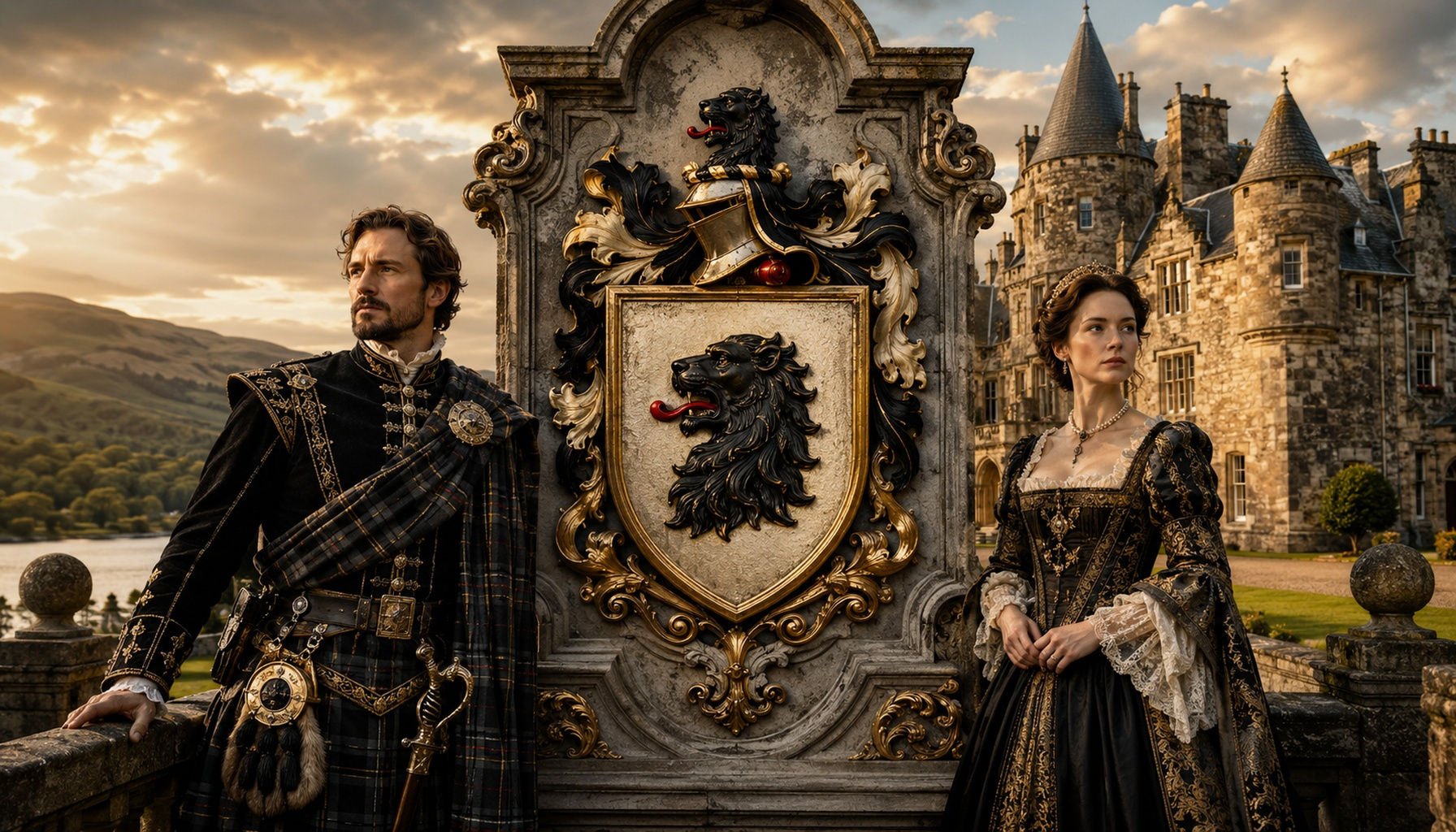
Clan Chalmers was a Scottish family tradition rooted above all in the Lowlands, with its name tied to service, office, and responsibility. The surname comes from the old office of chamberlain, the keeper of chambers and steward of household and revenue, so this is one of those very Scottish families whose identity grew not simply from warfare or landholding, but from public duty. Linked here with the primary family haplogroup I2a1b1a1b1a1a1, the Chalmers story sits in that familiar medieval pattern where administration, local standing, heraldic memory, and inherited surname all combine to create a lasting family identity.
That matters historically, because families like the Chalmers remind us that medieval Scotland was not built only by kings and fighting men. It was also run by people who kept accounts, managed estates, oversaw royal and noble households, and turned office into status. One early figure often associated with the name is Herbertus, Great Chamberlain of Scotland, active in the reign of David I between 1124 and 1153. Whether one looks at the family as a clan in the Highland sense or as a surname line in the Lowland tradition, Clan Chalmers represents a durable Scottish service-family: occupational in origin, regionally anchored, publicly useful, and remembered through generations.
Read more about Clan Carmichael
A key location anchor for the family is the Castle and Barony of Gadgirth in Ayrshire, on the River Ayr near Annbank. Gadgirth has a rather classic layered Scottish history: first a barony, then a fortified seat, then later rebuilt as a mansion, with the estate passing through different hands across the centuries. The older castle stood in a strong riverside position, which tells you a good deal about how lordship worked in medieval and early modern Scotland - visible, defensible, and tied to the management of land and people. For the Chalmers name, Gadgirth offers not just a dot on the map but a proper historical setting in the southwest Lowlands, where service, estate culture, and local authority all met. The original castle does not survive intact as a complete medieval fortress, but the site of Gadgirth and its later house remain part of the historic landscape and the area can still be visited, making it a worthwhile stop for anyone tracing Chalmers heritage on the ground.
From a DNA perspective, the Chalmers family is tagged here with haplogroup I2a1b1a1b1a1a1. That does not mean every Chalmers line carries it, nor does it prove direct descent from any excavated ancient individual. What it does offer is a fascinating set of related or linked ancient comparisons across Europe. Samples associated with this branch include Gothic Grave Aul of Kan Omurtag, Bulgaria, Han Krum Village, sample I40932; several Bronze Age men from the Tollense Valley battlefield in Mecklenburg-Vorpommern, Germany, including WEZ51, WEZ15, WEZ39, and WEZ64; Medieval Belgium Sint-Truiden Groenmarkt, ST2000; Medieval Germany Sachsen-Anhalt Western Slav settler Steuden, SDN037; Celto-Gepid Madaras in Migration Period Hungary, CGG021899; Iron Age Grofove njive in Slovenia, I5689; and Late Bronze Age Brvany in Bohemia, I14481. Together these linked samples show a deep and wide European footprint for related paternal lines, stretching from Bronze Age conflict zones to medieval towns and migration-era cemeteries. That broad spread suits a Lowland Scottish service family rather well: not a fantasy of one simple origin, but a long European backdrop of movement, survival, and continuity.
Explore medieval Sint-Truiden DNA
If you carry the Chalmers surname, have Lowland Scottish roots, or simply want to see whether your DNA connects with this family tradition or with related ancient I2a1b1a1b1a1a1-linked samples, you can explore that story more directly. Upload your DNA to MyTrueAncestry and see whether you match Clan Chalmers, its wider historical network, or the ancient individuals linked to this paternal branch.
Comments