Clan Caldwell
– 2 min read


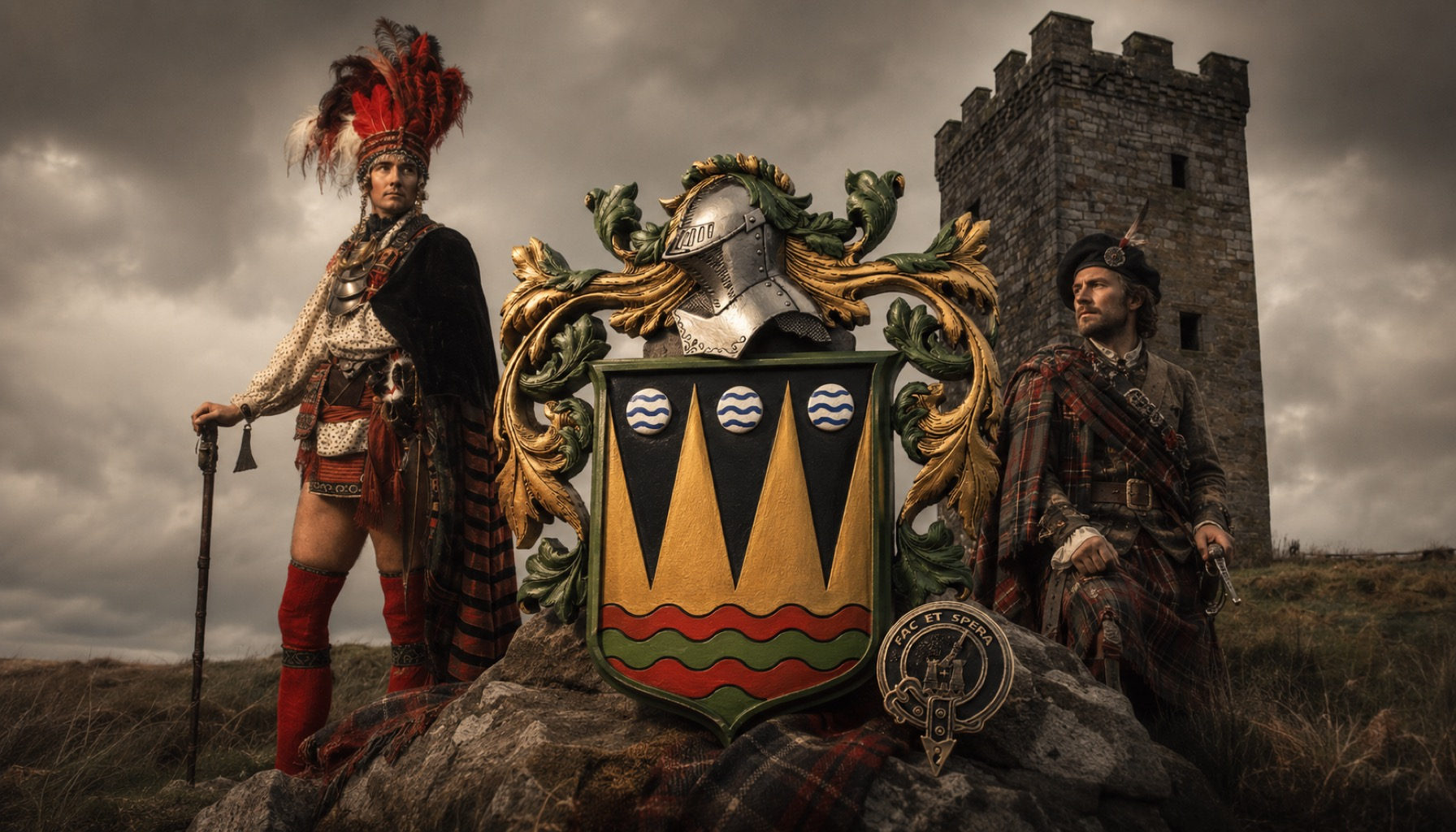
Clan Caldwell was a Lowland Scottish family tradition rooted in Renfrewshire in western Scotland, with identity tied not so much to a Highland-style chiefdom as to land, locality, and long memory. The name itself is territorial in character, drawn from place, and that matters in Scotland: it tells us that the family grew out of a landscape of estates, parish connections, service, and status. In genetic tagging terms, the primary family haplogroup associated here is R1b1a1b1a1a1c2b2a1b1a4b2, a branch within the wider paternal line long found across parts of western and northern Europe.
The Caldwells emerge in the record as one of those solid Lowland families whose history is built not on theatrical legend but on continuity. Men such as William de Caldwell in 1342, Robert Cauldwell in 1405, and Richard Caldwall, 1505 to 1584, show the surname in motion across the centuries, with spelling shifting as medieval scribes pleased themselves but the family identity holding firm. What we see is the classic Scottish territorial-family pattern: landholding, local responsibility, heraldic memory, and a surname that stayed attached to a particular district and its people.
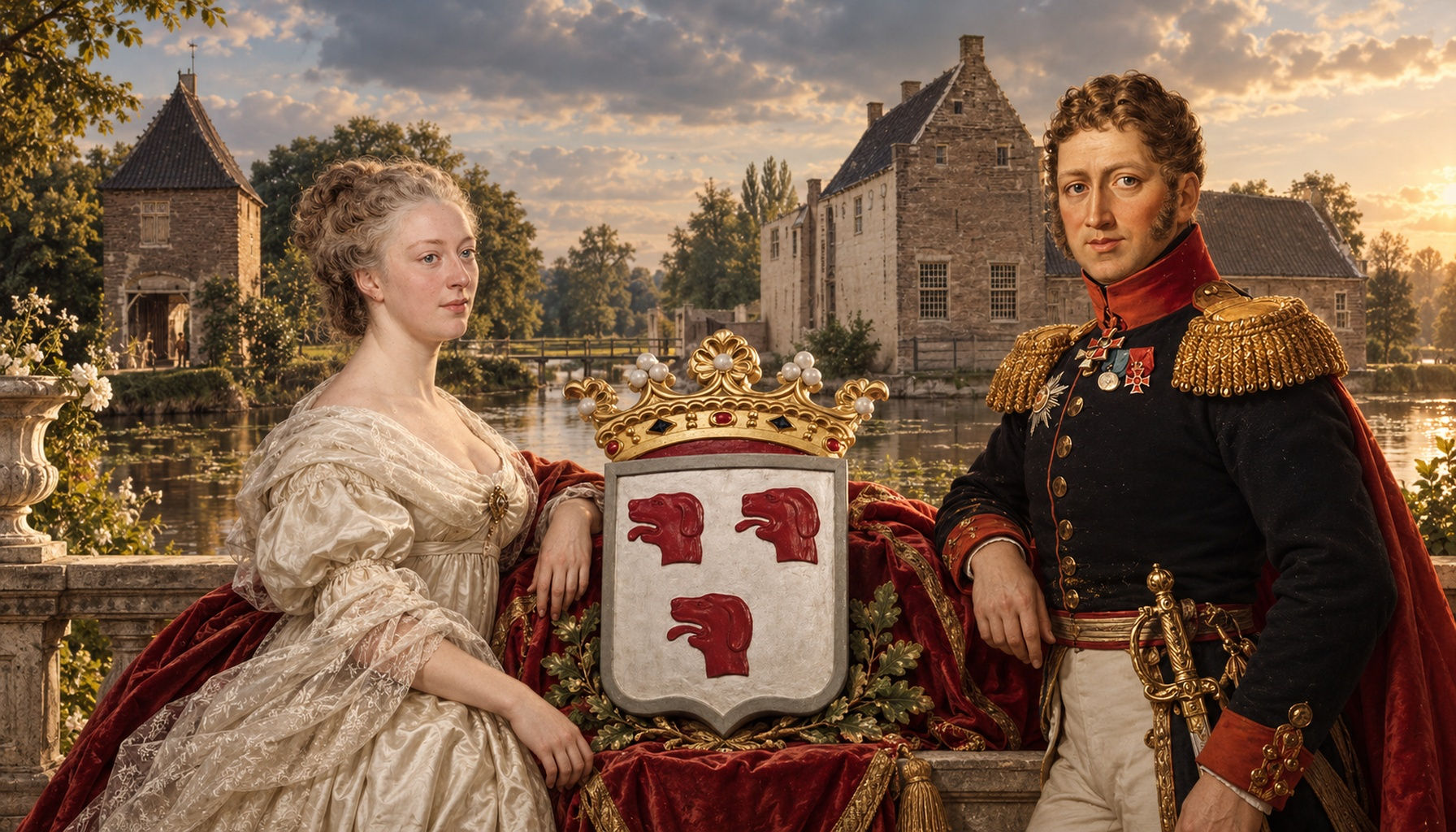
The great location anchor for the family is Caldwell, in present-day East Renfrewshire, historically within the old county of Renfrewshire. This was not some vague romantic backdrop but the actual territorial heart of the name. Caldwell Tower, associated with the estate, stood as the visible expression of family standing in the district: a defended residence, a marker of authority, and a reminder that surnames in medieval and early modern Scotland were often pinned to real parcels of land. The wider estate later became known for Caldwell House and its policies, but the older tower tradition preserves the deeper medieval footprint of the family. The site and surrounding landscape remain identifiable today, and the area of Caldwell in East Renfrewshire can still be visited, which gives modern descendants and history-minded travellers a rare chance to stand in the very district that gave the surname its shape.
From an ancient-DNA point of view, the haplogroup R1b1a1b1a1a1c2b2a1b1a4b2 connects Clan Caldwell to a wider web of related paternal lineages found in medieval and early historic Europe rather than to one single named ancestor. Related or linked samples include Medieval Oxfordshire Magdalen College Longwall Quad, sample C11119; Thuringii Tribe Germany Roman Deersheim, Saxony-Anhalt, sample DRH057; Medieval Germany Sachsen-Anhalt Western Slav settler Steuden, sample SDN003; Saxon Grave at Hannover-Anderten in Lower Saxony, sample ADN002; Viking Age Galgedil on Funen, Denmark, sample VK133; and a Viking Age spearman from Telemark, Norway, sample VK389. These do not prove direct descent from any Caldwell line, of course, but they do place the family haplogroup within a recognisable North Sea and north-central European historical world, one shaped by migration, settlement, warfare, and local continuity over many centuries.
If you carry the Caldwell surname, have Caldwell lines in your family tree, or simply want to see how your own DNA fits into the deeper story of Lowland Scotland, this is where genetics becomes properly exciting. Upload your DNA to MyTrueAncestry and you can explore whether you match Clan Caldwell, or whether you show links to related ancient DNA samples from medieval England, Saxon Germany, Viking Denmark, or Norway. Family history is rarely a straight line, but it is very often a wonderfully local story with unexpectedly wide horizons.
Comments