Clan Bruce
– 3 min read


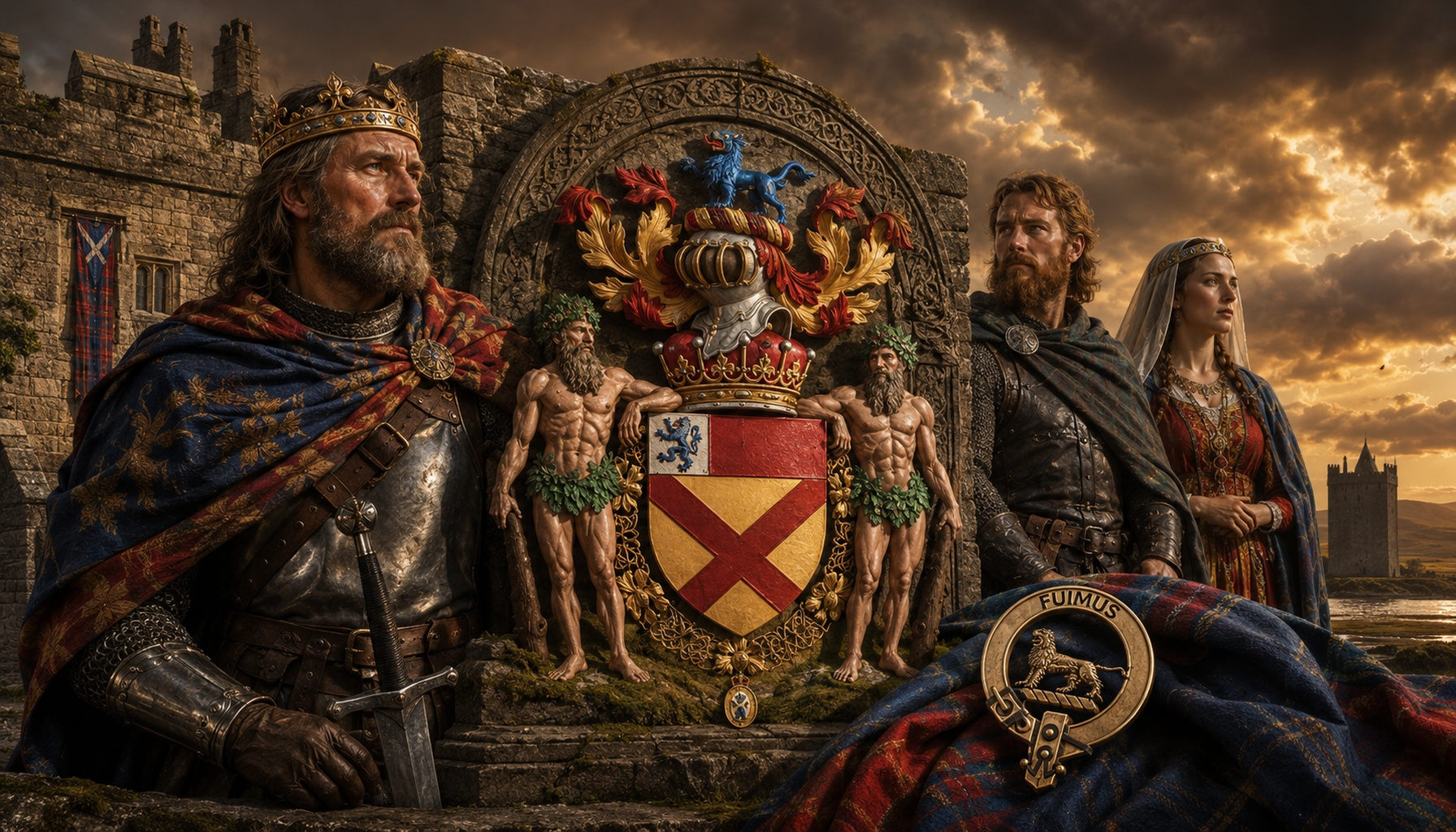
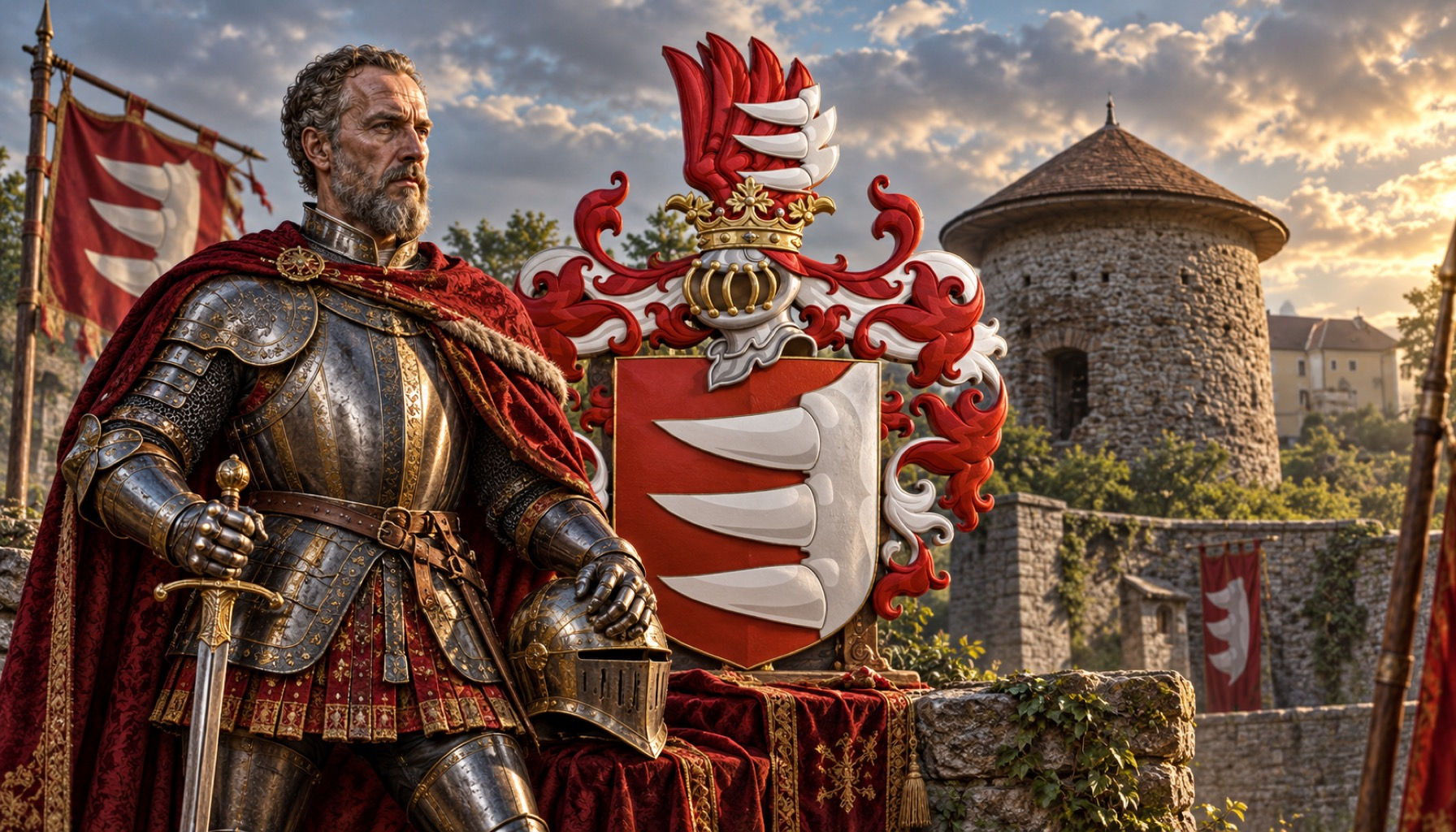
Clan Bruce was one of the great ruling families of medieval Scotland: a house of Norman origin that crossed the Channel world into Britain and then rooted itself so firmly in Scottish politics that its name became inseparable from kingship and independence. The family is generally traced back to lands at Brix in Normandy, with the name developing into de Brus or Bruce, before the line established itself in the Anglo-Norman realm and then in Scotland under David I. In haplogroup terms, Clan Bruce is linked here with I1a1a4a1a1b2a, the primary family haplogroup tag for this profile, a lineage with a wider northern European story behind it.
What makes the Bruces so fascinating is that they were never merely local lords. From the Lords of Annandale, first established in 1124, they climbed into the very top tier of medieval power, marrying, maneuvering, fighting, and claiming. Their motto, Fuimus, meaning we have been, has an almost haunting grandeur to it: less a boast than a memory of sovereignty. Out of this family came Robert the Bruce, the most famous of them all, whose victory in the Wars of Scottish Independence, above all at Bannockburn in 1314, made the Bruce name part of Scotland's national mythology. The line also produced David II of Scotland, Edward Bruce, the Barons of Clackmannan, the Lords Bruce of Kinloss created in 1608, the Earls of Elgin in 1633, and the Earls of Kincardine in 1647. It is a family story that begins in Norman aristocratic expansion and ends as one of the central dynastic stories of Scotland.
Read more about the Royal House of Stewart
If you want a place that feels properly Bruce, Lochmaben Castle in Dumfries and Galloway is a strong anchor. Set beside the loch near the town of Lochmaben, it was one of the chief strongholds of the Lords of Annandale and closely associated with the Bruce lordship in the southwest. The earlier motte-and-bailey castle was followed by a later stone fortress, and the site mattered because Annandale was not some sleepy backwater but a frontier lordship, tied into the politics of the Scottish kingdom and the Anglo-Scottish border. Lochmaben was captured, rebuilt, contested, and reused across centuries, which is exactly what one would expect of a castle standing in such a charged political landscape. Today the ruins still survive in a picturesque setting, and yes, it can still be visited, which is one of the great pleasures of Scottish history: these places are not just names in chronicles but real landscapes you can walk through, where the Bruce story still feels close to the ground.
From the ancient DNA side, the Bruce-linked haplogroup I1a1a4a1a1b2a connects not to a single proven dynastic skeleton, but to a broader northern European paternal landscape. Related or linked samples include Migration Period Germany Saxony-Anhalt Bruecken (BRC036x), Jute Early Roman Era Denmark Jutland Bog War Alken Enge (CGG019210), Viking Age Trelleborg Kingdom of Denmark (CGG106823), Pre-Vendel Age Oland Sandby Borg Sweden (snb013), and Viking Age Skara Varnhem Sweden (VK29). These do not prove direct descent from the Bruce family, and they should not be read that way. What they do offer is a glimpse of the deeper population background of a lineage found across Germanic and Scandinavian worlds long before the Bruces rose to prominence in medieval Scotland. That is part of the excitement of archaeogenetics: a noble house known from charters and battles can also be set against a much older map of migration, kinship, and northern European ancestry.
If Clan Bruce appears in your family story, or if the mix of Norman origin, Scottish kingship, and deeper northern European ancestry feels strikingly familiar, you can take that question further with DNA. Upload your DNA to MyTrueAncestry and see whether you match the Bruce family profile or related ancient DNA samples linked with haplogroup I1a1a4a1a1b2a.
Comments