Anna Catharina Bischoff
– 4 min read


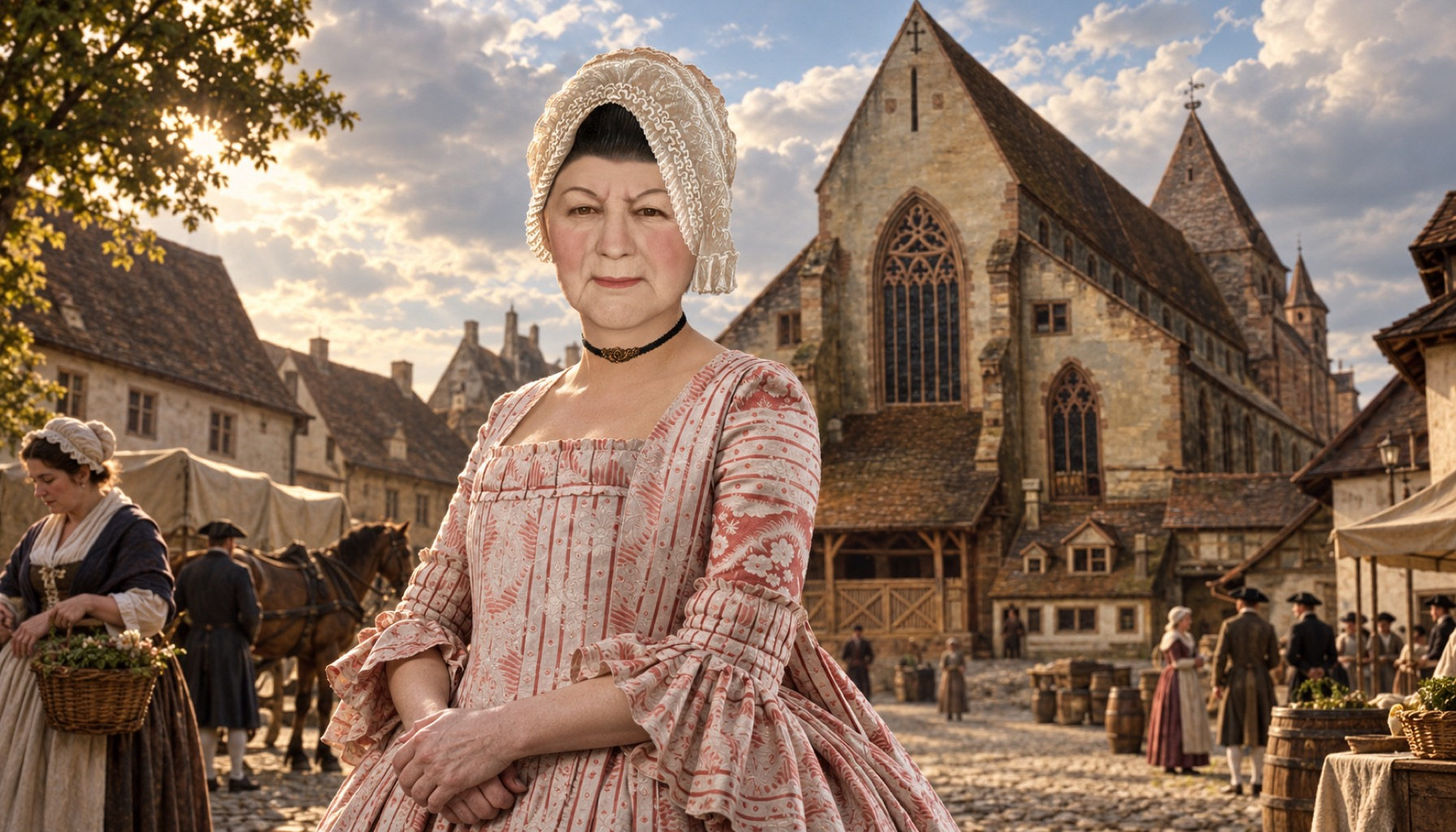
Anna Catharina Bischoff was an 18th-century woman of Basel whose afterlife, if one may put it that way, became unexpectedly public. Her naturally mummified body was found during archaeological work at the Barfüsser Church in Basel, and what might once have been a local curiosity became one of Switzerland’s most intriguing identification cases. She is historically important not because she ruled, wrote manifestos, or led armies, but because modern science and old-fashioned archival work managed to return a name to a person who had slipped out of memory.
That is what makes her such a compelling figure. Anna Catharina lived in the later 1700s and died in 1787, in a Basel that belonged to the busy, literate, interconnected world of Enlightenment Europe. This was a city of churches, family records, trade, and civic memory, yet even there an individual could vanish into the anonymity of burial. Her rediscovery shows how archaeology, church registers, genealogy, forensic examination, and ancient DNA can converge to identify a historical person with unusually strong support.
Anna Catharina Bischoff belonged to a prominent Basel family, and that matters because families like hers left documentary traces: baptisms, marriages, deaths, kinship networks, and burial traditions. Basel in her lifetime was a self-confident urban centre at the meeting point of Swiss, German, and wider European worlds. By 1787, the old order still stood, though the French Revolution was only just around the corner. The city’s churches were not merely places of worship; they were also repositories of social rank, family memory, and burial practice. In that setting, Anna Catharina’s interment in the Barfüsser Church placed her within a recognisable urban and familial landscape, even if her identity was later forgotten.
The real historical importance of her case lies in method. Researchers did not simply proclaim a romantic identification. They assembled it piece by piece, using forensic observations, the archaeological context of the church burial, documentary evidence from Basel, and extensive genealogical investigation, then compared that picture with genetic data. In other words, hers is one of those rare cases where the dead are not asked to tell the whole story alone. The archives speak, the body speaks, and the DNA speaks, each in its own accent.
The biological sample associated with her is recorded as Anna Catharina Bischoff Barfuesser Church Switzerland, dated to about 1787 AD. The remains were those of a naturally mummified woman discovered in the Barfüsser Church in Basel. Natural mummification is always a little arresting because it preserves not just bone but more of the physical presence of the person, and so invites both scientific examination and public imagination.
In this case, the identification as Anna Catharina Bischoff is best described as strongly supported rather than a casual guess. According to the supplied historical summary and the published research context, investigators combined ancient DNA, forensic examination, church records, and genealogical reconstruction to associate the mummy with Anna Catharina Bischoff, who died in 1787. That is a notably robust chain of evidence. It does not mean that genetics alone identified her; rather, genetics helped test and support an identification built from the historical and archaeological record.
The study referenced in the published research article is important here because it reflects the sort of interdisciplinary work that makes historical identifications persuasive. For Anna Catharina, the interest is not merely that DNA was recovered, but that it was used alongside conventional sources instead of replacing them.
Anna Catharina Bischoff’s reported mitochondrial DNA haplogroup is U5a1. Mitochondrial DNA, or mtDNA, is inherited through the direct maternal line: from mother to child, then through daughters onward. It tells us about one specific line of ancestry only, not a person’s whole family tree. Her Y-DNA haplogroup is not available, which is entirely unsurprising because Y-DNA follows the direct paternal line and is typically only present in genetic males.
Haplogroup U5 is one of the old maternal lineages of Europe, found in ancient European remains over long stretches of time. That does not make Anna Catharina a relic from prehistory, of course; it simply means her direct maternal line belonged to a lineage with deep time depth in Europe. U5a1 is a lineage label, not an ethnic badge, and it cannot by itself tell us whether Anna Catharina identified with any particular people beyond the world we already know from history: an urban woman from Basel in the late 18th century.
What the DNA can do, more modestly and more usefully, is support identification and place her maternal line within a broader human story. Related U5a1-linked material includes Anna Catharina Bischoff herself, listed as ACB. More distantly, lineages within the wider U5 world appear in a remarkable range of ancient individuals, from Mesolithic Scandinavia such as Hummervikholmen in Sweden (H22) and Kanaljorden Motala samples (I0011 and I0013), to later European burials like Medieval England Cambridge St Johns Hospital (ATP_PSN_70), Iron Age England Wetwang Slack (I36845; I37310), Bronze Age Austria Schleinbach (SLB026), and post-Roman or medieval central and eastern European contexts such as Scarbantia/Hegyko in Hungary (HMU071, HMU068), Arrabona in Hungary (GYS010), and Vasterhus in Jämtland, Sweden (wes001). These are not close relatives of Anna Catharina, and they do not imply direct descent. They simply show that maternal lines of this broad kind have a long and geographically widespread history in Europe.
That breadth is worth pausing over. A maternal lineage can persist through hunter-gatherers, farmers, Iron Age communities, medieval townspeople, and early modern city families, while the languages, religions, states, and surnames around it change completely. DNA gives continuity of lineage; history gives continuity of life.
Anna Catharina Bischoff’s DNA is historically interesting because it helped restore identity in a case where burial context and family history could be investigated in detail. This is one of the most illuminating uses of ancient DNA: not turning a person into a genetic abstraction, but helping reconnect a body, a name, a family, and a city. At the same time, the limits matter. Her mtDNA does not reveal her full ancestry, her social character, or the whole story of her family. It gives one maternal thread. The richer fabric comes from combining that thread with archaeology and records.
In that sense, Anna Catharina is less a story about sensational genetics than about good historical practice. A woman buried in 1787 at Basel’s Barfüsser Church became identifiable again because science and scholarship met in the middle and behaved themselves.
MyTrueAncestry allows you to compare your DNA with ancient populations and archaeological samples from across history. If Anna Catharina Bischoff’s world of Swiss history, genealogy, and deep maternal lineages interests you, you can explore whether your DNA shows connections to ancient populations and lineages linked to the broader European past.
Comments