Vittrup Man
– 5 min read


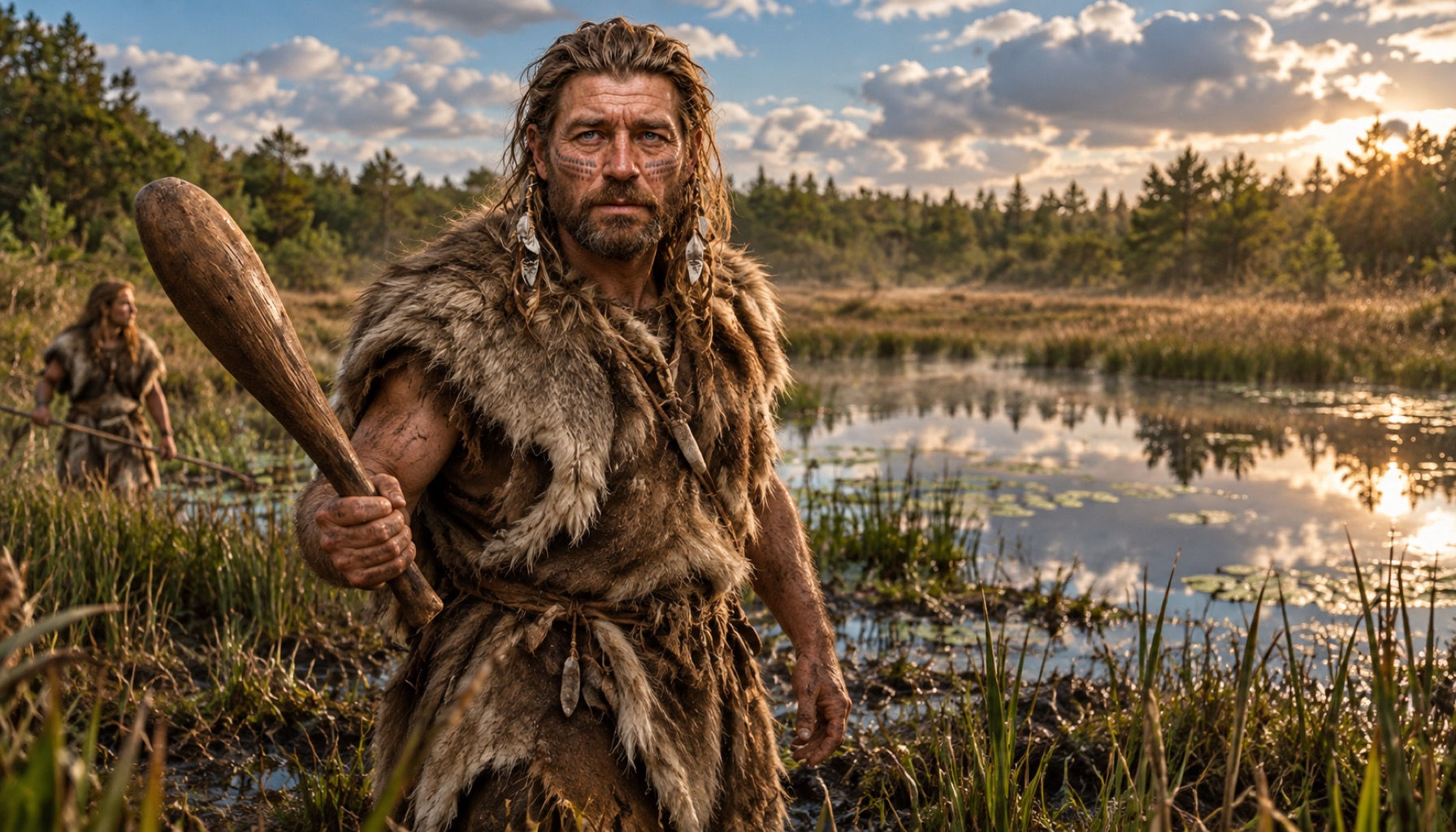
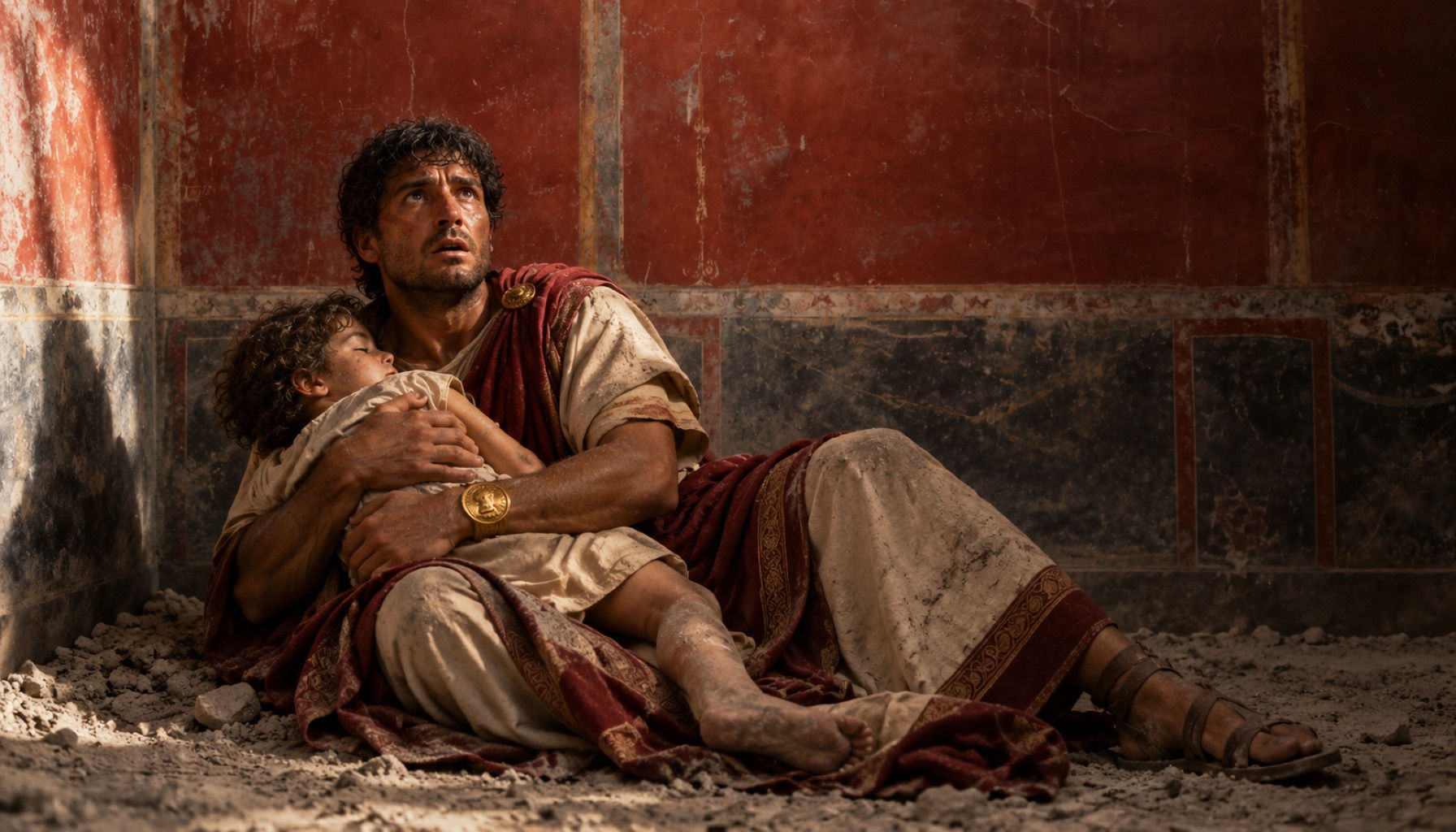
Vittrup Man was a Stone Age man who lived around 3300 BC, and yet we can now tell more of his life story than we can for many far more recent people. His remains were found in a peat bog in northern Denmark, but the real significance of the discovery lies in what modern archaeology, isotope analysis, and ancient DNA have revealed: he seems to have spent his childhood far to the north in Scandinavia, likely among hunter-gatherers who lived heavily from the sea, before moving south into Neolithic Denmark.
That journey matters because Vittrup Man appears to stand at the meeting point of two different worlds. In his lifetime, Denmark belonged to the Funnel Beaker cultural sphere, a farming society with domesticated animals, cultivated crops, and the monumental habits of the European Neolithic. But northern Europe was not neatly divided into farmers on one side and foragers on the other. People moved, traditions overlapped, and identities were negotiated in daily life. Vittrup Man gives us one unusually vivid case of that entanglement.
What makes Vittrup Man so compelling is not simply that he moved, but that science lets us watch the move happen across different kinds of evidence. Isotopes from his teeth and bones indicate that his early diet was rich in marine foods, exactly what one would expect for someone raised in a northern forager setting. Later, after arriving in Denmark, his diet shifted toward that of a farming society. This does not mean he became a different “people” in any simple sense, still less that DNA can tell us what language he spoke or how he described himself. But it does show adaptation. He was a man who crossed a cultural frontier in a world where such frontiers were real but permeable.
His end was brutal. His skull had suffered repeated heavy blows, and his body was deposited in a wetland with objects that may point to ritual activity. In prehistoric northern Europe, wetlands were not merely soggy margins of the landscape; they were charged places where people deposited valuables, bodies, and offerings. So Vittrup Man’s death may have been murder, sacrifice, execution, or some combination of violence and ritual that no modern category captures neatly. The great strength of the recent research, including the study published in Nature, is that it does not flatten that ambiguity. Instead, it shows how a single life can illuminate mobility, diet, ancestry, and violent death all at once.
The biological sample associated with him is listed as Vittrup Man Bog Skeleton Borglum Denmark, dated to about 3189 BC. This is not a doubtful attribution or a speculative historical identification. Rather, it is the excavated skeleton of the prehistoric individual conventionally known as Vittrup Man, discovered in a bog context in northern Denmark. Because he belongs to prehistory, there is no written name to verify against an inscription or document; the identification is therefore secure in the archaeological sense, but not “personal” in the literate historical sense. We know the skeleton belongs to the man found at Vittrup, not what he called himself.
The bog context is important. Danish wetlands have preserved remarkable human remains, and they also preserve context: evidence of deposition, associated finds, trauma, and landscape setting. In Vittrup Man’s case, that context strengthens the interpretation that his body was placed in a wetland after a violent death. The combination of preservation and modern biomolecular analysis is what allows his biography to be reconstructed so closely.
Read about Neolithic DNA on Gotland
Vittrup Man’s Y-DNA haplogroup was I2a and his mtDNA haplogroup was H2a. These two results track different lines of ancestry. Y-DNA follows the direct paternal line, passed from father to son. mtDNA follows the direct maternal line, passed from mother to all her children, though only daughters pass it on further. They are therefore useful lineage markers, but they represent only two slender threads in the much wider tapestry of a person’s ancestry.
The paternal lineage I2a is especially interesting in European prehistory because versions of this lineage appear in many ancient hunter-gatherer and some later farming-era individuals across Europe. That does not make it a label for a single people or culture. Haplogroups are not ethnic badges. But in Vittrup Man’s case, I2a sits comfortably alongside the wider picture suggested by isotope and genome-wide evidence: a man with strong links to northern hunter-gatherer ancestry who later lived among Neolithic farmers.
A short ancient-DNA comparison helps place him in context. Related I2a-linked samples include the closely comparable Danish and northern European finds Vittrup Man Bog Skeleton Borglum Denmark (NEO33), Neolithic Denmark Jutland Bygholm Norremark (NEO564), Neolithic Denmark Sjaelland Dojringe Bog Skeleton (NEO566), Ancient Denmark Sjaelland Kongemose (NEO587), Ancient Denmark Sjaelland Korsor Nor (NEO589), Neolithic Denmark Bog Skeleton Vissenbjerg Funen Neverker Mose (NEO594), Neolithic Denmark Pandebjerg (NEO595), Neolithic Denmark Bog Skeleton Storelyng Eel Picker Ogaarde Boat (NEO597), Neolithic Denmark Tysmose (NEO790), Neolithic Denmark Naes Aastrup (NEO792), and Neolithic Denmark Jutland Stenderup Hage (NEO943), as well as broader forager-connected parallels such as Ancient Latvia Zvejnieki (NEO307), Ancient Ukraine Lysa Gora (NEO265, NEO270), Ancient Ukraine Vasilevka (NEO492, NEO545), and several Sakhtish II individuals from Neolithic Russia. These samples do not show that Vittrup Man belonged to one vast continuous tribe, but they do illustrate how paternal lineages within I2a recur across Mesolithic and Neolithic Europe, especially in contexts linked to hunter-gatherer ancestry or mixed forager-farmer populations.
His maternal lineage H2a is less dramatic in public discussions, but no less important. A short H2a-linked comparison is necessarily modest here: the supplied related sample is Vittrup Man Bog Skeleton Borglum Denmark (NEO33) itself. That means the H2a result is presently most useful as part of his individual genetic profile rather than as the basis for a broad comparative cluster in this specific dataset. As always, sharing an mtDNA lineage indicates belonging to a wider maternal branch, not close kinship with every other carrier.
What the DNA can tell us, then, is careful and valuable. It contributes to the picture of ancestry and deep population connection. It helps place Vittrup Man within the biological landscape of Stone Age northern Europe. What it cannot do is tell us his language, his personal beliefs, or whether he thought of himself as a foreigner, a local, or something in between. Those larger questions must remain historical interpretations, not genetic certainties.
Vittrup Man is historically important because his case brings together several lines of evidence that are often studied separately. The genome suggests substantial hunter-gatherer ancestry; isotopes indicate a childhood far to the north on a marine diet; later chemistry points to life in a farming world in Denmark; the skull injuries reveal lethal violence; the bog deposition hints at ritualized treatment of the dead. Few prehistoric individuals can be followed so clearly across geography, diet, ancestry, and death. He is not important because DNA “solves” him completely, but because it lets us ask better questions about how mobile, mixed, and complicated Neolithic Europe really was.
Discover Sakhtysh hunter-gatherers
MyTrueAncestry lets you compare your DNA with ancient populations and archaeological samples, including the kinds of prehistoric forager and farmer worlds that shaped lives like Vittrup Man’s. It cannot prove direct descent from Vittrup Man, but it can help you explore whether your genetic profile shows connections to the ancient populations and lineages of Stone Age Europe.

Comments