The Venable Family
– 3 min read



The Venable family, more often found in medieval records as Venables, belongs to that great wave of Norman and Anglo-Norman lineages that crossed from Normandy into England and then put down deep local roots. Traditionally linked with Venables in Normandy and later with Cheshire, they are best understood not as fairy-tale nobles drifting through romance, but as a practical feudal family: military tenants, landholders, marriage-makers, and county gentry whose identity was built on service, property, and memory. Their primary family haplogroup is tagged here as R1b1a1b1a1a2a, a branch strongly associated with long paternal continuities across western Europe.
After the Norman Conquest, families like the Venables became part of the machinery by which England was reorganised: estates were granted, loyalties were formalised, and local authority was tied to landholding. In Cheshire, the Venables name became especially established, woven into the county's manorial life, heraldry, and gentry networks. One of the best-known early figures is Gilbert de Venables (1040-1086), a companion of the Conqueror traditionally associated with the family's rise in England. Through generations of alliance, inheritance, and feudal obligation, the family reflects the broader Norman story perfectly: continental in origin, English in landed identity, and enduringly remembered through place.
Explore the House of de Warenne
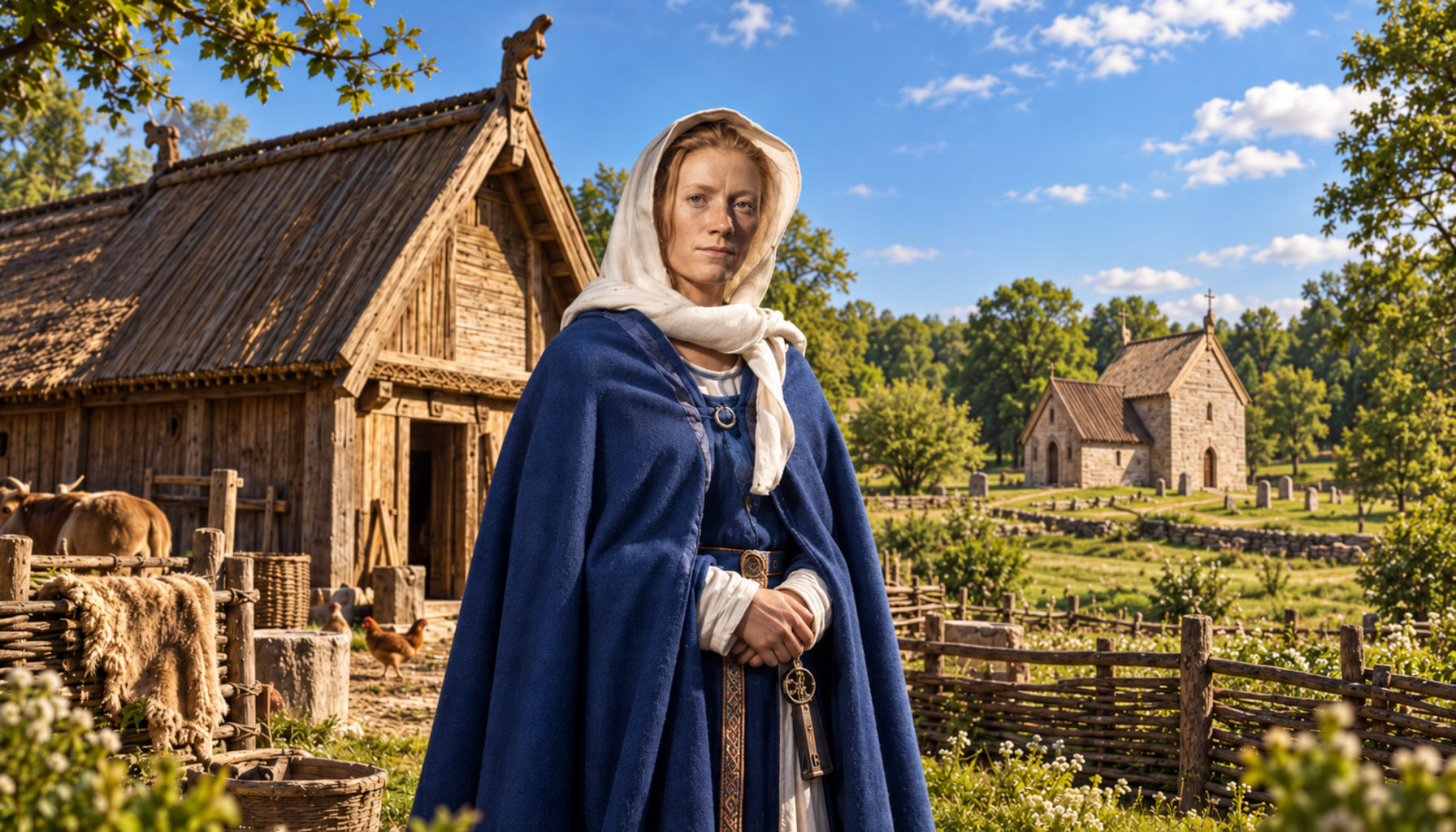
One useful place-anchor for the Venable story is Fifehead Magdalen in north Dorset, near the Somerset border, a small English parish whose very name preserves layers of medieval history. The first element, Fifehead, points back to an estate assessed at five hides, while Magdalen distinguishes it from nearby Fifehead Neville and recalls dedication to St Mary Magdalene. It is a landscape of fields, lanes, church, and long continuity rather than grand spectacle, which is precisely why it matters. Villages like this are the real stage on which much family history unfolded: rents collected, marriages arranged, tenancies recorded, and local standing maintained over centuries. The parish church of St Mary Magdalene, with its historic fabric and churchyard setting, helps preserve that sense of continuity between medieval landholding society and the present countryside. Yes, it can still be visited, and if you go, what you encounter is not a reconstructed Norman world but the surviving shape of an old English parish that still carries the marks of its past.
Read more about the Stanley Family
Haplogroup R1b1a1b1a1a2a has a long and rather remarkable archaeological footprint across Britain and continental Europe, so while we should not claim direct descent from any excavated individual, we can place the Venable family within a very broad paternal landscape shared by many western European populations. Related or linked ancient samples in this branch include medieval northern Spain individuals from Las Gobas such as ldo066, ldo037, ldo046, ldo048, ldo040, and ldo062; elite Celtic and early historic burials from central Europe such as Magdalenenberg MBG013, Asperg-Grafenbuehl APG001 and APG003, Hochdorf HOC001, HOC001b, and HOC001c, and Ludwigsburg Roemerhuegel LWB001; Romano-British and later British examples including NWC009 from Roman era Cambridgeshire, FEN008, ARB003, DUX003, and the Durotriges samples WBK103, WBK106, WBK17, WBK36, WBK192, WBK10, WBK105, and WBK23 from southern England. Taken together, these linked finds sketch the deep backdrop to families like the Venables: a paternal line seen among Bronze Age, Iron Age, Roman, early medieval, and medieval men across the same broad world that later produced Norman and Anglo-Norman houses.
If you are researching the Venable or Venables family, the most interesting question is not just whether a name appears in a pedigree, but how that family fits into the longer human story of Norman movement, English settlement, and deep European ancestry. Upload your DNA to MyTrueAncestry to see whether you match the Venable family profile or any related ancient DNA samples linked with haplogroup R1b1a1b1a1a2a.


Comments