The Peverel Family
– 3 min read


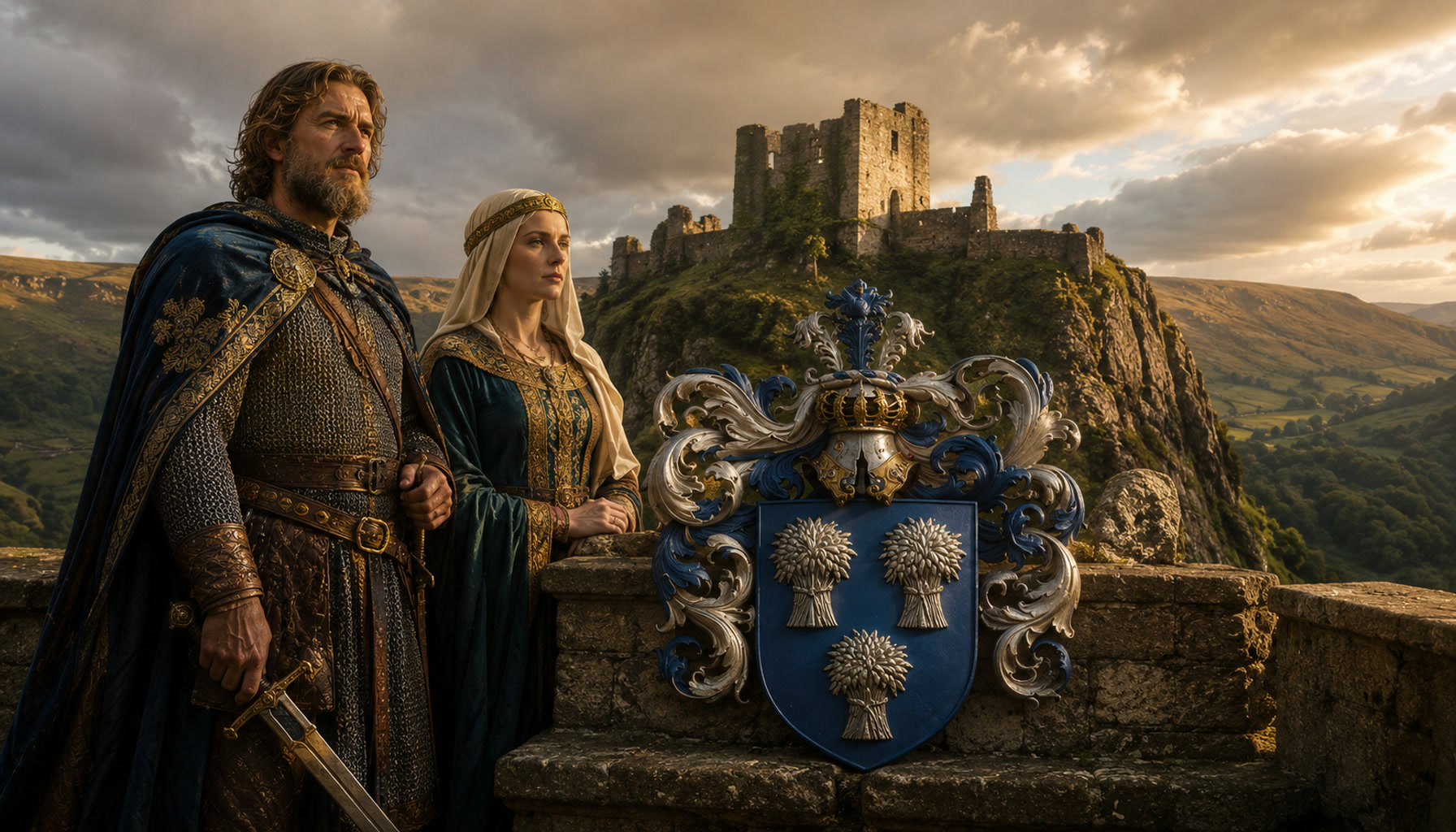
The Peverel family were one of those striking Norman and Anglo-Norman houses who arrived in the wake of the Norman Conquest and quickly became woven into the new ruling fabric of England. Their world was the hard, practical world of conquest-era lordship: castles on commanding hills, royal grants, tenants, manors, and the administrative net that would later be captured in Domesday Book. Traditionally linked with Norman origins across the Channel and with the first generation of aristocrats who benefited from William the Conqueror's settlement of England, the Peverels stand for that moment when military success became landed power. In haplogroup terms, the primary family lineage linked here is R1b1a1b1a1a2c1a1a1a1a1a1a1a, a branch within the broad R1b network so often found across western Europe.
What makes the Peverels so interesting is not simply that they were noble, but that they belonged to the very first layer of Norman rule imposed on an older English landscape. This was not a quiet inheritance. It was an aggressive remaking of society, in which old elites were displaced and new men were planted into strategic places. Figures associated with the family include Ranulph Wrenoc Gronwy Peverel, dated here to 1020, and William Peverel, associated with 1114, names that anchor the family in the era when Norman identity, royal service, and territorial control went hand in hand. The Peverels were not merely landowners on parchment; they were part of the mechanism by which medieval England was built, fortified, and governed.
Explore the House of de Warenne
The great location most firmly tied to the family's memory is Peveril Castle in Castleton, Derbyshire, dramatically set above the Hope Valley in the Peak District. It is one of those castles that still has the power to stop you in your tracks, less because it is vast than because it is so perfectly placed: on a limestone headland, looking out across routes, settlements, and upland country that mattered enormously in the 11th and 12th centuries. The castle is generally associated with William Peverel, often called William Peverel the Elder, one of the important royal tenants after the Conquest. Built soon after 1066, it formed part of the Norman project of controlling newly conquered territory through fortification, surveillance, and lordship. Over time it passed into royal hands, but its name kept the Peverel connection alive. And yes, it can still be visited today, which is rather the point with so much good medieval archaeology: these places are not just names in chronicles, but real landscapes where you can stand and see why power was planted there in the first place.
Read more about the House of de Clare
From a DNA perspective, the haplogroup linked here, R1b1a1b1a1a2c1a1a1a1a1a1a1a, appears in a number of related or linked medieval samples, especially from Ireland. These include the Ballyhanna cemetery in County Donegal, with samples such as Sk197an, Sk197y, Sk197q, Sk197am, Sk197s, Sk197ab, Sk197u, Sk197t, Sk197r, Sk197ad, Sk197x, Sk197n, Sk197aa, Sk197z, Sk197ak, Sk197w, Sk197ai, Sk197m, Sk197ah, Sk197ag, Sk197v, Sk197ac, Sk197al, Sk197af, Sk197ae, Sk197o, Sk197aj, HAN197x, Sk197a, Sk197b, Sk197c, Sk197d, Sk197e, Sk197f, Sk197g, Sk197h, Sk197i, Sk197j, Sk197k, Sk197l, Sk197p, and HAN197, as well as Kilteasheen-related samples KIL041, KIL044, KIL033, KIL037, KIL009, and KIL014 from Roscommon. These are not evidence of direct descent from the Peverel family, and it would be quite wrong to claim that. What they do show is that this paternal lineage belonged to a wider medieval genetic landscape in the British Isles and nearby regions, giving useful context for the sort of ancestry network into which Norman and Anglo-Norman families were inserted.
If the Peverels catch your imagination, they are a splendid example of how family history, archaeology, and genetics can meet in one story: a Norman name, a castle on a ridge, and a lineage placed within the wider medieval DNA record. Upload your DNA to MyTrueAncestry to see whether you match the Peverel family context or any of the related ancient DNA samples.
Comments