The Noble House of Skarzynski
– 3 min read


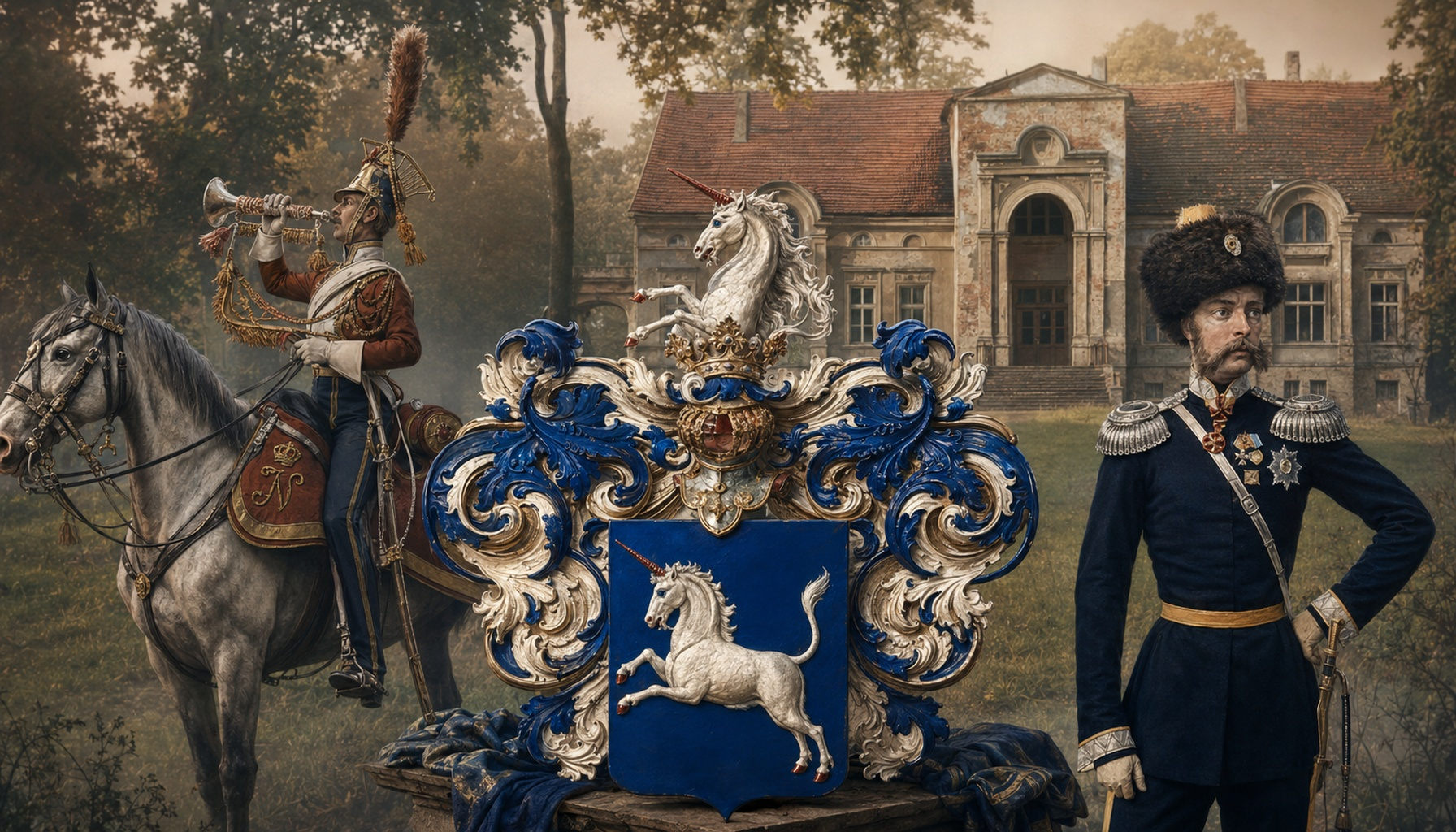
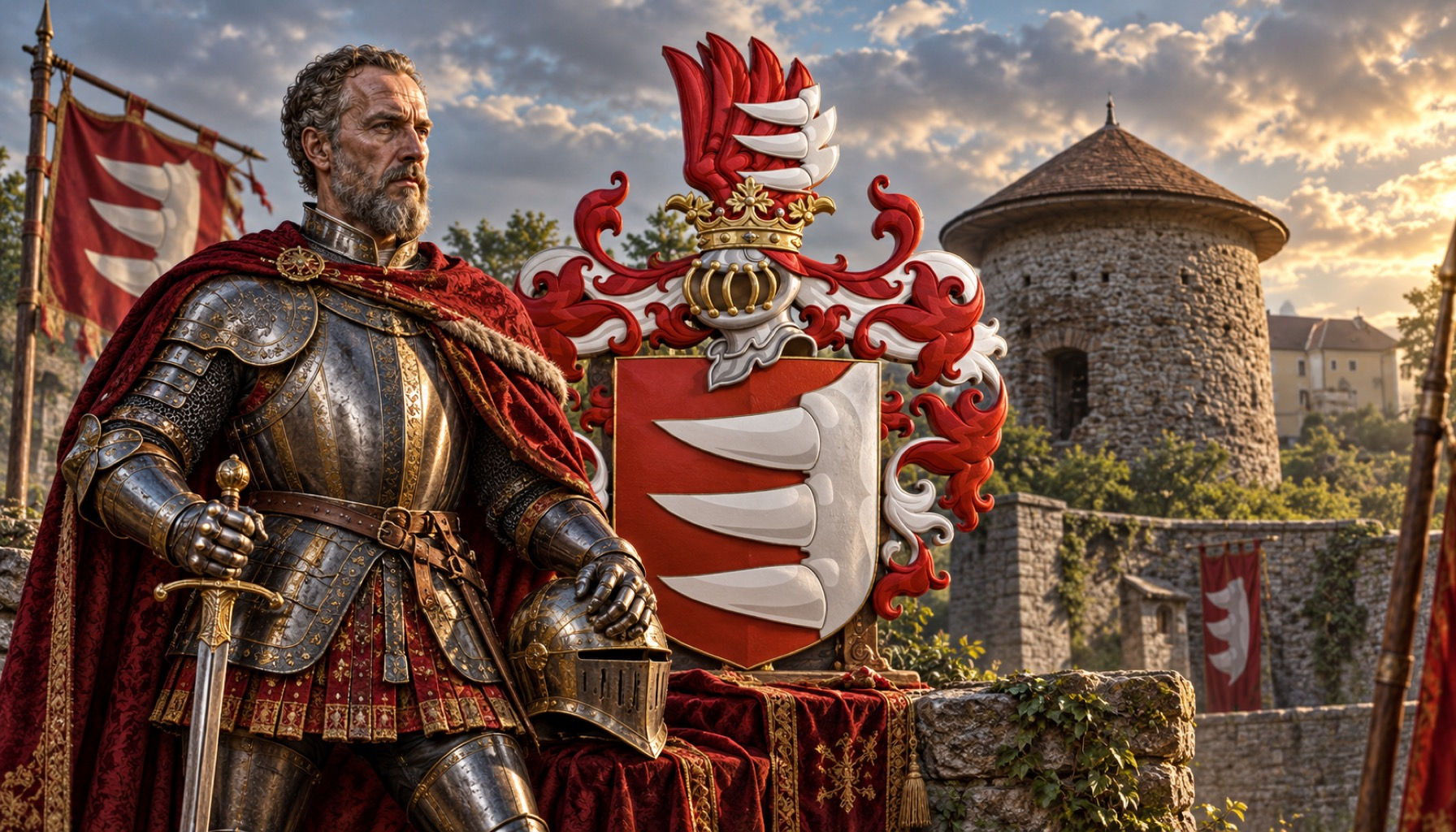
The Skarzynski family was a Polish noble house of the szlachta, rooted in the historical world of the Polish-Lithuanian Commonwealth and linked here with the primary family haplogroup R1a1a1b1a1a1a2. That matters not because DNA replaces history, but because in Poland noble identity was never just about one court, one palace, or one grand title. It was built through heraldic affiliation, landed estates, local authority, military duty, and steady participation in the civic life of the Commonwealth. In that sense, House Skarzynski belongs to a very recognisable Polish pattern: noble by status, armorial by tradition, regional by influence, and durable in memory across generations.
The family name points to an origin in place, as so many Polish noble surnames do, with the house developing from a local territorial anchor into a lineage known through landholding, alliances, and service. This was the society of sejmiks, cavalry obligations, and heraldic clans, where a family might be important not because it hovered permanently around a royal court, but because it mattered in its district and carried that standing over time. Figures associated with the family include Ambrozy Mikolaj Skarzynski (1787-1868), remembered from the long nineteenth century when old Commonwealth lineages had to navigate partitioned Poland, and Viktor Petrovich Skarzhunnky, whose form of the name reflects the wider eastern and imperial worlds into which branches of Polish noble families often moved.
Read more about the Czartoryski family
The location anchor for the family is the Skarzynski manor tradition, tied to the wider story gathered around the Skarzynski name and its historical seats. In Polish noble life, the manor was not merely a house. It was the practical theatre of status, estate management, patronage, memory, and negotiation with the surrounding countryside. A manor associated with a szlachta family like the Skarzynskis would have stood at the meeting point of agriculture, local politics, household chapel culture, kinship alliances, and the all-important performance of continuity. The Skarzynski entry on Wikipedia reflects this broader noble framework, linking the family to the old heraldic and landed order from which its identity emerged. Depending on the exact surviving site and present condition, associated places may still be visited today in the reasonable sense that many historic Polish manor locations, villages, and estate landscapes remain on the map even when the original buildings have been altered, rebuilt, or repurposed. In Poland, that sort of visit can be especially evocative: one is often standing not simply before one intact ancestral residence, but inside a layered historical landscape where the memory of the house still clings to the place-name.
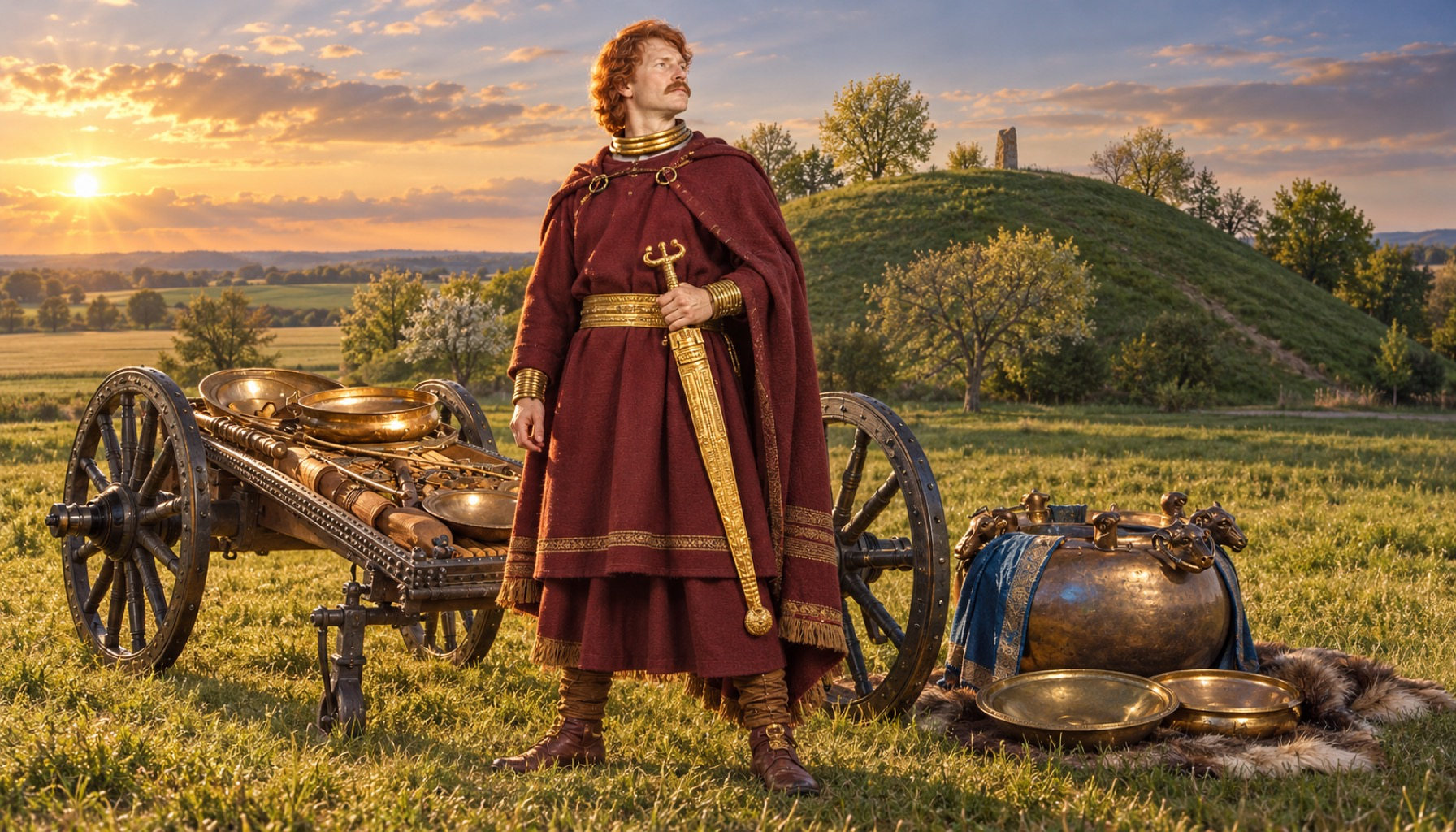
On the ancient DNA side, the Skarzynski family's linked haplogroup R1a1a1b1a1a1a2 sits within a deeply interesting central and eastern European story. It appears in a range of related or linked samples from medieval and earlier contexts, especially in Poland and its wider neighbourhood. These include medieval and Piast-era individuals such as Early Kingdom of Poland PCA0166, Plonsk Masovia PCA0328, Santok Lad PCA0386 and PCA0387, Santok samples PCA0502, PCA0510, PCA0513, and PCA0517, Greater Poland PCA0203, Konskie Sub-Carpathia PCA0309, Santok IA PCA0380, Silesia Milicz PCA0533 and PCA0557, Zielonka Poznan PCA0572, Piast princes PCA0573 and PCA0574, Obalczkowo Wielkopolska PCA0222, and Piast Dynasty samples PCA0205 and PCA0197. Broader linked examples include Bronze Age Poland poz554, Visigoth or Ostrogoth era Sisak Pogorelec in Croatia I26748, Early Medieval Croatia VEM054, Viking Age Gotland VK452 and VK438, Staraya Ladoga VK408, elite Viking grave Cedynia VK212, Iron Age Hungary I25524, and even Iron Age Boii-related MX265 from Singen am Hohentwiel. None of this proves direct descent from any one excavated person, and it should not be presented that way. What it does show is that the Skarzynski-linked paternal line belongs to a lineage well represented in the historical zones that shaped Polish noble society, especially the medieval world of the Piasts, frontier strongholds, and the older central European networks from which later noble houses emerged.
Explore the medieval Polish Piasts
If you carry the Skarzynski name, have family stories of Polish noble ancestry, or simply want to see how your DNA fits into the larger historical tapestry of the szlachta and related ancient populations, this is exactly the sort of case where genetics and history become wonderfully complementary. Upload your DNA to MyTrueAncestry and see whether you match the Skarzynski family profile or any of the related ancient DNA samples connected to R1a1a1b1a1a1a2.


Comments