The Noble House of Lascelles

– 3 min read


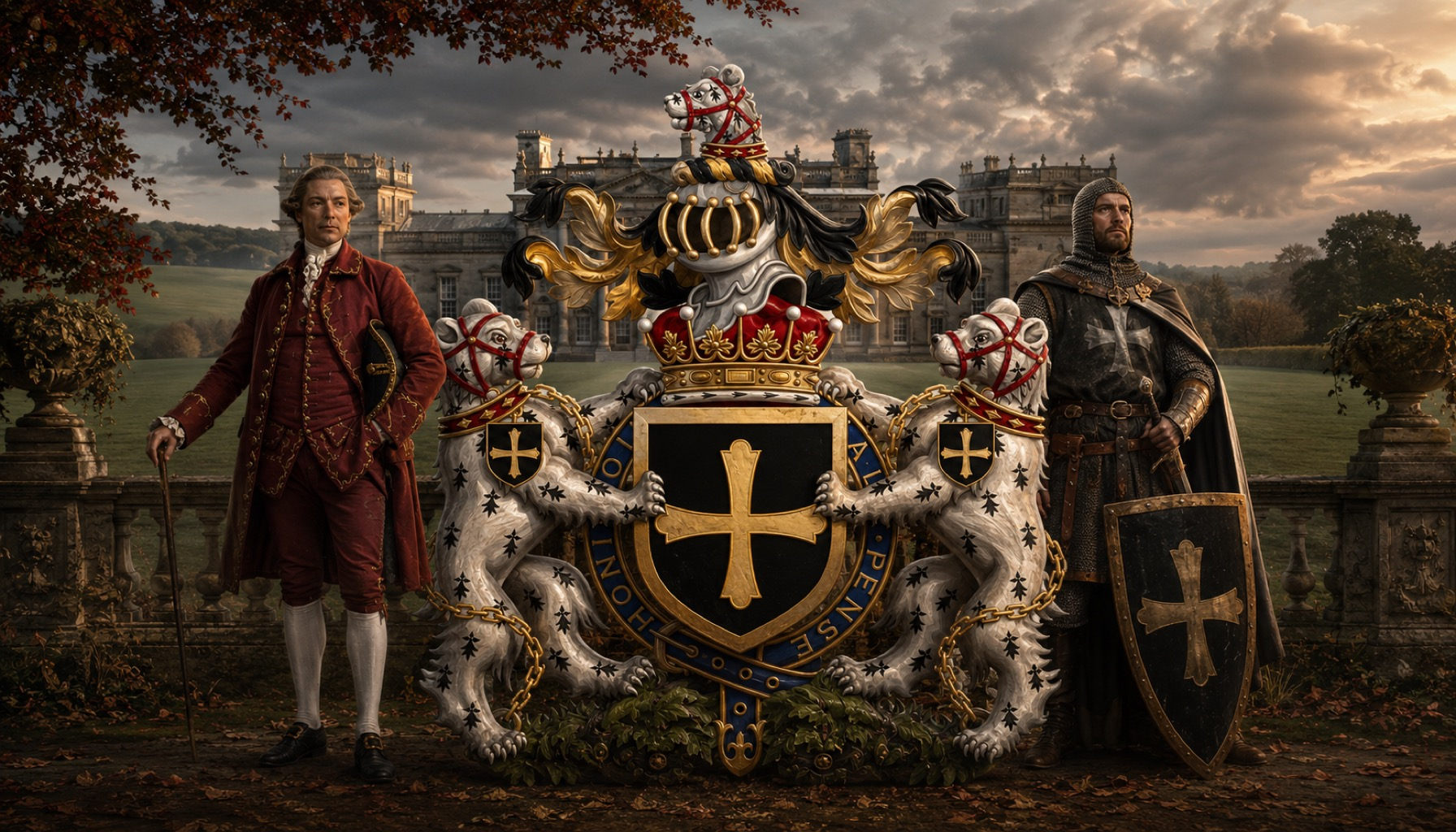
The Lascelles family was one of those Norman-origin noble houses that came to England in the long shadow of the Conquest and, over centuries, turned foreign roots into something unmistakably English. Strongly associated with Yorkshire, Harewood, and the landed aristocracy of Britain, the house grew through the familiar but formidable machinery of noble survival: estate ownership, service to the Crown, marriage alliances, public office, parliamentary influence, heraldry, and careful reputation-building across generations. In haplogroup terms, the primary family line here is linked with I2a1b1a2b1a2a1a1a1a1a1c, a lineage tag that places the story in a much deeper paternal time frame than written family history alone can show.
The surname itself is generally understood to be locational, tied to places in Normandy, which is exactly the sort of origin one expects for a family that entered the English world as part of the Norman aristocratic settlement. Once established in England, the Lascelles became woven into the fabric of elite society, especially in the north. Their rise was not a single dramatic leap but a gradual consolidation of land, office, and status. That is often how noble history really works: less fairy-tale flourish, more patient accumulation. Figures such as Francis Lascelles (1654-1658) and Henry Lascelles, 6th Earl of Harewood (1882-1947), help mark different points along that long arc of continuity, from early modern family memory to the distinctly modern public life of the peerage.
Explore the Noble House of Noel
If the Lascelles story has a physical anchor, it is Harewood House in West Yorkshire. This is not just a grand residence dropped decoratively into the landscape; it is a statement in stone about wealth, ambition, taste, and political standing. Built in the 18th century for the Lascelles family, Harewood House became the great seat of the Earls of Harewood and remains one of the best-known aristocratic houses in Britain. Architecturally, it is a major country house, with interiors associated with Robert Adam and furniture by Thomas Chippendale, while the surrounding landscape was shaped in the era when country estates were designed to impress as much as to function. The house also contains significant art collections and reflects the world of Georgian power, imperial money, and elite self-fashioning. Importantly for visitors today, Harewood House is still open to the public as a heritage site, so the Lascelles legacy is not locked away in parchment and pedigree but can still be walked through, room by room, in Yorkshire itself.
Read more about The Gascoigne Family
From the ancient DNA angle, the haplogroup link I2a1b1a2b1a2a1a1a1a1a1c opens a wider northern European backdrop rather than proving a direct paper-trail descent. Related or linked ancient samples include Merovingian Period Frankish Moemlingen, Germany (Mln13); Jute Early Roman Era Denmark, Jutland Bog War, Alken Enge (CGG019201 and CGG019212); Danii Tribe Denmark, Forevejlegard (CGG107532); Early Medieval Suffolk, England, Lakenheath (LAK015); and Viking Age Oland, Sweden (VK348). What is interesting here is the spread: Frankish, Jutish, Danish, early English, and Viking Age Scandinavian contexts. That does not make the Lascelles "from" any one of these individuals, but it does place their tagged paternal lineage within a broad historical zone that connects continental Europe, the North Sea world, and early medieval England.
Read more about Norman Conquest DNA
The House Lascelles is a classic example of how a Norman-origin family could become thoroughly English while never quite losing the aura of conquest-era prestige. If your own family history includes Yorkshire roots, aristocratic connections, Norman surnames, or haplogroup I2a1b1a2b1a2a1a1a1a1a1c, it is worth exploring further. Upload your DNA to MyTrueAncestry and see whether you match the Lascelles family story or any of the related ancient DNA samples that help illuminate its deeper background.
Comments