The House of Wyndham

– 3 min read


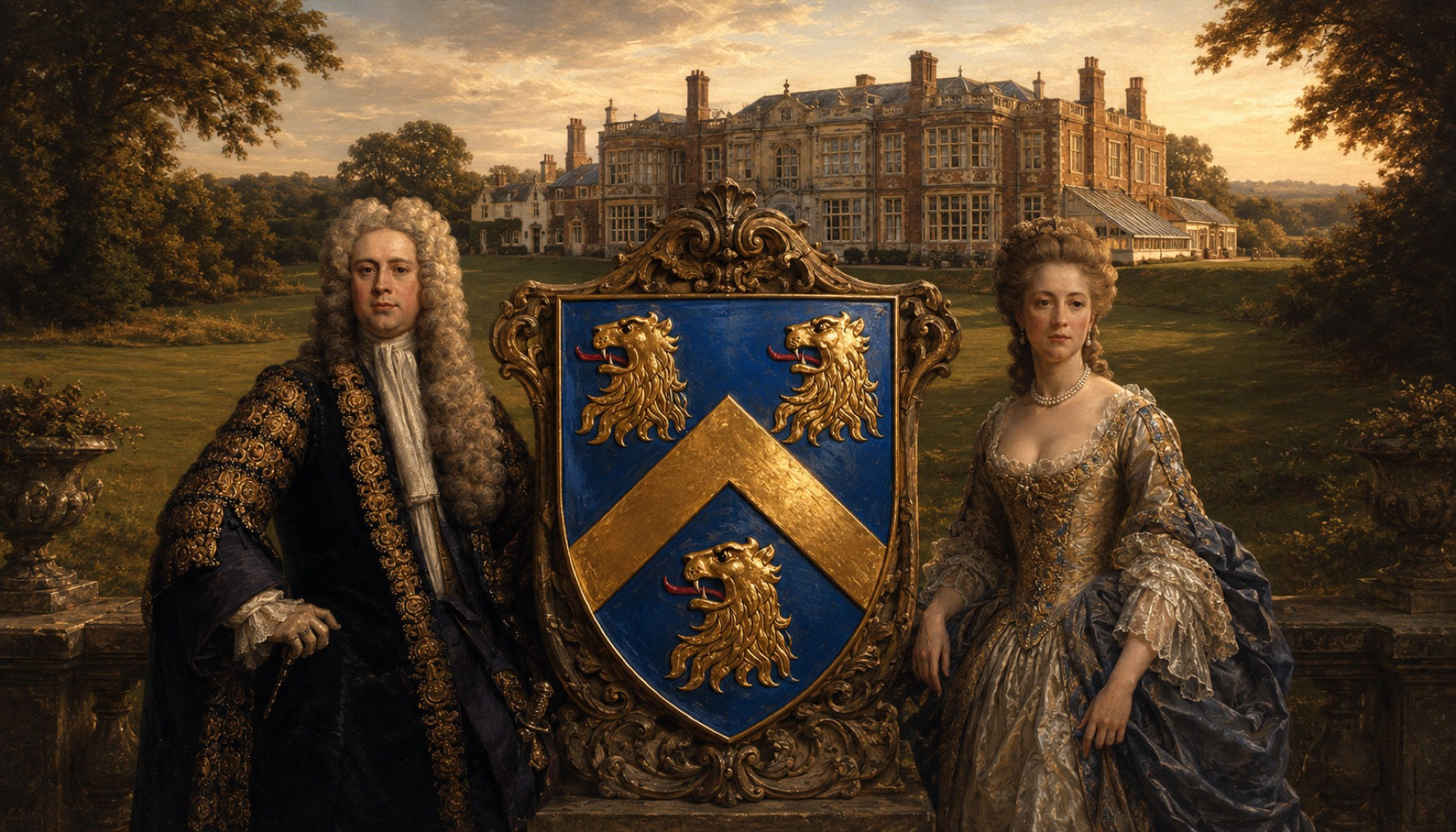
The House of Wyndham was one of those enduring English landed families whose importance rested not simply on a title, but on the longer, steadier machinery of influence: estates, marriages, heraldry, office, and the habit of public service. Historically associated with county society and the governing world of the English gentry, the family became part of that recognisable pattern in which a surname could carry weight across generations because it was tied to land, memory, and usefulness. The primary haplogroup linked here is R1b1a1b1a1a2b3c, placing the family within a broad paternal lineage that appears again and again across the archaeological record of western and central Europe.
The Wyndham name emerges from the English landscape and its feudal and post-medieval social order, a world in which families rose not only by battlefield glory or royal favour, but by staying power. In that sense the Wyndhams are very English indeed. Their story belongs to the long age of manor houses, local influence, parliamentary participation, and careful alliance-building with other established families. Figures such as Sir John Wyndham (1558-1645) and Sir Francis Wyndham, 3rd Baronet (1654-1716), stand within that tradition: men tied to service, property, and the sort of family continuity that helped a house remain visible long after louder names had burned out. The House of Wyndham represents not a sudden blaze of grandeur, but the durable prestige of the landed-house tradition.
One of the best-known location anchors connected with the Wyndham story is Felbrigg Hall in Norfolk, a splendid country house near Cromer that still conveys the texture of elite English domestic life with unusual force. The house is largely a 17th- and 18th-century building, with earlier roots, and is noted for its elegant interiors, important library, and landscaped parkland. It passed through families including the Windhams, and its history reflects precisely the kind of estate-based identity that gave families like this their social presence. Felbrigg was not just a residence but a statement: a place where architecture, landownership, lineage, and taste all worked together to say that a family belonged. Today it is preserved and can still be visited, which is one of the great pleasures of English country-house history: these places are not abstract names in pedigrees, but real settings where family ambition, memory, and daily life were staged room by room.
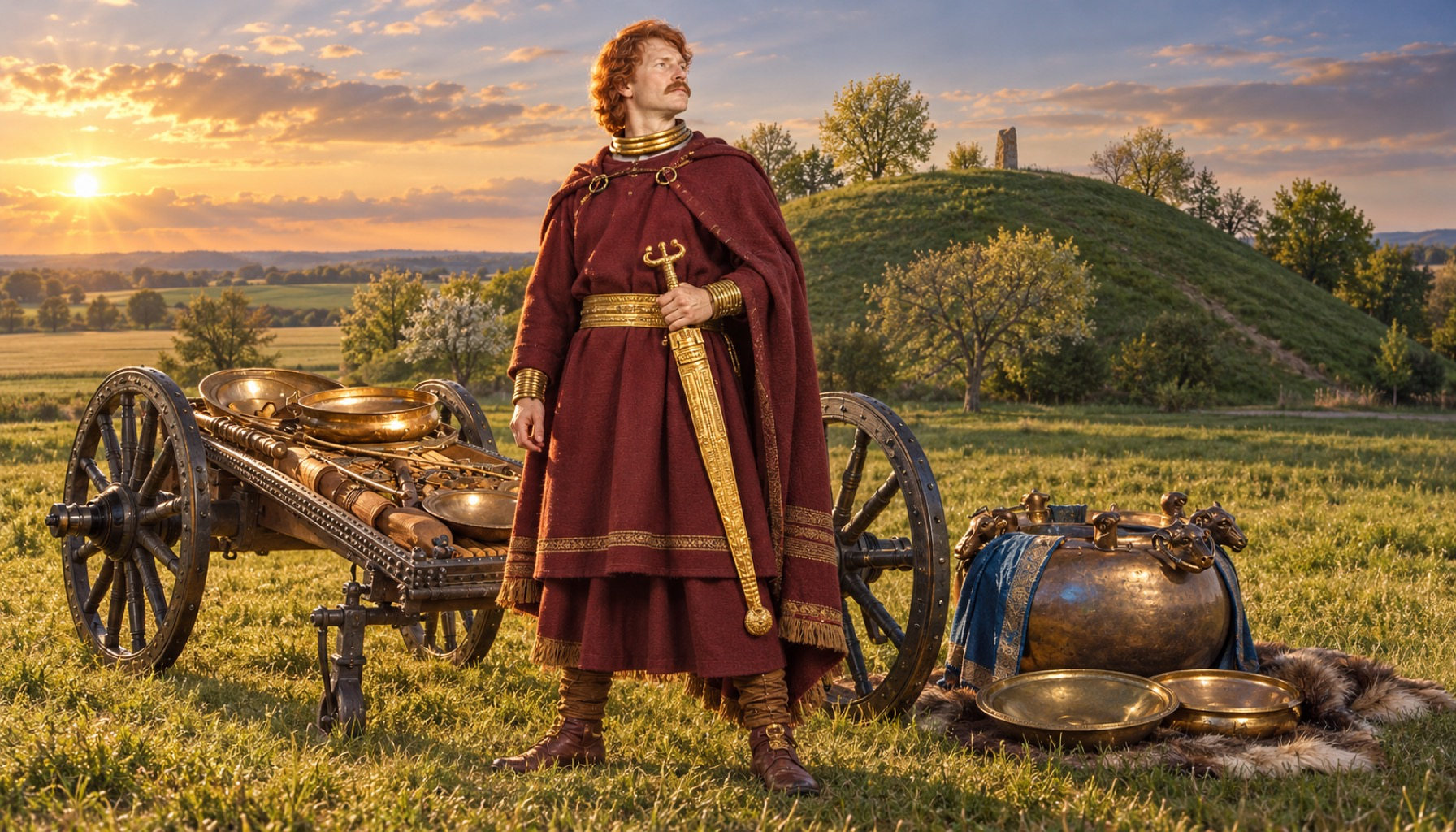
From a DNA perspective, the Wyndham-linked haplogroup R1b1a1b1a1a2b3c belongs to a paternal line with a remarkably wide historical footprint. Related or linked ancient samples appear in Iron Age and later contexts across Britain and Europe, including Celtic Durotriges individuals from Winterborne Kingston in England such as WBK36, WBK39, and WBK35; a Roman era sample from Fenstanton, Cambridgeshire, FEN008; and late medieval England at Clopton, Cambridgeshire, ATP_PSN_1217. The same broader lineage also turns up in medieval and dark age northern Spain at Las Gobas, including ldo066, ldo037, ldo048, and ldo062, as well as in elite Celtic burials in southern Germany such as Asperg-Grafenbuehl APG001 and APG003, and Ludwigsburg Roemerhuegel LWB001. That does not prove direct descent from any one of these people, and it would be irresponsible to pretend otherwise. What it does show is that the paternal lineage associated with the House of Wyndham sits within a deep and mobile European story, stretching through Bronze Age, Iron Age, Roman, medieval, and post-medieval populations.
Read about ancient DNA in post-Roman Britain
If the House of Wyndham catches your imagination, that is really the point of this kind of history: to see how a family name opens onto bigger themes of land, politics, memory, and ancestry. Uploading your DNA to MyTrueAncestry can help you explore whether you match the Wyndham family profile or any of the related ancient DNA samples linked to haplogroup R1b1a1b1a1a2b3c, and place your own story within this longer historical landscape.


Comments