The House of Tosney
– 2 min read


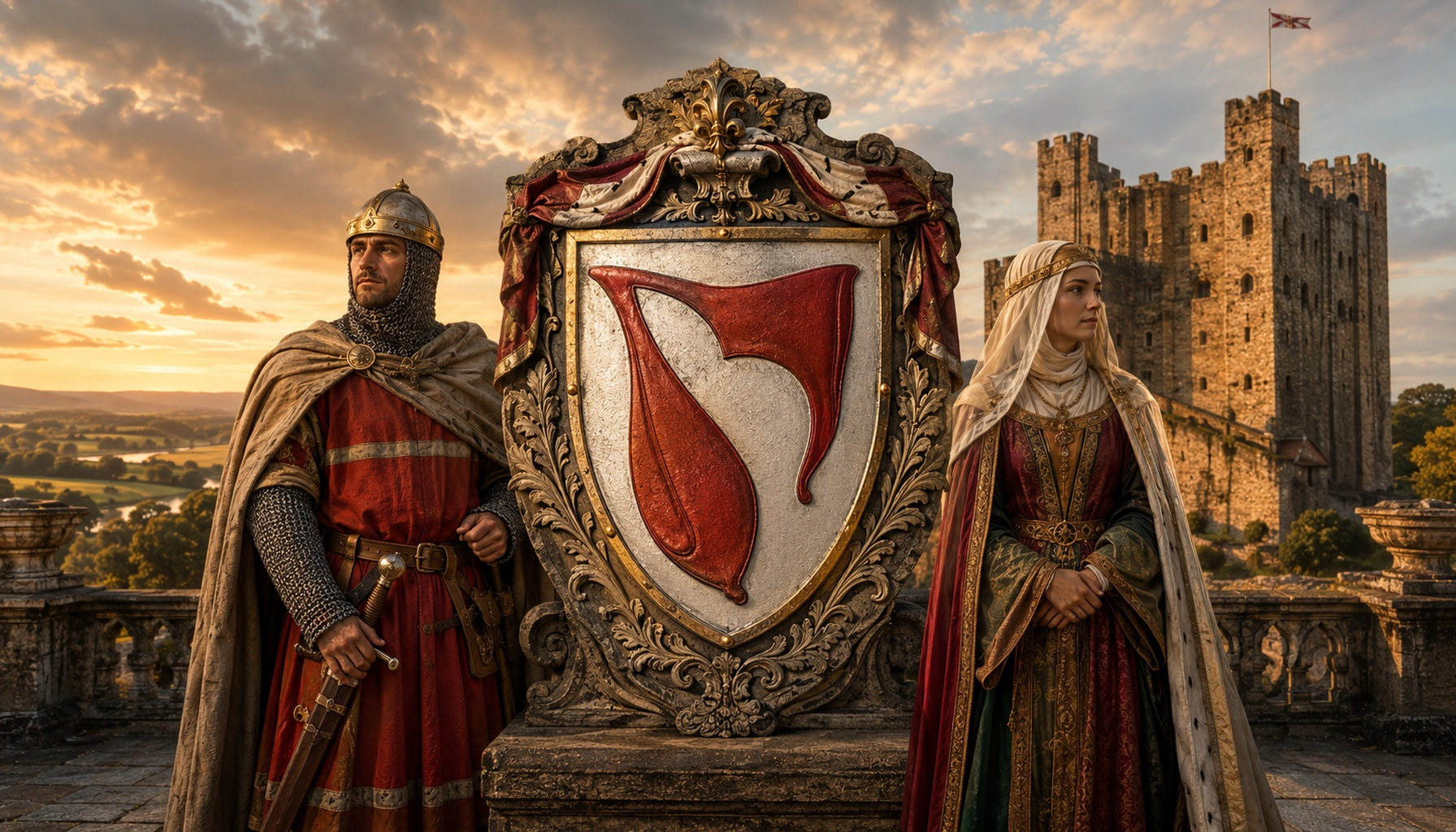
The House of Tosney, also written Tosny, was one of the notable Norman noble families to emerge from the feudal world of medieval Normandy and then extend its reach into England after the conquest era. Their name came from place-based identity, as so many Norman lineages did, and their story is a classic one of lordship, castles, mounted warfare, landholding, and political usefulness to dukes and kings. In haplogroup tagging terms, the primary family haplogroup linked here is R1b1a1b1a1a2a1b1a1, a lineage often associated in broad ancient DNA discussions with many western European male lines.
What makes the Tosneys interesting is not just that they were grand, but how they became grand. Norman power was built on movement: men crossed frontiers, married strategically, seized opportunities, and tied memory to stone fortresses and local lordship. The Tosneys fit that pattern beautifully. Figures such as Roger I de Tosny (990-1040), remembered as an early and formidable member of the line, Ralph de Tosny (1102), and Roger III de Tosny (1108) show the family active across the period when Norman aristocratic identity was being forged on both sides of the Channel. Their heritage speaks to a mobile military elite who turned service and conquest into durable family standing.
Read more about the House of de Clare
A key location anchor for the family is Chateau de Conches-en-Ouche in Normandy, closely associated with the Tosny lords and their territorial base. In historic terms, this was not merely a residence but a statement in earthworks, masonry, and command of landscape. The site developed around an important fortified centre in the Eure region, in the old duchy of Normandy, and it formed part of the kind of castle network through which noble families controlled routes, displayed authority, and defended their interests. Like many Norman castles, it evolved over time, with medieval fortification, later damage, and survival in fragmentary but evocative form. The remains are still known today, and yes, the site can still be visited, which gives modern visitors a rare chance to stand inside the physical setting that helped shape Tosny power and memory.
Explore the House of de Warenne
From an ancient DNA perspective, the Tosney haplogroup tag R1b1a1b1a1a2a1b1a1 links the family broadly to a much wider web of western Eurasian male-line history rather than to any single proven individual ancestor. Related or linked samples under this haplogroup include Historic St. Mary City Chapel Field Cemetery Maryland individuals I15304, I15319, and I35265; Bronze Age Pre-Celtiberian Spain Murcia Almoloya Pliego ALM041; Medieval Denmark Tjrbry Randers Municipality CGG100678; Soldier of Napoleon Grande Armee Mass Grave Vilnius Latvia YYY084B; Carthaginian Punic Western Sicily Italy Marsala Lad I24674; Carolingian Era Groningen Netherlands GRO024; Iron Age Hill Fort Suddern Farm Hampshire England I20982; Gallic Chemin de Coupetz Marne France I21399; Viking Age Skara Varnhem Sweden VK403; Viking Hesselbjergmarken Denmark VK87; Viking St. Brice Massacre Oxford VK166; and Sicily Buffa II Early Bronze Age I3123. These do not demonstrate direct descent from the House of Tosney, but they do show how a linked paternal lineage appears across a remarkably wide historical canvas, from Bronze Age Iberia to Viking Age Scandinavia and medieval northwestern Europe.
If you are exploring the House of Tosney through family history or DNA, the exciting question is not whether every Tosney story can be proved in a straight line, but how your own ancestry may connect to the same broader Norman and ancient European worlds. Upload your DNA to MyTrueAncestry to see whether you match the family story, the Tosney-linked haplogroup R1b1a1b1a1a2a1b1a1, or related ancient DNA samples from across medieval and prehistoric Europe.
Comments