The House of La Rochefoucauld
– 3 min read


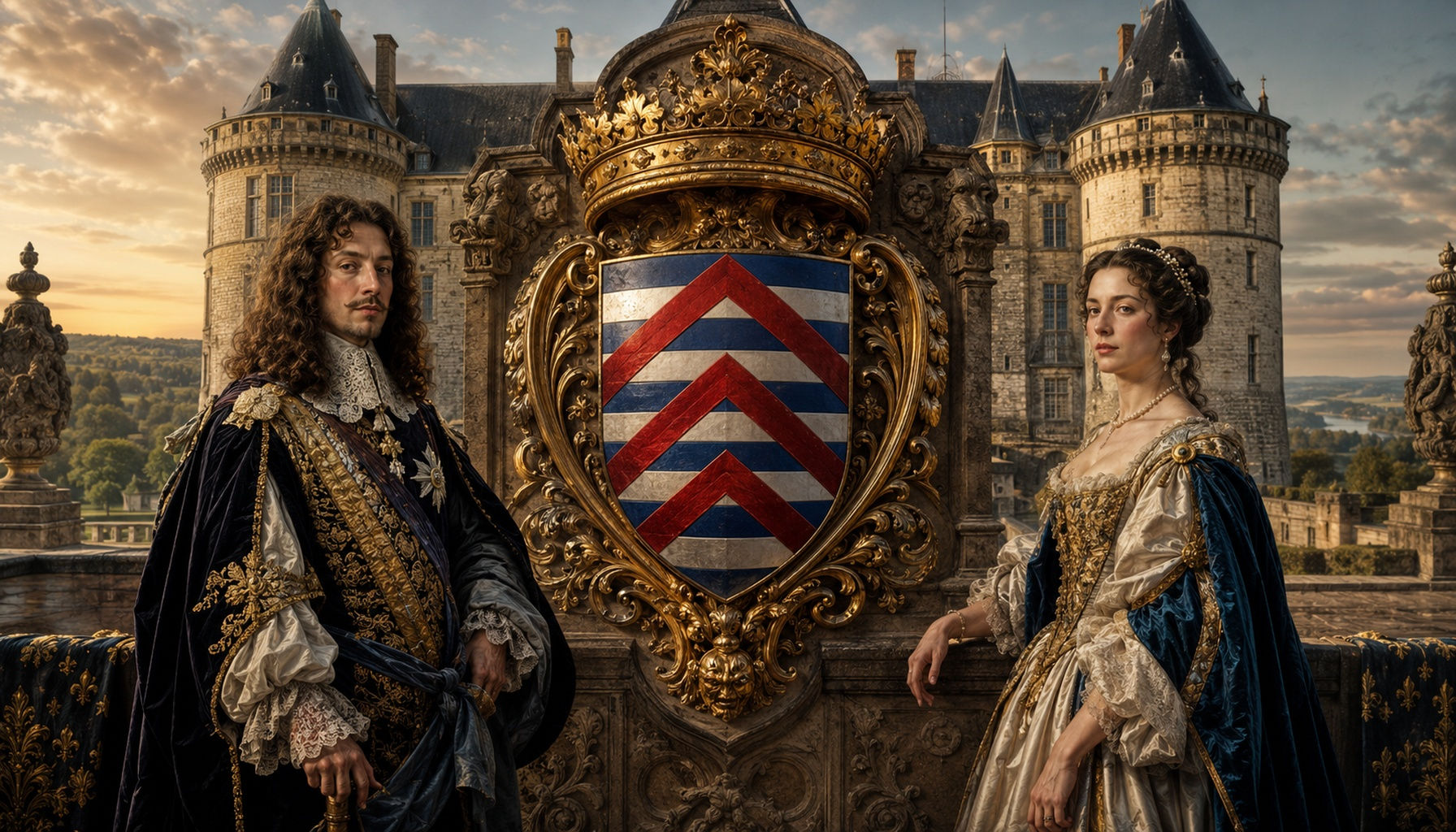
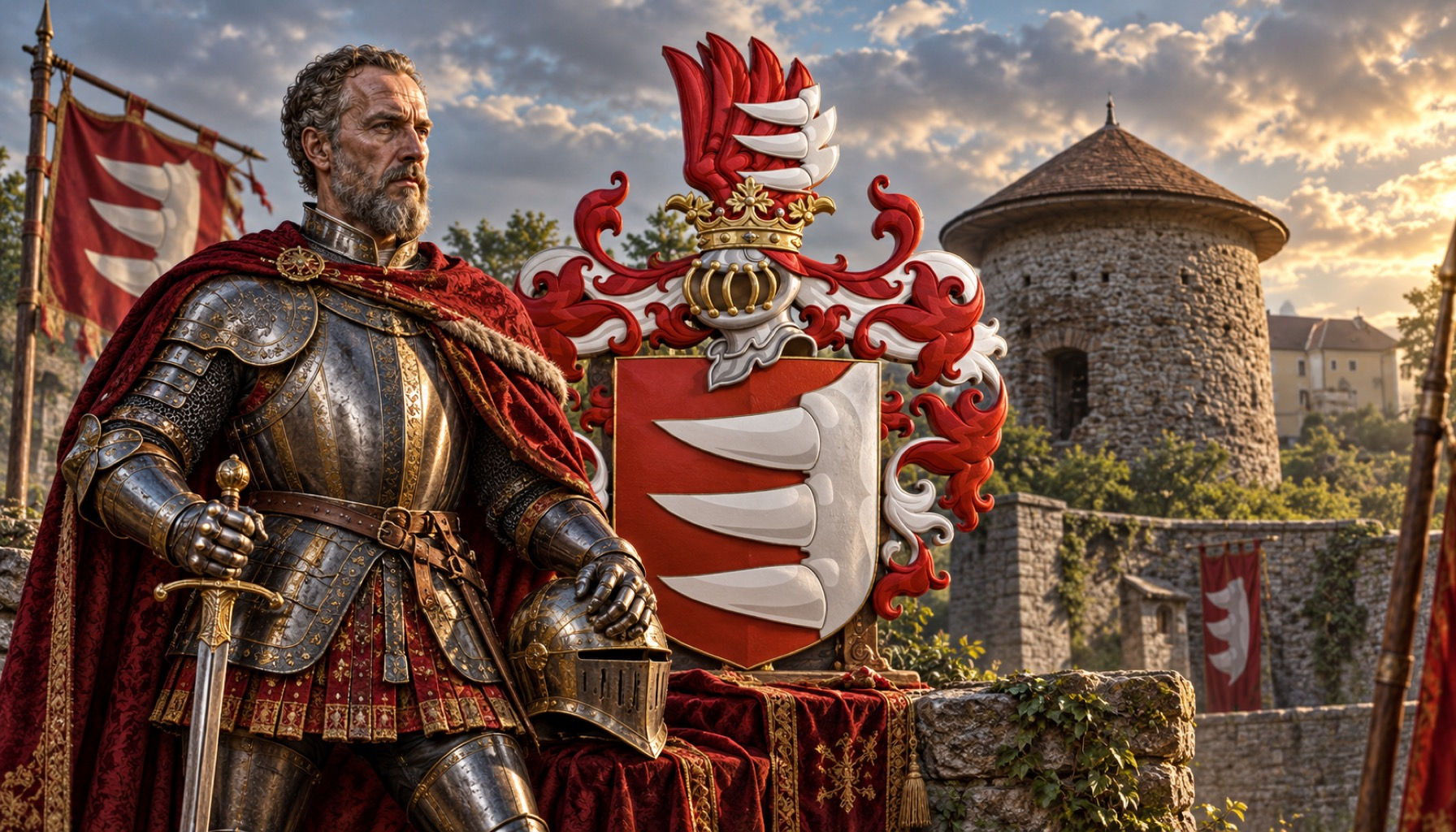
The House of La Rochefoucauld was one of the oldest and most distinguished noble families of France, rooted in the Angoumois region of western France and closely tied to the fortress town that gave them their name. In family tradition and historical memory alike, they belong to that grand French aristocratic world of castles, ducal titles, royal favor, military service, court maneuvering, and polished literary culture. Their primary linked Y-DNA haplogroup is R1b1a1b1a1a1b, a paternal line widely represented across western Europe and especially familiar in the long genetic history of Atlantic and Celtic-influenced regions.
The family emerged from the feudal landscape of early medieval France, when local lords built power from stone strongholds, landed control, and loyalty to greater rulers. A key early figure is Foucauld I of La Roche (973-1047), associated with the formative generations of the line. Over the centuries the house expanded its standing through marriage alliances, offices at court, military distinction, and careful participation in the upper ranks of French political life. By the early modern period the La Rochefoucaulds had become dukes and grandees of real consequence, and they also acquired something rarer than rank: cultural afterlife. That is largely thanks to Francois VI de La Rochefoucauld (1613-1680), the celebrated author of the Maximes, whose sharp observations on vanity, ambition, self-interest, and human behavior still cling to the family name. Later figures such as Francois XII de la Rochefoucauld (1747-1827) carried the house through the upheavals of revolution and restoration, showing how an ancient lineage could survive even when the whole social order around it was shaken.
Explore the House of Montmorency
The great location anchor of the family is the Chateau de La Rochefoucauld in the town of La Rochefoucauld, in Charente. This is not just a decorative backdrop for aristocratic memory; it is the physical expression of the house's long continuity. Rising on the site of an earlier medieval fortress, the chateau preserves layers of history from the defensive needs of the Middle Ages to the more elegant tastes of the Renaissance. It is especially noted for its impressive round towers, its galleries and courtyards, and a remarkable monumental staircase often associated with Renaissance design culture in France. In other words, this is a building where feudal lordship and courtly refinement meet in stone. The chateau remained closely tied to the family across centuries and, importantly for visitors today, it is still known as a heritage site open to the public, so it can reasonably be said that the ancestral seat can still be visited.
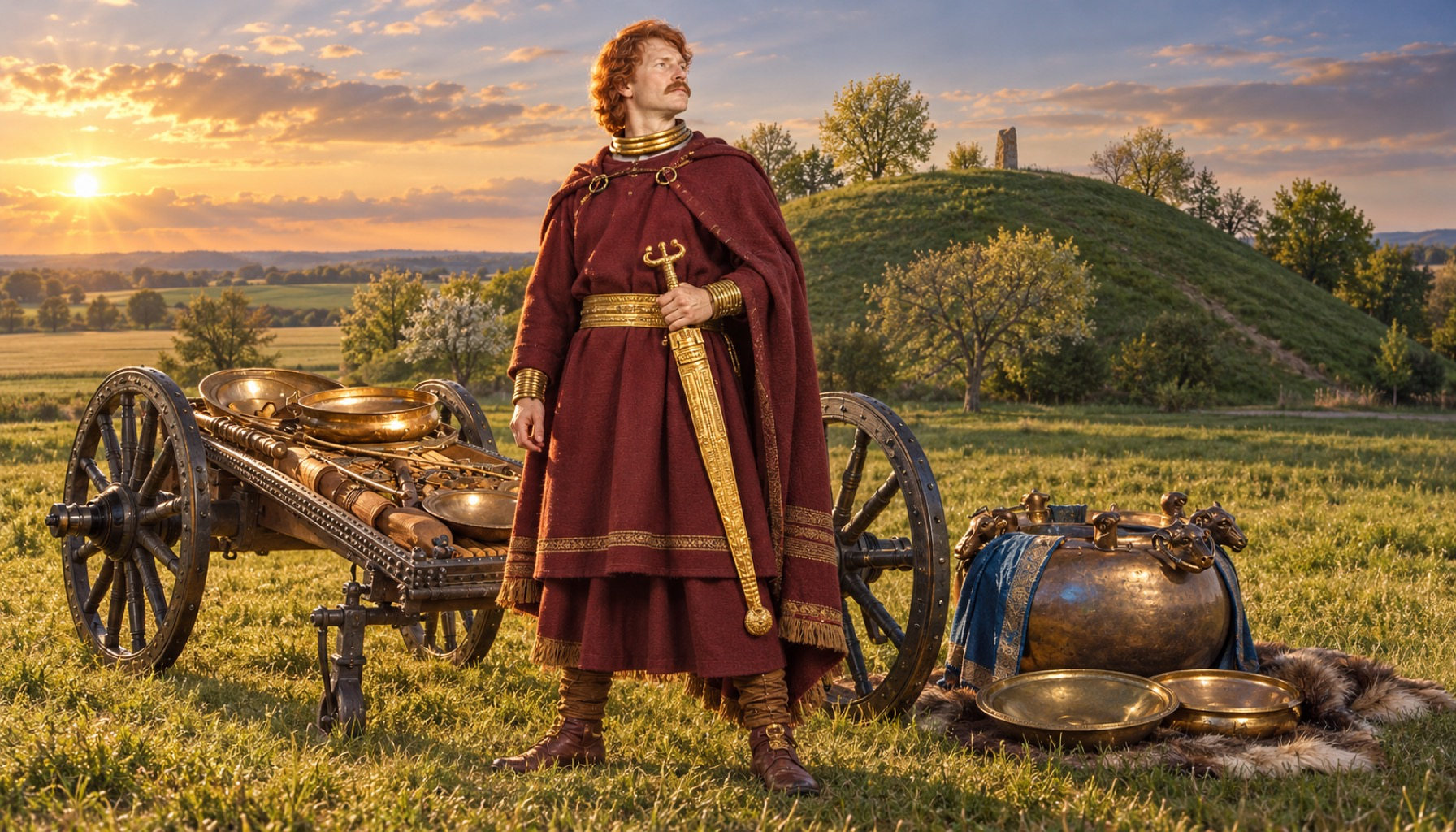
The La Rochefoucauld family's primary linked haplogroup, R1b1a1b1a1a1b, belongs to a very old and widespread western European paternal tradition. That does not prove direct descent from any ancient sample, and it should not be presented as such. But it does place the family within a broad genetic landscape seen in many elite, martial, and local high-status burials across European history. Related or linked ancient examples include the elite Celtic burials from Magdalenenberg, Germany (MBG013) and Eberdingen-Hochdorf Biegel (HOC001, HOC001b, HOC001c), Roman-era and high-status burials in England such as NWC009 and ARB003, Durotriges Celtic individuals from Winterborne Kingston (WBK106, WBK17, WBK192, WBK10), Early Bronze Age individuals from France such as SMGB54 and BRE445FK, and later medieval and migration-period men from Spain, Belgium, Germany, Scandinavia, and beyond. The pattern is striking: this is a lineage found not in one tiny corner of Europe, but across a long chain of communities from Bronze Age France to Celtic princely centers, Roman provincial society, medieval towns, warrior graves, and noble milieus. For a house like La Rochefoucauld, so deeply woven into the historic fabric of France, that wider R1b story is a useful reminder that aristocratic identity was built on local roots but also on very deep European continuities.
Explore the Royal House of Capet
If the House of La Rochefoucauld interests you, the next question is the obvious one: could your own DNA show links to this family story, or to related ancient individuals carrying the same broader paternal signature? Upload your DNA to MyTrueAncestry and explore whether you match the family, their haplogroup context, or ancient samples connected to the same long European genetic tradition.

Comments