The House of Green of Greens
– 3 min read


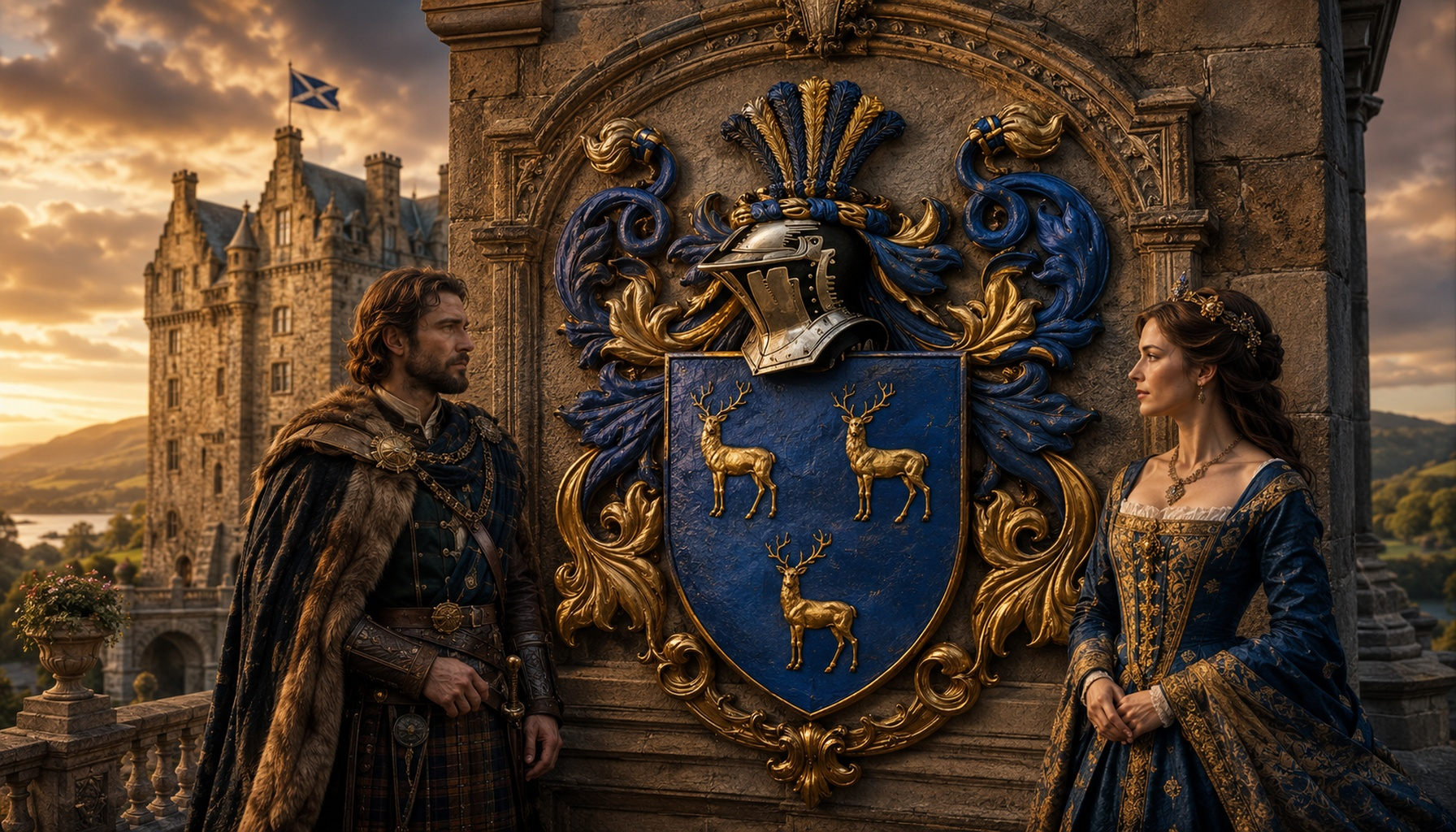
The House of Green of Greens belongs to that very recognisable English landed-family tradition in which name, estate, and heraldry work together to preserve memory across generations. In this case, the family is best understood as a noble or gentry house rooted in the English Midlands, with its identity shaped by landholding, local influence, marriage ties, public duty, and the careful continuity of lineage. The associated primary family haplogroup is R1b1a1b1a1a1c1a2, a paternal line found widely across parts of western and central Europe and often turning up in ancient and medieval contexts tied to elite, martial, and settled populations.
The surname itself belongs to a world where people were often known by place as much as by blood, and where "of Greens" or "de Greene" signalled connection to a manor, district, or inherited estate. The family appears in medieval records through figures such as Alexander de Greene of Bokton in 1250, Sir Henry Greene of Boughton in 1369, and Sir Thomas Green, who lived from 1461 to 1506. These are not just names on parchment. They point to a family moving within the machinery of English society: service to the crown, estate management, regional authority, and the web of alliance that allowed a house to endure through the uncertainties of late medieval politics.
Explore the House of De La Pole
A key location anchor for the family story is Greens Norton in Northamptonshire, a village whose very name keeps the Green connection alive. Historically, this was no isolated hamlet but part of the deeply worked agricultural and manorial landscape of the English Midlands, shaped over centuries by lordship, parish life, open-field farming, and the steady bargaining of local power. Greens Norton lies near Towcester, in a region long important for movement and settlement, with Roman roads, medieval estates, and later market connections all helping to knit it into a larger story of English continuity. The parish church of St Bartholomew is especially notable, and the village as a whole still preserves that sense of layered time so typical of Northamptonshire, where Norman, medieval, and later landscapes sit almost on top of one another. Yes, it can still be visited today, and for anyone interested in family history it offers something more valuable than a romantic ruin: a real, inhabited place where the relationship between surname and land can still be felt on the ground.
From an ancient-DNA point of view, the Green of Greens haplogroup tag, R1b1a1b1a1a1c1a2, sits within a broad and fascinating European paternal landscape. Related or linked samples appear across a striking range of places and periods: Iron Age Belgic Suessiones burials at Bucy-le-Long in France, Batavi-associated individuals from Valkenburg in the Netherlands, an Iron Age Briton from Cambridgeshire, early Anglo-Saxon burials from West Heslerton and Buckland Dover, a Norman-era individual from Lincoln Castle, medieval samples from Denmark and Belgium, Lombard-associated elite burials from Collegno in northern Italy, and later knightly or elite contexts such as the Bathory-linked Pericei burials in Hungary. There are even deeper echoes in Bell Beaker, Bronze Age, Roman, Migration Period, and Viking Age contexts. None of this proves direct descent from any one sample, and it should not be read that way. What it does suggest is that the paternal line associated with the House of Green of Greens belongs to a long-lived European strand that appears repeatedly in communities tied to migration, settlement, warfare, lordship, and local continuity across two millennia and more.
The House of Green of Greens is, in the end, a fine example of how family history really works: not as a fairy tale of uninterrupted grandeur, but as a durable bond between people, place, memory, and recorded identity. If your own DNA or surname story points toward this family, or toward related ancient samples in Britain and northwestern Europe, you can explore those links more closely. Upload your DNA to MyTrueAncestry and see whether you match the family or any of the related ancient DNA samples connected to this wider R1b1a1b1a1a1c1a2 heritage.



Comments