The House of de Livet

– 3 min read


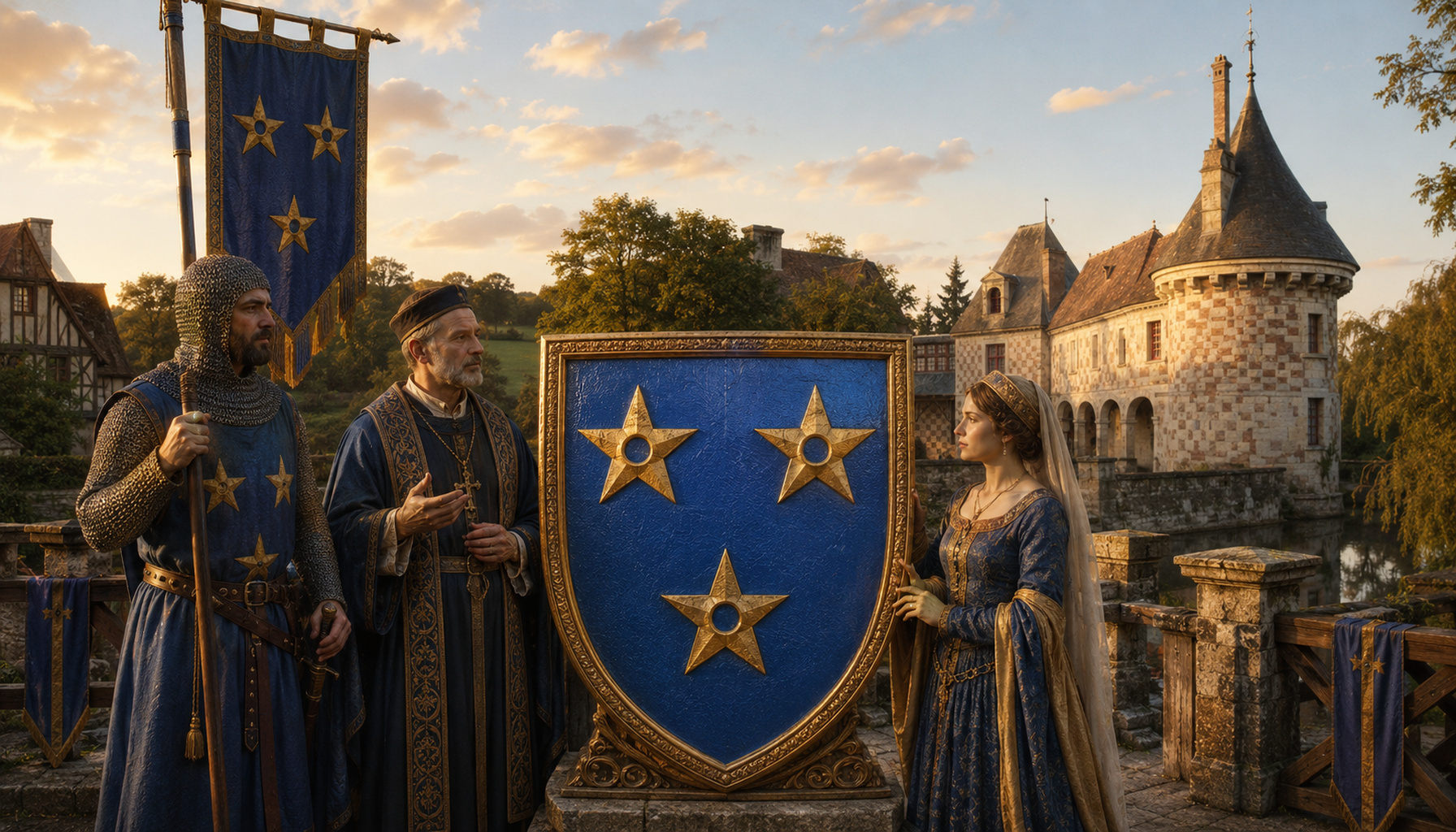
The House of de Livet was a Norman noble family of medieval northern France, rooted in Normandy and shaped by the hard practical business of feudal life: land, lordship, military duty, marriage strategy, and service to greater powers. Their name is territorial, taken from Livet, which is exactly how so many Norman houses announced who they were - not by some misty legend, but by the place from which their authority and memory were built. In haplogroup terms, this family is here linked with R1a1a1a as the primary family haplogroup, alongside the wider mix of lineages found across Norman and French noble society.
That matters historically because a house like de Livet was not simply a surname floating through documents. It was a local power structure. Families of this type held onto status through estates, heraldic identity, continuity across generations, and their ability to remain useful in regional politics. The de Livets fit that recognisable Norman pattern very well: a place-based noble origin, feudal service, and the gradual transformation of a local seigneurial identity into an enduring family house. Named figures help pin that long story to the record, including Gilbert de Lyvet in 1244, Guillaume de Livet in 1431, and, later in the broader noble orbit of French aristocratic memory, Louis Charles de Levis, 1647-1717.
Explore the House of de Harcourt
The great location anchor for the family is the Chateau de Saint Germain de Livet in Calvados, Normandy, one of those places that seems almost to stage-manage the history of Norman nobility for you. The site preserves the layered story of aristocratic residence over centuries, with a striking blend of late medieval and Renaissance building phases. It is especially noted for its picturesque half-timbering, patterned brick and stone, and its setting with water features that give it the look of a seigneurial residence designed both to impress and to endure. Historically, it is tied to the local noble world from which families such as the de Livets emerged and operated: not abstract "feudalism" in the textbook sense, but landed authority made visible in masonry, halls, chapels, courts, and estate management. Better still, this is not a vanished memory on parchment alone. The chateau still survives and can be visited today, making it a very tangible doorway into the landscape that sustained the family name.
Read about the House of de Warenne
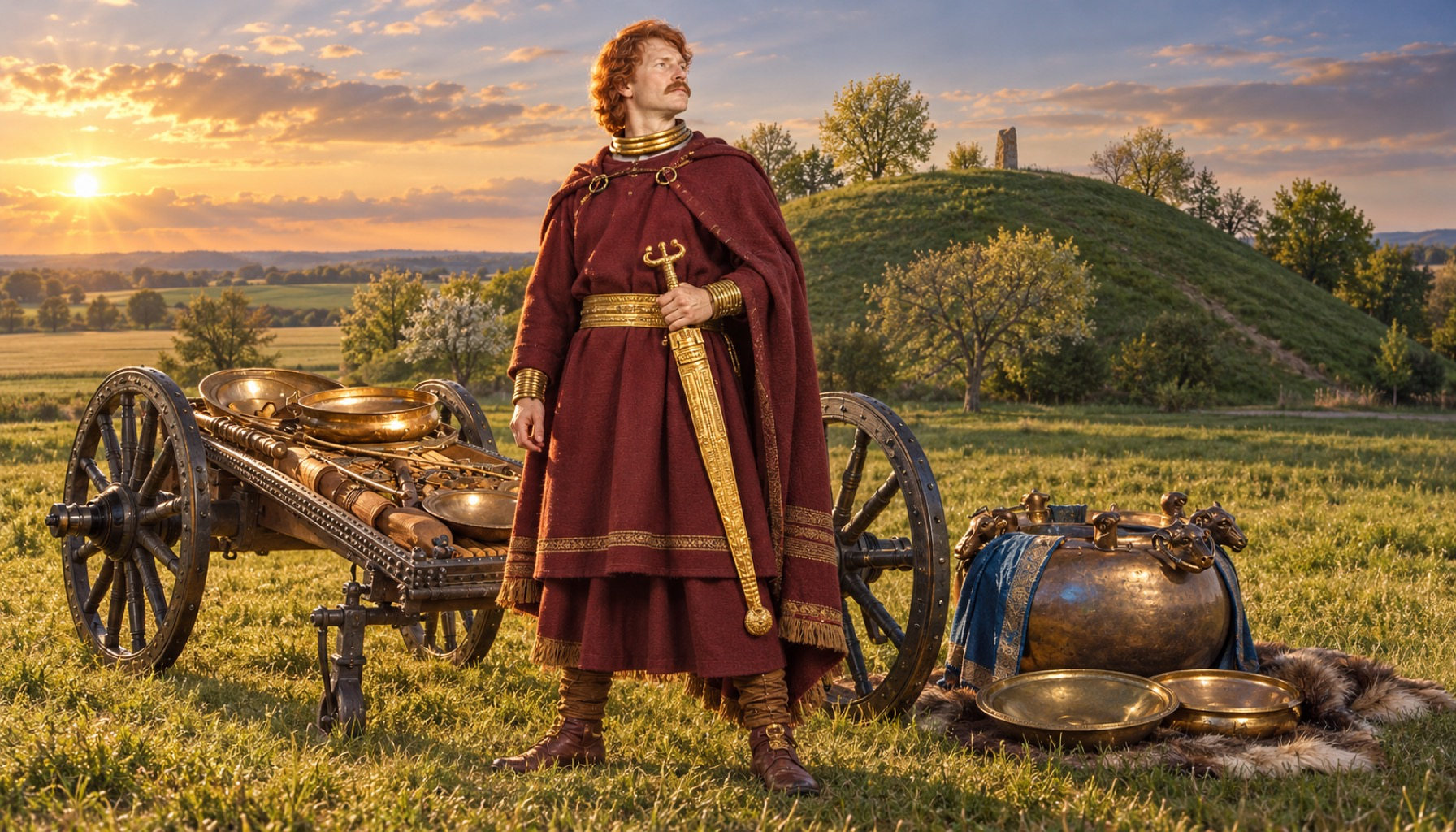
With the de Livet family associated here with R1a1a1a, the most sensible ancient DNA comparison is not to claim direct descent from any excavated individual, but to note a broad web of related or linked paternal signatures found across Eurasia and later medieval Europe. Samples connected with R1a1a1a include Early Iron Age Ukraine individuals from Petrykiv, Ternopil such as UKR170 and UKR171, Scythian-linked UKR083 from Bilsk in Poltava, and UKR150 from Dykyi Sad in Mykolaiv. The lineage also appears across later European settings, from Migration Period Hungary at Rakoczifalva, Bronze Age Unetice contexts in Thuringia, Corded Ware individuals such as Esperstedt I0104 and related Czech samples, medieval and dynastic Poland including Piast-associated PCA0218 and PCA0254, Gothic and West Slavic linked burials in Poland and Germany, Viking Age Scandinavia, medieval Sweden, medieval Estonia, medieval Belgium, medieval England, and even later colonial-era contexts like St. Mary's City in Maryland. What that tells us is not that the de Livets came from Scythians, Goths, Jutes, Vikings, or Piasts in any simplistic sense, but that their tagged haplogroup belongs to a very old and very widespread paternal network that runs through Bronze Age, Iron Age, medieval, and early modern European history. DNA gives the deep backdrop; the archives and the stones of Normandy give us the family itself.
If the House of de Livet catches your imagination, the next step is simple: upload your DNA to MyTrueAncestry and see whether you match the family story, the Norman noble world around it, or any of the related ancient DNA samples linked with R1a1a1a. That is where the fun begins - not with grand claims, but with evidence, comparison, and the thrill of placing your own ancestry into the long human past.



Comments