The House of Archer

– 3 min read


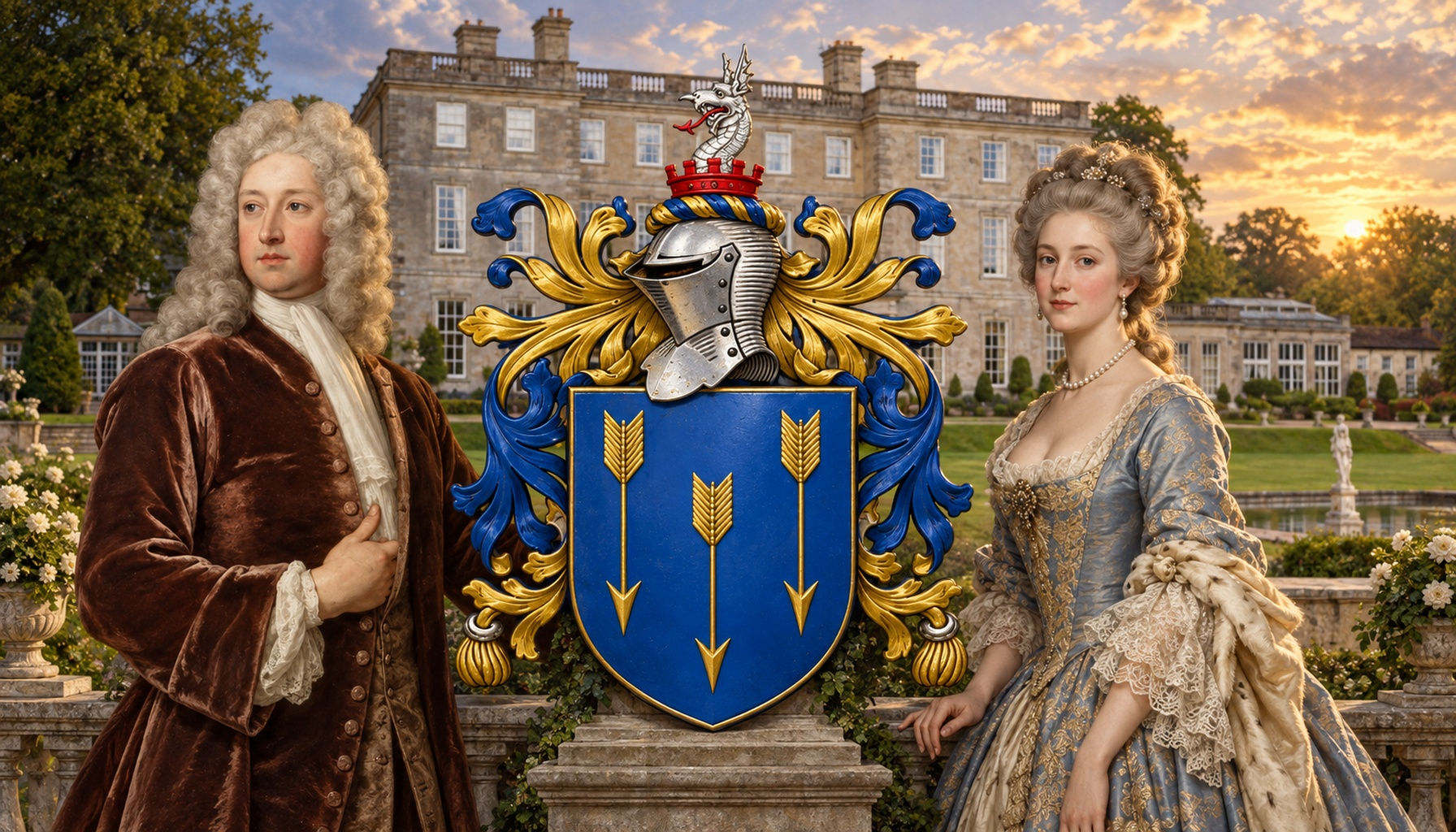
The House of Archer was a historic English landed family rooted above all in Warwickshire, and most closely tied to the estate of Umberslade. In broad terms, they were one of those families who show how power in England was often built not by sudden conquest, but by patient accumulation: land, office, legal service, parliamentary work, heraldic standing, and shrewd marriage alliances. Their primary family haplogroup is tagged here as R1b1a1b1a1a2a1a2, a paternal lineage widely represented across western Europe and strongly at home in the deeper genetic landscape of Britain.
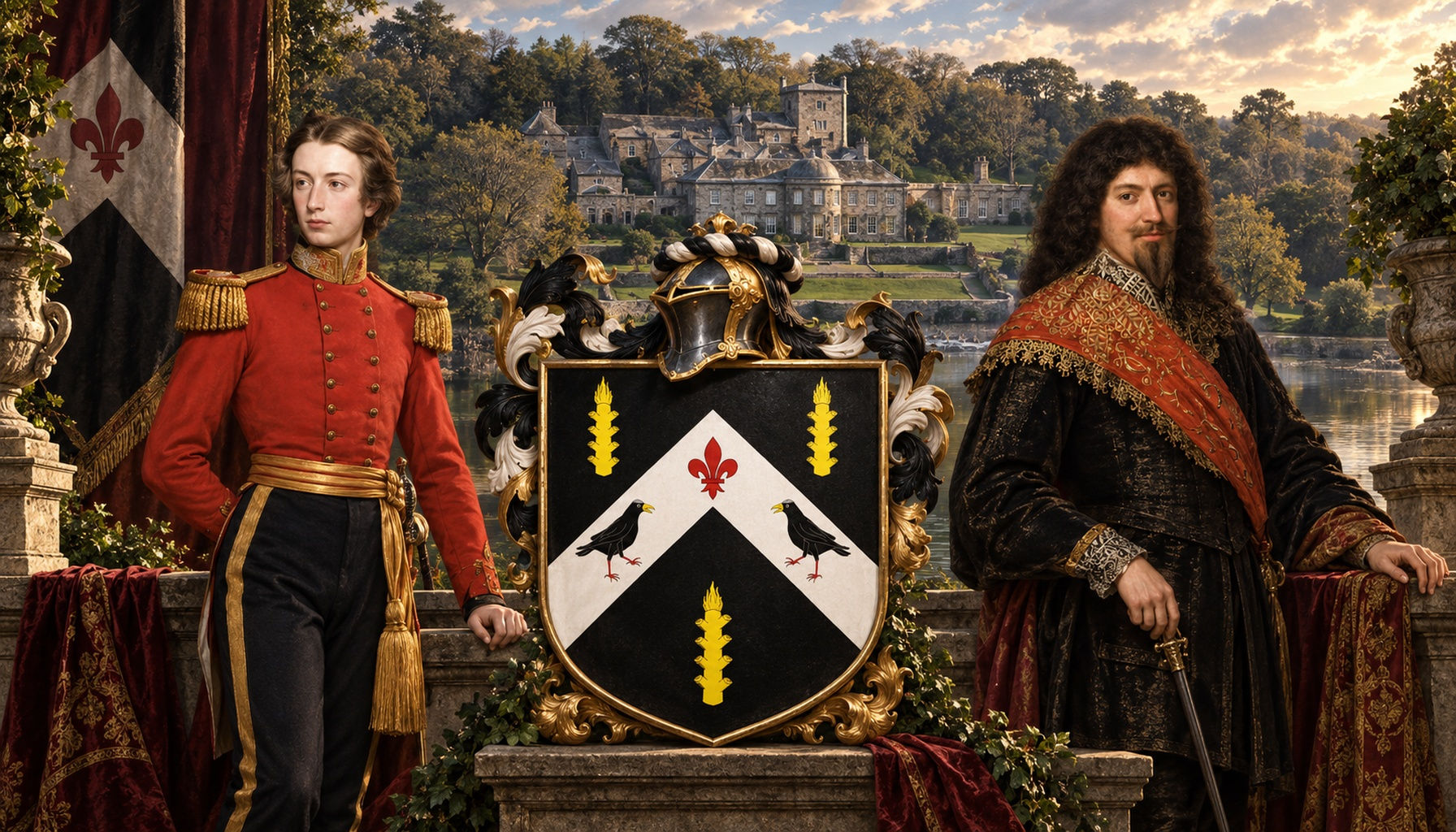
The Archers emerged from the world of county gentry, that very English social stratum which sat between the village and Westminster and managed to matter enormously in both. Their rise belongs to the long post-medieval history of local influence, where estates were not simply houses in the countryside but engines of authority, reputation, and continuity. By the seventeenth and eighteenth centuries, figures such as Andrew Archer of Umberslade (1659-1741), Thomas Archer, 1st Baron Archer (1695-1768), and Andrew Archer, 2nd Baron Archer (1736-1778) carried the family into the political nation. Thomas Archer's elevation to the peerage as Baron Archer marked the moment when a Warwickshire landed house stepped decisively into the aristocratic establishment, while still remaining anchored in its county identity.
Read more about The House of Berkeley
Umberslade Hall is the great location anchor of the Archer story, and it does exactly what a family seat should do: it turns genealogy into landscape. Situated near Hockley Heath in Warwickshire, the house stands within a historic park setting and preserves one of the strongest architectural links to the Archer name. The present hall is largely a nineteenth-century rebuilding, but it occupies the site of the older family seat and so carries forward the memory of the estate that made the family socially and politically legible in the county. In other words, even where bricks have changed, the place has not lost its historical role. Umberslade was the visible expression of landed continuity: residence, status marker, estate centre, and a statement that the Archers belonged not fleetingly but structurally to Warwickshire. The hall and its wider setting are associated today with events and estate use, so it is still possible to visit the site in a practical sense, which makes it a rare pleasure for anyone trying to connect names in a pedigree to a real surviving place.
For the DNA side of the story, the Archer tag R1b1a1b1a1a2a1a2 links the family to a much older and wider paternal world rather than proving descent from any one excavated individual. Related or linked ancient samples with this lineage appear across Britain and beyond, including Medieval England Cherry Hinton (ATP_PSN_950), Iron Age Parisi burials from Wetwang Slack and Pocklington in East Yorkshire such as I36973, I36818, I36789, I36796, I36808, I31511, I36748, I30991, I21699, and I21645, as well as Bronze Age and Iron Age individuals from Dorset, Cornwall, Derbyshire, Somerset, Yorkshire, Bohemia, France, Spain, Sicily, Sardinia, Germany, Portugal, Hungary, Denmark, and even later historic contexts such as Maryland and the Grande Armee burial at Vilnius. The important point is not a fairy-tale claim that the Archers descend from one named ancient skeleton, but that their tagged paternal line sits inside a long archaeological pattern visible from Bronze Age and Iron Age western Europe through medieval Britain. That is precisely what makes archaeogenetics so fascinating: it lets a county family of historical record be set against a backdrop of deep time.
Explore Iron Age Britain and DNA
If you have Archer roots, Warwickshire connections, or simply an interest in how families moved from county influence to peerage status, this is exactly the kind of story DNA can enrich. Upload your DNA to MyTrueAncestry to see whether you match the House of Archer, its haplogroup R1b1a1b1a1a2a1a2, or related ancient DNA samples from medieval and earlier Britain.
Comments