The de Alba Family
– 3 min read


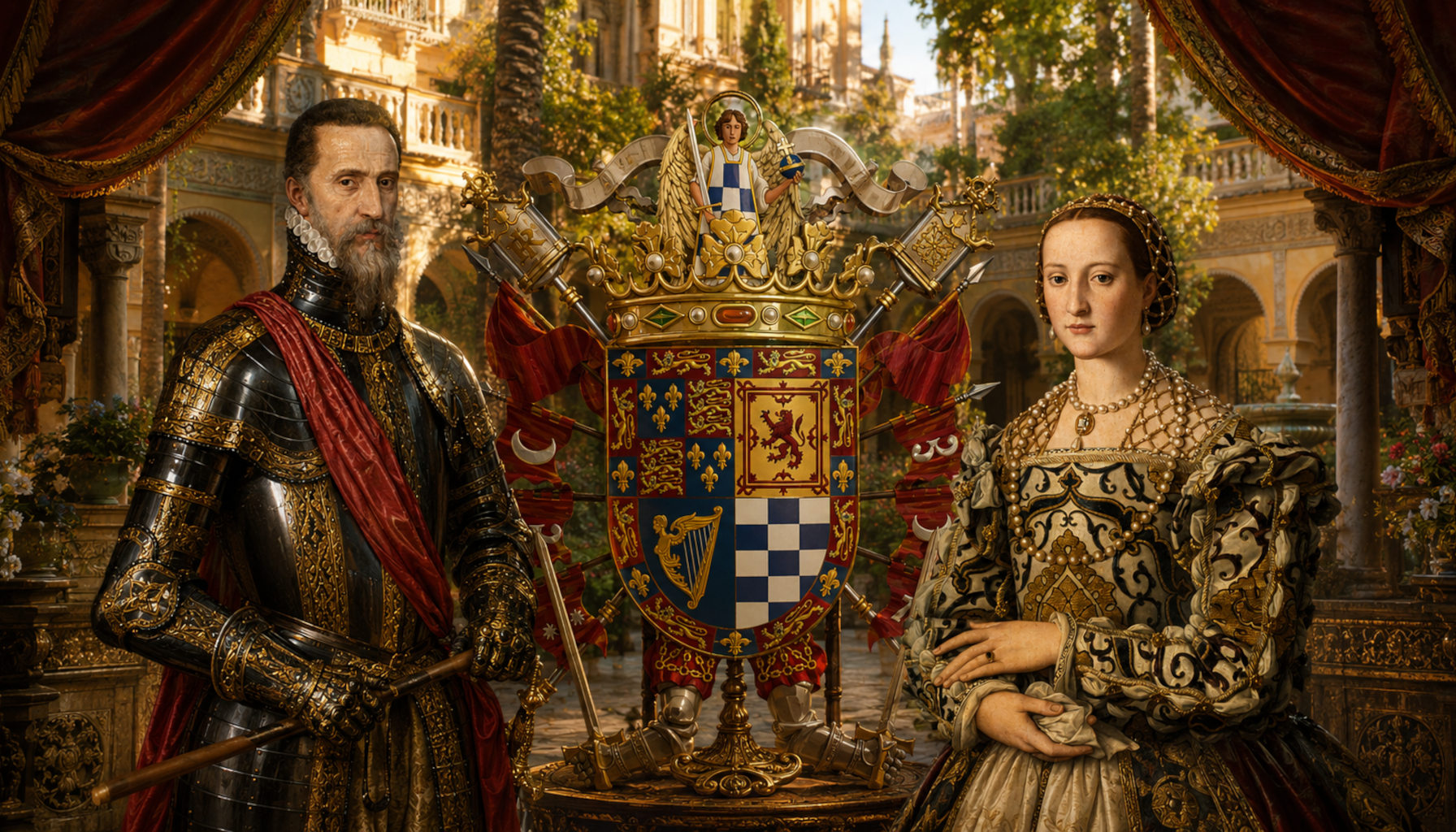
The de Alba family, better known in formal terms as the House of Alba de Tormes, was one of the great aristocratic houses of Spain, rooted in the medieval nobility of Castile and Toledo and historically anchored to Alba de Tormes in the province of Salamanca. Their primary family haplogroup is tagged here as R1b1a1b1a1a2b1d1, a branch within the wider R1b world so often associated with much of western Europe's deep paternal history. In historical terms, the Alba story is not just about one titled lineage, but about the making of high noble power in late medieval and early modern Spain: land, court influence, military command, dynastic marriage, heraldry, and a very deliberate cultivation of prestige.
The family emerged forcefully in the 15th century, when Gutierre Alvarez de Toledo became Lord of Alba de Tormes in 1429, tying the lineage more firmly to the place from which it would take its enduring identity. His successor Garcia Alvarez de Toledo, 2nd Count of Alba de Tormes, saw the house rise further, and in 1472 the dignity was elevated to the ducal rank. From there the House of Alba became one of those families that seems to stride through Spanish history in polished boots and embroidered sleeves. Under the Alvarez de Toledo line, and especially through Fernando Alvarez de Toledo, 3rd Duke of Alba, the family reached extraordinary prominence in Habsburg Spain. He was not merely a grandee with a long title, but one of the crown's most formidable commanders and statesmen. The family also reached beyond Spain through figures such as Eleanor of Toledo, who married Cosimo I de Medici and became Duchess of Florence, linking Alba influence to the wider dynastic map of Europe. Later inheritances carried the title through Silva, Fitz-James Stuart, and Martinez de Irujo lines, while the House of Alba remained a byword for noble continuity, art collecting, archives, and cultural patronage.
Explore the Spanish House of Bourbon
One of the most evocative places linked to the House of Alba is the Palacio de las Duenas in Seville, a residence that says a great deal about the family's cultural world. Built between the 15th and 16th centuries, the palace combines Gothic-Mudejar and Renaissance elements in that very Andalusian way that reminds you Spain was never made from a single thread. It passed into the Alba family through marriage in the early 17th century and became one of the house's best-known residences. The palace is famous for its courtyards, gardens, arches, decorative tilework, family portraits, and the sense that generations of Spanish history have been lived rather than merely displayed there. It has also been associated with notable figures in modern Alba history, including Cayetana, Duchess of Alba. Crucially for visitors today, Palacio de las Duenas is open to the public, so it can still be visited as a living monument to the family's status, taste, and long memory.
Read about DNA and the Medici family
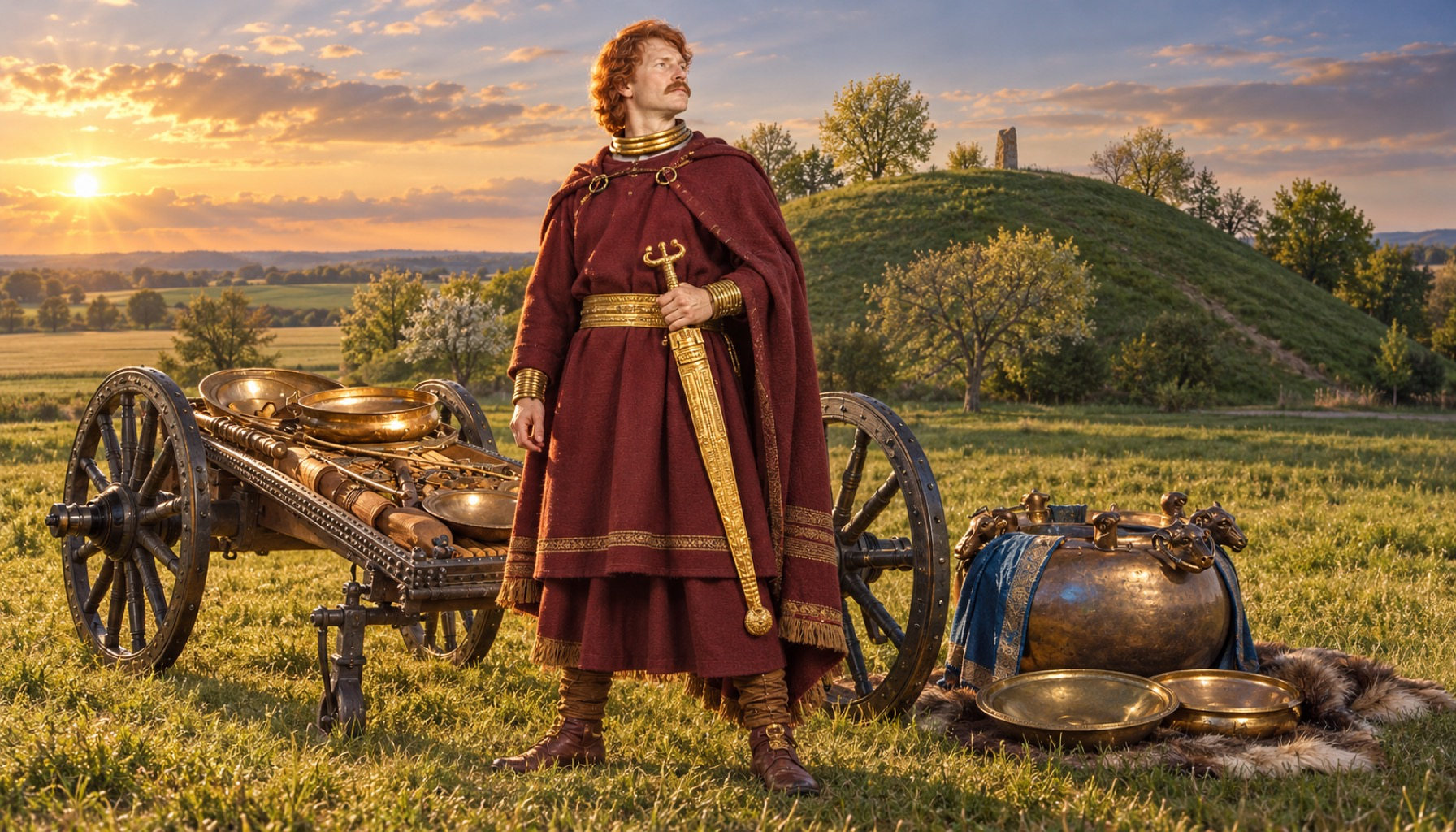
With the haplogroup tag R1b1a1b1a1a2b1d1, the de Alba family sits within a paternal lineage that has deep archaeological echoes across Europe. That does not mean direct descent from any specific excavated individual, and it is important not to overclaim. What it does mean is that related or linked ancient DNA samples carrying comparable downstream connections appear in an extraordinarily wide historical range: Bell Beaker and Copper Age individuals from Brandysek in Czechia such as I7249 and I7278, Early and Bronze Age Unetice burials from Leubingen-Sommerda in Thuringia such as LEU025 and LEU055, Bronze Age Prague area samples like I4889 and I14191, and later Iron Age and historic individuals stretching through Celtic, Italic, Roman, post-Roman, and medieval contexts. Among the more evocative linked examples are the Celtic Durotriges sample WBK13 from Winterborne Kingston in England, Gallo-Celtic sample 3439 from Pont de Cornaux-Les-Sauges in Switzerland, Etruscan Tarquinii individuals including TAQ018A and TAQ018B in Italy, a Gallic Cenomani sample from Verona, the Piast-associated medieval samples PCA0391 and PCA0618 in Poland, and even later frontier or migration-era finds from Croatia, Hungary, Germany, and beyond. In other words, this haplogroup signal belongs to a very old and widespread western Eurasian paternal landscape, one that long predates the rise of the House of Alba but helps place the family within the broader genetic story of Europe.
Explore ancient DNA and Celtic expansions
The House of Alba is a splendid example of how family history can sit at the crossroads of place, power, memory, and inheritance. From Castilian and Toledan roots to ducal magnificence, from Alba de Tormes to Seville and Madrid, and from imperial service to artistic patronage, their story is woven into the fabric of Spain itself. If your own DNA links you to this family or to related R1b1a1b1a1a2b1d1-associated ancient samples, you may be seeing echoes of that larger European past. Upload your DNA to MyTrueAncestry to discover whether you match the de Alba family or connected ancient populations from across Bronze Age, Iron Age, Roman, and medieval Europe.


Comments