Shaman of Bad Dürrenberg
– 4 min read


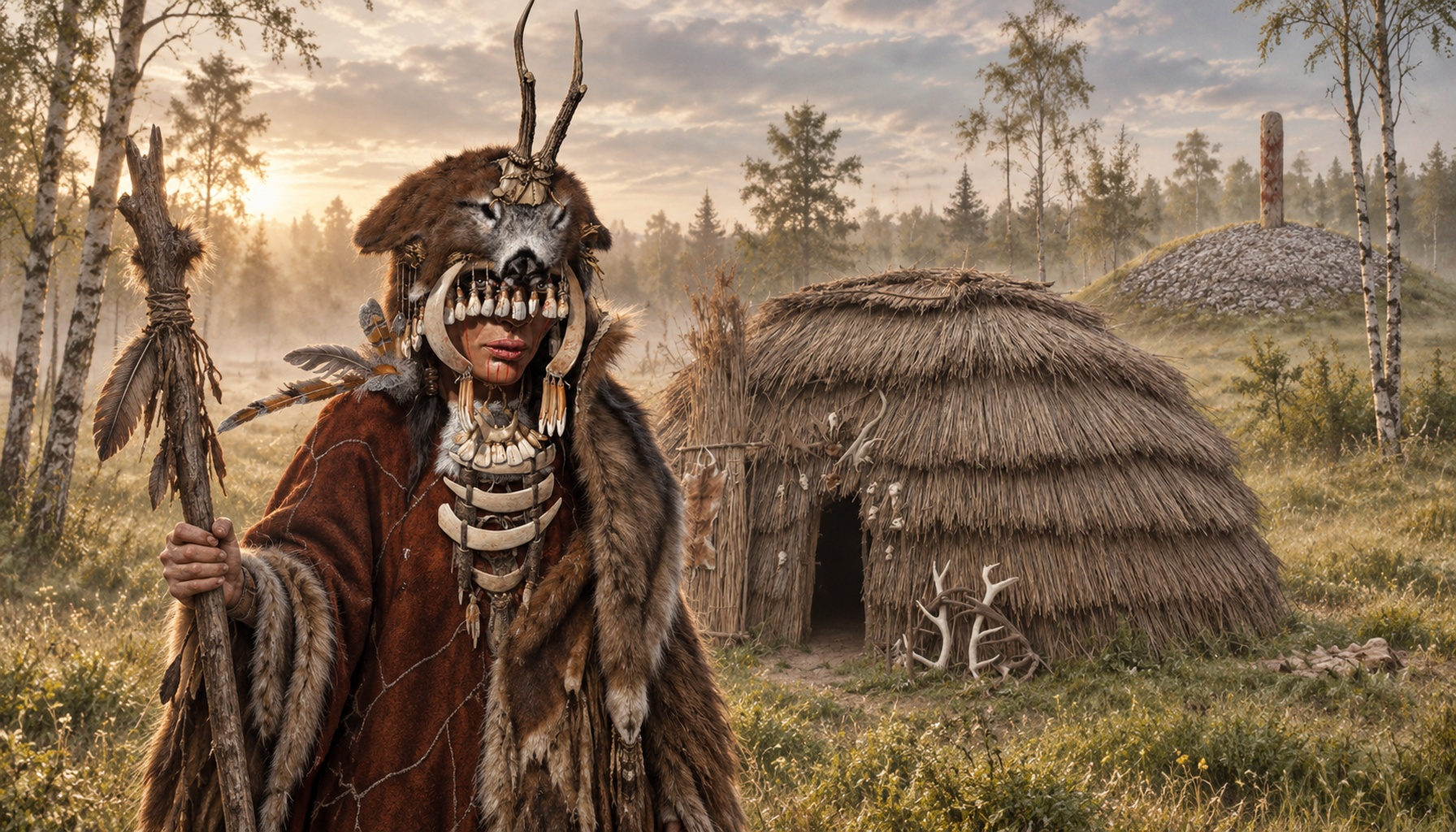
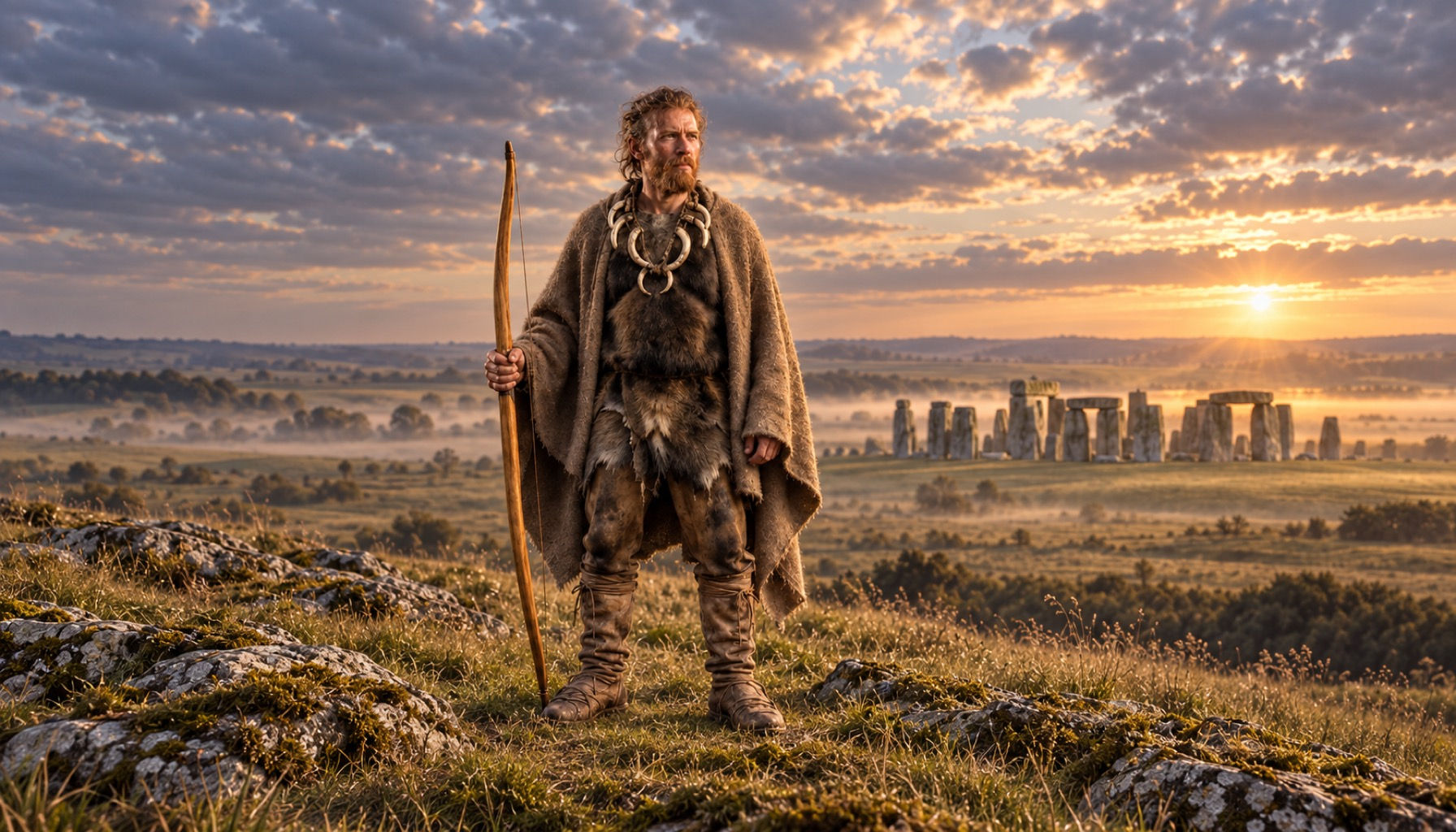
The so-called Shaman of Bad Dürrenberg is one of the most arresting figures from Mesolithic Europe: a hunter-gatherer woman buried in central Germany around 7000-6800 BC, long before farming transformed much of the continent. She matters not because we know her personal name, rank, or tribe, but because her grave is so unusual that it offers a rare glimpse of ritual life, social distinction, and the treatment of the dead in a world otherwise known mostly from stone tools, animal bones, and scattered campsites.
Discovered in 1934 at Bad Dürrenberg in present-day Saxony-Anhalt, her burial stood out at once. The woman had been placed in a distinctive seated position and accompanied by an extraordinary array of objects and animal remains. Archaeologists have therefore often interpreted her as a person of special spiritual or social importance, traditionally calling her a shaman. That label is an interpretation rather than a certainty, but it reflects a real archaeological puzzle: this was not an ordinary burial.
To place her in history is to step into a Europe between the Ice Age and the first farmers. Central Germany at this time was inhabited by mobile or semi-mobile foraging communities who lived by hunting, fishing, gathering, and managing seasonal landscapes. There were no kingdoms, no dynasties, no written records, and no cities. Yet there were clearly traditions, symbols, and rules about death and memory. The Bad Dürrenberg burial suggests a society capable of marking out certain individuals in highly distinctive ways, whether because of ritual expertise, healing, age, ancestry, or some combination now lost to us.
Explore Balkan Hunter-Gatherers
The grave itself remains the heart of the story. The woman was buried with rich and unusual accompaniments, including ornaments, tools, animal parts, and objects interpreted as having ritual significance. The seated burial position is especially striking, because body placement in graves can reveal deliberate ceremonial choices rather than mere disposal of the dead. The combination of posture, grave goods, and setting is what gave rise to the long-standing idea that she held an exceptional role in her community.
The 1934 discovery has since been revisited through modern osteoarchaeology and genetics. The research article on the burial, The Burial of Bad Dürrenberg, Central Germany: Osteopathology and Osteoarchaeology of a Late Mesolithic Shaman's Grave, helped frame the grave as one of the key finds for understanding late Mesolithic ritual practice in central Europe. Still, one should be careful. Archaeologists use the word “shaman” as a convenient interpretive label for a person whose burial signals unusual status, not as a title that can be historically verified in the way one might identify a medieval bishop or Roman emperor.
The associated ancient-DNA sample is listed as Shaman of Bad Duerrenberg Mesolithic Germany, dated to about 6650 BC. In this case, the identification is strongly supported archaeologically: the DNA comes from the human remains found in the famous Bad Dürrenberg grave and is therefore securely associated with the buried woman herself. What is not secure is the older interpretation of her social role. We can identify the individual as the woman in the exceptional Mesolithic burial; calling her a “shaman” remains a scholarly interpretation of that burial context.
One especially interesting detail concerns the infant buried with her. Earlier speculation suggested this child might have been her own. DNA analysis has complicated that picture by indicating a more distant biological relationship rather than a straightforward mother-child tie. That is precisely the sort of thing ancient DNA does well: it can test specific biological relationships within a burial, even when archaeology alone leaves the matter open.
Genetically, she also fits a now familiar profile among some early European hunter-gatherers: relatively dark skin, dark straight hair, and blue eyes. This combination can seem surprising only because modern assumptions often project present-day European appearances too far into the deep past. Mesolithic Europe was biologically and visually diverse, and the Bad Dürrenberg woman is part of that broader prehistoric story.
The mitochondrial DNA, or mtDNA, of the Bad Dürrenberg woman belongs to U4b1b1. mtDNA traces the direct maternal line: mother to child, and then from daughter to the next generation. Her Y-DNA, which traces the direct paternal line from father to son, is naturally not applicable here because the individual was female, so no Y-chromosome haplogroup was reported.
Haplogroup U and its branches are well known in ancient Europe, especially among hunter-gatherer populations. That does not make U4b1b1 an ethnic badge or a tribal name. It simply marks one deep maternal lineage within the much larger human family tree. In historical terms, it is interesting because it helps place the Bad Dürrenberg woman among the maternal lineages that circulated in forager communities before and during the transition to farming.
As for related ancient-DNA comparisons, the most directly relevant U4b1b1-linked sample here is BDB001, the Bad Dürrenberg woman herself. In broader hunter-gatherer context, Mesolithic individuals from the Iron Gates, including Vlasac I4880, I4881, and I4882 in Serbia, are useful comparators for the world of southeastern European foragers, though not necessarily close maternal relatives. Likewise, later samples such as Neolithic Sakhtish II NEO194 in Russia show how some lineages and ancestry components connected across wide regions of prehistoric Europe, even as cultures and lifeways changed. These parallels are best understood as population-level echoes, not evidence that these people knew one another or belonged to a single unified folk.
The DNA does not tell us whether she was truly a ritual specialist, healer, or community leader. It cannot read beliefs from bone. What it can do is sharpen the human outline. It confirms biological sex, helps reconstruct aspects of appearance, places her maternal ancestry within a hunter-gatherer genetic landscape, and tests kinship questions such as the relationship to the infant in the grave. In other words, genetics does not replace archaeology here; it works best alongside it.
That combination is what makes the Shaman of Bad Dürrenberg so compelling. We have an individual from the seventh millennium BC whose burial speaks of ceremony and distinction, and whose DNA reminds us that Mesolithic Europeans were neither faceless nor uniform. She stands at the meeting point of ritual interpretation, osteoarchaeology, and paleogenetics: an ancient woman whose grave still forces us to ask how deep the social and symbolic worlds of prehistoric Europe really ran.
Discover Ancient DNA and Archaeogenetics
With MyTrueAncestry, you can compare your DNA to ancient populations and archaeological samples from worlds like Mesolithic Europe, exploring broad genetic connections to the people who lived there thousands of years ago. It is a way to place your own results into deep history without claiming direct descent from a single ancient individual.
Comments