Izyaslav Ingvarevich, Prince of Dorogobuzh
– 4 min read


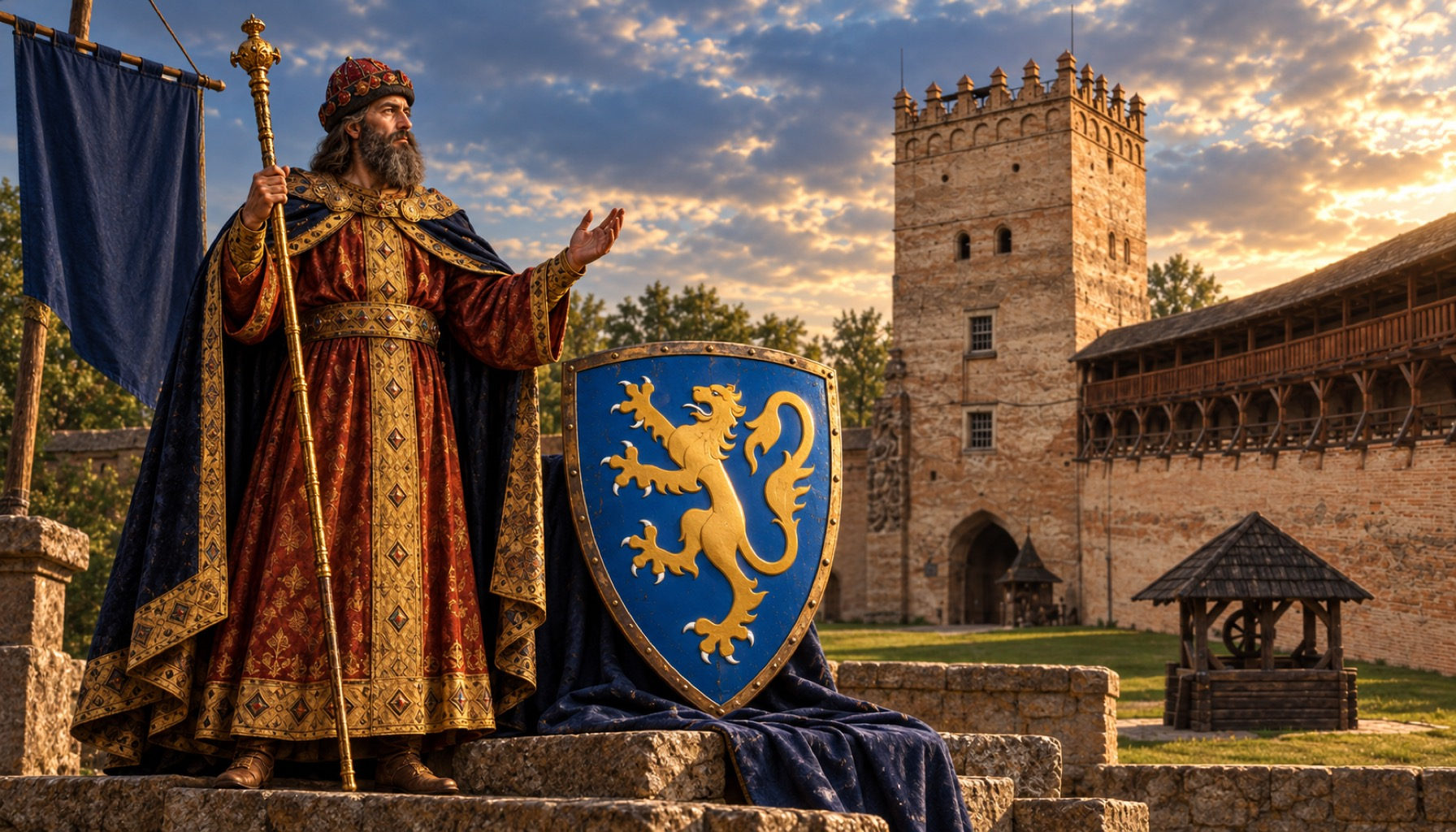
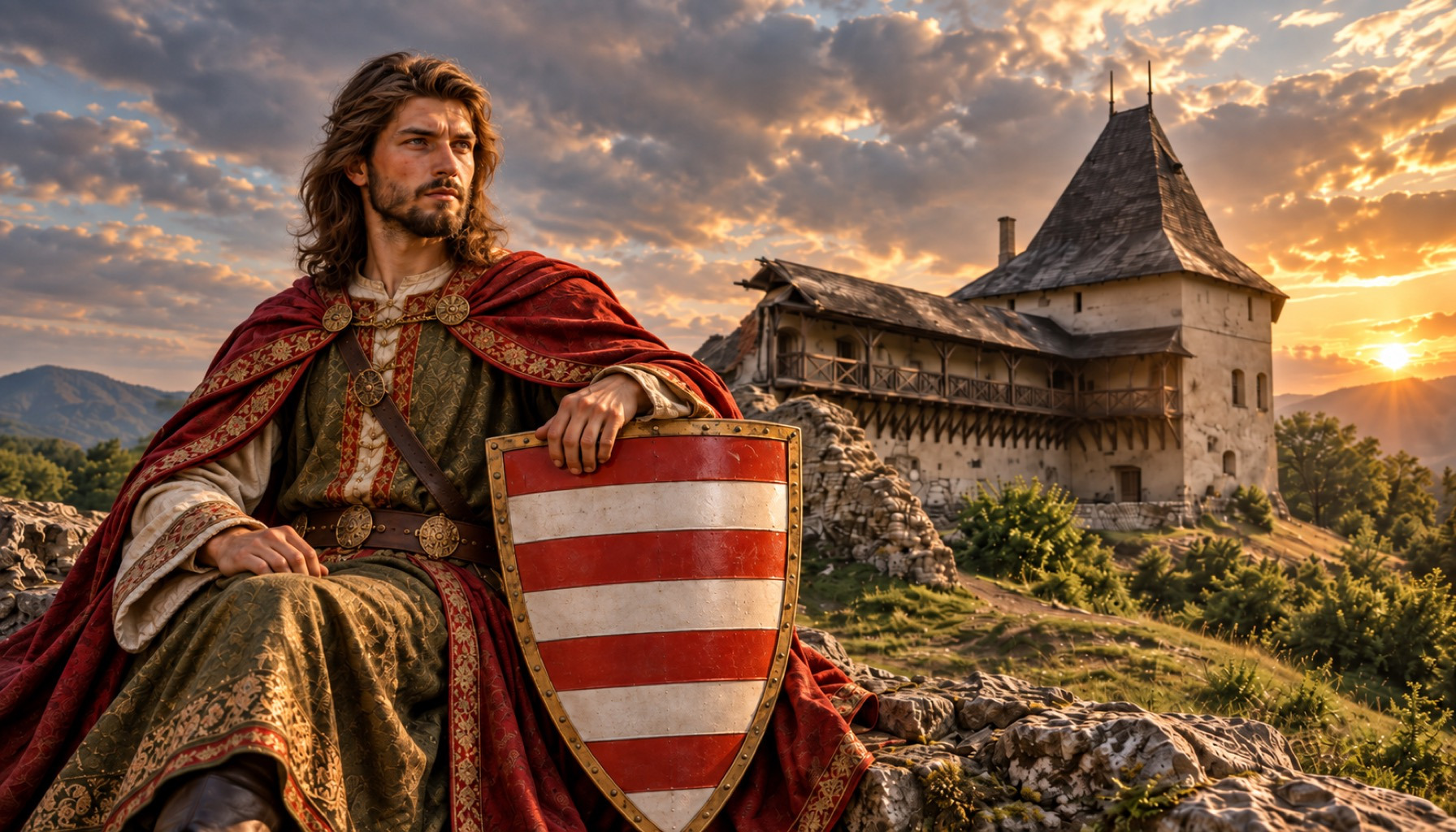
Izyaslav Ingvarevich, Prince of Dorogobuzh, belongs to one of those moments in medieval history when the great names of dynastic politics suddenly collide with the brute fact of war. A Rurikid prince, the son of Ingvar Yaroslavich, Prince of Kiev, he came to rule Dorogobuzh in 1220, in a world where the old unity of Kievan Rus had long since fractured into rival principalities, each jealous of its rights, lands, and precedence.
That political fragmentation mattered. While the princes of the Rus argued, allied, and quarrelled among themselves, a new imperial force was remaking Eurasia far to the east. Under Genghis Khan, Mongol armies had already torn through enormous territories. In the early 1220s, the commanders Subutai and Jebe pushed west on a vast reconnaissance campaign through Persia and the Caucasus and into the steppe borderlands of the Rus. The encounter that followed would prove catastrophic for Izyaslav and for many of his peers.
Izyaslav’s historical importance lies not in a long reign or a shelf of charters, but in the way his life ended: at the Battle of the Kalka River in 1223, one of the earliest great clashes between the Rus principalities and the Mongol war machine. The Rus princes, together with their Cuman allies, pursued what seemed to be a retreating enemy. It was, of course, the sort of feigned withdrawal at which the Mongols excelled. The coalition forces were drawn out, separated, and defeated in detail. Numerous princes were killed, and Izyaslav was among them. It is a very medieval story in one sense, full of dynastic rank and battlefield honour, but it is also part of a much larger Eurasian drama: local rivalries meeting an army that thought strategically on a continental scale.
Explore the Northern Black Sea World
The biological sample associated with him is listed as Izjaslav Ingvarevych Prince of Dorogobuzh Rurik Dynasty, with an approximate date of 1223 AD. The remains were later associated with a tomb inside Lutsk Castle, and that association gives the case much of its fascination. This is not merely a nameless medieval skeleton from the broad period. It is a set of remains proposed to belong to a specific prince who died in a specific military disaster.
Archaeologically, the most striking detail is the skull. It belonged to a man estimated at roughly 30 to 40 years old and preserved evidence of violent trauma, including an embedded arrowhead. One hardly needs to over-dramatise that. The object speaks for itself. It provides an unusually vivid connection between bone, violence, and recorded history: the body of a nobleman apparently killed in warfare during the first major Mongol-era shock suffered by the Rus lands.
At the same time, it is important to keep the identification in careful terms. The remains were associated with Izyaslav rather than proven beyond all possible doubt by the information supplied here. That makes this best described as a strongly supported or proposed identification, not an absolutely secure one established by complete documentary and genetic kinship chains. Ancient DNA can illuminate such cases, but it cannot by itself conjure certainty where the historical chain of identification is incomplete.
The reported Y-DNA haplogroup for this sample is R1a1a1b1a1a1c1h, and the mtDNA haplogroup is H1-d4a. In plain terms, the Y-DNA traces Izyaslav’s direct paternal line, passed from father to son, while the mitochondrial DNA traces his direct maternal line, passed from mother to child. These are two very narrow genealogical threads within the ancestry of a whole person, but they can still be historically useful.
The paternal lineage, R1a1a1b1a1a1c1h, is interesting in a medieval eastern European princely context because it gives a specific genetic signature for the direct male line of this sample. Broadly speaking, branches of R1a are widespread across parts of eastern and central Europe and much of Eurasia, but that does not make them an ethnic badge, still less a proof of “being Rus” or “being Rurikid.” What matters here is the much narrower downstream designation. In ancient-DNA comparisons, related R1a1a1b1a1a1c1h-linked samples include this same individual, VK541, as well as later or geographically separate finds such as Late Roman Era Aquae Calidae Bulgaria (I41193), Medieval Germany Sachsen-Anhalt Western Slav Settler Steuden (SDN017, SDN018, SDN019), and Medieval Germany Krakauer Berg Peissen (KRA009). Those parallels do not make these people close relatives in any simple family sense, but they do place Izyaslav’s direct paternal line within a wider web of lineages documented in eastern and central European historical populations, including western Slavic contexts.
His maternal lineage, H1-d4a, is more narrowly attested in the material supplied here. The related H1-d4a-linked sample explicitly available is the same individual, Izjaslav Ingvarevych Prince of Dorogobuzh Rurik Dynasty (VK541). That means we should be restrained. We can say that his direct maternal line falls within mitochondrial haplogroup H1, a branch of a wider maternal lineage long found across Europe, but with the evidence provided here we should not spin an elaborate story about his maternal ancestry beyond that.
The research article provided, https://www.biorxiv.org/content/10.1101/703405v1, is an important point of reference for the genetic context of medieval and ancient individuals from this wider region. Its value here is not that it magically settles every historical question, but that it helps place named or attributed individuals like Izyaslav into an emerging archaeogenetic map of eastern Europe and adjacent regions.
Read about Princess Maria Shvarnovna
Izyaslav’s DNA is historically interesting because it joins three kinds of evidence that rarely sit so neatly together: dynastic history, battlefield archaeology, and genetic data. We have a prince of the Rurikid world, a death tied to the calamity at the Kalka River, and skeletal trauma that fits a violent end. The DNA then adds a biological dimension to that story, preserving the direct paternal and maternal lineages of a man caught in one of the great turning points of thirteenth-century Eurasia.
But it also has limits. These haplogroups do not tell us his language, his political loyalties, his personality, or the full ancestry of the Rurikid court. They do not prove that everyone sharing the same Y-line or mtDNA line today descends closely from him. What they do offer is something subtler and, in its way, more valuable: a way of anchoring a named medieval prince within the real biological variation of the past, rather than the tidy simplifications of later legend.
Discover Ancient DNA and Archaeogenetics
With MyTrueAncestry, you can compare your DNA with ancient populations and archaeological samples from the worlds that shaped people like Izyaslav Ingvarevich, from medieval eastern Europe to the wider steppe frontier. It is a way to explore genetic connections to the past without claiming that a shared lineage marker alone can prove direct descent from a particular prince.
Comments