House Rohan
– 3 min read


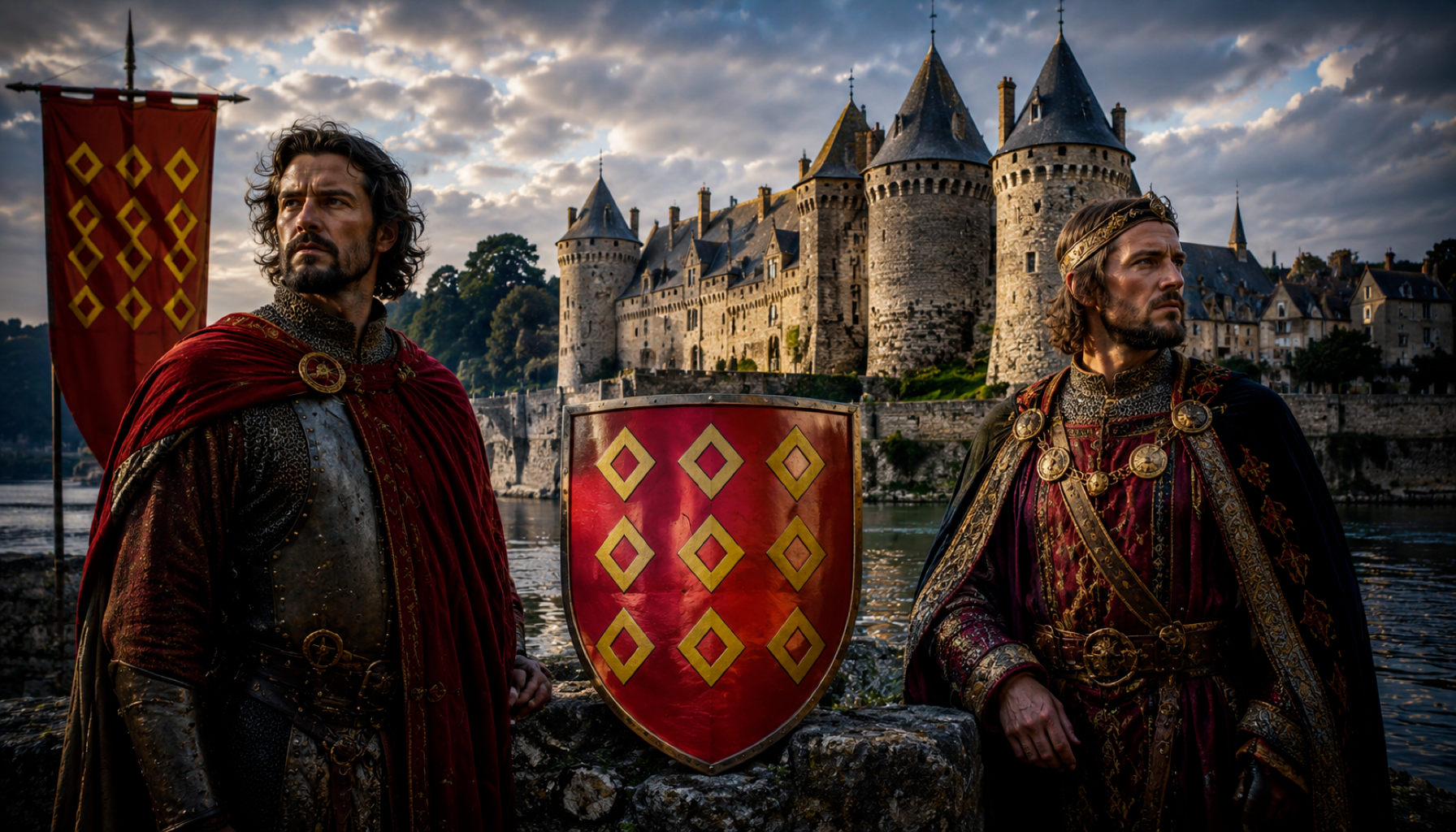
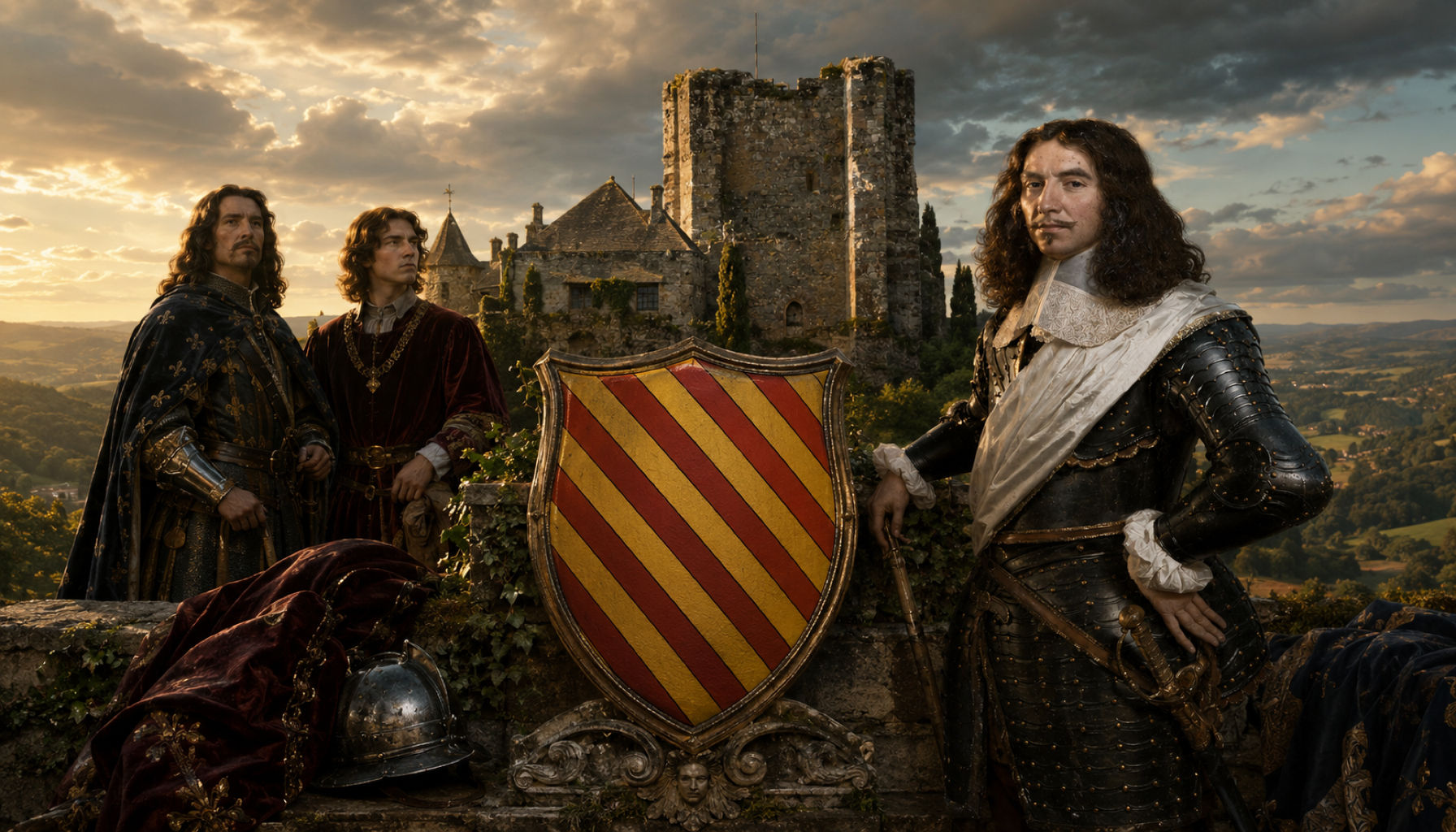
House Rohan was one of the great noble families of Brittany and later of France, a dynasty that began in the Breton world and rose into the highest ranks of the French aristocracy. Their story is rooted in western Brittany, in a landscape of lordship, castles, church patronage, and feudal competition, where local power could, over generations, become national importance. In genetic tagging terms, the primary family haplogroup associated here is R1a1a1b1a1a1c2, a paternal line with a long and wide history across Europe. For the Rohans, though, what mattered in the historical record was not genetics but rank: lands, titles, heraldry, marriages, and the ability to remain visible at court while still claiming deep regional roots.
The family took its name from Rohan in Brittany and developed as one of those medieval houses that understood perfectly how power worked. They built influence through estates, offices, military service, and carefully chosen alliances, gradually turning Breton seigneurial authority into princely prestige within France. Alan I Viscount of Rohan, recorded in 1116, stands among the early named figures who help anchor the house in the documentary record. Over time, the Rohans became famous not simply for wealth, but for their insistence on ancient lineage and high status, presenting themselves as a house whose nobility was old, public, and unmistakable. In that sense they are almost a textbook example of the old French noble tradition: regional beginnings, then courtly elevation, and finally a memory preserved through arms, stone, and ceremony.
Explore the House of Montmorency
If you want one place that captures the Rohan story in stone, it is Josselin Castle in Brittany. Set above the River Oust in the town of Josselin, the castle became one of the principal seats of the family and remains closely identified with them. The site goes back to the medieval period, with an early fortress established by the Rohans, but what survives today is a mixture of eras, which is often the case with great aristocratic residences. Its massive towers and riverfront facade still speak the language of feudal power, while later rebuilding and embellishment reflect the transition from fortress to noble residence. The castle suffered damage and alteration across the upheavals of French history, including the Wars of Religion and later political change, yet it endured as a family landmark. It is not some ghostly ruin in a field, but a major historic monument, and yes, it can still be visited, which makes it one of the best physical entry points into the long memory of House Rohan.
Read about the Princely House de Dreux
From an ancient DNA perspective, the haplogroup tag R1a1a1b1a1a1c2 links House Rohan into a much broader web of related paternal-line evidence rather than proving direct descent from any one excavated individual. Related or linked samples with this haplogroup include medieval and dynastic individuals from Poland such as Early Kingdom of Poland PCA0166, Piast Dynasty Poland Plonsk Masovia PCA0328, Santok lads PCA0386 and PCA0387, Greater Poland PCA0203, Zielonka Poznan PCA0572, Piast princes PCA0574 and PCA0573, Obalczkowo Wielkopolska PCA0222, and Piast lads PCA0205 and PCA0197. Beyond that medieval cluster, related R1a-linked finds also appear in Bronze Age Poland at poz554, the Stora Kronan shipwreck sample kro002 from Sweden, Iron Age Hungary sample I25524, Viking Age Gotland samples VK452 and VK438, Staraya Ladoga VK408, the elite Viking grave at Cedynia VK212, and even Iron Age Central European sample MX265 from Singen am Hohentwiel. These do not mean the Rohans descend from the Piasts or Vikings in any simple dynastic sense; rather, they show that the same broader paternal lineage appears across a wide historical and geographic field stretching from Bronze Age and Iron Age Europe into medieval ruling and elite contexts.
If House Rohan catches your imagination, that is very much the point: this is the world where Breton lordship, French court power, and family memory all meet. Upload your DNA to MyTrueAncestry and see whether you match the family haplogroup R1a1a1b1a1a1c2 or any of the related ancient DNA samples linked to this wider paternal story.

Comments