House de Sousa

– 3 min read


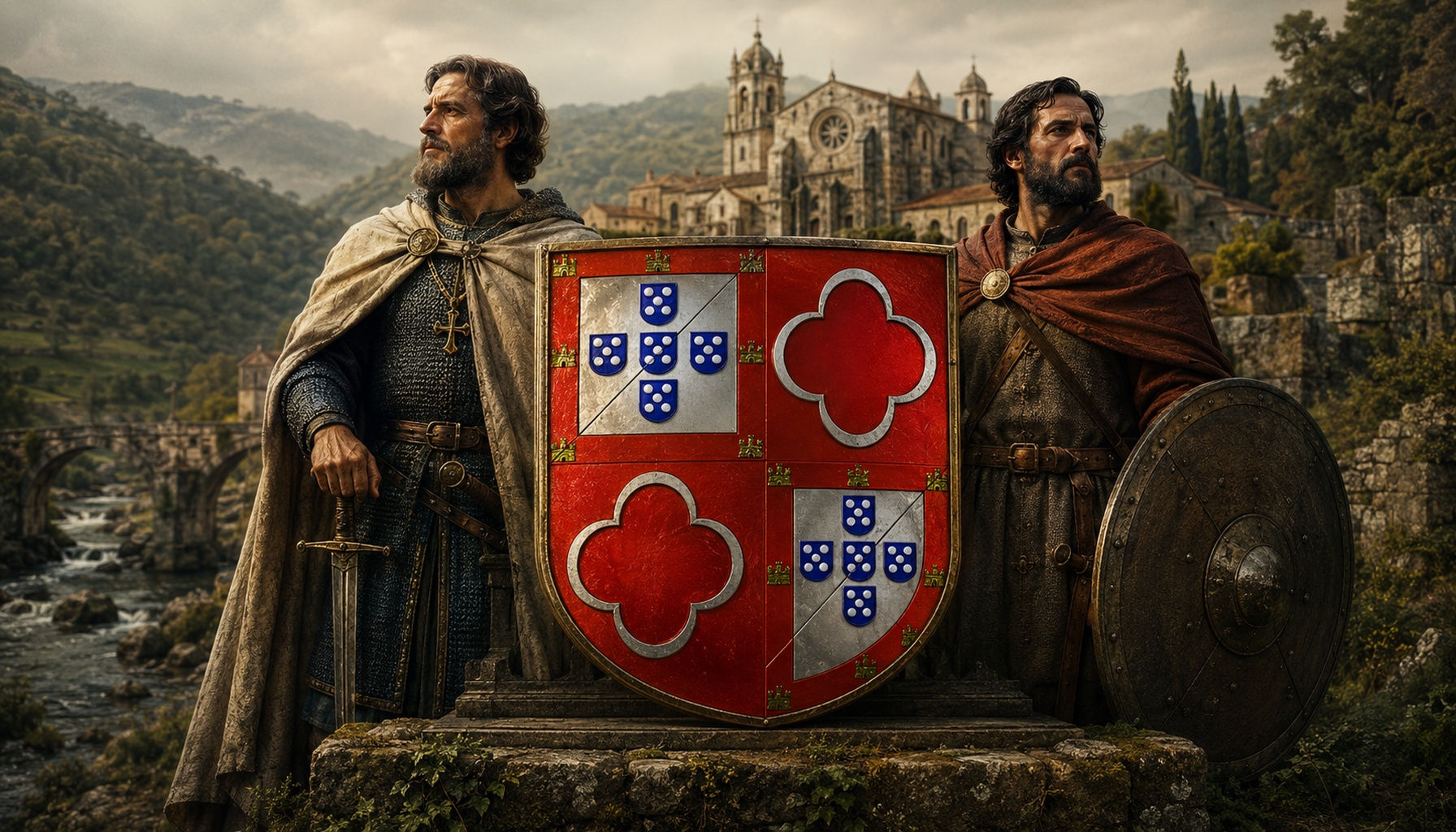
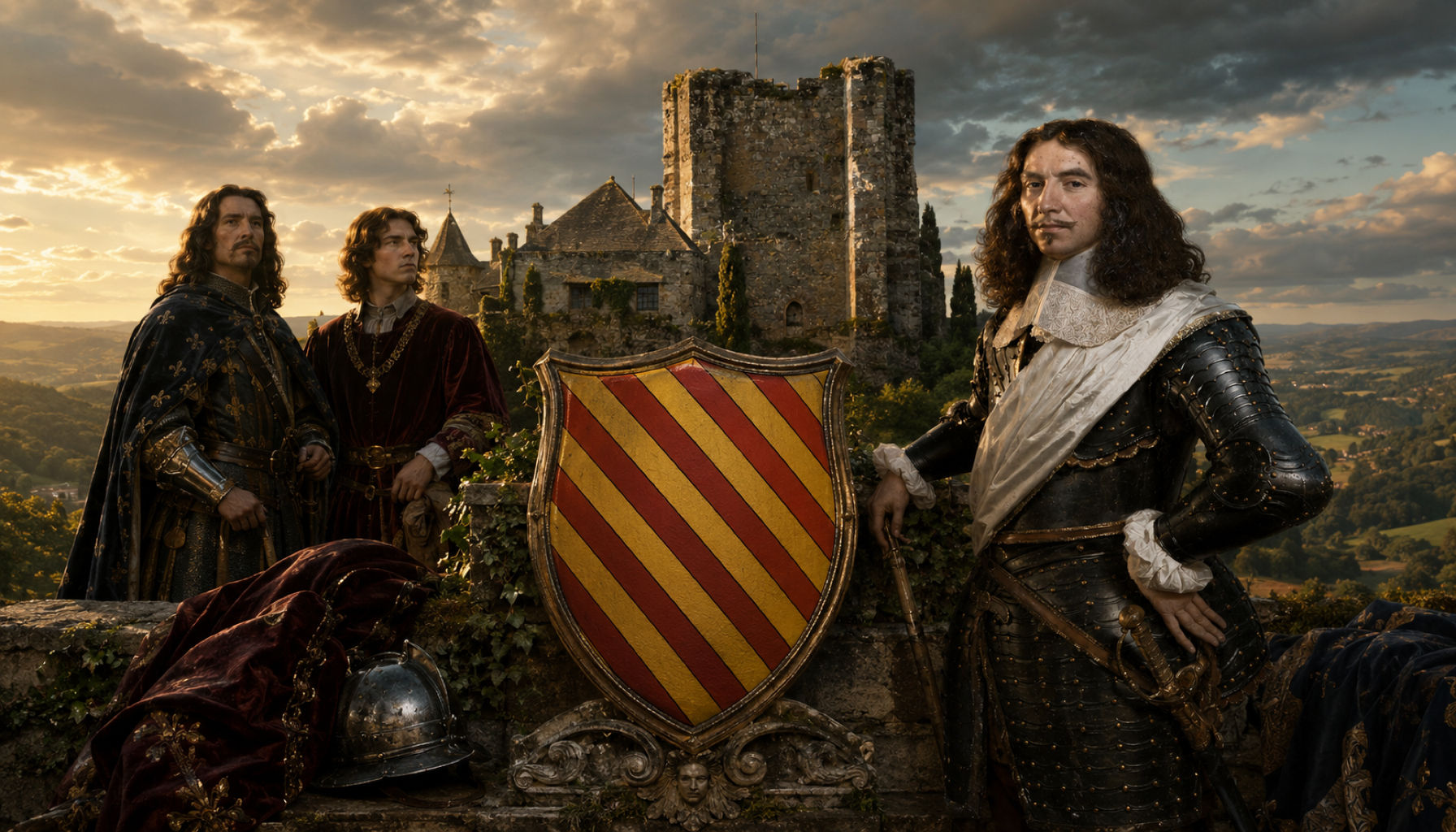
House de Sousa was one of the great historic noble houses of Portugal, rooted in the medieval north and closely tied to the making of Portuguese aristocratic society. Its story belongs to that formative Iberian world where lineage, lordship, military obligation, marriage strategy, and royal favor all mattered enormously. The family name is linked here with the primary haplogroup R1b1a1b1a1a2a1a1a2, a paternal line widely found across western Europe. In historical terms, the Sousas stand as a classic Portuguese noble house: ancient descent, regional power, heraldic identity, service to the crown, and a memory that outlasted the medieval centuries that first shaped it.
The family emerged from the landholding and warrior aristocracy of the region around the Sousa valley in northern Portugal, in the broad historic zone between the Douro and the old frontier societies forged during and after the Reconquista. This was not nobility in the decorative sense. It was practical, territorial, and often martial. Men such as D. Sueiro Belfaguer, dated here to 875-925, and Lord Egas Gomes de Sousa, active by 1035, belong to that early stratum of noble memory in which family, land, and military standing were closely fused. Over time, branches of the Sousa family became connected with estates, offices, and wider noble networks, preserving status through coats of arms, patronage, kinship alliances, and the stubborn continuity of property from one generation to the next.
Read more about the Genetic History of Portugal
A useful location anchor for thinking about the world of House de Sousa is Penafiel Castle, in northern Portugal. The site sits in the district of Porto and occupies a strategically important landscape long shaped by frontier politics, movement, and defense. Like so many Iberian castles, it was not merely a picturesque pile of stone but part of a larger network of authority: a place from which territory could be watched, controlled, and symbolically claimed. The castle's history reaches back into the medieval period, with the site tied to the defensive needs of a region caught up in the slow reordering of power between Christian polities and Muslim al-Andalus. In that sense it fits the Sousa story perfectly. Noble identity in early Portugal was inseparable from places like this, where military usefulness, regional standing, and lordly prestige came together. Penafiel Castle can still be visited today, which is one of the pleasures of Portuguese history: the landscape has not forgotten the families who once organized it.
Explore Roman Iberia and its DNA history
From a DNA perspective, the Sousa-linked haplogroup R1b1a1b1a1a2a1a1a2 belongs to a broad and very old western Eurasian paternal story rather than to a single medieval house alone. Ancient and medieval samples linked or related to this branch appear across an impressively wide map: Medieval England at Cherry Hinton (ATP_PSN_950) and Cambridge St Johns Hospital (ATP_PSN_905), Medieval Belgium at Sint-Truiden Groenmarkt (ST2107), Carthaginian-period and related western Sicilian contexts at Lilybaeum and Mozia including I21859 and I21858, Bronze Age Austria at Unterhautzenthal (UZH028), the Hungarian Conqueror Period sample SZA-7, Iron Age and Gallic France with the Sequani-linked Parancot sample CGG023685, Visigothic migration-period Spain at Estevillas Virgen de la Torre (CGG022051), Anglo-Saxon Sedgeford samples SED018, SED020, and SED021, Iron Age Prague Jinonice in Central Bohemia (I20522), Bronze Age Iberia at Lorca-Zapeteria Falls (ZAP002), medieval Sardinia at Duomo San Nicola (SNN002), and the Ullastret Ligurian Head from Girona (I3324). These do not demonstrate direct descent from House de Sousa, of course. What they do show is that the broader paternal lineage associated here with the family was part of a long, mobile, and deeply interconnected European and Mediterranean past.
See DNA from medieval Portugal's frontier world
If you are exploring Sousa heritage, the interesting question is not just whether a surname appears in a pedigree, but how your own DNA might fit into the older Portuguese and Iberian story behind it. Upload your DNA to MyTrueAncestry to see whether you match House de Sousa, or related ancient DNA samples connected to the wider R1b1a1b1a1a2a1a1a2 lineage across Iberia, medieval Europe, and the Mediterranean.


Comments