Haplogroup XX

– 5 min read


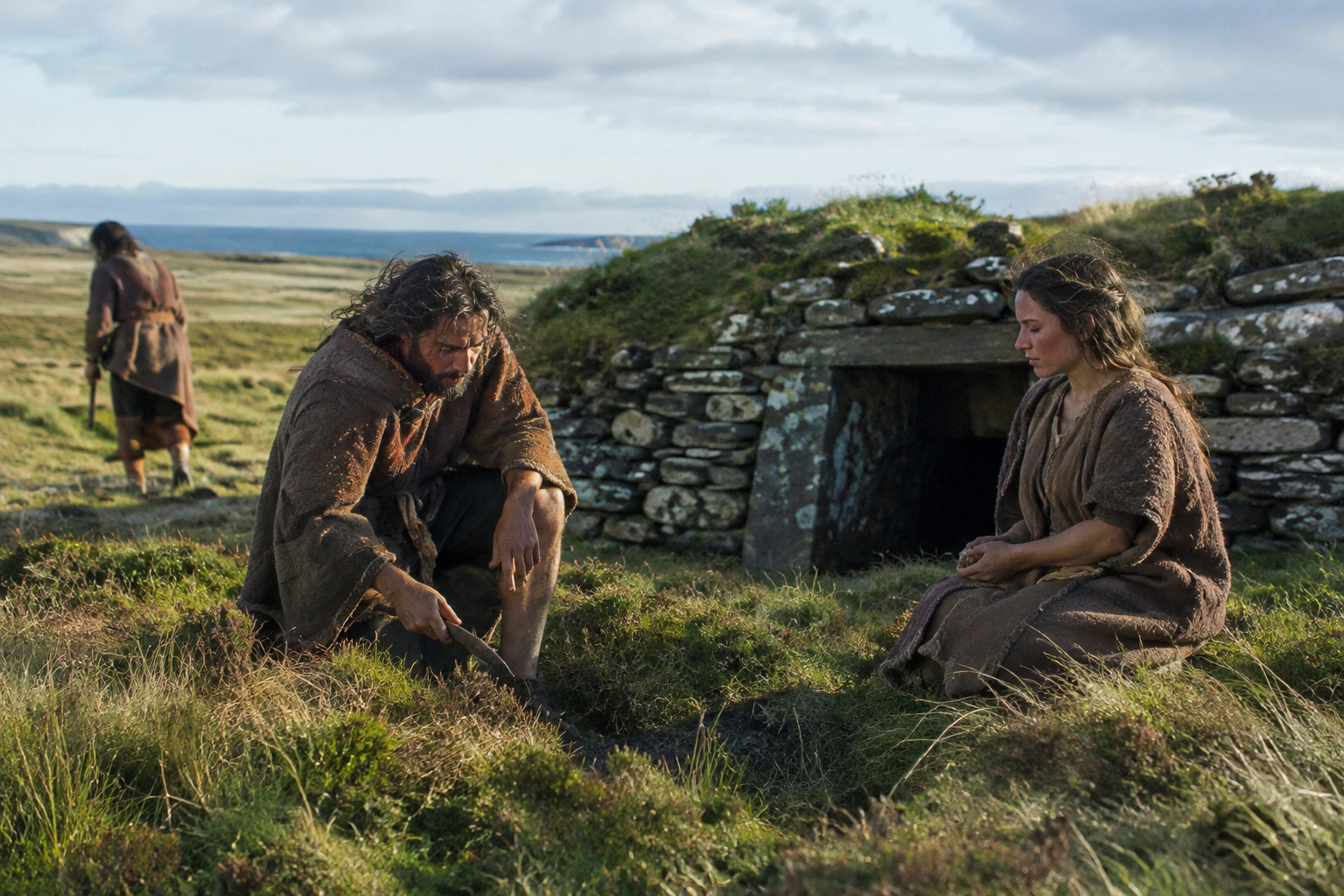
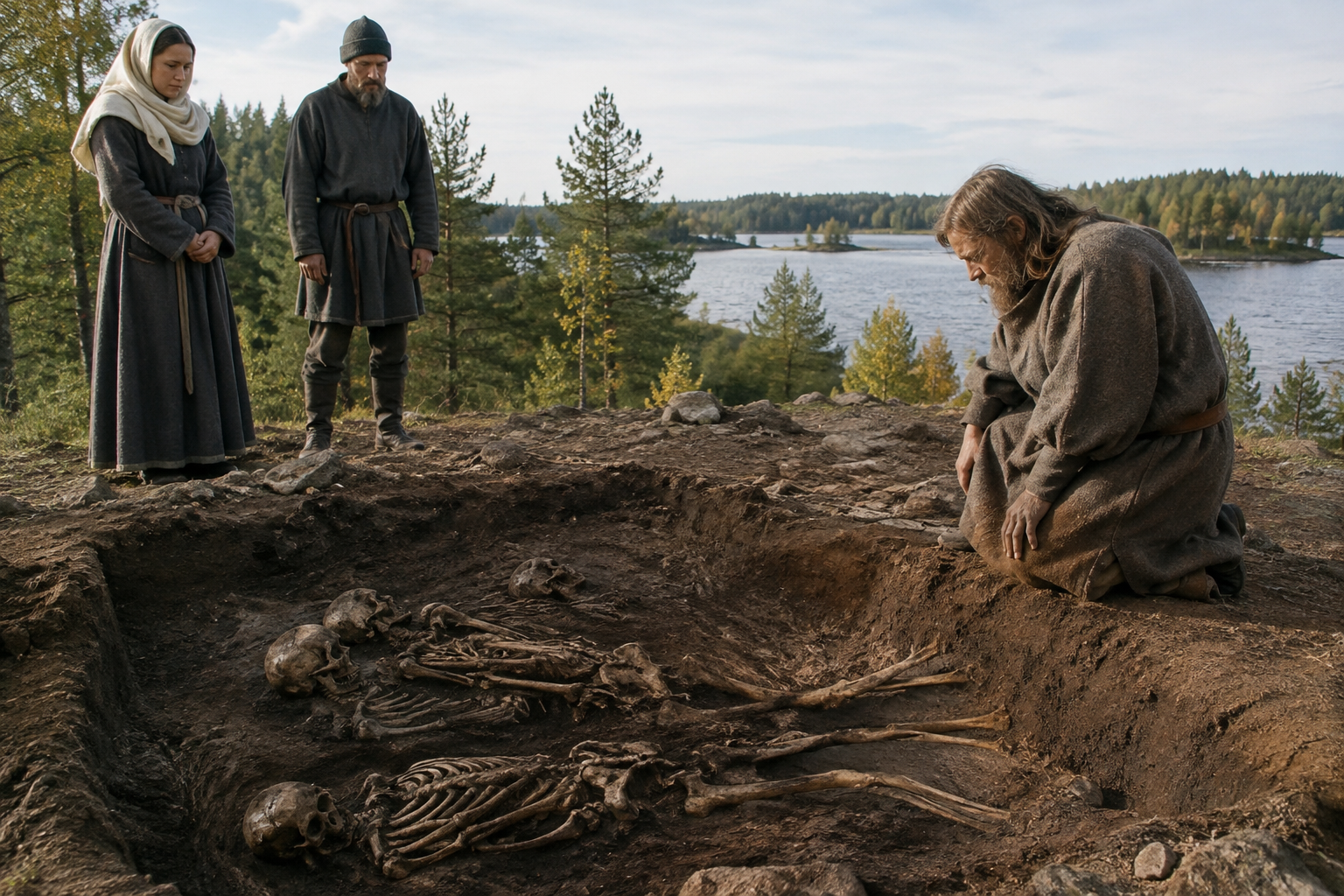
At Links of Noltland on Westray, in Orkney, archaeologists uncovered the remains of a man dated to around 1498 BC, identified in ancient DNA work as KD050-65. He belongs to the Bronze Age world of northern Scotland, but he also carries a problem that is rather useful for anyone thinking about Y-DNA: the haplogroup label here is simply XX, a placeholder broad enough to remind us how much depends on precise classification. Even so, the individual matters, because he anchors this paternal line in a real place, a real cemetery landscape, and a moment when Orkney was changing.
That is where the interesting story starts. Y-DNA follows one direct paternal line only, not a person's whole ancestry, but it can still illuminate how male-line descent moved through communities. In the case of KD050-65, the archaeology of Westray and the wider genetic work on ancient Orkney place this lineage in a society that was not isolated in any simple sense, even at the far northern edge of Bronze Age Britain.
Links of Noltland is one of those Orcadian sites that seem almost indecently rich in information. Best known for its long settlement history, it has produced evidence spanning major changes in island life, from earlier prehistoric occupation into the Bronze Age. KD050-65 belongs to that later horizon, when Orkney was no longer the same world that built the great Neolithic monuments.
By about 1500 BC, the islands had already lived through centuries of social and demographic change. Ancient DNA studies of Orkney have shown that the transition from the Neolithic into the Bronze Age was not merely a shift in pottery styles or burial fashion. It involved substantial changes in ancestry as well, especially the arrival and spread of lineages associated elsewhere in Britain with Bell Beaker and later Bronze Age populations. A broader ancient DNA study of the islands, published in research on prehistoric Orkney, helped make that picture much clearer.
Northern Scotland tomb kinship
That does not mean every man in Bronze Age Orkney shared the same paternal origin, nor does one sample stand for the whole archipelago. But KD050-65 shows that the haplogroup reported here as XX was present in this transformed Orcadian population. It is a small but solid point of evidence: one paternal line, in one island community, after the great Neolithic age and within the connected seaways of the North Atlantic.
There is a tendency, when reading haplogroup summaries, to want a grand migration route and a neat ethnic label immediately attached. Archaeology is usually less obliging. What KD050-65 gives us is not a saga hero, not a clan founder, and certainly not proof of a later dynasty. What he gives us is context.
Westray sits in a maritime zone that linked Orkney to mainland Scotland and beyond. Bronze Age people in these islands were part of exchange networks carrying materials, ideas, and probably marriage ties over water. So when a paternal lineage turns up here, it belongs in that busy northern world rather than in some romantic notion of a sealed-off island refuge.
This is particularly important in Orkney because the islands often look archaeologically distinctive. Distinctive, however, does not mean genetically frozen. The Bronze Age evidence points toward continuity in some local practices alongside deeper population change. A man like KD050-65 therefore matters less as an isolated curiosity than as a witness to how paternal lines persisted, arrived, or became established in a community already shaped by earlier upheavals.
Orkney's prehistoric fame rests heavily on its Neolithic monuments: chambered tombs, ceremonial complexes, and stone-built settlements that still dominate the imagination. But by the Bronze Age, the social landscape had altered. New ancestry profiles appear in the ancient DNA, and with them new paternal histories. The presence of XX in KD050-65 belongs to that later chapter, not to the world of Maeshowe or the Stones of Stenness.
This distinction matters because people often compress prehistoric Britain into one undifferentiated past. In fact, the gap between Neolithic and Bronze Age Orkney is historically significant. The men who carried Bronze Age Y-chromosome lines were living in communities shaped by different kinship structures, different regional contacts, and probably different ideas of identity than their Neolithic predecessors.
That is why even a single male-line result can be useful when handled carefully. It does not flatten the past into a bloodline tale. Instead, it helps place one direct paternal ancestry inside a wider archaeological shift: the remaking of northern Britain after the Beaker horizon and during the Bronze Age.
Here we need to be precise. The article haplogroup is given only as XX. That is not a standard published Y-DNA branch name, and no narrower terminal subclade has been supplied for KD050-65 in the material here. So the honest thing is not to pretend otherwise. We can say that this Bronze Age man is associated with the haplogroup label XX in the present record, but we cannot responsibly build a detailed branching tree, assign an origin story to a subclade, or claim links to later named families on that basis.
What we can do is explain how such evidence normally works. A broad or uncertain Y-DNA assignment often tells us that a paternal line was present in a region and period, while leaving open the finer question of exactly which downstream branch it belonged to. That is not a failure. It is simply the difference between having one secure archaeological anchor and having a full phylogenetic map.
For family historians, that distinction is worth keeping in mind. If your own paternal results sit somewhere near this branch in a testing platform or matching system, the ancient parallel is evocative, but it is not the same thing as direct descent from KD050-65 or from Bronze Age Westray. Ancient Y-DNA is best used as historical placement, not as a shortcut to a named ancestor.
Bronze Age Orkney is especially revealing because it sits at the intersection of local continuity and incoming ancestry. Britain in the second millennium BC was already a patchwork of regional populations with strong connections across sea lanes. Northern island communities were part of that pattern. The presence of XX at Westray therefore belongs to a British story, but one told from the edge of the map where maritime contact was everything.
That broader perspective also helps avoid a common mistake: treating northern Scottish samples as automatically "Celtic," "Pictish," or "Norse" before their time. KD050-65 predates all those later political and cultural labels. He was a Bronze Age Orcadian man, and that is the right historical frame. His Y-DNA is part of prehistoric population history, not a retroactive badge of later ethnicity.
Seen in that light, the sample becomes more rather than less interesting. He stands in a northern archipelago famous for deep prehistory, carrying a paternal line recorded here as XX, during a period when Britain's genetic landscape had already been profoundly reshaped.
The most useful lesson from KD050-65 is not that haplogroup XX points to one tribe, one people, or one grand migration legend. It is that this paternal line was present in Bronze Age Orkney, in a community living through the long aftermath of prehistoric population change. If you are researching your own paternal ancestry, that gives XX a grounded archaeological setting: not mythic founders, but a real man on Westray, in northern Scotland, around 1500 BC, within the shifting human landscape of Bronze Age Britain.
Comments