Haplogroup T1a1a1b2b2b

– 5 min read



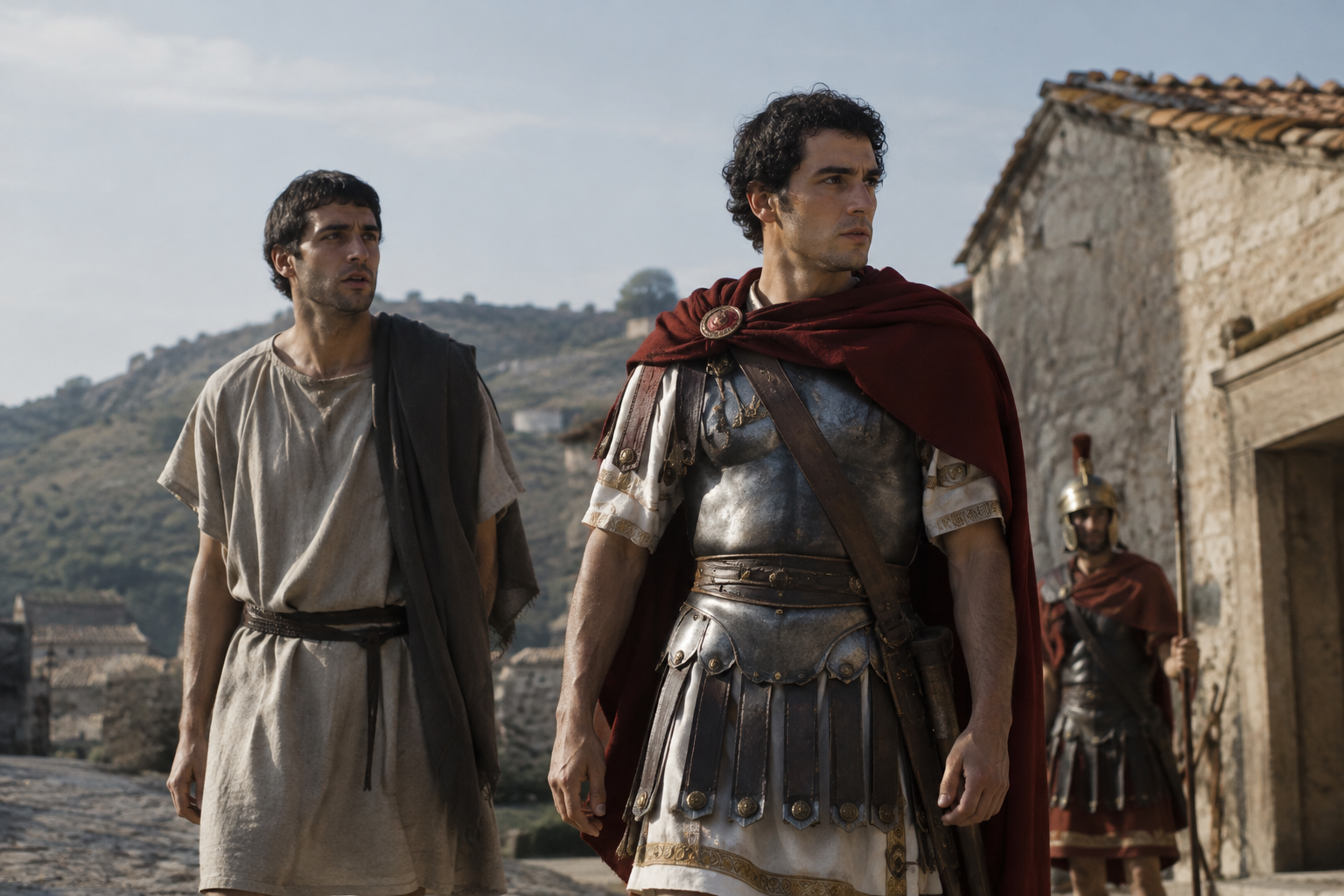
At Nicaea in Byzantine Anatolia, around AD 800, one excavated man carries a particularly uncommon paternal signal: Y-DNA haplogroup T1a1a1b2b2b. In the ancient sample list he appears simply as bar021, which is a very spare label for a life once lived in one of the most famous cities of the eastern Roman world. Yet that is precisely what makes the find interesting. When a rare paternal branch turns up in a place like Nicaea, it reminds us that Byzantine cities were not sealed ethnic containers. They were crossroads.
That needs saying carefully. Y-DNA follows one direct male line only: father to son to son. It does not tell us everything about a person's ancestry, language, religion, or identity. But it can still be historically revealing, especially when it appears in a well-placed urban setting such as Byzantine Nicaea, where imperial administration, church politics, trade, military movement, and regional mobility all overlapped.
Nicaea, in northwestern Anatolia, had an astonishingly long public life. It was important in the Roman period, famous in Christian history, and still strategically significant in the middle Byzantine centuries. By around AD 800, the city belonged to a world tied together by the Aegean, the Marmara, and the inland routes of Anatolia. Men could arrive there through family continuity, military service, clerical careers, commerce, or migration from elsewhere in the empire.
So when sample bar021 is associated with the haplogroup T1a1a1b2b2b, the immediate historical lesson is not that we have found a "Byzantine type." Rather, we have caught sight of one paternal thread inside a large and mixed urban population. The interesting question is not whether he was "really local" in some simplistic sense, but how lineages like this came to be part of Byzantine Anatolia at all.
The wider Y-haplogroup T is scattered today across parts of the Near East, East Africa, South Asia, the Mediterranean, and Europe, usually at low frequencies. That wide distribution is important background, but it should not be confused with the very specific branch named here. T1a1a1b2b2b is a narrow twig on a much larger paternal tree, and without additional securely published ancient comparanda we should resist the temptation to assign this exact branch a grand migration story of its own.
Still, the broader pattern is suggestive. Haplogroup T often appears in discussions of long-range connections around the eastern Mediterranean and southwest Asia. That makes Byzantine Anatolia an entirely plausible setting for such a lineage. Anatolia was not only a bridge between continents; it was also a region with deep local continuity layered with repeated arrivals, imperial reshuffling, and urban mixing across many centuries.
In other words, bar021 need not represent a dramatic one-time immigrant. He could just as well belong to a paternal line that had already been in Anatolia or the eastern Mediterranean for many generations before his burial. Ancient DNA is often most powerful precisely when it stops us from imagining neat beginnings.
One of the hardest things in early medieval history is avoiding false categories. "Byzantine," after all, is a political and cultural label. It tells us that an individual lived within the eastern Roman world; it does not define his paternal ancestry. The population of Byzantine Anatolia included descendants of earlier Roman-period communities, people with roots deeper in Anatolia still, and others linked to population movements around the Black Sea, the Balkans, the Caucasus, the Levant, and beyond.
That is why a sample like bar021 matters even when the archaeological description is brief. A single Y-line cannot describe the city, but it does warn us against assuming that medieval populations were genetically uniform. In fact, many recent ancient-DNA studies across the Roman and post-Roman world have pointed in the opposite direction: local continuity mixed with mobility, and identities that were social and political as much as biological.
A reader interested in these wider eastern Mediterranean continuities may also want to compare the Greek-speaking world farther west.
There is a tendency, when a haplogroup is rare, to make it either exotic or decisive. Neither approach is very helpful. The rarity is real enough: T1a1a1b2b2b is not one of the dominant paternal signatures commonly discussed for medieval Europe. But rarity in itself does not mean recent arrival, special status, or foreignness. It means only that this direct male line is less commonly observed in the available datasets.
What makes bar021 valuable is context. Nicaea was a city embedded in imperial networks. A rare paternal line turning up there fits the historical reality of the Byzantine world far better than any fantasy of isolated populations. If anything, the sample underlines how much movement could be absorbed into apparently stable societies. Cities keep the record of that quietly: not always in inscriptions or chronicles, but in bones and chromosomes.
Researchers working on ancient populations of adjacent Byzantine and post-Byzantine zones have increasingly shown just how mixed such settings could be. The same broad lesson appears again and again around the Mediterranean: political labels stay stable longer than biological lineages do, and lineages themselves often survive through changing languages and states.
Nicaea's fame can distract us from its geography. It sat in a region that was deeply connected to the Sea of Marmara and therefore to Constantinople, the Aegean, and the wider eastern Mediterranean. That matters because paternal lineages do not move as abstract markers. They move with families, sailors, soldiers, craftsmen, monks, captives, merchants, and farmers; sometimes with sudden events, more often with ordinary human circulation.
By the early medieval period, Anatolia had already inherited centuries of movement under Hellenistic, Roman, and late Roman rule. Then came the disruptions and reorganizations of the Byzantine centuries. To find an uncommon branch there is therefore not an anomaly to be explained away, but part of the normal complexity of the region.
For readers following how ancestry shifted across Roman and early medieval communities elsewhere in the empire, Italy offers a useful comparison.
The scientific framework for this sort of work comes from ancient DNA projects examining human remains from archaeological contexts across time and region. The dataset associated with this ancient DNA research archive is one example of the kind of genomic work that allows individual paternal lines to be placed inside a real historical setting rather than treated as abstract modern percentages.
If your own paternal line falls under T1a1a1b2b2b, the most responsible historical takeaway is not a single origin myth but a setting: eastern Mediterranean complexity. Sample bar021 from Byzantine Nicaea shows that this lineage, or a very closely related reported branch, was present in an important Anatolian city around AD 800. That places the haplogroup within a world shaped by urban continuity, imperial structures, and long-range human movement rather than by one tidy ethnic label.
That may sound modest, but it is actually rather rich in historical terms. It means your paternal line fits into one of the great connected zones of the medieval world, where Roman, Anatolian, Greek, and wider Near Eastern histories met in everyday life.

Comments