Haplogroup R1b1b1

– 5 min read


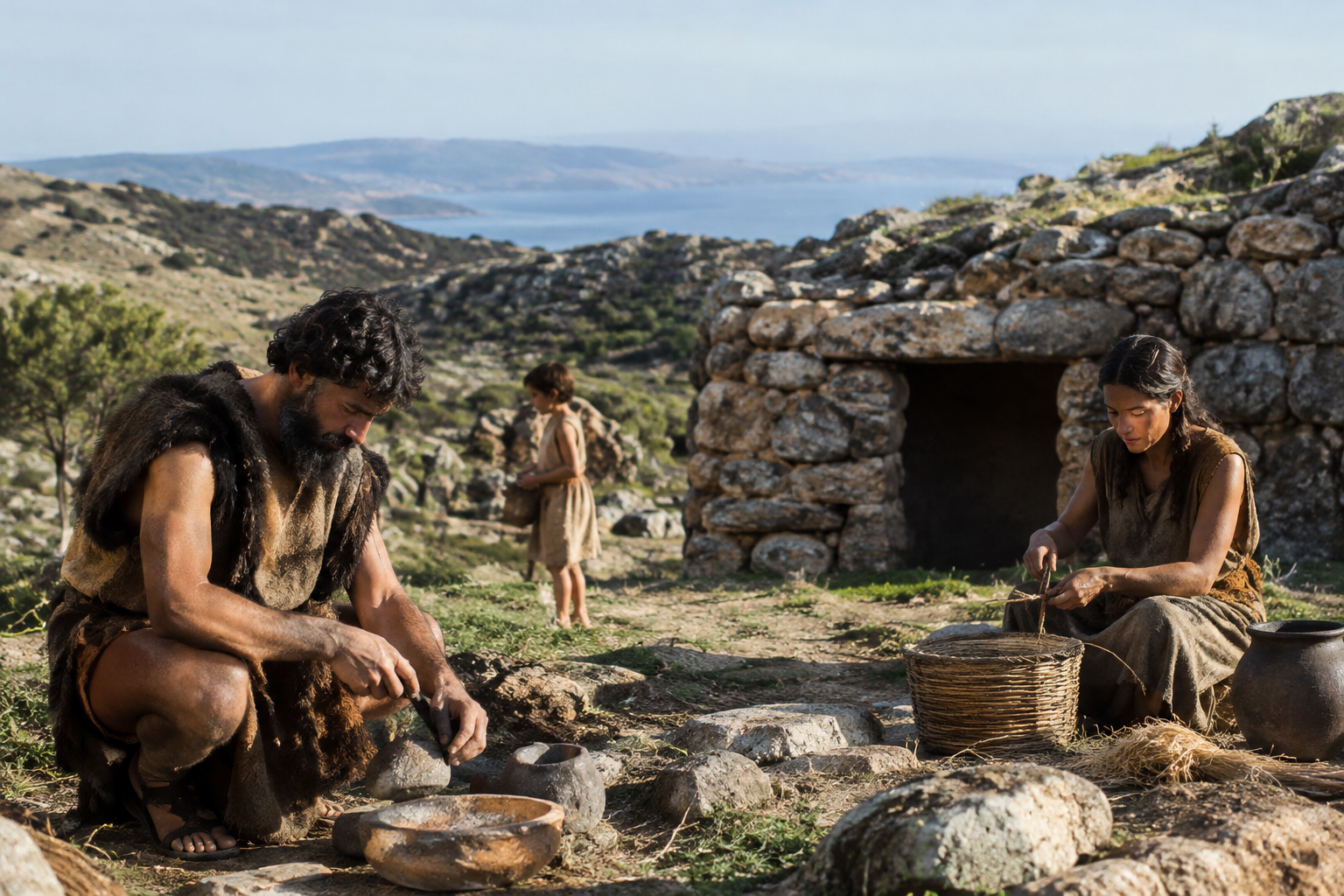
At Seulo, in the mountainous interior of Sardinia, one Bronze Age man has become a small but telling witness to a much larger story. The individual identified as I3743, dated here to around 2041 BC and described as Nuragic-era Sardinia, is associated with the Y-DNA haplogroup R1b1b1. Alongside him stands another Sardinian case, SUA002, from Early Bronze Age Sardinia at around 2200 BC. Two samples are not a dynasty, not a tribe, and certainly not the whole island. But they are enough to make Sardinia, rather than some grand continental battlefield, the proper starting point for this branch in this article.
That matters because R1b1b1 belongs to a broad paternal family with a long and complicated history in western Eurasia. Y-DNA tracks one direct male line only: father to son to son. It does not sum up a person's whole ancestry, language, or identity. Still, when this paternal line appears in ancient Sardinian contexts, it invites a very specific historical question: how did one branch of the wider R1b world become part of island communities whose archaeology is often discussed in terms of continuity, insularity, and distinctive local development?
The earlier of the two individuals, SUA002, is assigned to Early Bronze Age Sardinia at about 2200 BC. Even without embroidered burial detail, that date alone places him in a crucial interval. This was the period after the first farming worlds of the island had long taken root, but before the fully developed Nuragic landscape of famous stone towers had come to dominate Sardinia's image in popular history.
What makes SUA002 useful is precisely that chronological position. He shows that a paternal line reported here as R1b1b1 was present on Sardinia before the classic Nuragic horizon was fully formed. That does not mean the haplogroup "created" Nuragic culture, and it does not identify one incoming people marching ashore under a single banner. It does suggest that male lines connected to broader western Mediterranean and European population histories had already entered the island's human mix by the early Bronze Age.
A genetic study of ancient populations on the Italian islands helped put this kind of evidence into a wider frame, showing that Sardinia cannot be reduced to a timeless genetic isolate frozen since the Neolithic. The island preserved important continuity, but it also participated in prehistoric change. For readers interested in that wider island setting, see this ancient DNA research on the region.
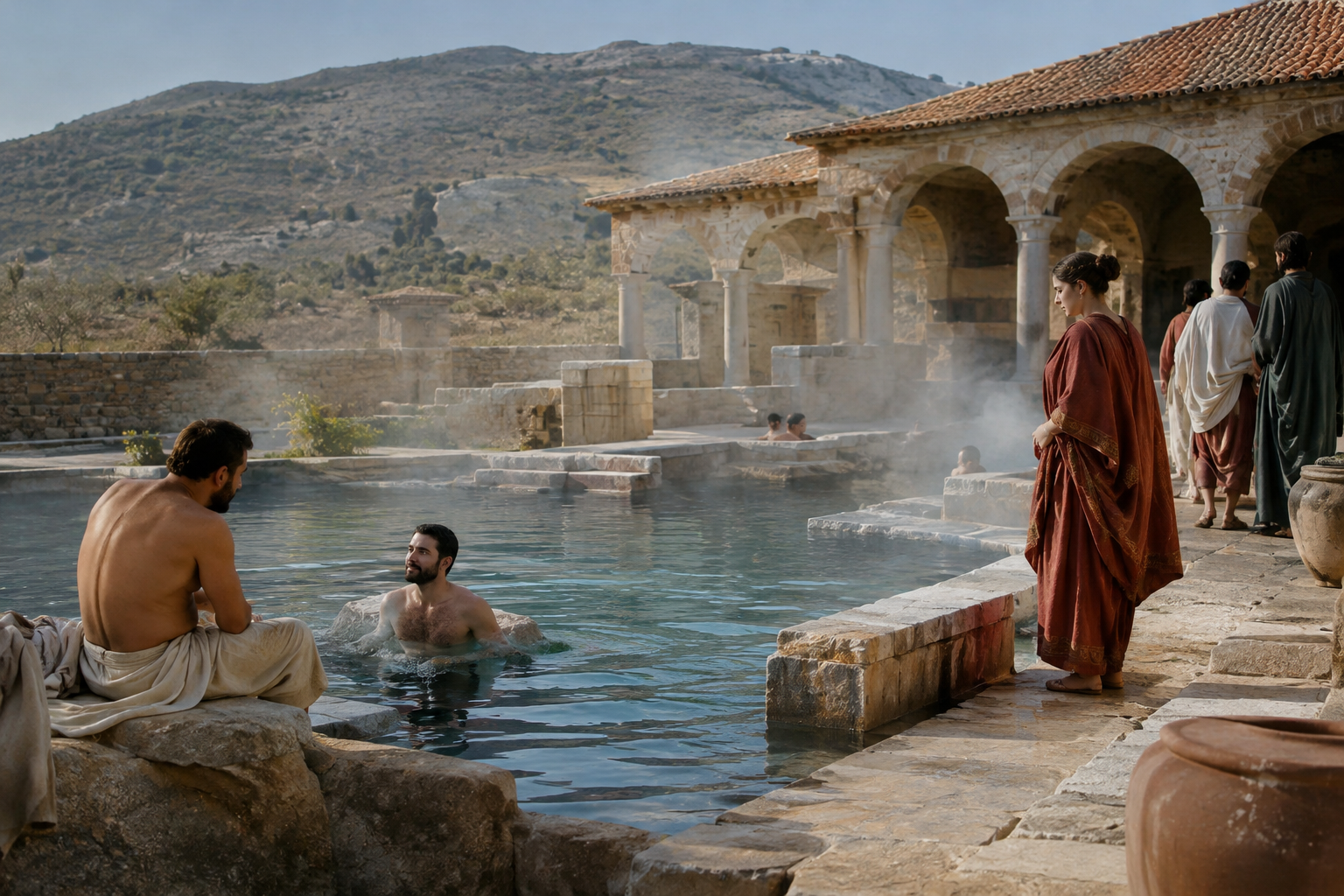
I3743, dated to around 2041 BC and labeled Nuragic Seulo Bronze Age Sardinia, brings the story forward into the island's better known Bronze Age world. Seulo lies in Sardinia's rugged interior, the sort of landscape that has long encouraged easy myths about untouched mountain survivors. Archaeology is usually less romantic and more interesting: interior communities were not sealed off from history, but part of regional networks shaped by movement, exchange, and local adaptation.
Here R1b1b1 appears not on some imperial frontier or in a historically named royal tomb, but in a local Sardinian setting. That is important. Too often haplogroup writing races toward later prestige genealogies and forgets that lineages lived most of their lives among ordinary communities. I3743 reminds us that paternal branches become historically meaningful not only in courts and castles, but in places where people built settlements, buried their dead, and took part in the slow formation of regional cultures.
The label "Nuragic" should also be handled carefully. It is an archaeological term for Sardinia's Bronze and Iron Age cultural world, above all associated with the island's monumental stone nuraghi. It is not the same thing as a single biological population, and it certainly is not a guarantee that every Nuragic man shared the same Y-line. What I3743 gives us is one securely placed male line inside that world.
With a designation as broad as R1b1b1, caution is not an optional extra. R1b is a vast paternal macro-lineage with many later branches spread across Europe and beyond. The article haplogroup here is not automatically identical with the better known downstream lineages often discussed in Bell Beaker, Atlantic, or later western European contexts. Without a more precise terminal subclade, it is wiser to speak of association with this broader branch than to build an overconfident migration tale.
That said, the Sardinian evidence is still historically useful. It shows that men reported within this paternal branch were present on the island in the early and middle Bronze Age. In practical terms, that places R1b1b1 within the demographic history of prehistoric Sardinia, where local continuity and outside connections seem to have coexisted rather than cancelled each other out.
This is exactly the sort of picture that ancient DNA keeps sharpening across the western Mediterranean: not a simple replacement, not perfect isolation, but a layered history. Sardinia often looks distinctive in genetic studies, yet distinctive does not mean disconnected. Even islands with strong local signatures could absorb new lineages over time.
It would be tempting to force these two men into a single sweeping narrative about seaborne Bronze Age pioneers. Better not. Two paternal samples cannot tell us the exact route by which R1b1b1 reached Sardinia, whether through movements tied to earlier Copper Age changes, Bronze Age maritime exchange, or multiple arrivals over time. But they do fit a broader archaeological reality: Sardinia was never merely remote. It sat in the middle of western Mediterranean circuits linking islands, coasts, and inland zones.
That wider backdrop matters because the island's Bronze Age communities were developing in a world where metals, techniques, and people moved. Ancient DNA research on Mediterranean and island populations has repeatedly complicated the old picture of neatly bounded prehistoric societies. The interesting point is not to pin one haplogroup to one culture as if ancient people wore genetic badges. It is to see how a direct paternal line can surface inside a setting already known from archaeology to be both locally grounded and outward looking.
Sardinia's case also helps correct another common mistake. A lineage found on the island does not become "typically Sardinian" for all time, and it need not have originated there. What the evidence does show is presence: by about 2200 BC, and again around 2041 BC, men associated with R1b1b1 were part of Sardinia's prehistoric population history.
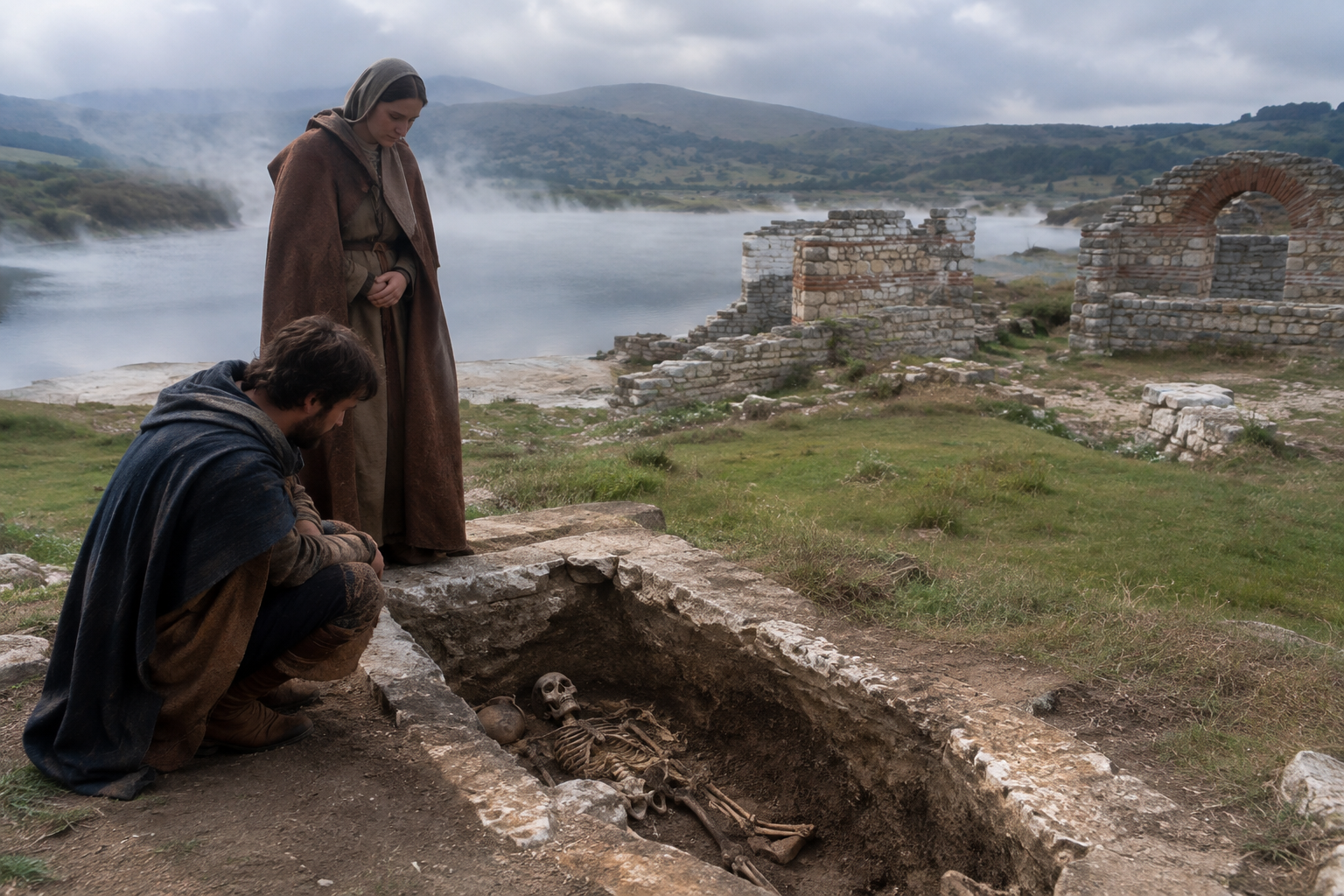
There is a pleasing modesty to this evidence. No famous king. No inscribed tomb. No irresistible temptation to confuse archaeology with legend. Instead we have SUA002 and I3743, two Bronze Age Sardinian men whose reported Y-DNA links them to R1b1b1. One comes from the island's Early Bronze Age; the other sits in the Nuragic horizon of the interior. Together they suggest continuity of presence, or at least repeated presence, for this paternal branch across an important stretch of Sardinia's Bronze Age development.
Another study associated with these Sardinian findings has helped frame prehistoric population change on the island and its neighbors, though one should resist squeezing more certainty from a paper title than the evidence allows. If you want to place these individuals in that growing research conversation, this ancient DNA study on island prehistory is one of the relevant scientific starting points.
If your paternal line falls under R1b1b1, these Sardinian cases offer a grounded kind of connection: not to a single heroic ancestor, but to real Bronze Age men living on a Mediterranean island during a period of cultural formation and exchange. The strongest responsible takeaway is that this branch was present in Sardinia by the early Bronze Age and still visible in Nuragic-era context. That is not the whole story of the haplogroup, but it is a vivid and historically meaningful chapter in it.
Comments