Haplogroup R1b1b

– 6 min read


There is something wonderfully awkward, in the best archaeological sense, about haplogroup R1b1b. It is not one of those neat labels that can be dropped into a simple story about one people, one kingdom, or one migration. Instead, it appears in ancient DNA from the Balkans, the north Pontic zone, the steppe, Denmark, Sardinia, and early medieval Italy. That broad spread is precisely what makes it historically interesting. It reminds us that paternal lineages do not belong to tidy modern categories. They move with men, families, local communities, newcomers, and survivors.
Y-DNA haplogroups trace a direct paternal line: father to son to son across many generations. They are powerful tools for reconstructing parts of the human past, but only parts. They do not describe a person's full ancestry, culture, language, or identity. In the case of R1b1b, the story is especially instructive because this branch sits within the wider R1b tree, a major Eurasian paternal lineage with many downstream branches that later became widespread in different parts of Europe and beyond. But the deep history of an older branch like R1b1b is not the same as the later history of all its descendants. Ancient DNA helps us keep that distinction clear.
The samples linked here suggest that R1b1b, or lineages close enough to be grouped with it in older classifications, was present across a wide prehistoric zone stretching from the Iron Gates of the Danube to the Black Sea and into the steppe. That does not prove a single homeland in any simplistic sense. It does, however, place this paternal lineage in some of the most important contact zones of prehistoric Europe: river corridors, farming frontiers, and open grasslands where populations met, mixed, and moved.
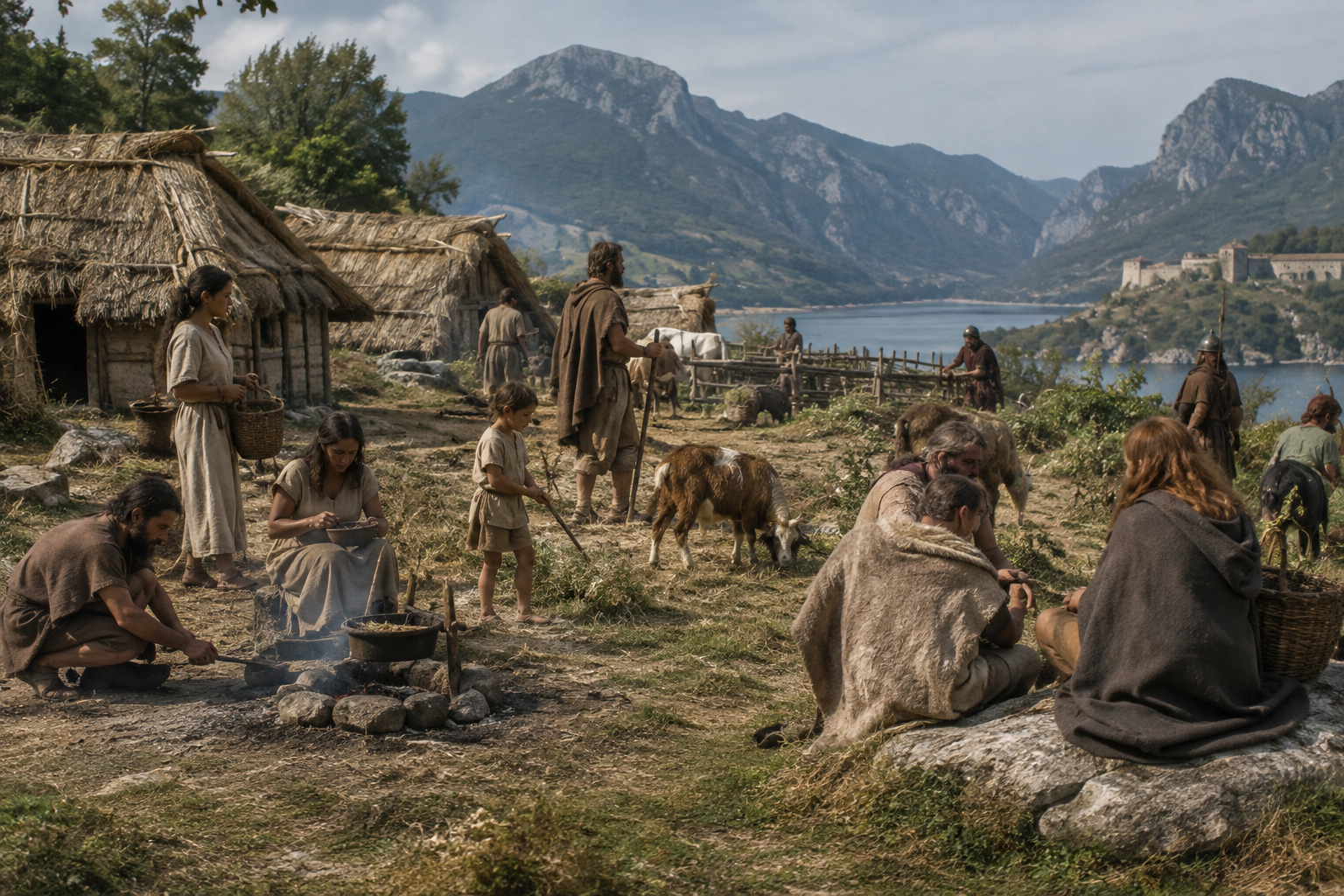
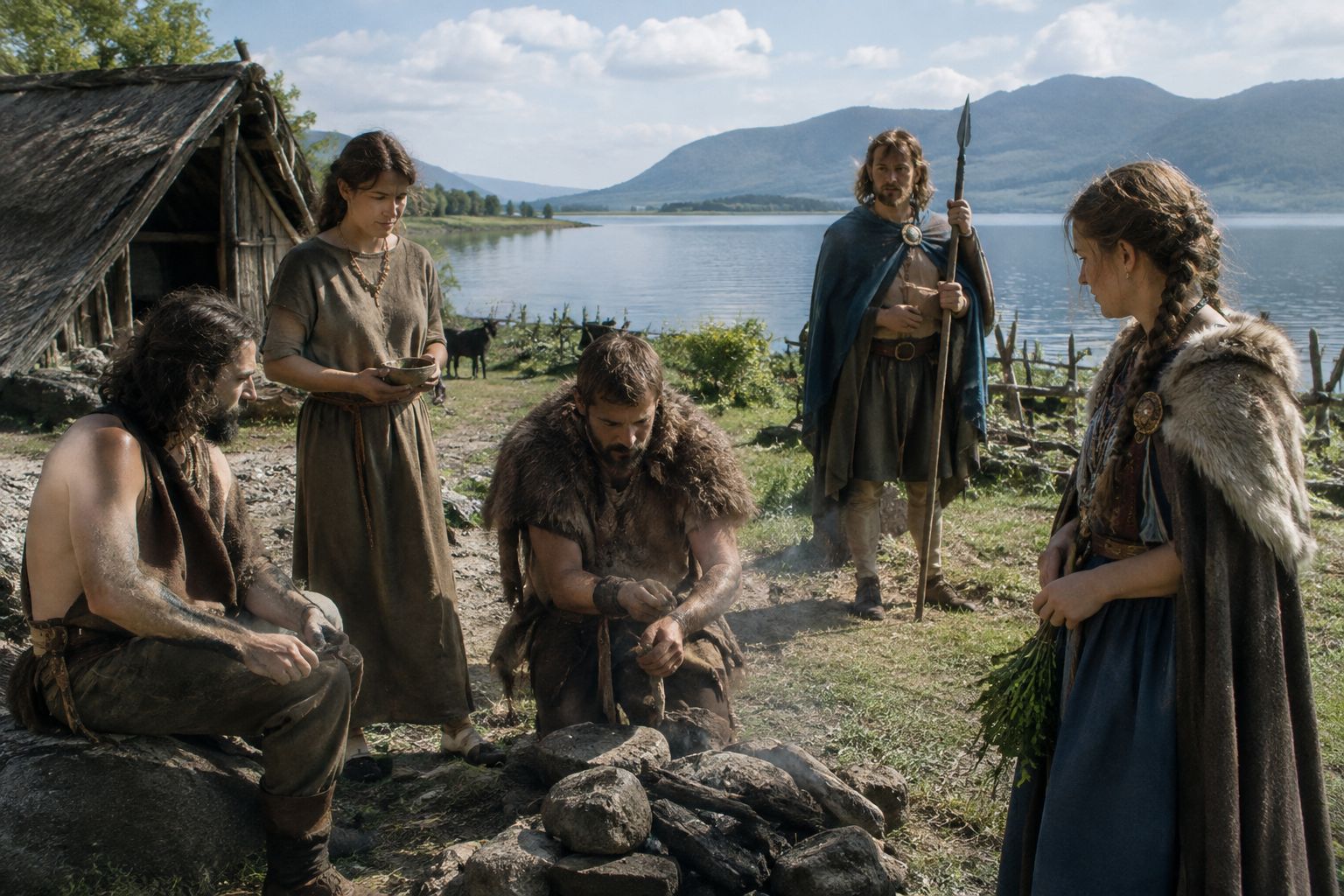
Two of the oldest anchors are from Padina in Serbia's Iron Gates: I5237, dated to 9300 BC, and I5232, dated to 5951 BC. These are striking because the Iron Gates is one of the great meeting grounds of European prehistory, where Mesolithic foragers lived in communities tied to the Danube long before farming transformed the continent. If R1b1b was present there, it places this paternal line deep in the world of southeastern Europe's hunter-gatherers.
That Balkan and lower Danube setting is worth keeping in mind when we later meet the haplogroup in Neolithic and post-Neolithic contexts farther afield. The same broad paternal lineage can persist while the societies carrying it change dramatically around it.
Explore Balkan Hunter-Gatherers
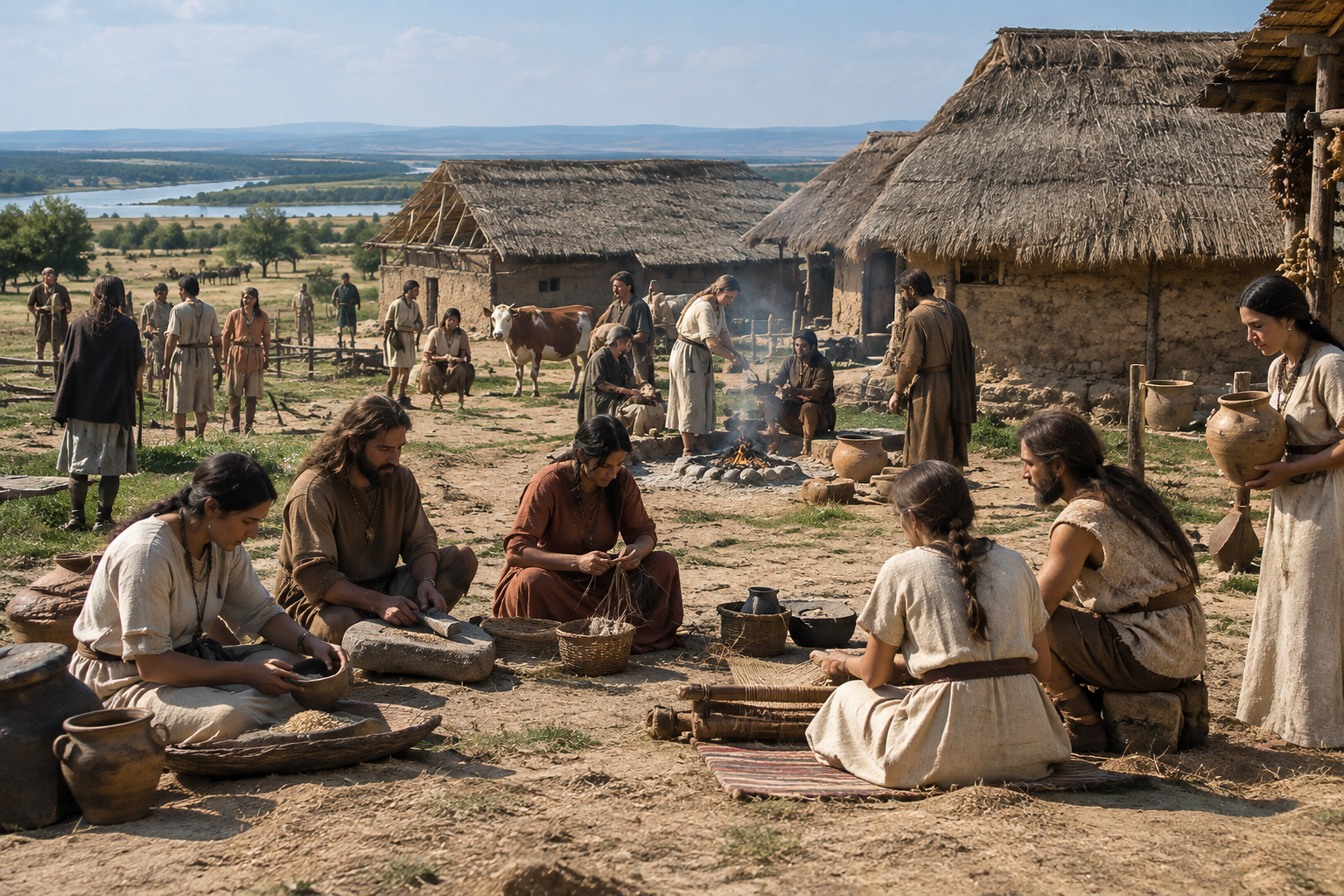
By the Neolithic, the picture becomes even more interesting. UKR008, from Neolithic Black Sea Ukraine Zaporizhzhia and dated to 6500 BC, places this paternal line in the northern Black Sea region very early indeed. Another sample, PIE042, from Neolithic Romania Giurgiu Pietrele Magura Gorgana and dated to 4100 BC, brings it into the lower Danube world of settled farming communities. These are not marginal places. They are central to the long encounter between incoming farmers, local foragers, and later steppe-linked populations.
Then there is KHB002, from Ancient Steppe Khutor Belyy Russia, dated to 4300 BC. This sample matters because the Eurasian steppe was not merely a backdrop to migration narratives; it was one of the engines of prehistoric mobility. Seeing R1b1b in such a setting raises the possibility that branches of this paternal line participated in the shifting networks that connected the Pontic-Caspian steppe to southeastern Europe. That should be phrased carefully: a single sample does not prove a grand migration route on its own. But it does place this lineage within the wider geography of prehistoric interaction between farmers, herders, and frontier communities.
A northern appearance is also notable. CGG107526, from Early Neolithic Denmark Ruds Vedby and dated to 3631 BC, suggests that this paternal lineage, or an ancestral classification close to it, was also present in Scandinavia's early farming world. That does not mean a straight-line movement from the Balkans to Denmark, nor that all such cases belong to one uninterrupted population. It does show that R1b1b was part of a very broad prehistoric landscape.
Read the Northern Black Sea Story
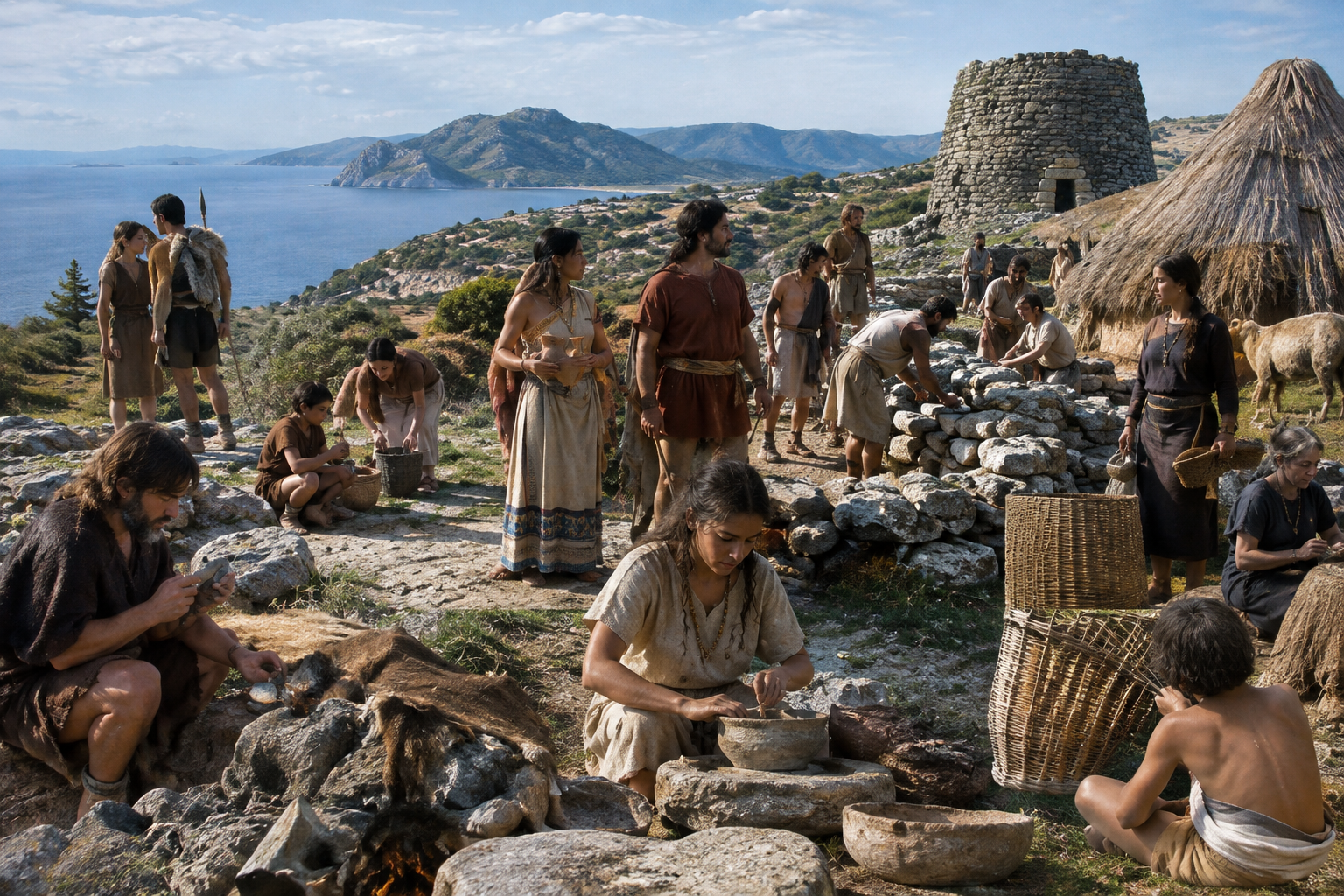
If the Balkans and steppe feel expected for an old R1b-related lineage, Sardinia perhaps does not. Yet three supplied samples place R1b1b in the island's Bronze Age world: SUA007 from Early Bronze Age Sardinia dated to 2200 BC, and I0206 and I0209 from Bronze Age Sardinia dated to 1800 BC. These finds are a useful warning against over-tidy continental narratives. Island populations were never sealed jars. They were connected by sea routes, exchange, marriage, and local developments over very long periods.
In Sardinia, the presence of this lineage does not by itself tell us whether we are looking at continuity from earlier arrivals, movement from the mainland, or several strands meeting on the island. What it does show is that R1b1b had reached, or persisted in, a Mediterranean setting far from the Danube gorges and Black Sea shores. Ancient DNA keeps puncturing our old assumptions about isolation.
Readers interested in island population history will find that Sardinia often refuses easy labels, which is part of what makes it so useful for archaeogenetics.
Discover Ancient Italian Islands
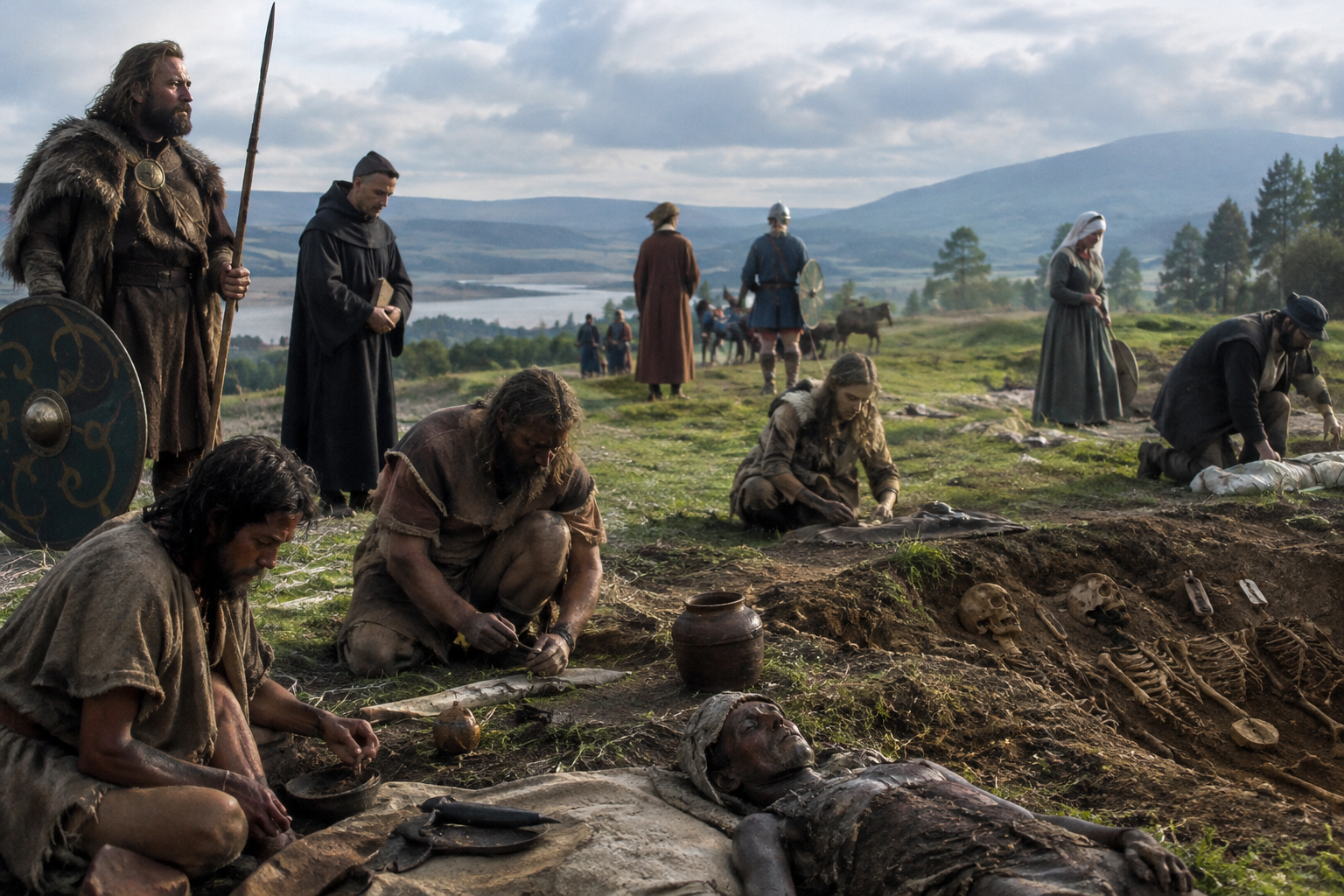
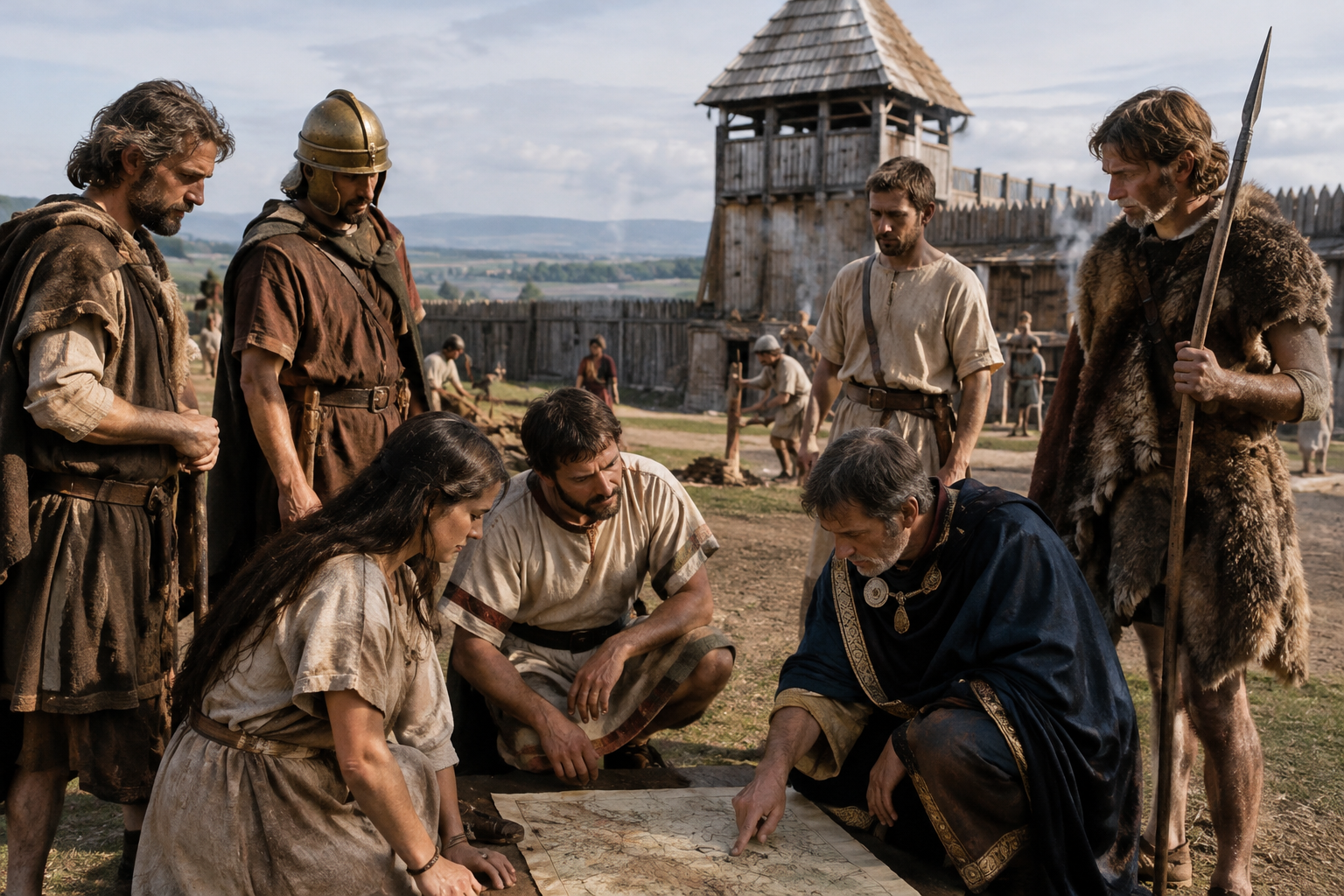
The latest supplied sample brings us into a very different world: 2430_60, from Dark Ages Italy South Tyrol Malles Burgusio Santo Stefano, dated to 450 AD. Now we are in the age of the late Roman and post-Roman Alps, where military movement, local continuity, Christianization, and the reshaping of political authority all overlapped. South Tyrol was not some isolated valley. It sat within the routes linking Italy with the transalpine world.
This sample does not prove that the same paternal line ran unbroken from Padina or Zaporizhzhia to a man buried in the Alps in the fifth century AD. That would be far too strong a claim. But it does show how an old branch could still be present in a completely changed historical setting: no longer Mesolithic fishers on the Danube or Bronze Age islanders, but communities living through the end of Roman power in the western empire.
That is one of the chief lessons of Y-DNA. Paternal lineages can persist while languages, religions, political systems, and social identities change beyond recognition.
Explore DNA in Early Medieval Italy
In this case, no associated noble families or castles were supplied in the source material, and that absence is itself worth stating plainly. It would be very easy, and very misleading, to bolt a later aristocratic pedigree onto a deep prehistoric haplogroup simply because both happened in Europe. Good genetic history has to resist that temptation.
Still, the gap between ancient DNA and medieval genealogy is not a dead end. It is the space where the most interesting questions live. Medieval noble families preserved memory through charters, heraldry, lordship, churches, and castles. Ancient DNA preserves something else: biological traces of men who lived thousands of years before surnames, titles, and dynastic archives. Sometimes those two records can be brought into productive conversation, but only with caution and only when the evidence is specific enough.
For a lineage like R1b1b, what we can say responsibly is geographical and historical rather than genealogical. The regions where this haplogroup appears in ancient samples - the Balkans, the lower Danube, the north Pontic zone, the western Mediterranean, and the Alpine world - were all places that later produced medieval lordships, castles, and noble houses. That does not make an Iron Gates forager the ancestor of any particular count or baron. It does remind us that the men who later built fortresses and founded lineages inhabited landscapes already thick with much older human histories.
R1b1b is historically fascinating because it refuses to sit still. In the evidence supplied here, it appears in Mesolithic Serbia, Neolithic Romania and Ukraine, steppe Russia, early farming Denmark, Bronze Age Sardinia, and Dark Ages South Tyrol. That distribution suggests not a single neatly bounded people, but a paternal lineage present across several major transitions in European prehistory and history.
For anyone who carries R1b1b today, that does not mean descent from one famous tribe, one ethnicity, or one noble house. It means your direct paternal line belongs to a very old branch that has turned up in multiple archaeological settings across Eurasia's western half. Ancient DNA offers context, not certificates of identity. But that context can be thrilling: it places your Y-line in the company of real men who lived beside the Danube, on the Black Sea frontier, on the steppe, in Bronze Age Sardinia, and in the post-Roman Alps.
That is, in the end, what makes archaeogenetics so compelling. It does not flatten history. It makes it messier, older, and more human.
If your Y-DNA belongs to R1b1b, or to a nearby branch, MyTrueAncestry can help you explore how your results compare with ancient individuals such as I5237, UKR008, PIE042, KHB002, SUA007, and 2430_60. These matches can offer remarkable clues about deep ancestry and ancient population history, even though they do not by themselves prove direct descent from any one ancient person or later historical family.
Upload your DNA to see how your story may connect with the archaeology of the Balkans, the Black Sea, the steppe, Sardinia, and early medieval Europe.
Comments