Haplogroup R1b1a2a1a2b

– 5 min read


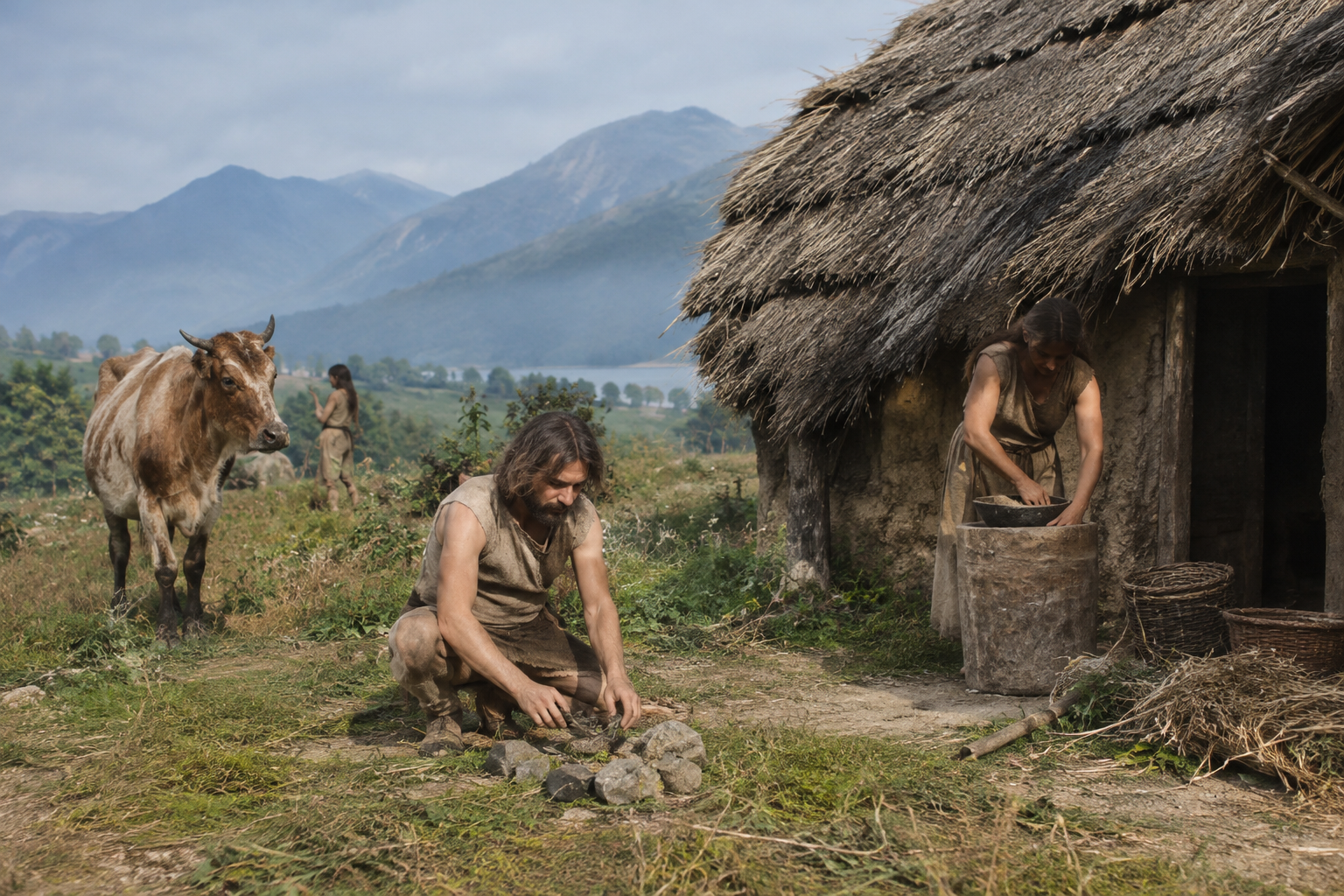
At Franzhausen in Lower Austria, one Early Bronze Age burial gives this Y-DNA branch a very precise foothold in time. The individual identified as FZH003, dated to about 1900 BC, is associated here with haplogroup R1b1a2a1a2b - a reminder that even a single male line can anchor a much larger story about population change in Bronze Age central Europe.
That matters because Franzhausen is not an isolated name on a map. It belongs to one of the best-known Early Bronze Age cemetery landscapes in the Danube region, part of a world of farming settlements, metalworking, exchange networks, and carefully organized burial grounds. Y-DNA traces only one direct paternal line, not a person's whole ancestry, but when a lineage like R1b1a2a1a2b appears in this setting, it joins an archaeological record already rich in evidence for how communities were structured and connected.
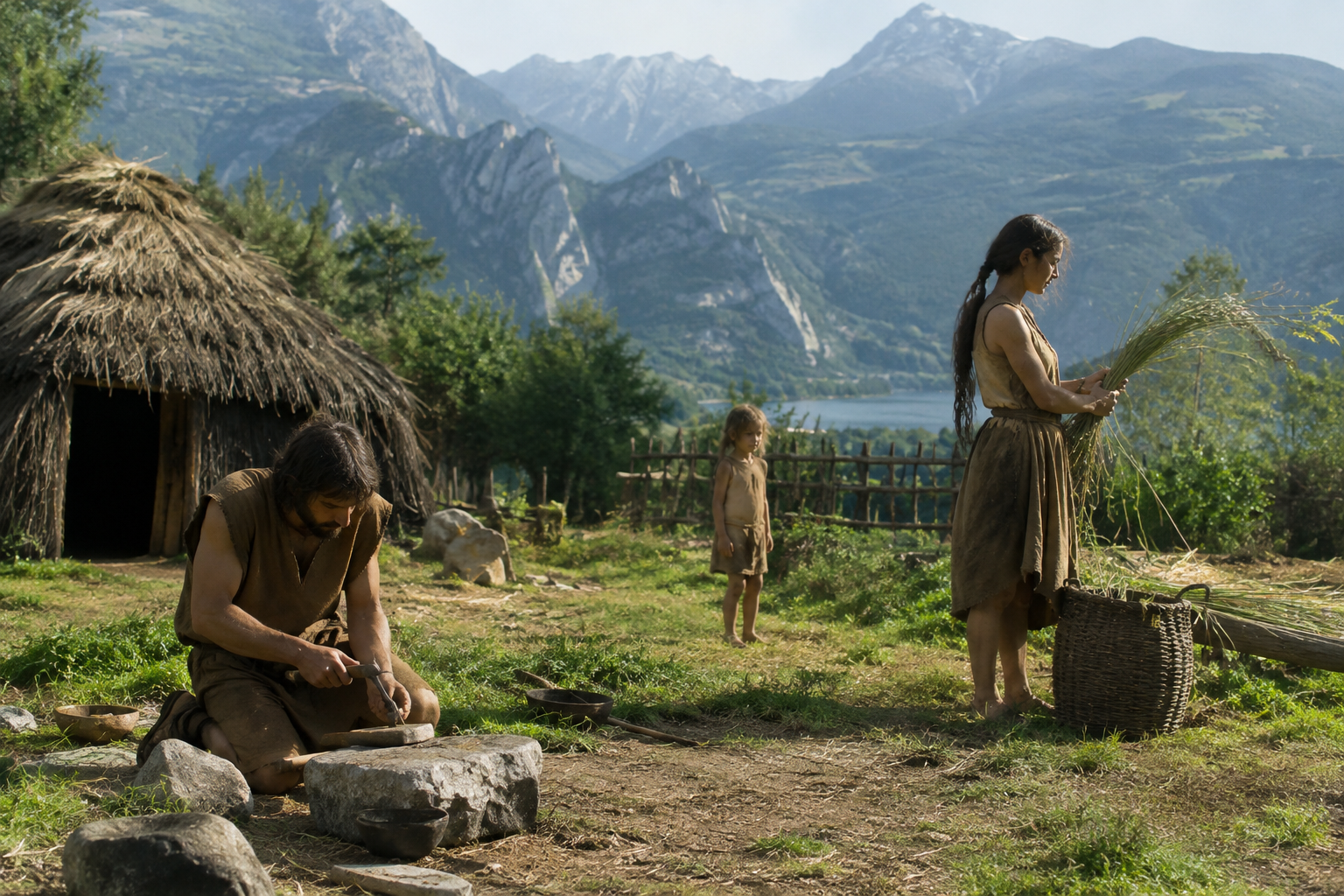
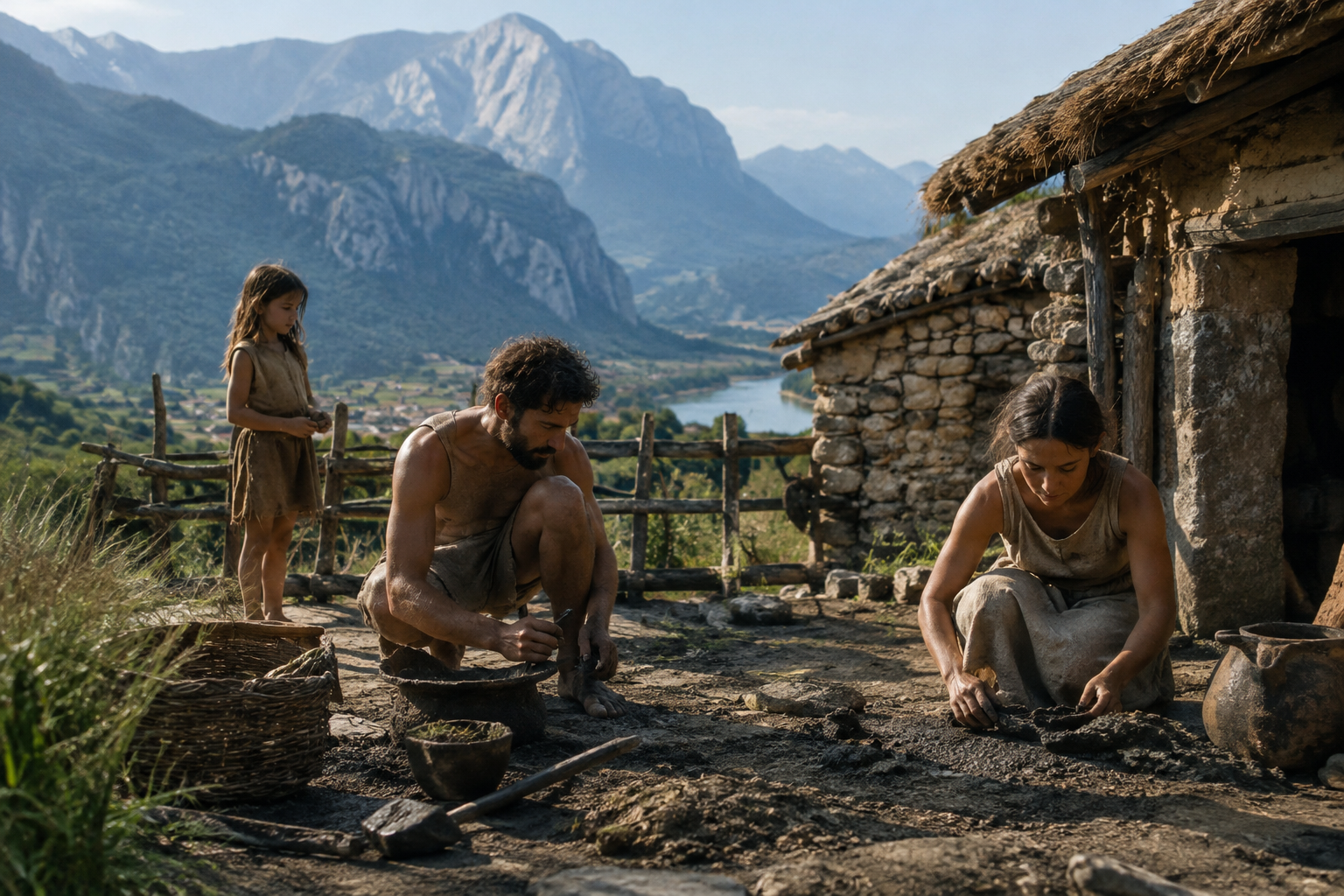
Franzhausen lies within the Traisen valley zone of Lower Austria, an area that has become central to discussions of Early Bronze Age society in central Europe. Cemeteries here are important not because they hand us neat ethnic labels, but because they preserve real communities: men, women, and children buried within a landscape shaped by kinship, farming, and regional ties.
Sample FZH003 belongs to that world. The date, around 1900 BC, places him after the dramatic upheavals that transformed much of Europe in the later third millennium BC and within a period when new local traditions had already taken root. By this stage, communities in Austria were not simply receiving influences from elsewhere; they were developing durable regional societies with their own burial customs and local histories.
A useful companion piece on this broader setting is MyTrueAncestry's look at Bronze Age Austria, which explores the wider genetic and archaeological background of this region.
The haplogroup label R1b1a2a1a2b sits inside the much larger R1b family, a major Y-chromosome branch that became prominent across large parts of Europe during later prehistory. But one must be careful here. The broad success of R1b in Bronze Age Europe does not automatically tell us the detailed origin story of every one of its downstream branches, including this specific lineage.
What we can say, more cautiously, is that R1b-derived paternal lines were already well established in central Europe by the Early Bronze Age. In a cemetery such as Franzhausen, that makes this haplogroup part of a settled social landscape rather than some exotic intrusion. The interest lies less in a simplistic "arrival" narrative and more in continuity: how paternal lines persisted inside communities that were themselves adapting to new technologies, shifting alliances, and changing burial traditions.
By around 1900 BC, the societies of Lower Austria had inherited the consequences of earlier demographic shifts associated with the Bell Beaker and post-Bell Beaker world. Across central Europe, ancient DNA has shown that the centuries before FZH003 were anything but static. New mixtures of ancestry, new social patterns, and new regional identities had already taken shape.
That is why Franzhausen is so useful. It helps place R1b1a2a1a2b not at the beginning of the story, but in the middle of one. This branch appears in a population living after those major transitions, when the descendants of earlier movements were now buried in established cemeteries and embedded in local networks. If you carry this lineage today, the deeper significance may be less about a single migration event than about belonging to the long-lived Bronze Age societies that emerged from that upheaval.
For readers interested in the earlier background to these changes, the Lower Rhine-Meuse evidence offers a valuable comparison in this article on Bell Beaker expansion and persistence of local ancestry.
There is a temptation, when only one named ancient sample is available, to either overstate it or dismiss it. Both are mistakes. FZH003 does not represent every man in Bronze Age Austria, and he certainly does not prove a direct line to every later R1b-bearing population in Europe. Yet he is still important because securely placed ancient males are the fixed points around which better histories can be written.
In archaeological terms, a cemetery sample tells us that this paternal line was present in a real community at a real time and place. It was part of the human fabric of Bronze Age Lower Austria - a landscape of settlements, fields, exchange routes, and burial grounds. That is a stronger historical statement than vague claims about "ancient Europe" in general.
Research on Bronze Age burials in Austria has also intersected with broader questions of health and disease. One study connected with the region's Early Bronze Age cemeteries is available here: https://www.researchgate.net/publication/373689145_Yersinia_pestis_im_fruhbronzezeitlichen_Graberfeld_von_Drasenhofen_Die_derzeit_altesten_Pesttoten_Osterreichs_in_ihrem_kulturhistorischen_Kontext. Even where a particular paper is not focused on this exact individual, it helps frame the wider cultural and biological setting of Early Bronze Age Austria.
Because this branch appears in Bronze Age central Europe, some readers will naturally wonder about later language groups - Celtic, Italic, Germanic, or others. That is a fair question, but the evidence has to be handled with care. A Y-DNA lineage is not a language, and a cemetery in Lower Austria around 1900 BC sits long before historically documented Germanic peoples in the region.
Still, the central European setting does matter. Later prehistoric and early historic language expansions often built upon populations already established in regions like the middle Danube and adjacent zones. If R1b1a2a1a2b was present in Lower Austria this early, it belonged to the demographic substrate from which many later central European populations emerged.
That wider debate is explored from another angle in MyTrueAncestry's post on ancient DNA and the spread of Celtic languages.
One of the most interesting developments in archaeogenetics is that Bronze Age cemeteries are no longer just collections of graves. Increasingly, they are being read as social archives. Studies from Austria and neighboring regions have shown that burial grounds can preserve traces of kinship, mobility, and household structure across generations.
That does not mean every man with a related Y-lineage in one cemetery belonged to a simple dynasty. But it does mean that paternal lines mattered socially, and that Y-DNA can illuminate one strand of how these communities reproduced themselves over time. FZH003's lineage is therefore historically meaningful not because it stands alone, but because it fits a broader pattern in which male descent lines formed part of the structure of Bronze Age life.
A related discussion appears in MyTrueAncestry's article on kinship and long-distance genetic networks in Early Bronze Age Lower Austria.
The most responsible way to read haplogroup R1b1a2a1a2b here is also the most interesting. It places one paternal line firmly inside the settled, locally rooted societies of Early Bronze Age Lower Austria, represented by Franzhausen individual FZH003 around 1900 BC. For someone researching this lineage today, that does not promise a royal pedigree or a single dramatic migration tale. It offers something better: a documented link to the men who lived in the cemeteried farming landscapes of Bronze Age central Europe, where lineage, locality, and long-term continuity all mattered.

Comments