Haplogroup R1b1a1b1b

– 6 min read


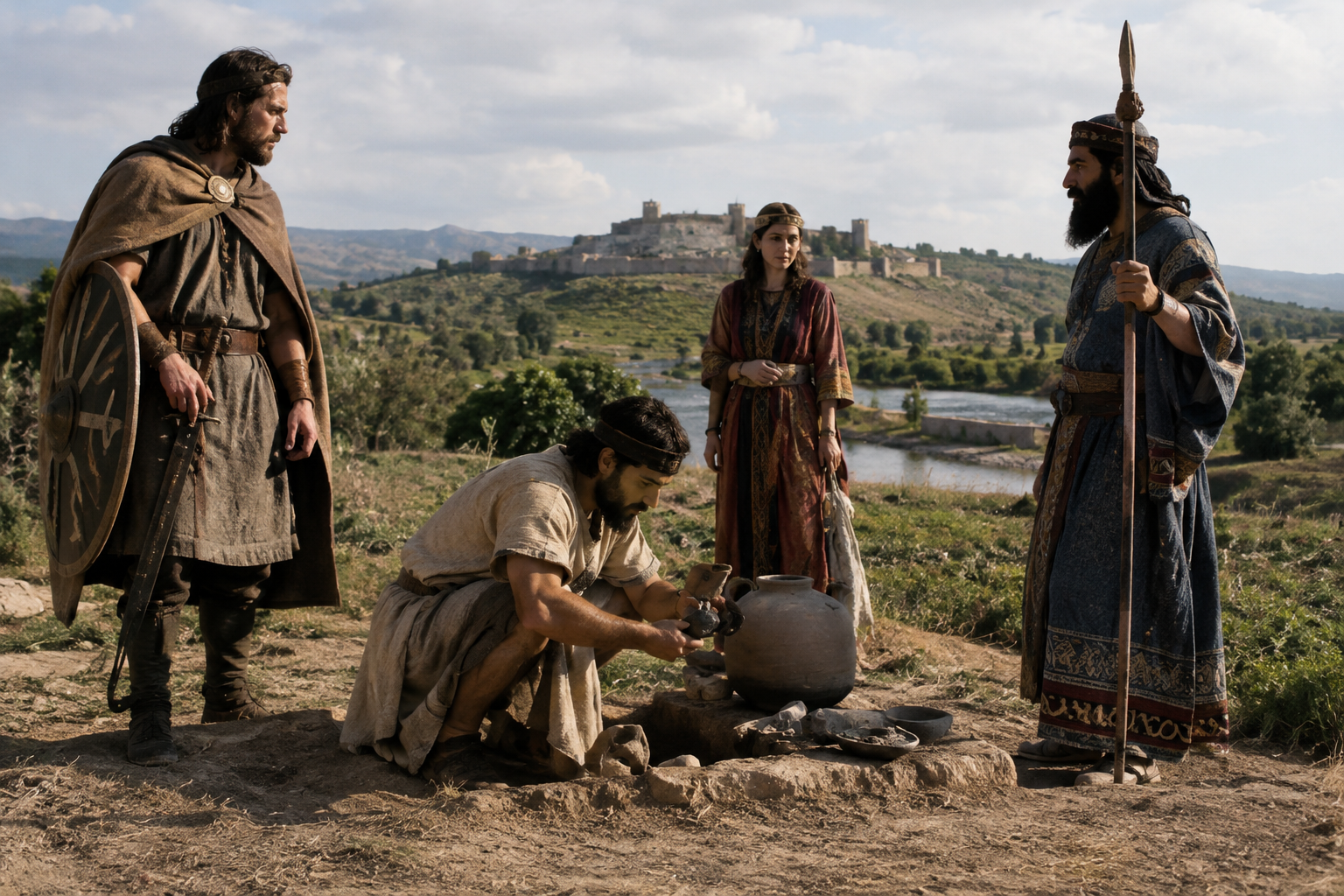
At Winterborne Kingston in Dorset, archaeologists working at the Durotriges center often called Duropolis recovered an intriguing later burial: sample WBK193, dated to about AD 125. By that point the old Iron Age stronghold had long been living in Rome's shadow, yet the man carried a Y-chromosome line associated here with R1b1a1b1b. That matters because this same paternal branch also appears much farther east and much earlier, in Bronze Age steppe contexts and in the Caucasus, making WBK193 part of a much larger and less tidy story than any simple "Celtic" label would suggest.
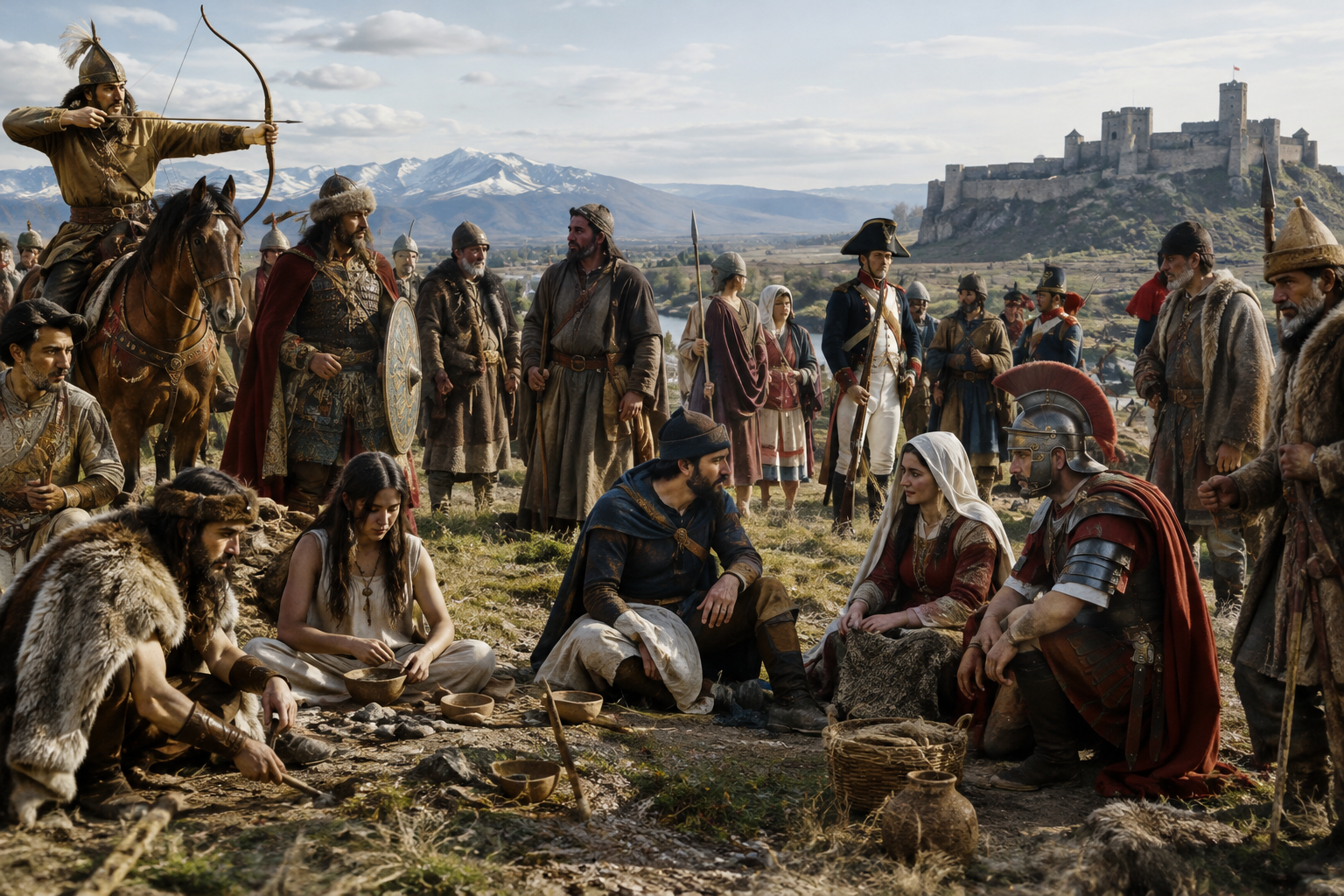
That is really the first useful thing to say about R1b1a1b1b. It is a paternal marker, tracing one direct male line only, not a person's whole ancestry, language, or identity. But when the same branch turns up in places as different as Maykop-era North Caucasus graves, Yamnaya-linked burials in Hungary, Scythian-period Ukraine, Roman Britain, Armenia, and early medieval Italy, it becomes a very good guide to long-distance connections across Eurasia.
One of the earliest entries in this set is ESY010 from Essentukskiy in the northern Caucasus, dated to around 3600 BC and described as Neolithic or Maykop-era Russia Caucasus. Nearby in time and region is KMM002 from Komsomolec, about 2800 BC. These are not decorative preliminaries. They show that the branch was already present in the Caucasus-world before one reaches the better-known historical names of Scythians, Alans, Romans, or Lombards.
The Caucasus is often treated as a borderland, but archaeologically it is better imagined as a zone of traffic: mountains, passes, piedmonts, and exchange networks linking steppe, plateau, and Near East. A genetic study of the wider region and its long population history has helped underline just how complicated those connections were, especially between the Bronze Age and the early medieval period here. R1b1a1b1b in these northern Caucasus contexts does not prove a single origin story, but it does place the branch in one of the great contact zones of western Eurasia at a very early date.
That early Caucasus presence also helps explain why later samples tied to Armenia and northwestern Iran do not look like odd outliers. They belong to a region where lineages, languages, and political systems were repeatedly meeting and mixing over millennia.
The branch then appears in some of the classic Early Bronze Age steppe-associated settings west of the Black Sea. Two especially clear cases are I18101 from Kunhegyes-Nagyallas-halom in Hungary, dated to about 2750 BC, and I3511 from Puspokladany in Hajdu-Bihar, dated to about 2501 BC, both classified as Yamnaya. Other Bronze Age steppe-related examples in this wider cluster include MAJ017 from Ukraine, I0440 from the Poltavka horizon in Samara, and RK1001, labelled broadly as Yamnaya Bronze Age.
This is the point at which R1b-related paternal lines become historically conspicuous in ancient DNA studies. The spread of steppe ancestry into the Carpathian Basin and beyond is one of the best documented demographic shifts of later prehistory, but it was never a matter of one uniform people marching under one banner. These burials represent local communities, particular men, and specific funerary settings. What they show is that the branch associated here with R1b1a1b1b was part of the male-line repertoire carried westward during the Bronze Age transformations that linked the Pontic-Caspian steppe to central Europe.
There are also useful side currents. I2787 from Szigetszentmiklos-Felso-Urge in Hungary, dated around 2350 BC, and I3499 from Vucedol, around 2775 BC, remind us that the Carpathian Basin was not merely receiving migrants; it was one of the places where incoming lineages became entangled with established regional societies. The result was not a frozen "steppe package" but a new social landscape.
Several later samples place R1b1a1b1b firmly in the Iron Age and post-Iron Age steppe world. Among them are UKR110 from Vesele in the Kharkiv region, dated to about 350 BC and described as a Scythian horse archer, and UKR133 from Psiochyn, around 400 BC, described as a Scythian elite warrior. Another relevant case is Pr9, labelled Early Sarmatian and dated to about 350 BC.
One should be careful here. "Scythian" and "Sarmatian" are historical and archaeological labels for confederations and cultural horizons, not Y-DNA clans. Still, the repeated appearance of this branch in steppe burials over many centuries is striking. It suggests continuity of some paternal lines through changing political worlds: mounted pastoralism, shifting alliances, interaction with Greek colonies, pressure from empires, and eventually the migrations that remade late antiquity.
A broader ancient DNA investigation of mobility in Ukraine and the North Pontic zone is particularly useful for this kind of question, because it situates burials like these within a region that was less a frontier than a crossroads here. The later samples continue the pattern: CGG021451 from Iron Age Alan Ekazhevo in Russia, CGG022003 and CGG022005 from Migration Period Zaragizh, and even UKR069 from a Golden Horde-era hill fort in Donetsk around AD 1350. Different centuries, different political formations, but the same paternal branch still turning up in the broad steppe orbit.
If the steppe provides continuity, Armenia and neighboring northwestern Iran provide density. The sample list includes a remarkable concentration from Bover, Pijut, Karashamb, Noratus, Bagheri Tchala, Bardzryal, Lorid Berd, and the Black Fortress, spanning roughly the Late Bronze Age to the Iron Age. Among them are I16376, I16117, I16191, I16193, I16194, I19346, I19343, I18478, and a series from Bagheri Tchala such as I14588 and I14618.
That spread matters because it moves the branch out of a purely steppe narrative. In Armenia and around Lake Urmia, these men lived in landscapes shaped by fortified settlements, regional kingdoms, and the world of Urartu and its neighbors. The presence of R1b1a1b1b here across multiple cemeteries and centuries suggests not an occasional visitor but a branch that had become locally embedded.
The Hasanlu-related entries in Iran, including I4269, I4280, I4355, I4356, I6429, I6430, and I6431, strengthen the same point. Northwestern Iran and the Armenian highlands were deeply connected zones. For anyone carrying this haplogroup today, that cluster is one of the most distinctive features of the evidence: R1b1a1b1b was not only moving across open grasslands but also taking root in complex settled societies south of the Caucasus.
Bronze and Iron Age Upper Near East
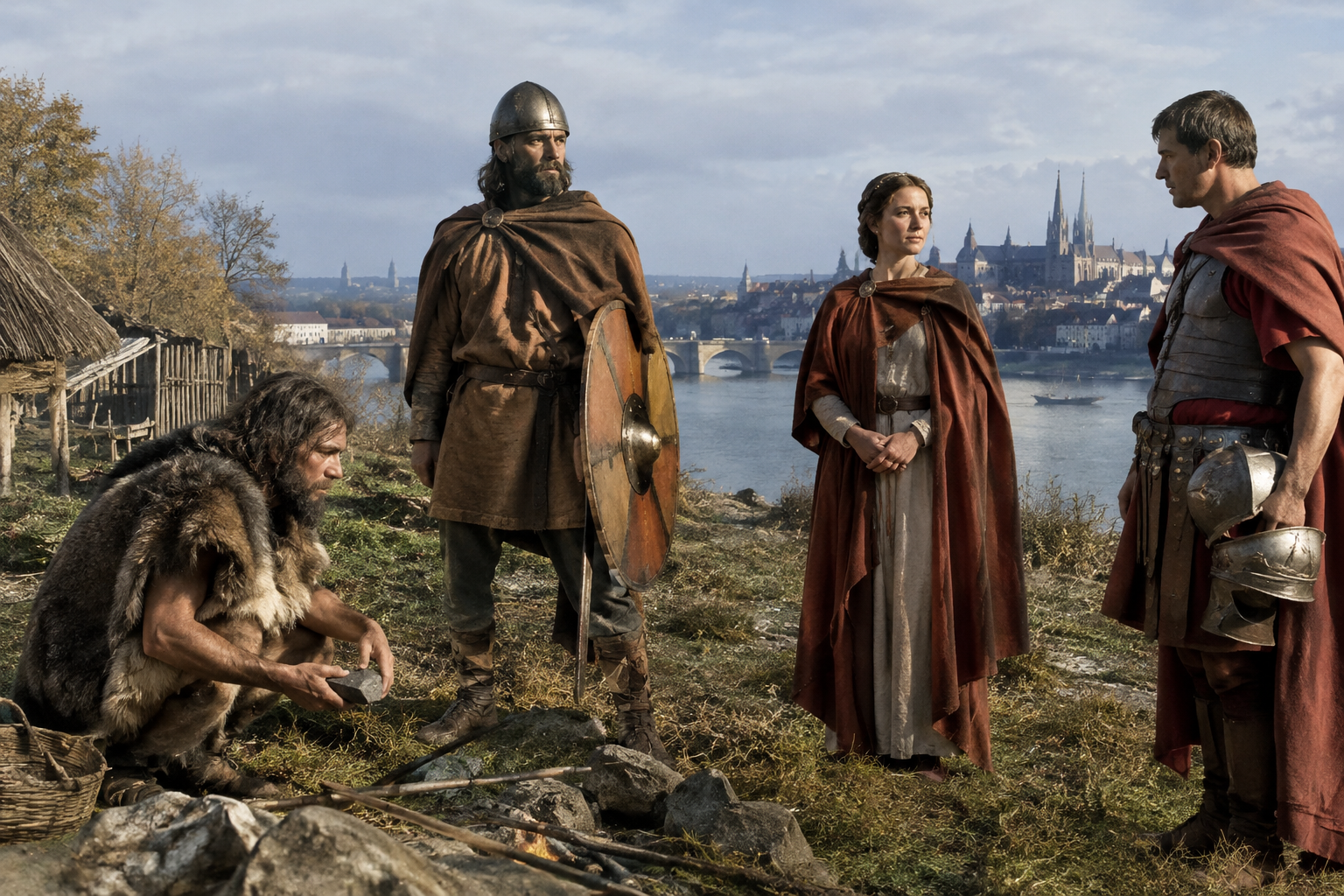
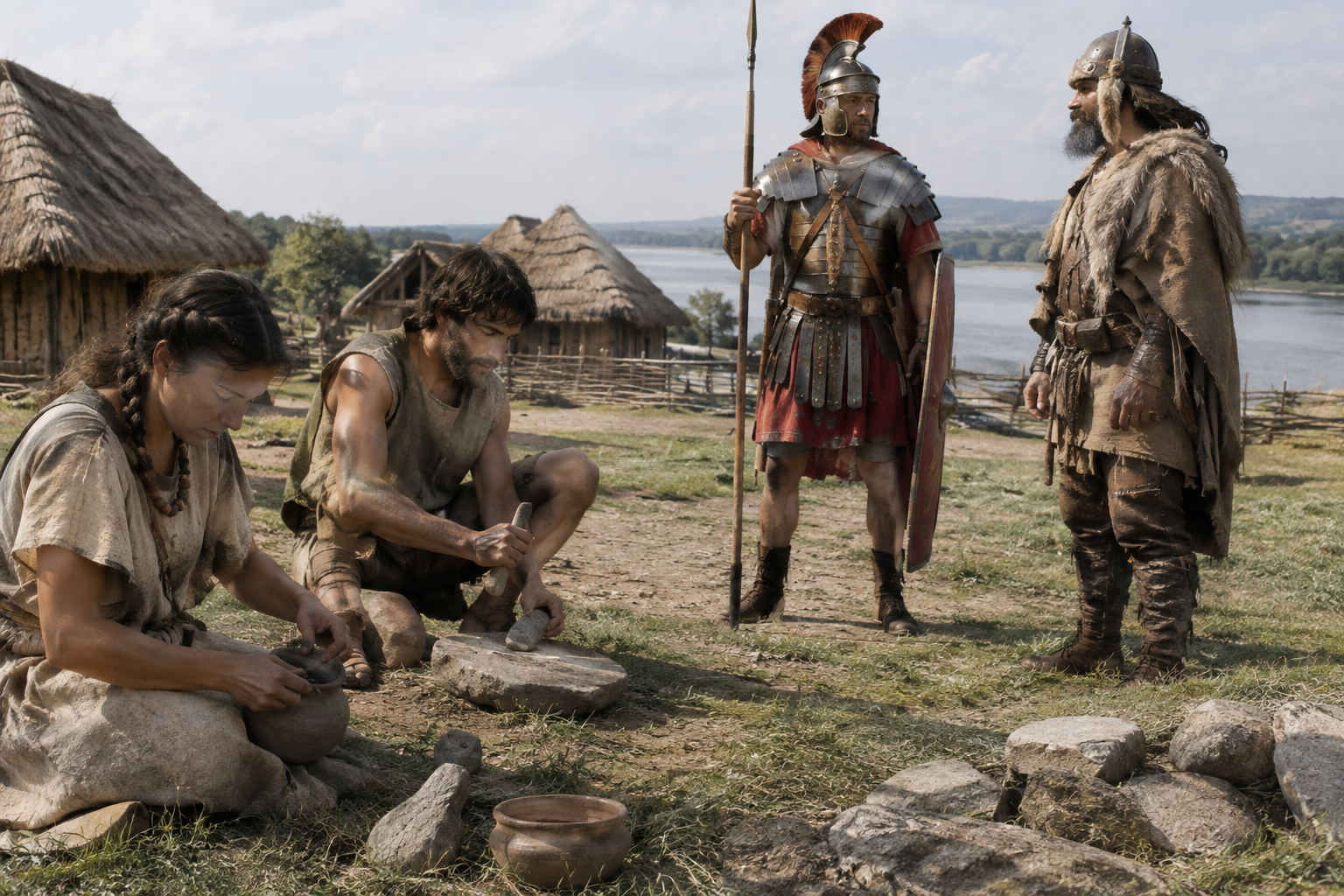
By the Roman period, the branch appears in contexts that are almost delightfully untidy. In Britain there is WBK193 in Dorset and the two Offord Cluny Outsider entries, C10271b and C10271c, dated around AD 177. The very label "outsider" is a useful warning against tidy ethnic assumptions. Roman Britain contained locals, soldiers, migrants, merchants, descendants of earlier communities, and people whose family histories crossed provinces.
On the continent, the same branch turns up in I15551 from Timacum in Serbia around AD 241 and I15515 from the late Roman cemetery at Viminacium, also in Serbia. Then there are the Italian and post-Roman cases: MAS002 from Marsiliana d'Albegna, 2069_121 from Malles Burgusio Santo Stefano in South Tyrol, To_Lav_T90US339 from Torino Lavazza, and COL_106 and COL_106x from the Lombard-era cemetery at Collegno.
None of this means that R1b1a1b1b was a "Roman" lineage in any exclusive sense. It means something more interesting: the branch remained mobile and socially adaptable. It could appear in imperial frontier communities, in late antique provincial settings, and in cemeteries associated with the Lombard world. Another western example, I30930 from early medieval Epila near Zaragoza, around AD 600, shows the branch continuing into post-Roman Iberia as well.
That is the historian's delight and frustration in equal measure. One paternal line can pass through communities that spoke different languages, served different rulers, and buried their dead under very different customs, while still being recognizably the same Y-chromosomal branch.
Roman and Early Medieval Britain DNA
The most distinctive feature of R1b1a1b1b in this evidence is not a single homeland or a single famous people, but persistence across connected worlds: early Caucasus communities, Bronze Age steppe expansions, Iron Age Armenian and Iranian societies, nomadic confederations north of the Black Sea, and the mixed populations of Roman and post-Roman Europe. For someone researching this paternal line today, that is the sensible takeaway. It points toward a branch with deep roots in the steppe-Caucasus interaction zone and a long history of movement into many later historical settings, rather than a neat badge of one ethnicity.
Comments